If your flight or train gets you into Boston late in the evening, the right hotel neighborhood can save you time, stress, and a missed morning meeting. Choose a stay that minimizes travel between arrival point and morning commitments, offers a straightforward way to check in after hours, and provides a predictable, comfortable room so you can reset quickly. This guide leads with the one practical decision to make at booking: prioritize either proximity to your morning meeting, proximity to Logan Airport or South Station for rapid arrivals, or a quiet work-ready hotel when you expect to move around the city the next day. After the quick recommendation, I’ll explain how daily routes, room type choices, and final booking terms change when your arrival is late. Use these criteria to shortlist an area and compare specific hotels with confidence before opening live inventory, including optionally checking Trip.com for current availability.

Check live stays in the areas that fit
Use your dates and party size to compare current rooms after you narrow the neighborhood fit.
Neighborhood fit: choose by first-morning priority
When you arrive late, the single most useful decision is where your day begins. If your first meeting is in the Seaport or Financial District, pick a hotel in or near those neighborhoods to minimize morning taxi or transit time. If your morning starts at a client site in Cambridge or the Longwood medical area, choose a hotel on the Red Line or near an inbound commuter rail stop. For arrivals where the morning plan is flexible, a central Back Bay hotel lets you pivot between multiple neighborhoods with predictable routes.
Think in terms of what you want to eliminate at 6 a.m.: an unfamiliar transit transfer, a long rideshare surge, or a complicated baggage drop. Neighborhood fit is not only distance; it’s about reliable routes and the kind of morning you’re willing to accept after a late arrival. The right area reduces friction, gives you a short and familiar path to your first commitment, and lets you reclaim sleep instead of navigating city logistics while tired.
Choose an area-selection strategy
| Area approach | Best for | Tradeoff to check |
|---|---|---|
| Closest to first-morning meeting | Single high-priority appointment where being nearby reduces stress. | May increase arrival complexity from airport or rail if location has fewer direct routes. |
| Closest to arrival point (Logan or South Station) | Minimizing time and effort immediately after a late arrival with minimal transfers. | Could lengthen the commute to morning meetings elsewhere in the city. |
| Central hub (Back Bay or Downtown) | Flexible multi-stop business days with balanced transit access across the city. | Requires a short commute to some meeting neighborhoods and may be busier/less quiet late at night. |
| Quiet, work-ready hotel (residential edge neighborhoods) | Need to recover, do late-night work, or host a small in-room meeting the next morning. | Often farther from core business districts, adding morning travel time to meetings. |
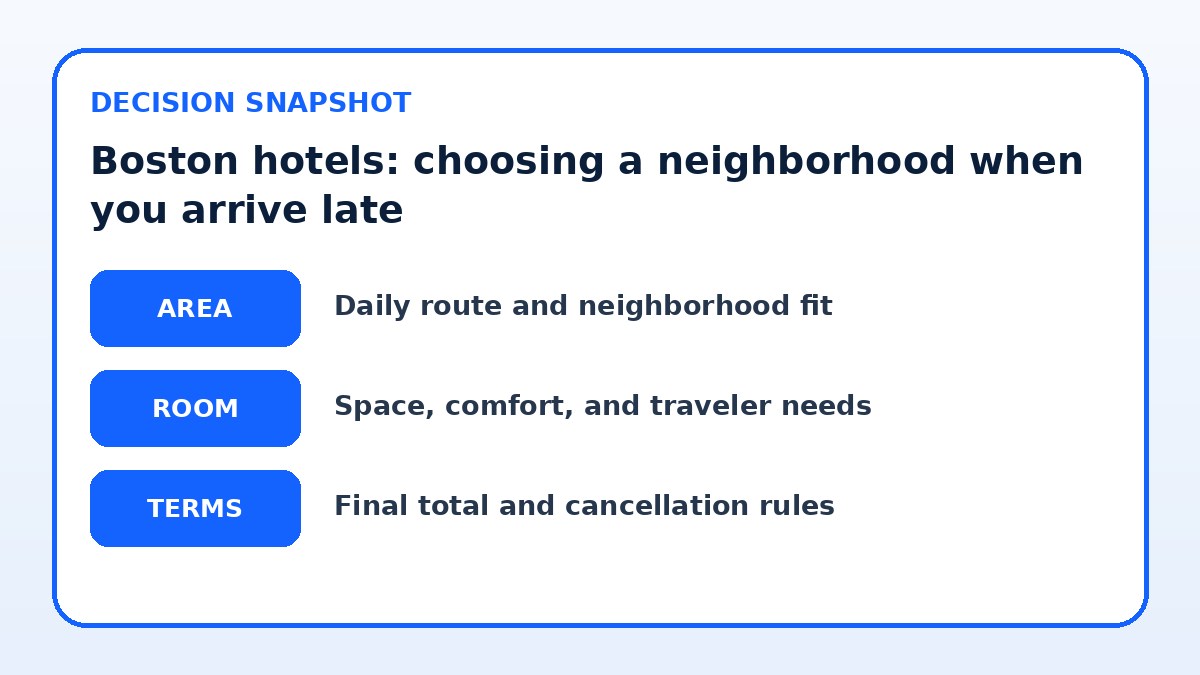
Daily-route friction: transit, traffic, and arrival point
Map your arrival—Logan Airport, South Station, or Back Bay—and the common transfer options to each neighborhood before booking. If you arrive at Logan late, neighborhoods with uncomplicated airport shuttle, taxi, or rideshare access are preferable. If South Station or the commuter rail are your entry, staying near Downtown, South End, or Back Bay shortens door-to-door time. Also account for rush-hour traffic windows: routes that look fast at midnight can be very different in the morning.
Evaluate rooms by how they solve the first commute. Hotels near an express transit line or on a direct rideshare corridor let you avoid multi-step transfers when you’re tired. If your morning is early, a hotel within walking distance of a subway stop or meeting venue reduces the risk of a late taxi. Ask the hotel what typical transit options look like at your expected arrival and morning times, and verify directions on the provider’s booking page or the official transit site.
Now compare like with like
Keep the same dates, guests, room needs, and cancellation preferences while you compare the final choices.
Room and party needs: sleeping, working, and baggage
Late arrivals change what matters in the room. You may prioritize a quiet room facing away from a busy street to ensure rest, a guaranteed early wake-up service, or an accessible workspace if you must do late-night prep. Traveling with colleagues or family means confirming adjoining rooms or a suite with enough space to spread out without unpacking in the hotel lobby. If you carry presentations or equipment, check whether the hotel offers secure luggage hold or late check-in baggage handling.
Confirm bed type, blackout curtains, and a reliable desk lamp so you can recover and work quickly. If you expect to join a morning video call, ensure the room has strong Wi‑Fi and a stable headphone-friendly layout. When multiple people share the room, consider the check-in logistics—can one person collect keys while others wait?—and whether mobile check-in and digital keys are offered to simplify late-night arrivals.

Hotel booking check before payment
- Confirm the hotel’s late check-in process and whether the front desk staff work 24/7 or provide a mobile key.
- Ask the property to note early departure or early check-out needs and request a wake-up call or mobile alarm option.
- Verify room features: quiet-facing room, blackout curtains, reliable desk lighting, and Wi‑Fi speed for video calls.
- Check luggage handling: can the hotel store bags if you arrive earlier than check-in or after late arrivals?
- Review cancellation and deposit terms on the hotel’s booking page before finalizing to avoid surprises.
- Plan ground transport from your arrival point—confirm authorized rideshare pick-up, shuttle details, or taxi availability for late hours.
Final booking terms: what to verify before you click
When booking, verify three critical items on the hotel’s booking page: late check-in policy, cancellation terms, and how the property handles early departures or schedule changes. Ask whether front desk staff are on-site 24 hours, whether mobile or express check-in is available, and what ID and deposit procedures apply after hours. If you need a guaranteed quiet room or a specific amenity for the morning, make that request in writing and confirm it in the reservation notes or a follow-up message.
Also confirm practical arrival details: the hotel's preferred entrance after midnight, secure late-night parking or drop-off instructions, and whether the property can hold luggage if you arrive before room readiness. If you’re comparing options, note what each hotel requires to secure the booking (credit card hold, prepayment, or free cancellation window) and double-check those points on the provider’s final booking page. Optionally compare availability on Trip.com as one source, but always verify provider-specific facts on the hotel’s direct booking terms.
Hotel Guide questions travelers ask
Is it better to stay near Logan Airport after a late arrival or closer to my morning meeting?
If your morning meeting is early and fixed, staying closer to that meeting usually pays off: you gain time and reduce the chance of being delayed by morning traffic. However, if you’re very tired or arrive late at night, staying near Logan can simplify the arrival—no long transfer, less unpacking stress, and quicker access to your room. Consider the trade-off by estimating door-to-door time for both options at your expected arrival and morning hours, and verify typical transit or taxi availability on the hotel’s page.
What special booking terms should I ask about when I’m arriving late?
Ask whether the hotel has a guaranteed late check-in policy, how they handle ID and payment after hours, and whether the reservation requires a deposit or prepayment. Confirm whether they offer mobile check-in or digital keys to bypass the desk, and whether luggage can be stored if you arrive before the room is ready. Always get these answers in writing—either an email confirmation from the hotel or clear terms on the booking page—so you can show them if needed at arrival.
How can I ensure a smooth morning after arriving late in Boston?
Choose a neighborhood that shortens your morning commute, request a quiet room and reliable Wi‑Fi, and confirm a wake-up call or set multiple alarms. Pre-book your morning transport if it’s critical—reserve a rideshare or review transit schedules the night before—and confirm the hotel’s recommended route. Pack essentials (chargers, presentation materials, outfit) in an accessible bag so you can leave quickly, and verify the hotel’s express checkout or mobile payment options to avoid desk delays.
Final decision note
A late arrival in Boston need not derail a business trip if you prioritize the right neighborhood and confirm practical arrival and room details. Start by deciding whether the morning’s priority is being close to a single meeting, minimizing arrival transfers, or keeping a flexible central base. Then verify late check-in procedures, room features that support recovery and work, and the hotel’s cancellation or deposit terms on the booking page. With those checks done, you can shortlist a small set of hotels by area and open live inventory safely confident that your late-night arrival will lead to a smooth, productive morning.
Continue planning
Check current options and final conditions
Use the provider page to confirm live availability, the final total, cancellation terms, and every condition that matters to your trip.
This evergreen planning guide was created with AI-assisted drafting and a structured quality review. It does not display live prices, schedules, availability, visa guidance, or provider rankings. Verify current details before booking. Some links are affiliate links; we may earn a commission at no additional cost to you.