If you land late in Singapore with oversized bags or multiple suitcases, pick a neighbourhood first — not a single hotel. Choosing an area that minimizes late-night transfers, offers flexible front-desk service, and has room types suitable for heavy luggage will save time, stress, and extra handling charges. For most travelers with extra baggage, proximity to the airport express or straightforward taxi access, easy next‑day transit links, and hotels with generous room layouts or luggage-friendly policies are the priority. Below I give a practical shortlisting method: which stay area fits your arrival hour and route, how neighbourhood friction affects your first 24 hours, what room features and party layouts to look for, and the final booking terms to verify before you commit. Use these checks to shortlist an area, then open live hotel inventory to compare specific rooms and arrival policies.
Check live stays in the areas that fit
Use your dates and party size to compare current rooms after you narrow the neighborhood fit.
Neighborhood fit: pick the area by arrival logistics
Start by matching your arrival time, likely transfer mode (taxi, rideshare, MRT plus shuttle), and tolerance for late-night navigation. If you arrive very late or after the last rapid-service departure from the airport, neighbourhoods with straightforward taxi access or short express-train rides are safer. Central districts like Marina Bay and Orchard are compact and have many hotels, but they may involve longer rides through city traffic late at night. Suburban hotel clusters near major roads or the airport line can be quieter and faster to reach, which matters more when you have heavy or awkward luggage.
Think about where you will be next morning: if you need quick access to the port, convention centre, or a northbound train, pick a close-by neighbourhood and avoid an early-morning inner-city transfer. Also factor in 24-hour services you may need on arrival — convenience stores, late eateries, and pharmacies. A neighbourhood that supports simple late-night errands reduces the need to haul bags again before morning. Use maps to compare transfer routes from the airport or seaport and shortlist areas that minimize intersections and stairs on arrival.
Choose an area-selection strategy
| Area approach | Best for | Tradeoff to check |
|---|---|---|
| Stay near the airport line or express stop | Travelers needing the quickest rail transfer with predictable luggage routes | Fewer evening dining or sightseeing options within easy walking distance |
| Central business district (Orchard/Marina) | Those wanting immediate access to city services and late-night amenities | Longer or more complex nighttime taxi rides from the airport with peak traffic |
| Hotels by major road junctions or suburbs | Arrivals that prioritize straightforward taxi or rideshare drops with curbside access | Less public transit convenience for early-morning departures into the city |
| Near transit hubs with locker/storage options | Travelers who plan to store luggage and explore before check-in | Potential need to move bags twice and check exact storage hours and security rules |
Daily-route friction: plan how luggage affects your first day
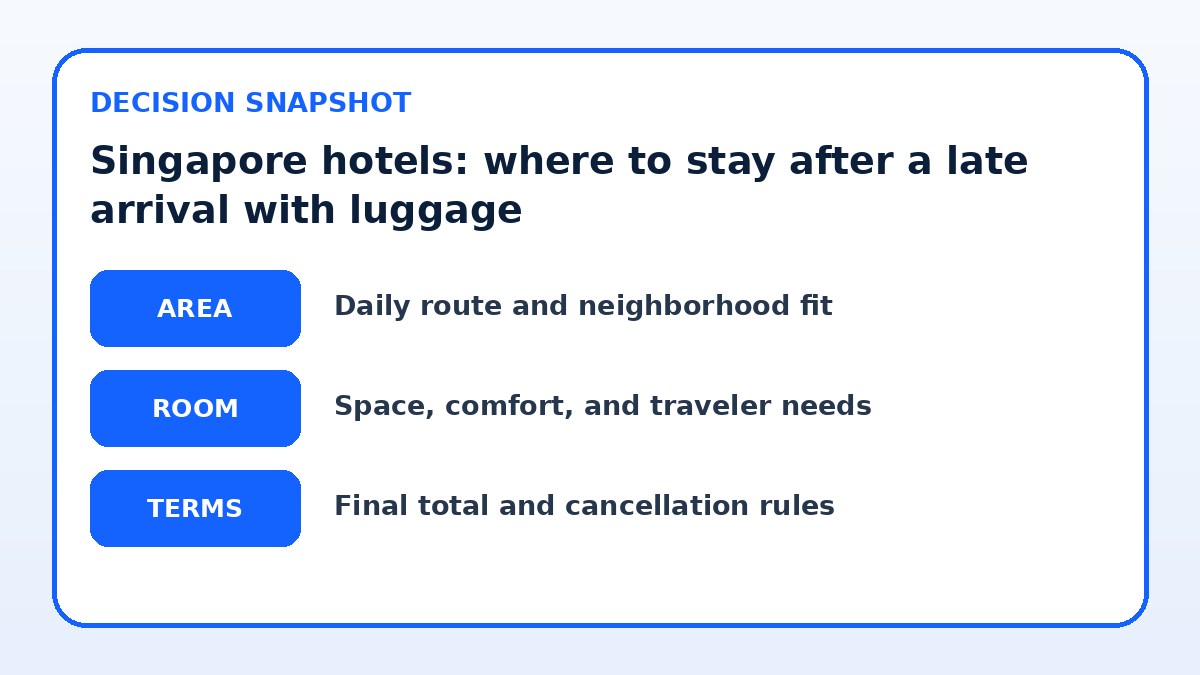
Daily-route friction is about physical effort and time lost because of your bags. Large suitcases, duffels, and equipment slow you down moving between transport modes. When shortlisting areas, picture the door-to-room sequence: airport arrival, luggage pickup, transfer vehicle, hotel entrance, lift, and corridor to the room. Choose areas where transfers are likely to be curb-to-lobby rather than involving long walks, stairs, or transfers across busy stations. Areas with street-level hotel entrances and accessible drop-offs reduce the moments you must handle your luggage.
Also consider how your luggage changes plans for the rest of the day. If you’ll be transiting inside Singapore, pick a neighbourhood offering easy luggage storage with the hotel, reliable lockers at transit hubs, or simple onward transfer options. If you expect to explore before check-in, choose an area with secure luggage-storage policies or same-day parking for a private vehicle. Account for the physical layout of neighbourhood hotels — many new developments provide luggage carts or porter service, but always verify these services before relying on them.
Now compare like with like
Keep the same dates, guests, room needs, and cancellation preferences while you compare the final choices.
Room and party needs: what to book when you have extra bags
When traveling with extra luggage, room selection becomes as important as neighbourhood. Look for rooms with open floor space or suites with separate living areas where you can keep suitcases out of walkways. If you travel with family or a small group, consider connecting rooms or a one-bedroom suite that offers dedicated luggage staging areas. Request a room on a lower floor if elevators are slow or elevators require long walks from the lobby — this reduces the effort of moving multiple bags in and out late at night.
Ask about rollaway beds, luggage racks, and closet space before you book; these small features make a big difference to comfort and safety. Some hotels provide complimentary luggage racks and baggage tags; others may offer paid porter service. If you plan to leave items at the hotel while you sightsee, verify secure short-term storage and any conditions on retrieving items at odd hours. When a room description is unclear, open the live inventory page and check photos, bed configurations, and amenities, then message the property to confirm space and handling options.
Hotel booking check before payment
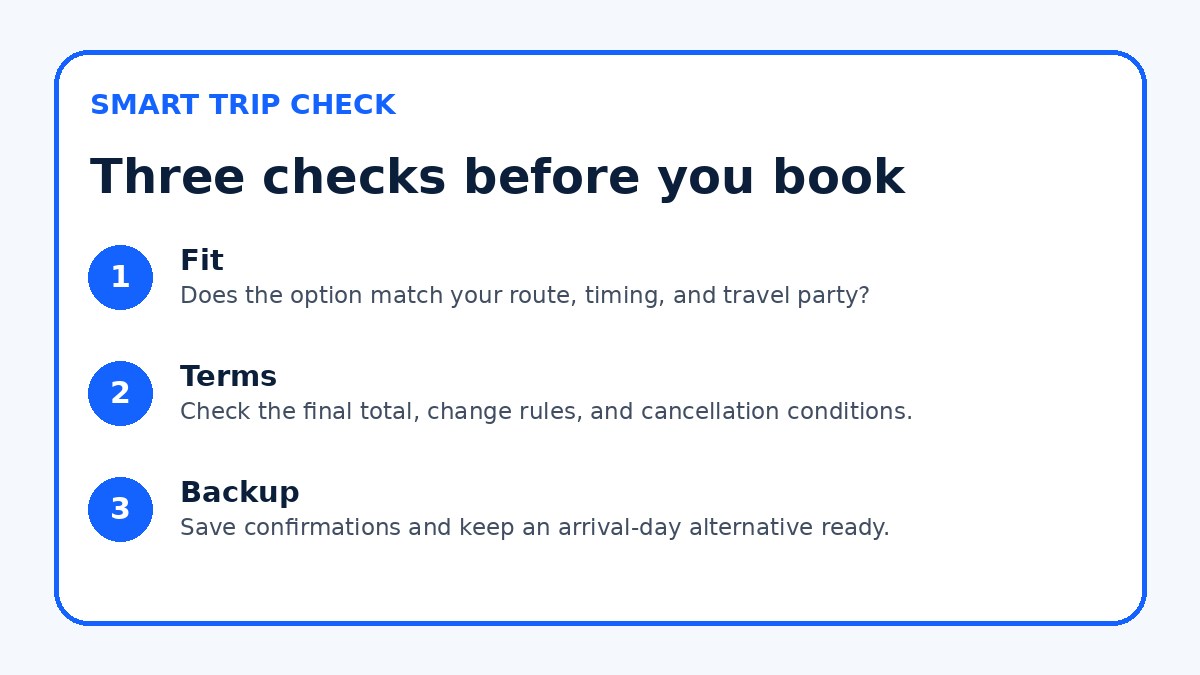
- Verify the hotel’s official check-in hours and confirm late-arrival acceptance in writing via email or the booking platform.
- Ask the property whether they offer porter service, luggage carts, or free luggage storage and note any associated fees.
- Compare transfer options from your arrival point: express rail, taxi, rideshare, and approximate curb-to-lobby complexity.
- Select a room type with clear floor space, connecting-room options, or a suite layout and confirm bed/room layout with the hotel.
- Record a backup contact method for the hotel (phone and email) and send your expected arrival time and flight details.
- Save the hotel’s exact address and a short set of directions for your driver, plus a map screenshot in case mobile data is limited.
Final booking terms: what to confirm before you commit
Before you click reserve, verify four booking items on the hotel page: the official check-in window and late check-in policy; whether 24-hour front-desk or on-request late arrivals are supported; any fees for late arrivals or baggage handling; and short-term luggage storage availability. If the online listing doesn’t specify a late-arrival option, contact the hotel to confirm an arrival time outside standard hours and ask how staff will receive and secure your bags. Policies vary and can change, so rely on the hotel’s booking confirmation or property page for the final terms.
Also confirm cancellation and arrival amendment rules that apply in case your flight changes, and check whether the booking platform requires you to input an exact arrival time. If you use a third-party site to compare options, verify the hotel’s own page for arrival details and add any required arrival notes to your reservation. Trip.com may be useful to compare availability and conditions, but always confirm luggage handling and late-arrival specifics directly with the hotel to avoid surprises.
Hotel Guide questions travelers ask
Can hotels in Singapore accept very late check-ins and help with oversized luggage?
Many hotels in Singapore are set up to handle late arrivals and oversized luggage, but policies vary by property. Before booking, contact the hotel to ask whether the front desk is staffed 24 hours or whether they require an arrival window. Specifically ask how oversized items are handled: whether they provide porters, luggage trolleys, or a secure storage option if you need to arrive early or leave before standard check-in times. Always get confirmation of any agreed arrangement on the reservation so staff have your arrival details on record.
Is it better to take a taxi or the airport rail if I have extra suitcases late at night?
Deciding between taxi and rail comes down to tradeoffs of cost, convenience, and physical effort with your luggage. A taxi or rideshare typically offers curb-to-lobby service, fewer transfers, and less handling of heavy items, which is helpful late at night. Airport rail can be faster during the day and predictable for planning, but factor in platform stairs, last-mile transfers, and whether your final hotel is an easy walk from the station. Evaluate the number of pieces you have, how smooth your connections are, and the simplicity of the drop-off at your chosen neighbourhood.
What should I check about storage if I want to leave bags at my hotel between check-out and late-night departure?
If you plan to leave bags at the hotel after check-out, confirm the hotel’s baggage storage policy: whether storage is complimentary, how long they will hold items, and their security procedures for valuable or bulky items. Ask if retrieval is possible outside normal hours and whether the hotel requires identification or a claim tag. For bulky or high-value items, request written confirmation of the storage arrangement or special handling so there is a clear record in case of issues. If the hotel cannot store items, identify a transit hub locker option or third-party storage service in your chosen area.
Final decision note
When you arrive late in Singapore with extra luggage, decide the neighbourhood first: pick an area that simplifies the transfer from your arrival point and reduces the number of times you must handle heavy bags. Shortlist areas by evaluating curb-to-lobby drop-off ease, late-night service availability, and morning transit needs. Then choose a room layout that gives you space for suitcases or offers connecting suites for groups. Finally, confirm late check-in, luggage-handling, and storage details directly with the hotel and keep those confirmations with your booking. With those steps you’ll be able to narrow areas and open live hotel inventories confidently to select the best room for your arrival and first day.
Continue planning
Check current options and final conditions
Use the provider page to confirm live availability, the final total, cancellation terms, and every condition that matters to your trip.
This evergreen planning guide was created with AI-assisted drafting and a structured quality review. It does not display live prices, schedules, availability, visa guidance, or provider rankings. Verify current details before booking. Some links are affiliate links; we may earn a commission at no additional cost to you.