Practical answer first: set price alerts for flights and hotels, but only act once you’ve compared the same traveler count, dates, and luggage allowances across the options. For travelers bringing extra bags to Gyeongju, the cheapest-looking package can become more expensive after baggage fees, inflexible change rules, or restrictive hotel policies are applied. Before you click “book,” verify baggage allowance, transfer timings, refund/change rules, and where extra luggage can be stored at the hotel or station. Use alerts as a trigger to run a direct comparison — not as a signal to buy instantly. This article explains exactly which inclusions and terms to check, how to test flexibility, and how to decide if a bundle or separate bookings save you time and money when you’re traveling with more bags than usual.

Test package value fairly
| Booking approach | Best for | Tradeoff to check |
|---|---|---|
| Package deal (single supplier handles flight, transfer, hotel) | Travelers wanting a single contact and included transfers that accommodate luggage. | May have limited flexibility and a single cancellation policy that applies to all elements, increasing change costs. |
| Separate bookings (book flight, hotel, transfer independently) | Those who want precise control over baggage allowances and fare classes for each leg. | Requires more coordination; you absorb responsibility if one supplier’s delay affects another part of the trip. |
| Hybrid (book flight with baggage-included fare and separate hotel/transfer) | Travelers who need guaranteed luggage on the aircraft but want flexibility over ground arrangements. | You must still arrange reliable transfers that handle your bags; misalignment can add unexpected costs. |
| Booking via OTA with bundled add-ons | People who want easy comparison alerts and optional add-on baggage or transfers at checkout. | OTAs may obscure provider-level change rules and ancillary fees; final terms must be checked on supplier pages. |
Check current package and separate options
Use identical dates, travelers, room needs, baggage, and flexibility so the comparison stays meaningful.
What to compare before judging a package useful
Start with identical search parameters: same departure and return dates, same number of travelers, and the exact number and weight of checked bags. Many package comparisons fail because the user compares a bundled flight with one included checked bag against separate bookings that assume carry-on only. Also match arrival and departure airports, since transfers between different airports or distant stations add time and cost when you have extra luggage. If train or bus legs are part of the package, confirm seat type and luggage rules because regional trains and express buses can have stricter or looser allowances.
Next, list the tangible inclusions: transfers (meet-and-greet or self-transfer), checked baggage counts and weight, hotel luggage storage, and any guided tours that require you to handle bags. Don’t forget change and cancellation terms per element—some bundles treat the whole booking as one non‑refundable product while separate bookings let you change the flight without touching the hotel. Finally, note layover lengths and transfer logistics: short connections with lots of luggage increase the risk of missed connections and fees for rebooking, which should factor into your bundle-versus-separate decision.

Inclusions that matter for extra-luggage travelers
Baggage allowances are the headline—but the fine print matters. Check whether a flight’s allowance is per person or pooled across the booking, and whether carry-on size rules match your bag dimensions. For hotels, see if short‑term luggage storage is complimentary and what hours it’s offered; some smaller guesthouses have limited storage and expect you to check in immediately. Transfers included in packages may assume minimal luggage; confirm whether the vehicle type can accommodate oversized suitcases or sport equipment, and whether porter service is provided or costs extra.
Also verify who handles mishaps: if a bag is delayed and you miss a tour or transfer included in a package, is there compensation or a backup option listed in the provider’s terms? If you’re booking a combined train or bus leg, inspect luggage limits for those services—regional operators sometimes enforce strict size limits even when airlines are liberal. Where possible, choose options that offer flexible rebooking or separate supplier contracts so a baggage issue on one leg doesn’t forfeit the entire package.
Look past the headline total
Compare inclusions and change conditions before deciding whether a package is genuinely useful for this trip.
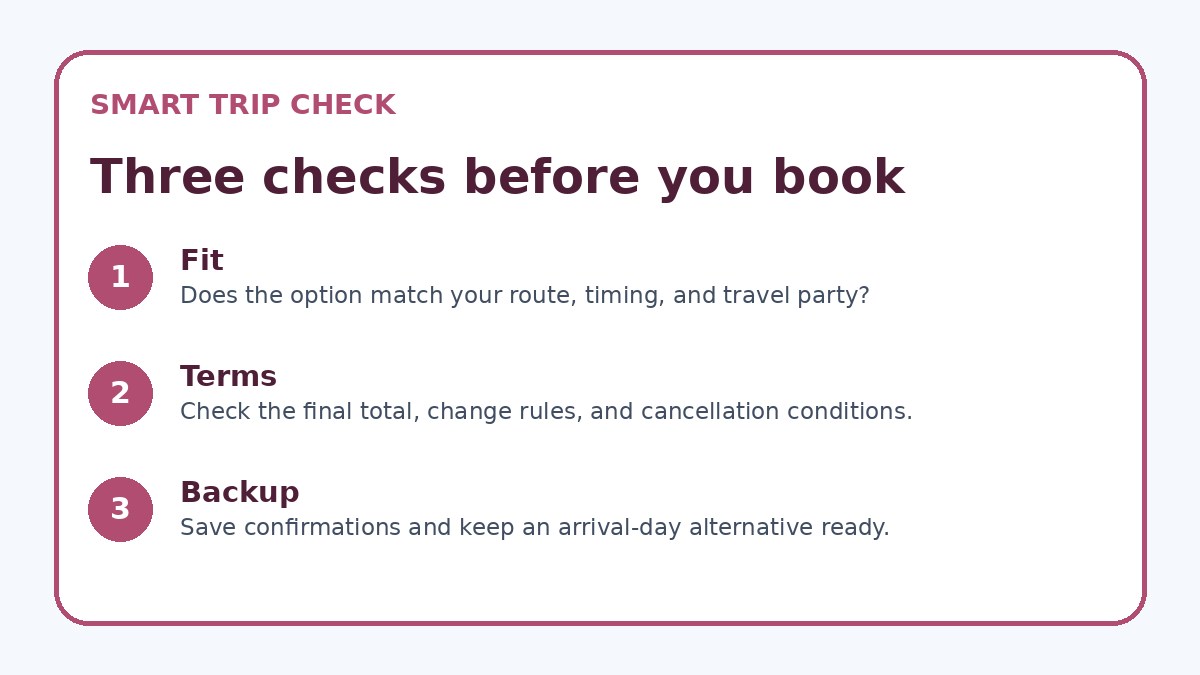
Deal comparison checklist
- Set separate price alerts for flights and hotels on at least two platforms and note the alert timestamps for comparison.
- When an alert triggers, run a side-by-side search matching dates, traveler count, and total checked baggage across every option.
- Open each supplier’s final booking page and copy or screenshot baggage allowances, change/cancellation fees, and transfer descriptions.
- Confirm the hotel’s luggage storage policy and hours directly with the property before booking if you expect to arrive early or late.
- If booking a package, ask the provider in writing how delayed baggage or missed transfers are handled and whether alternate transport is included.
- Before paying, calculate the total door-to-door cost including potential baggage fees, transfer surcharges, and penalties for changes.
Flexibility and traveler-specific value: when a bundle helps
A bundle can save time and reduce coordination stress, particularly when it includes reliable, roomy transfers and allows checked baggage without extra fees. For travelers who prioritize a single point of contact — for example, having one supplier handle flight delays, ground transfers and hotel check-in — a well‑specified package can be worth a small premium. Bundles also shine if they explicitly include luggage handling or if local transport between arrival points and Gyeongju is complex; the convenience of a door-to-door transfer that accommodates your bags can justify choosing a package.
On the other hand, bundles limit your ability to swap parts of the trip when plans change. If your flight price trend looks promising and you carry extra luggage, separate bookings let you select the fare class that includes the baggage you need. Use traveler-specific value tests: are you willing to pay more for a single-support booking outlet, or do you prefer optimizing each element (airfare, rail, hotel) individually to control luggage fees and change penalties? Your tolerance for contingency handling should guide the choice.
Final terms to verify on provider pages before booking
Always open the final booking page for each supplier and read the exact terms you’ll be charged under. Verify baggage fees on the checkout screen, not just in a separate policy summary, and confirm what change and cancellation fees will apply to your total booking price. If a package vendor lists ‘included transfers,’ find the transfer description on the provider’s page and note vehicle type, meeting procedure, and what happens if your flight is delayed. Look for explicit statements about luggage size limits or extra handling charges.
If you rely on an OTA or aggregator to set alerts, cross‑check the same itinerary on the airline’s or hotel’s direct site before final payment. The OTA may show an overview that omits ancillary baggage fees or different refund policies. Trip.com can be used as one comparison point to verify current availability and conditions, but always confirm baggage allowance, change windows, and baggage handling on the provider’s final booking page before you commit.
Travel Deals & Booking Strategy questions travelers ask
How should I set alerts so I don’t impulsively book a low fare that lacks baggage?
Set alerts for two types of fares: one that matches the baggage allowance you need and a lower-fare alert for carry-on only. When an alert arrives, immediately open the full fare rules on the airline’s site and compare the included baggage, change fees, and refundable status. Use a short decision checklist (dates match, luggage included, transfer capacity verified) before purchasing. This turns alerts into prompts for a structured comparison rather than a trigger for impulse purchases.
Can I trust package transfer descriptions on aggregator sites when I have oversized bags?
Treat aggregator transfer descriptions as preliminary; always confirm vehicle type, luggage capacity, and porter service on the provider’s final booking page or by emailing the operator. Aggregators sometimes summarize transfers without stating limits for oversized or extra suitcases. If your bags are unusually large, ask for a direct confirmation from the transfer company and request written assurance that the vehicle can accommodate your equipment before finalizing a package.
What’s the safest booking approach if my Gyeongju dates might change?
If change risk is high, prioritize bookings with flexible change windows or low change fees for the element most likely to move — typically the flight. A hybrid approach often works well: buy a flight fare that includes baggage and allows free or low-cost changes, and keep hotel and transfers flexible or refundable. Confirm the exact change and cancellation penalties on the provider’s booking page; do not rely on summary language on alert emails or search results.
Final decision note
Using price alerts for Gyeongju travel deals can save time, but alerts must be the start of a verification process when you carry extra luggage. Always compare identical search parameters, verify baggage allowances and transfer capacities on the supplier’s final booking page, and calculate how change and cancellation rules would affect your total cost. Choose a package only if it explicitly covers the luggage handling and transfer logistics you need; otherwise, mix and match the flight, hotel, and transfer to control baggage fees and retain flexibility. With a small checklist and a habit of confirming final terms, alerts become a useful tool rather than a pressure to book hastily.
Continue planning
Check current options and final conditions
Use the provider page to confirm live availability, the final total, cancellation terms, and every condition that matters to your trip.
This evergreen planning guide was created with AI-assisted drafting and a structured quality review. It does not display live prices, schedules, availability, visa guidance, or provider rankings. Verify current details before booking. Some links are affiliate links; we may earn a commission at no additional cost to you.