If you’re planning to go from Kuala Lumpur to Singapore solo, pick the transport mode that matches how you value comfort, cost, and convenience. For most solo travelers the decision comes down to four practical approaches: an intercity train (or train+local transfer), a long‑distance coach, a combination of rail and coach, or breaking the trip into shorter segments with flights or ferries where available. Start by deciding which matters most to you: minimal transfers and easy door‑to‑door logistics, the lowest friction with luggage, or the most timing flexibility. Read the sections below to match your priorities with terminal fit, transfer complexity, and how to build a disruption backup. Take the final checklist with you to confirm operator pickup points, terminal transfers, luggage rules, and reliable real‑time booking details (Trip.com is a place to compare current availability, but always verify on the provider’s official booking page).

Terminal fit: where each mode drops you and how it affects logistics
Choosing a transport mode starts with where it leaves you in both cities. Trains typically arrive at main rail stations that may be central or require a short taxi or metro ride to your accommodation; check whether the station’s exit lands you close to a metro line or if you’ll need a ride‑hail pickup. Coaches normally use dedicated bus terminals or interchanges that are designed for quick boarding and luggage loading; these terminals often have multiple onward transport options but can be outside the historic center. When planning, map the terminal-to-door distance for your hotel or guesthouse and factor the cost and time of the last mile into your decision.
Ferries, if part of your itinerary, use ports that require extra transfer time to reach the city center and usually operate on limited schedules; they’re better where the terminal is close to your end destination. If you consider a multimode route, prioritize combinations with terminals connected by frequent, reliable local transit to minimize waiting and the risk of missing a connection. Always verify exact terminal names and the recommended local transport options on the carrier’s final booking page so you can estimate realistic door‑to‑door time and how comfortable the transfers will be with your luggage.
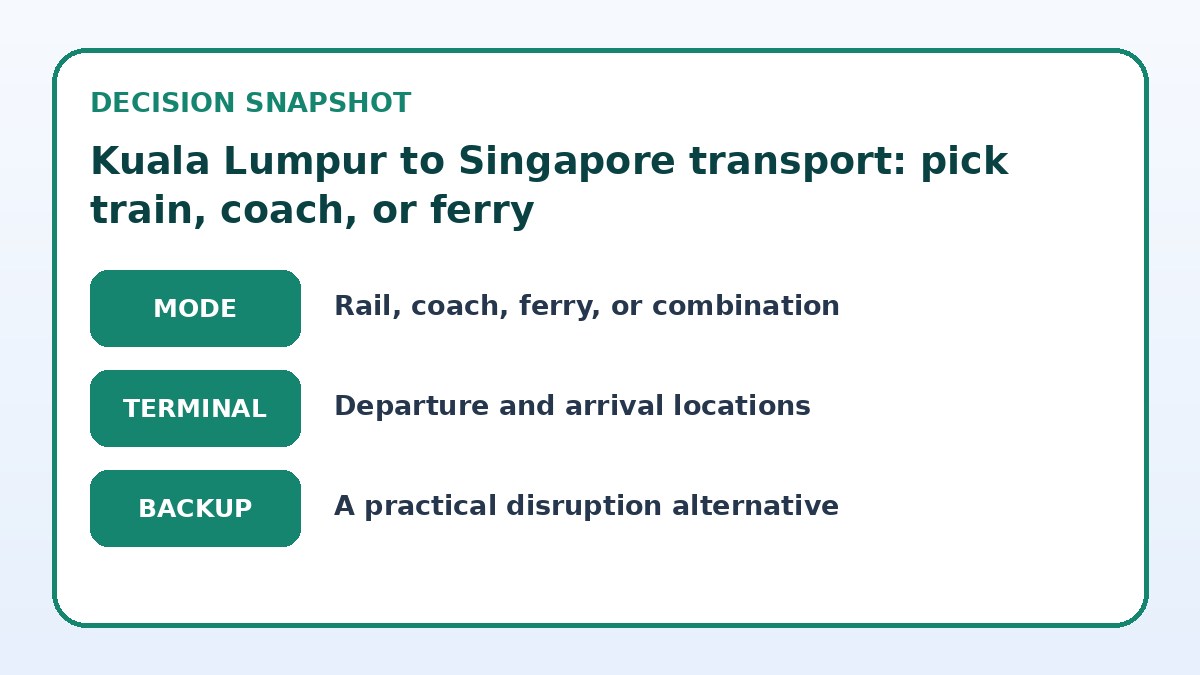
Choose the end-to-end journey plan
| Journey approach | Best for | Friction to check |
|---|---|---|
| Direct intercity train | Travelers who prefer a relaxed seat and fewer individual transfers | May require local transfer from station to final address and has limited departure slots |
| Long‑distance coach | Solo travelers valuing frequent departures and simple luggage handling | Comfort varies and coach terminals can be outside walking distance to some neighborhoods |
| Mixed train + coach | Those needing timing flexibility and city‑center pickup/dropoff balance | Adds transfer friction and multiple baggage policies to manage |
| Segmented route (flight or ferry + ground) | When time savings justify airport/port transfers or when routes are disrupted | More complex door‑to‑door logistics, stricter check‑in, and potential for missed connections |
Check live intercity options
Look beyond the ride itself and compare terminals, transfers, luggage, and arrival fit.
Luggage and transfer friction: packing and handling where it matters
Solo travelers should weigh luggage rules and handling more heavily than couples. Coaches usually include checked luggage handling at the terminal and a simple retrieval process, which reduces carrying strain. Trains vary: some allow large bags in overhead racks and luggage areas but others have strict limits or require you to manage your bag in a crowded carriage. On combined trips, each operator may treat luggage differently, so plan to pack for easy handling and keep essentials in a daypack. If you’re moving between modes, consolidate what you need for the transfer to avoid repeated opening of large suitcases.
Transfers between terminals or between a station and a bus depot can add significant friction if you have heavy luggage or mobility concerns. Investigate whether stations have luggage trolleys, elevator access, or porter services; if not, consider a coach or a private transfer for a door‑to‑door option. For ferries, boarding and disembarkation often involve stairs or gangways — factor that into your plan. For all options, check the provider’s rules about carry‑on size and declared luggage on the booking page, and plan extra time in case baggage checks slow you down.
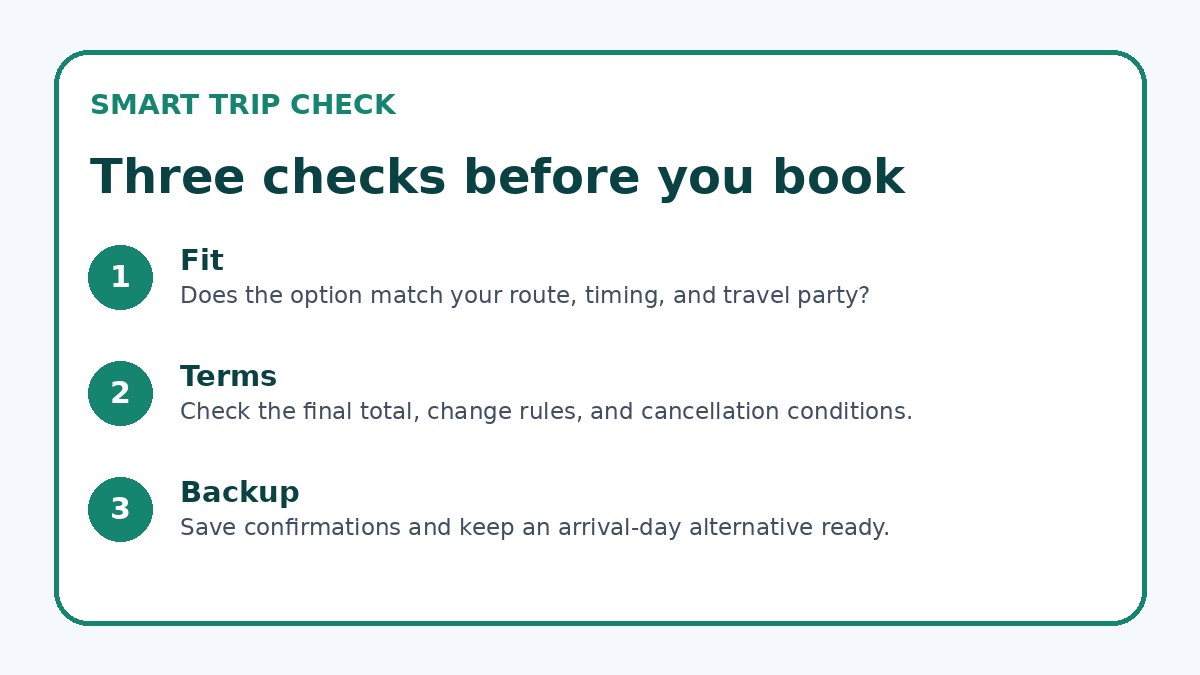
Timing flexibility: schedules, frequency, and what to do if plans change
Coaches often win on frequency — multiple departures across the day make them forgiving if you need to alter departure times at short notice. Trains may have fewer departures but a more comfortable fixed schedule; if you must arrive or depart at a specific time, compare direct and connecting services and allow buffer time for border procedures. Ferries and flights can be constrained by less frequent departures and stricter check‑in windows, so use them only if they fit your schedule. When evaluating options, consider how easy it is to change or cancel a booking and whether there are alternative same‑day departures.
Build a plan for disruptions: pick options with several same‑day alternatives, or choose carriers that let you change tickets without prohibitive penalties. If time flexibility is critical, prioritize services with frequent departures and short transfer windows. Keep contact numbers and arrival terminal names saved, and allow extra time for border formalities when crossing from Malaysia into Singapore; border queues can vary by time of day. Before booking, verify the operator’s real‑time change policy on the official booking page instead of relying on third‑party summaries.
Compare the practical alternatives
Use the final page to confirm what is actually offered on your dates and save a workable fallback.
Intercity travel checklist
- Map exact terminal names and door‑to‑door travel time between terminals and your accommodation before booking.
- Confirm luggage allowances, carry‑on rules, and whether porters or trolleys are available at each terminal.
- Check frequency and same‑day alternative departures so you can rebook if your initial option is disrupted.
- Save offline maps and take screenshots of tickets and terminal pickup points in case mobile data is unreliable.
- Verify boarding cutoffs and required ID or printed documents on the carrier’s official booking page.
- Identify nearby low‑cost overnight options at each terminal in case you must delay travel unexpectedly.
Disruption backup and realistic door-to-door planning
A practical trip plan looks beyond the scheduled ride and prepares for missed connections, late arrivals, or sudden cancellations. Identify at least two same‑day alternatives: a later coach, a different train pattern, or even a short flight where appropriate. For solo travelers, having a local SIM or roaming data helps you rebook on the go and find last‑mile transport. Save maps of both the departure and arrival terminals offline and pin nearby accommodations in case you must overnight unexpectedly.
Also consider where you will store extra luggage in case you want to explore a city while waiting for your onward connection; many major stations and bus terminals offer short‑term storage but policies vary. Keep digital copies of tickets and ID, and check whether the carrier requires printed copies. Before finalizing any booking, confirm pickup points, allowed luggage dimensions, boarding cutoffs, and real‑time changes on the provider’s official page — and use Trip.com or similar platforms only to compare availability but not as the final source of operational rules.
Rail & Intercity Transport questions travelers ask
What’s the most practical single‑ticket approach for a solo traveler?
Practicality depends on your priorities. A single train or coach ticket that delivers you close to your accommodation minimizes transfers and luggage handling, which is often best for solo travelers. If no single ticket lands you near your final address, look for combined tickets sold by the same operator or choose services that terminate at well‑connected terminals with frequent local transit. Always confirm whether ‘single‑ticket’ means one contract covering transfers or simply one leg of a multi‑operator itinerary before booking.
How should I pack differently depending on the mode I choose?
Pack for transfers: if you choose coaches, consolidate clothing in one large bag and keep important items in a daypack for easy retrieval at terminals. For trains, use luggage that fits overhead racks and can be maneuvered on platforms; avoid large, cumbersome cases if you’ll walk between stations and accommodations. If you expect to mix modes, keep essentials in an accessible bag and use locks and clear labeling so retrieving checked luggage at intermediate terminals is quick and painless. Prioritize comfortable shoes for boardings, and a rain layer for unexpected waits.
What’s the best backup plan if my scheduled service is canceled?
Have at least two same‑day alternatives pre‑checked: a later coach, a different train departure, or a short flight if feasible. Keep the carrier’s change and rebooking policy on hand, and ensure you can access booking channels via a local SIM or Wi‑Fi. If alternatives are limited, identify nearby accommodations and plan to stay overnight rather than rush a risky connection. Finally, save contact details for the operator and a reliable local transport option to get you to a different terminal quickly if needed.
Final decision note
For solo travelers moving between Kuala Lumpur and Singapore, the right choice balances terminal proximity, luggage ease, and schedule flexibility. Coaches tend to reduce transfer friction and offer many departure choices; trains provide a more relaxed onboard experience but may demand extra last‑mile connections. Ferries and flights can help in specific scenarios but usually add complexity unless they cut total travel time meaningfully. Decide which inconvenience you can tolerate — more transfers, stricter luggage rules, or fewer departure options — then verify terminal names, luggage policies, boarding cut‑offs, and change penalties on the provider’s official booking page. Use the checklist above to confirm practical door‑to‑door details, and keep at least one same‑day backup ready so a solo trip stays calm even if plans shift.
Continue planning
Check current options and final conditions
Use the provider page to confirm live availability, the final total, cancellation terms, and every condition that matters to your trip.
This evergreen planning guide was created with AI-assisted drafting and a structured quality review. It does not display live prices, schedules, availability, visa guidance, or provider rankings. Verify current details before booking. Some links are affiliate links; we may earn a commission at no additional cost to you.