Practical answer first: if you want kid-friendly attractions within easy walking distance and minimal daily transfers, target the Viaduct/City Centre for short walks to museums and ferries, or Parnell and Mt Eden for quieter streets and parks close to town. If you prefer coastal beaches and a holiday vibe, look to Takapuna on the North Shore; for large family suites and resort-style pools, consider Auckland's waterfront hotels that advertise family rooms and on-site amenities. Now the tradeoffs: central areas save travel time but can be noisier and have fewer free parking options; beachside and suburban hotels give space and calmer nights but add commute time to central attractions. Use room layout and transit fit as your tiebreakers when shortlisting.
Check live stays in the areas that fit
Use your dates and party size to compare current rooms after you narrow the neighborhood fit.
Neighborhood fit: match energy and access
Deciding where to stay in Auckland starts with matching neighborhood energy to your family's rhythm. The central business district and Viaduct Harbour are dense with cafés, short ferry rides, and museums — ideal if your kids can handle busy sidewalks and you want to walk to many activities. Parnell and Mt Eden are quieter, with parks and bakeries within a short drive; these neighborhoods suit families who value calm evenings and easy access to playgrounds. Takapuna and Devonport on the shore side give a beach-day feel, playgrounds by the sand, and shorter walks to coastal cafes, but expect a bit more transit time to downtown attractions.
When you assess fit, list two must-have nearby features: a playground or park, a grocery or supermarket, and a transit stop with reliable links to your planned sights. If your family packs a stroller or wheelchair, check sidewalk conditions and whether crossings are frequent and signalized. Consider noise levels at night: nightlife hubs are convenient but can disturb light sleepers. Finally, think about meal logistics — neighborhood choice determines evening options if you prefer to dine near the hotel rather than ferry back into the city each night.
Choose an area-selection strategy
| Area approach | Best for | Tradeoff to check |
|---|---|---|
| Stay in the city centre (CBD/Viaduct) | Families wanting walking access to museums, ferries, and evening dining. | Higher noise, limited free parking, and smaller room footprints. |
| Choose a quiet inner suburb (Parnell/Mt Eden) | Families who prefer parks, bakeries, and calmer nights near town. | Short drive or transit ride to central attractions; fewer late-night dining options. |
| Base in a beach suburb (Takapuna/Devonport) | Families prioritizing beach time, playgrounds, and a holiday vibe. | Longer daily commutes to downtown attractions and museums. |
| Pick a waterfront resort-style hotel | Families wanting on-site pools, kid activities, and larger suite options. | Can be farther from local neighborhoods and may add commute time for central sightseeing. |
Daily-route friction: how travel adds up
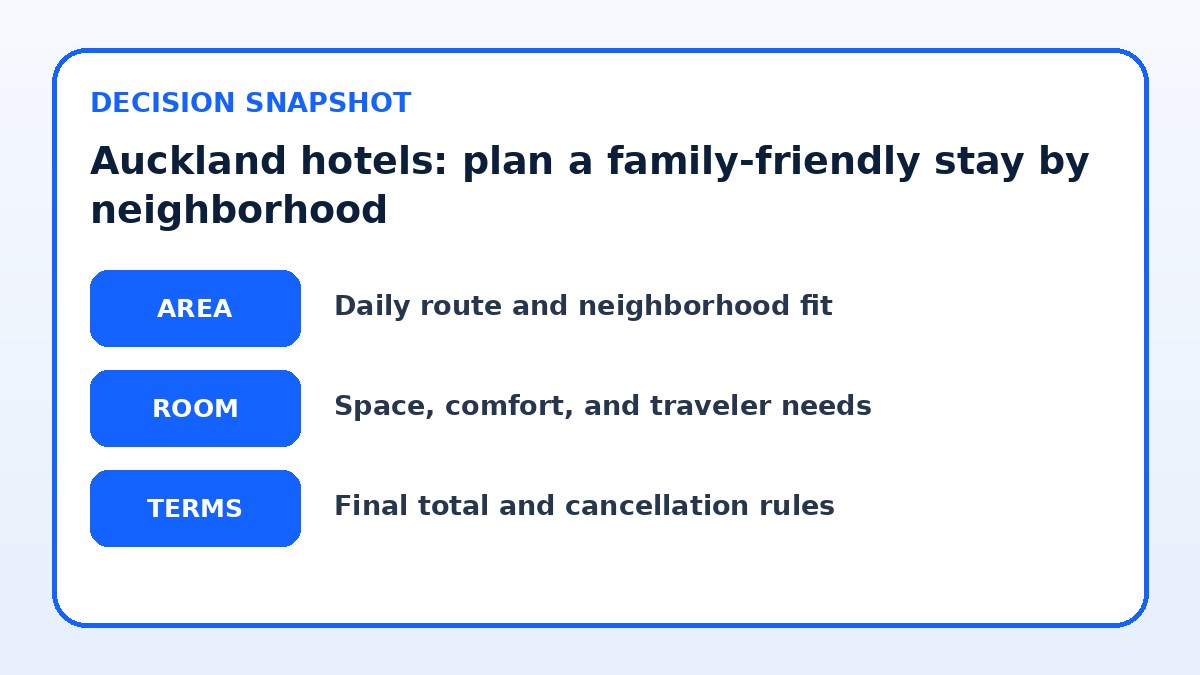
Calculate daily friction in minutes, not miles. A 20–30 minute trip to the aquarium from a waterfront hotel is very different in hassle than a 20–30 minute trip that requires two transfers and a long walk with bags or prams. Map your top three activities and test door-to-door routes from each candidate neighborhood at realistic times (morning and late afternoon). Factor in transfers, waiting time for buses or ferries, and uphill walks that tire small children. If driving, consider parking availability and likely congestion during peak hours; suburban hotels sometimes include parking while central hotels may charge or have limited spaces.
Also think about midday needs: where will you go if a child needs a nap away from the room, or if you need a quiet spot for changing diapers? Neighborhoods with small cafes, libraries, or indoor play spaces near the hotel reduce back-and-forth. If you plan day trips — Waiheke Island or Rotorua, for example — prioritize access to ferry terminals or easy parking for hired cars. Ultimately, reduce daily friction by favoring the neighborhood that minimizes the number of legs and transfers for your most frequent journeys.
Now compare like with like
Keep the same dates, guests, room needs, and cancellation preferences while you compare the final choices.
Room and party needs: layouts, beds, and extras
Room configuration is one of the most concrete decisions you can make before booking. For families, options to compare include interconnecting rooms, suites with separate living areas, and rooms with sofa beds or rollaway availability. Count beds and bathrooms relative to traveling party size; a single bathroom for a family of four can dominate mornings, so a two-bathroom suite or interconnecting rooms can be worth the extra space. Ask about exact bedding arrangements, whether cots are provided and how they are secured, and whether linen or bedding for extra beds is included.
Beyond sleeping, look at on-site amenities that reduce friction: a kitchenette or refrigerator for late-night snacks and baby food, laundry facilities for longer stays, and a pool or indoor play area to burn energy without leaving the property. Confirm whether pools have shallow areas suitable for toddlers and whether lifeguards are present or supervised swim sessions exist. When contacting properties, request floor-level options to avoid long elevator waits and ask about noise insulation if you have a light sleeper in the family.

Hotel booking check before payment
- Map door-to-door routes from the hotel to your three top activities, noting transfers and total travel time.
- Confirm exact room layout and bedding (interconnecting rooms, sofa bed, or two bathrooms) with the hotel before booking.
- Ask the hotel about child-age definitions, cot availability, and any fees for extra beds or cots.
- Verify parking arrangements and whether a space must be reserved or paid for separately.
- Check pool details: depth gradations, supervised times, and whether towels or life vests are provided.
- Save the hotel's cancellation policy and emergency contact info, and verify it on the property's booking page.
Final booking terms: what to verify before you reserve
Before you tap Reserve, verify specific booking terms that affect families. Confirm the property's policy on extra guests and the ages that define 'child' for complimentary stays versus paid occupancy. Ask about fees for cots, rollaway beds, and additional cleaning. If you need late check-in or early check-out, confirm whether there are fees or storage options for luggage. For parking, check whether secure on-site parking is included, requires a reservation, or is off-site; for guests arriving by ferry, confirm whether transport to and from terminals is offered or if a taxi is the only option.
Also review cancellation and rescheduling terms in case your travel plans change, and ask the property what proof or identification you might need at check-in with children. If you rely on airport shuttles or pickup services for convenience, verify schedules and costs directly with the hotel rather than assuming these are complimentary. Finally, when comparing live availability and current terms, you can check Trip.com as one comparison point, but always verify the final price, bed types, and policies on the hotel's own booking page before confirming.
Hotel Guide questions travelers ask
Which Auckland neighborhood minimizes walking with young children?
For minimal walking, the Viaduct Harbour and central city areas typically put you within short distances of attractions such as museums, some waterfront activities, and ferry terminals. These neighborhoods concentrate cafés, supermarkets, and family-friendly eateries so you can often walk between activities without long commutes. If you prefer flat, stroller-friendly promenades, look specifically for hotels advertising waterfront access and level sidewalks. Always check maps during your shortlist step to confirm sidewalks, crossings, and distances between your chosen hotel and the specific attractions you plan to visit.
Is it better to book a suite or two connecting rooms for a family of four?
The right choice depends on family routines and privacy needs. A single suite with a separate living area is often simpler for families who want shared evenings, easier supervision of children, and space for naps. Two connecting rooms work well if adults want private sleeping time or different bed types, and they reduce morning bottlenecks when multiple bathrooms are needed. Ask the hotel for floor plans and exact bed layouts, and confirm rollaway or sofa-bed dimensions so you can ensure sleeping arrangements are comfortable for everyone.
How should I evaluate transport for day trips from Auckland with kids?
Assess transport by the total door-to-door time and number of transfers rather than distance alone. For trips to nearby islands or coastal spots, proximity to ferry terminals matters; for inland day trips, ease of hiring a car and secure parking at your hotel can simplify logistics. If you prefer public transit, check whether your shortlisted neighborhood has frequent bus or train services at the times you plan to travel. Also factor in how easy it is to store strollers or extra gear on whatever transport you choose, and whether there are sheltered waiting areas near stops for rainy days.
Final decision note
Shortlisting an Auckland neighborhood before checking rooms turns booking from guesswork into a clear decision. Start by matching neighborhood energy to your family's daily rhythm: city centre for walkable access, suburbs for calm and parks, shore areas for beaches, or waterfront hotels for on-site amenities. Use daily-route testing, room-layout verification, and clear questions about cots, extra beds, and parking to separate contenders. Before you confirm, verify child policies, pool details, and cancellation rules on the property’s official booking page — and optionally compare live availability on Trip.com. With these steps you’ll be ready to pick an Auckland hotel that minimizes daily friction and keeps the whole family comfortable.
Continue planning
Check current options and final conditions
Use the provider page to confirm live availability, the final total, cancellation terms, and every condition that matters to your trip.
This evergreen planning guide was created with AI-assisted drafting and a structured quality review. It does not display live prices, schedules, availability, visa guidance, or provider rankings. Verify current details before booking. Some links are affiliate links; we may earn a commission at no additional cost to you.