Pick the neighbourhood first. For business travellers in London, the single most effective planning move is deciding which part of the city will reduce your daily friction — whether that’s being next to a client office, near a conference venue or close to a specific Tube or rail station. Once you have that neighbourhood set, you can evaluate room comfort and hotel features that matter for work: quiet rooms, reliable desks and stable Wi‑Fi. This article gives a short decision framework to shortlist an area, the tradeoffs between proximity and in-room comfort, how to think about daily routes and transportation contingencies, and the final booking checks you must do before confirming. By the end you should have one or two London districts to search and a clear list of hotel attributes to prioritise when comparing rooms.
Check live stays in the areas that fit
Use your dates and party size to compare current rooms after you narrow the neighborhood fit.
Neighbourhood fit: pick the base that matches your schedule
Decide where to base yourself by starting with the locations that matter most for the trip: client offices, conference halls, partner sites or frequently visited co‑working spaces. Look for a neighbourhood that gives straight or single‑change public transport to those points. For example, if your meetings are concentrated in the City of London, lodging in nearby areas like Barbican, Farringdon or Liverpool Street cuts walking and transfer time. If you’ll be crossing between the West End and King’s Cross, prioritise zones with good east‑west Tube connectivity to avoid long surface journeys during rush hour.
Also consider the practical services you rely on: 24‑hour convenience options, late‑night dining, business centres, and pharmacies within walking distance reduce disruption. Think about arrival and departure logistics — proximity to major rail terminals (Paddington, King’s Cross, Victoria) or direct airport transfers can be decisive if you move across London at odd hours. Finally, factor in personal preferences: quieter residential streets may cost minutes on the commute but can provide the restful environment needed after dense meeting days.
Choose an area-selection strategy
| Area approach | Best for | Tradeoff to check |
|---|---|---|
| Closest-to-office strategy | Single-site visits or when punctuality is critical | May limit evening options and offer smaller rooms for the same budget |
| Central-hub strategy | Multiple client locations across London | Can be busier and noisier; rooms may be pricier or smaller |
| Airport/train-proximity strategy | Early arrivals, late departures or frequent intercity travel | Longer in-city commutes could increase daily travel time |
| Quiet-residential strategy | Focused work time and restful evenings | Often adds commuting minutes to client sites or conferences |
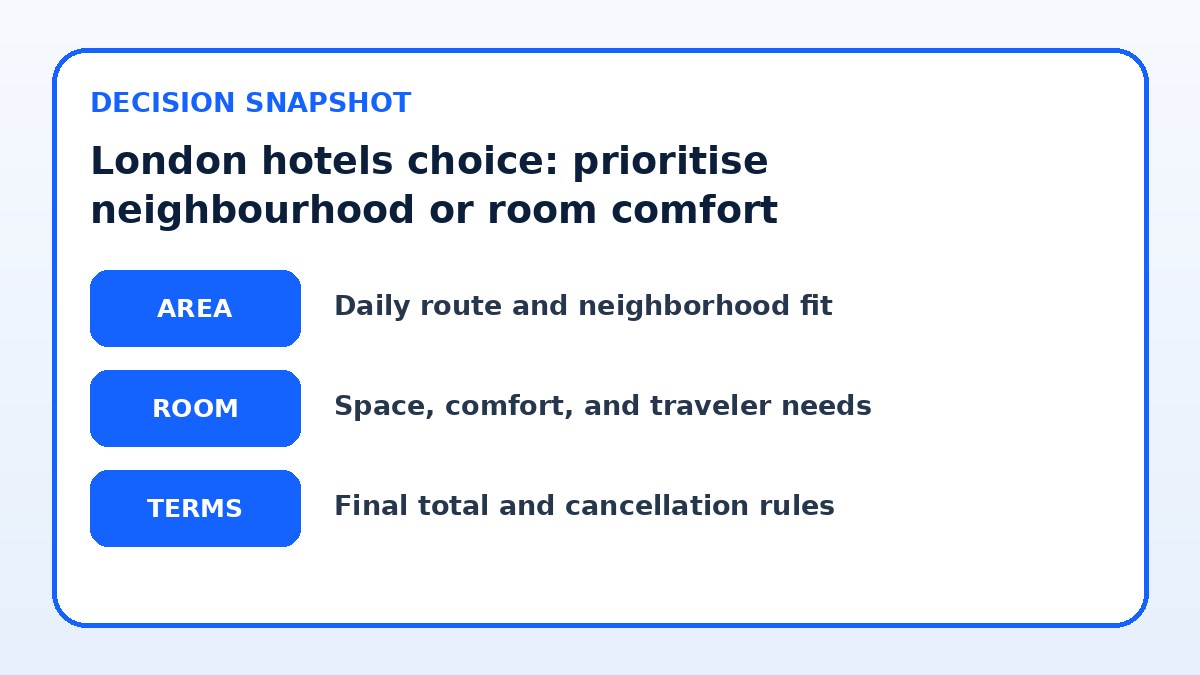
Daily-route friction: measure the real cost of location
Don’t rely on straight-line distance. Measure door‑to‑door time during the hours you’ll commute, including walking to the station, average Tube frequency at that hour, and typical interchange times. Using a transport app to simulate journeys at your meeting times reveals real friction: a 15‑minute Tube ride at off‑peak may become 30–40 minutes in morning rush with extra walking and interchange. Also think about the mental cost of repeated transfers — one-connection trips are often less draining than shorter but fragmented routes requiring multiple changes.
Build a simple daily schedule and test two or three candidate neighbourhoods against it. If most of your appointments are clustered in one area, a slightly longer but straightforward commute from a quieter neighbourhood might be preferable to a noisy central hotel with fragmented transit links. Conversely, if your day requires hopping between hotspots across the city, prioritise a central hub with frequent lines and minimal walking between platforms to keep time and stress down.
Now compare like with like
Keep the same dates, guests, room needs, and cancellation preferences while you compare the final choices.
Room and party needs: what the room must deliver for work
Once you’ve shortlisted a neighbourhood, change focus to the room. For business travellers, non-negotiables typically include a dedicated work surface with an ergonomic chair, reliable and fast Wi‑Fi (verify whether it’s free or paid), strong lighting, and sufficient power outlets near the desk and bedside. If you must host a small meeting in-room, check bed configuration and available seating or ask about small suites or executive rooms. For long evenings of work, request quiet rooms located away from lifts and service areas.
Consider party size and amenities: travelling alone on a short trip has different room needs than a two-person stay or bringing a colleague for an overnight review. If you expect to receive shipments or need printing, confirm hotel business services or nearby office shops. For longer stays, kitchenette options and laundry facilities can improve comfort. When evaluating room photos, look beyond staged images: read recent guest comments focusing on Wi‑Fi reliability, noise, and the actual size and usability of the desk.
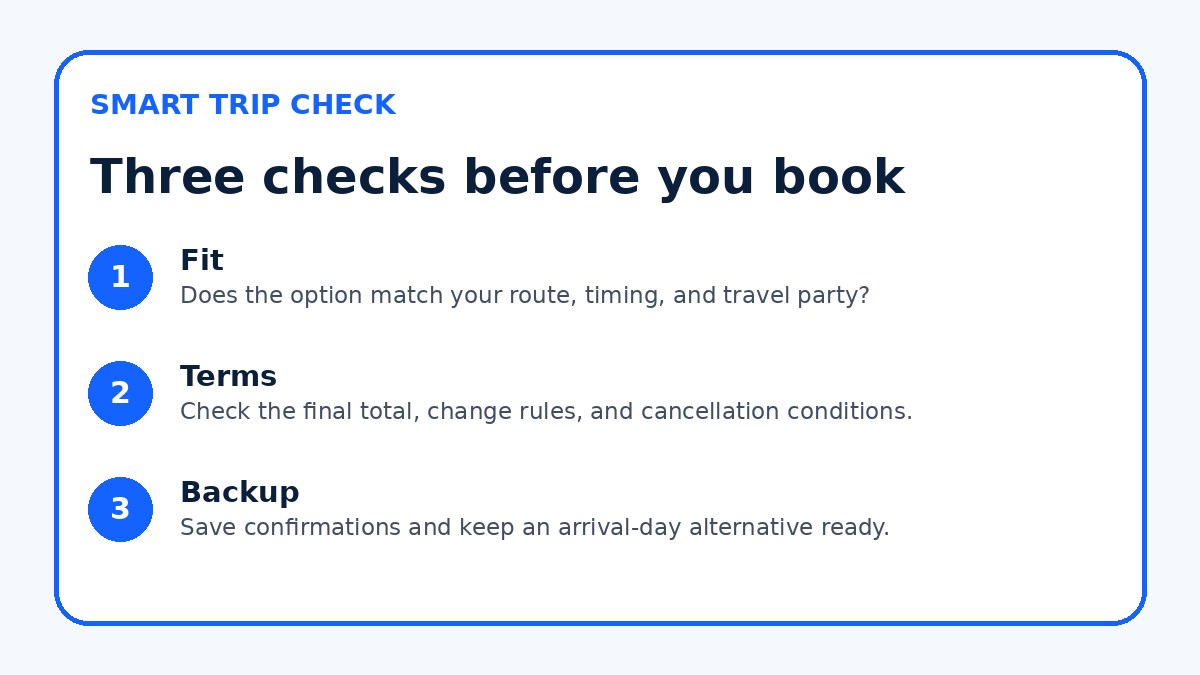
Hotel booking check before payment
- Map door‑to‑door commute times from each candidate neighbourhood to your top three destinations at the exact times you will travel.
- Confirm Wi‑Fi terms and speed on the hotel booking page or ask the hotel directly about business connectivity guarantees.
- Request a quiet room away from lifts, service areas and ice machines when you book, and note any room numbers to avoid.
- Verify cancellation, change and invoicing policies on the provider’s final booking page before entering payment details.
- Check whether breakfast, business lounge access or meeting‑room hire are included or require a fee; confirm if receipts reflect your company name.
- Save one backup hotel in a nearby district with similar transit access in case availability or timings change during booking.
Final booking terms: verify what matters before you commit
Before hitting reserve, confirm cancellation and change policies on the provider’s final booking page and check whether the hotel allows flexible check‑in or late arrivals — important if meeting times shift or travel is delayed. Verify what the stated Wi‑Fi policy actually includes (speed caps, number of devices, paid vs free) and whether breakfast or business lounge access is included when those amenities matter for client meetings or catching up on emails. If you use receipts for expense reporting, confirm the invoicing process and the name the hotel will show on your statement.
Also double‑check transport connections from the hotel to your key locations at the expected times of travel, and read recent guest notes about noise, elevator waits, and housekeeping schedules, since these operational details affect daily productivity. If you rely on particular facilities like a gym, meeting room hire, or late checkout, confirm availability and any extra fees directly with the hotel. Consider saving a backup option in a nearby neighbourhood in case timing or availability changes when you book.
Hotel Guide questions travelers ask
Should I prioritise being close to a Tube station or to the client office?
If most meetings sit in one area, being closest to the client office reduces last‑mile stress and walking time between back-to-back appointments. If your day includes multiple locations across different zones, prioritise proximity to a Tube or rail station with direct services that match your schedule. Test sample journeys for the hours you’ll travel; a short walk to a frequent direct line can be faster and less draining than a longer but closer walk to a line with poor connections.
How can I ensure the room is actually suitable for work before booking?
Look for explicit hotel descriptions that list a proper desk, ergonomic chair, power outlets near the workspace and business‑grade Wi‑Fi. Read recent guest comments for mentions of noise, desk usability and Wi‑Fi consistency. When in doubt, contact the hotel to request a room on a quiet floor and ask for confirmation about the desk setup and outlet placement; keep screenshots or written confirmations in case you need to reference them for special requests at check‑in.
What if my meetings move around after I book — how flexible should my reservation be?
Choose a booking with flexible cancellation or amendment options if your itinerary is likely to change; verify the exact conditions on the booking page since policies differ by rate and provider. If flexibility costs significantly more, weigh that against the potential cost of rescheduling clients or changing hotels mid‑trip. As a practical compromise, select a rate that allows at least moderate changes and keep a shortlist of nearby hotels you can switch to quickly if meeting locations shift.
Final decision note
Successful London hotel choices for business travelers begin with a neighbourhood decision tied to your actual daily itinerary. Once you’ve selected the base that minimises commute friction, evaluate rooms for work essentials — a proper desk, reliable Wi‑Fi and quiet placement — and confirm operational details on the hotel’s booking page. Use the comparison approaches to match priorities: be closest to the office when punctuality is critical, choose a central hub for multi‑site days, favour transport hubs for arrival efficiency, or pick quiet residential streets for rest. Shortlist one or two districts, then compare room attributes and booking terms before committing. For live availability, you can compare options on Trip.com or the hotel’s site, but always verify the final policies and amenities on the provider’s confirmation page.
Continue planning
Check current options and final conditions
Use the provider page to confirm live availability, the final total, cancellation terms, and every condition that matters to your trip.
This evergreen planning guide was created with AI-assisted drafting and a structured quality review. It does not display live prices, schedules, availability, visa guidance, or provider rankings. Verify current details before booking. Some links are affiliate links; we may earn a commission at no additional cost to you.