Choose the area first, then the hotel. For a short solo trip to Tokyo you want a base that minimizes wasted transit time, keeps late-evening options safe and walkable, and matches the one-person room type you actually use. Prioritize neighborhoods near a major train or subway hub that connect cleanly to the attractions you plan to visit — museums, a single business center, or nightlife — and make walking, convenience stores, and late check-in straightforward. This piece gives a quick recommendation up front, then unpacks the tradeoffs by neighborhood fit, how routes affect daily friction, what room features matter for solo travelers, and the final booking terms to verify before you hit reserve. By the end you’ll be able to shortlist one or two Tokyo areas and know exactly what to check on the hotel’s booking page and the transport apps you’ll rely on.
Check live stays in the areas that fit
Use your dates and party size to compare current rooms after you narrow the neighborhood fit.
Neighborhood fit: match your plan to a compact area
Start by deciding what you will do most: museum and shrine hopping, a concentrated business meeting, nightlife and dining, or a bit of everything. If your days will cluster around a single district — for example, business meetings in a Marunouchi office cluster, museums in Ueno, or evening bars in Shibuya — pick a neighborhood that puts those activities within a single direct train or a short taxi ride. That saves hours otherwise eaten by transfers on Tokyo’s dense but sprawling network.
Also think about the micro-feel of a neighborhood at night. Solo travelers often prefer areas with steady foot traffic and multiple convenience stores, restaurants, and late-opening izakaya for safety and ease. Quiet residential pockets near a hub can be cheaper but mean a longer walk when arriving late; busier hubs offer more options but less serenity. Balance convenience and comfort by choosing an area that suits your arrival and nightly rhythm.
Choose an area-selection strategy
| Area approach | Best for | Tradeoff to check |
|---|---|---|
| Base near a major transfer hub (Shinjuku, Tokyo Station) | Minimizing transfers and quick access to many lines | Crowds, more noise, and often longer walks from platforms to exits |
| Base in a quieter neighborhood near one line (Daikanyama, Kagurazaka) | Relaxed evenings and a more local feel | More transfers if your plans span several distant areas |
| Base close to museums and parks (Ueno, Asakusa) | Cultural days with short daytime walks | Limited late‑night dining and fewer direct links to some business districts |
| Base near business districts (Marunouchi, Shinbashi) | Convenient for meetings and short business trips | Quieter nights and fewer casual evening options for solo socializing |
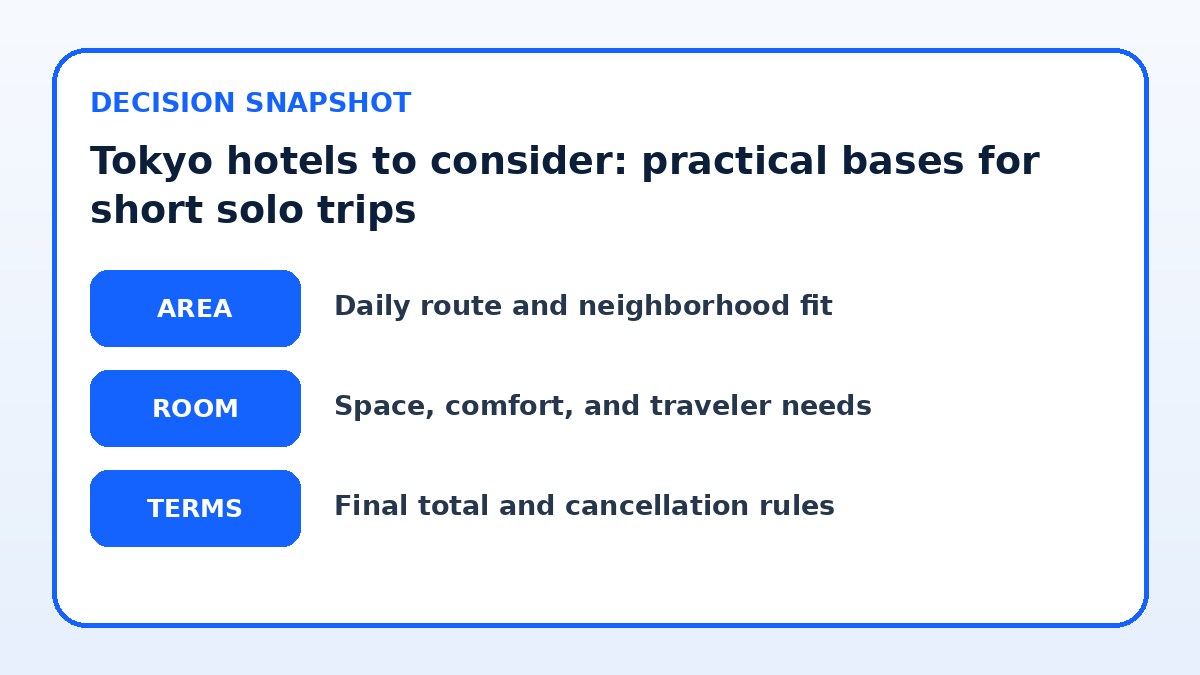
Daily-route friction: how transfers shape your day
Tokyo’s public transport is fast but can become friction if you must change multiple lines each day. Count transfers between your hotel and the top two or three places you plan to visit; aim for zero or one transfer for most daily routes on a short trip. Staying near a major interchange (Shinjuku, Tokyo Station, Ueno, Ikebukuro) often reduces transfers, but remember those hubs can mean crowds and longer walks from platforms to street exits.
Also review platform-to-exit distances and whether your likely routes involve long corridor walks or multiple station levels. If you’ll be carrying luggage or returning late, prefer stations with simpler layouts or a short, well‑lit walk to the hotel. Use a transit app to map door-to-door times at your typical travel hours — morning rush, midday, and late evening — so you can compare the lived experience, not just theoretical speed.
Now compare like with like
Keep the same dates, guests, room needs, and cancellation preferences while you compare the final choices.
Room and party needs: what solo travelers actually use
A single traveler rarely needs a large suite, but comfort and function matter. Look for rooms with a comfortable bed, adequate workspace if you’ll use a laptop, good blackout curtains for jet-lagged naps, and reliable wi‑fi. Consider bathrooms: many solo travelers prefer a private bath, but if your stay is short and you mostly sightsee, a clean compact bathroom is acceptable; ensure ventilation and realistic expectations about compact Japanese layouts.
Other practical details: luggage storage policy, late check-in flexibility, and onsite vending or breakfast options will affect your day. If you plan evening exploring, check whether the hotel offers 24-hour reception or a practical late check-in window. If you rely on laundry during a short stay, confirm whether there is a coin‑laundry or nearby laundromat, or whether same-day laundry service exists — verify these on the property’s booking page.
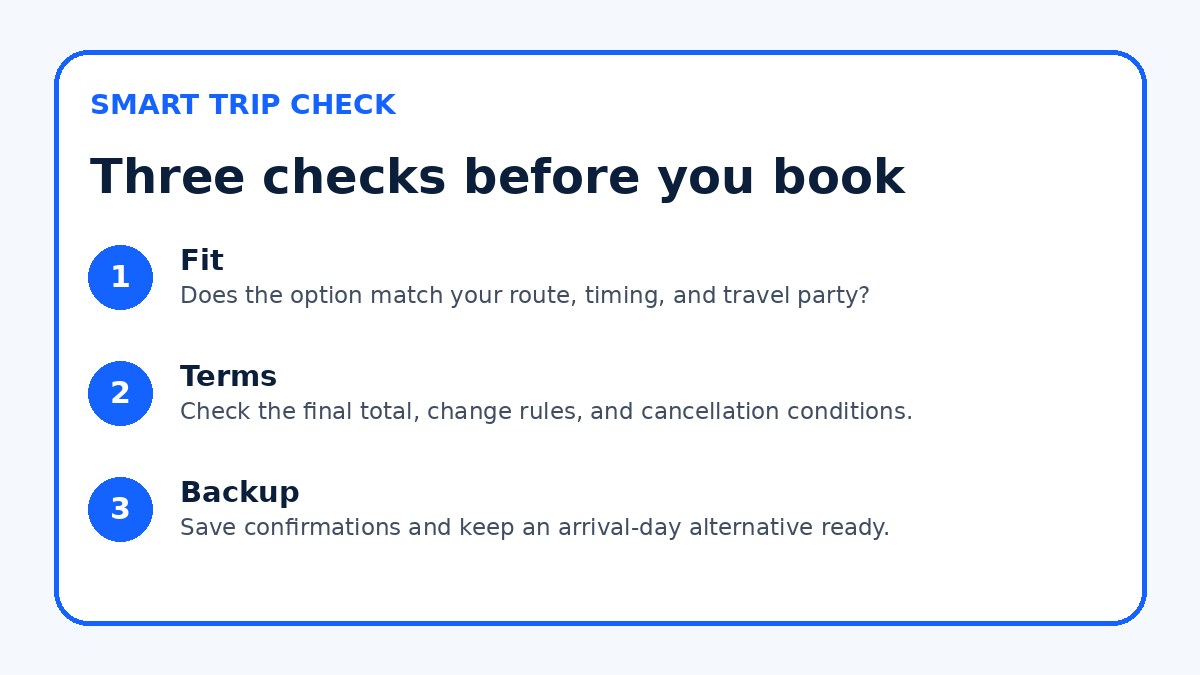
Hotel booking check before payment
- Map door‑to‑door travel time from your hotel candidate to your top three planned stops at morning, midday, and late evening using a transit app.
- Confirm the official nearest station and recommended exit on the hotel’s booking page, then plan the walking route and check for elevators if you have heavy luggage.
- Verify check‑in window and late arrival policy; request clear arrival instructions from the property if you expect to arrive after 22:00.
- Check cancellation, prepayment, and refund rules on both the booking platform and the hotel’s own page before giving payment details.
- Confirm luggage storage policy for early arrival and late departure, and check availability of washing options if you need clothes care during a short stay.
- Look for room photos that clearly show desk space, power outlets, and bathroom layout; if photos are unclear, message the property with specific questions.
Final booking terms: what to verify before you reserve
Before you finalize your reservation, check cancellation and payment rules clearly on the hotel’s booking page, including any prepayment requirements or non‑refundable conditions. Verify your arrival check‑in window and how the hotel handles late arrivals; if you arrive by Narita or Haneda late at night, confirm a straightforward route from the airport to the hotel and whether the property can provide clear arrival instructions.
Also inspect what is actually included: wi‑fi speed or whether there is a fee, breakfast availability, and luggage hold policy for early arrival or late departure. When finalizing, compare the property’s listed nearest station plus the station exit to use; sometimes the shortest walk uses a specific exit. If you want, use Trip.com or another booking site to compare availability and terms, but always confirm the hotel’s own page for the most current rules.
Hotel Guide questions travelers ask
Which Tokyo neighborhood is easiest for a one‑night solo stay when I arrive late at night?
For a one‑night solo arrival, prioritize a hotel near a major rail or airport transfer hub with clear late‑night access. Stations like Shinjuku and Tokyo Station have many late transport options and plentiful taxis, which reduces the risk of long waits or complicated transfers. Choose a hotel that lists 24‑hour reception or a specific late check‑in procedure on its booking page, and confirm the walk from the recommended exit; if the hotel requires key collection at a kiosk or partner property after hours, verify those instructions before you travel.
How should I balance price against convenience for a short solo Tokyo stay?
For short trips the value of saved time usually outweighs small price differences. A slightly higher nightly rate near a major station can save taxi or transfer time and give you more usable hours. Decide how many hours you want to reclaim each day and estimate the time cost of cheaper but more remote options. Check cancellation flexibility too: a refundable or flexible rate may be worth paying more for a short trip, since it reduces stress if plans shift.
What room features are most important for a solo traveler who plans to work a few hours each day?
Prioritize a stable wi‑fi connection, a comfortable desk or table, and reachable power outlets near the workspace and bed. A quiet room with decent soundproofing matters for calls; request a room away from elevators, street-facing sides, or communal spaces. If the hotel’s photos don’t clarify workspace suitability, ask for specifics — table dimensions, chair comfort, and whether wired ethernet is available. Confirm wi‑fi terms and speed on the booking page and consider booking a business‑class single room if available.
Final decision note
A short solo trip to Tokyo becomes far easier once you choose the right neighborhood before hunting specific hotels. Start by matching the area to your plan — cultural cluster, business hub, or nightlife — and prefer locations that cut transfers and offer walkable evening options. Then judge rooms on practical solo needs: a functional workspace, secure luggage storage, reliable wi‑fi, and clear late check‑in. Finally, verify cancellation, payment rules, and the exact station exit on the property’s booking page; these small checks prevent common friction on short stays. With a neighborhood shortlisted and a checklist completed, you’ll be ready to compare live availability, confirm terms, and book a hotel that lets you spend most of your short Tokyo visit doing what you came to do.
Continue planning
Check current options and final conditions
Use the provider page to confirm live availability, the final total, cancellation terms, and every condition that matters to your trip.
This evergreen planning guide was created with AI-assisted drafting and a structured quality review. It does not display live prices, schedules, availability, visa guidance, or provider rankings. Verify current details before booking. Some links are affiliate links; we may earn a commission at no additional cost to you.