When your plane touches down in Lisbon, the first decision is swift and practical: do you head into the city on public transport or wait for a private vehicle? For business travelers the choice usually hangs on four things you’ll feel immediately after landing—how much luggage and how many people you have, whether your arrival is on time or disrupted, how clear your meeting point will be, and whether your final destination is easy to reach by rail or road. This guide gives the direct answer up front: choose private transfer when punctuality, door-to-door convenience, and luggage handling are the priority; choose public transit when you need the lowest-hassle cost, more flexible routing around traffic, or are traveling light and on a familiar schedule. Below you’ll find the decision criteria, practical tradeoffs, and the exact checks to run while you still have your flight and accommodation reservations open.
Check options for your arrival details
Use your flight, luggage, party size, and accommodation address to compare current choices.
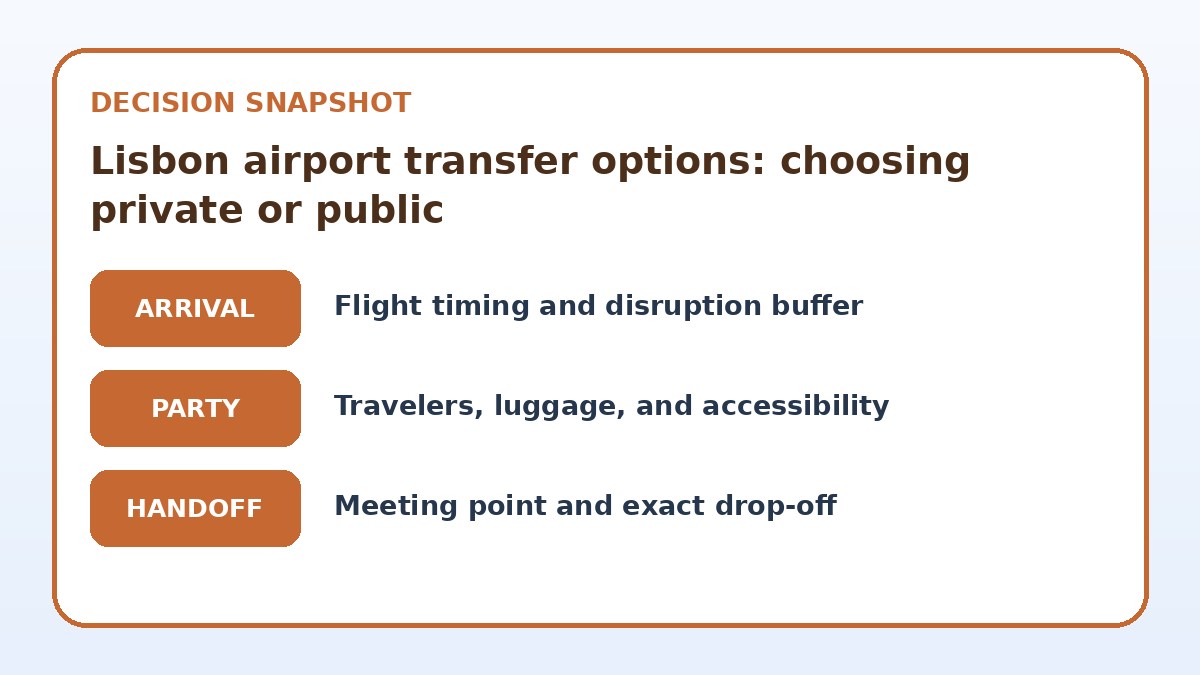
Luggage and party size: match vehicle to load
Count bags and people before you commit. A standard public metro or bus ride handles one or two cabin bags easily, but larger suitcases and multiple passengers add transfers, stairs and cramped spaces that cost time and energy. If your group is two or more professionals with heavy cases, a private car saves repeated lifts and reduces time spent moving between modes. Also consider secure, weather-protected loading: a private vehicle lets you supervise luggage loading and keeps documents or gear at hand during the short drive.
That said, a single traveler with minimal luggage often finds public transport faster to a central location during peak hours because metros and express buses can bypass road traffic. If you plan to arrive, drop off luggage at a hotel and immediately head to a nearby meeting, a quick metro ride to a central stop then a short taxi or ride-hail leg may be the most efficient. Before deciding, check whether your accommodation has luggage storage for early arrivals; that changes the balance toward public options.
Arrival details to have ready
- Confirm your flight number and check whether the transfer provider monitors flight arrivals automatically.
- List each traveler’s luggage pieces and measure oversized items to ensure the chosen vehicle has space.
- Check arrival-time service levels: night/early-morning arrivals and weekend schedules for public transit.
- Verify the private provider’s waiting time, delay policy, and how they communicate pickup instructions.
- Find the exact address and preferred drop-off point at your hotel or office and confirm vehicle access.
- Save local taxi numbers or a ride-hail app and keep a backup booking window in case the primary option fails.
Late or disrupted arrivals: who absorbs delay risk
Flights are delayed occasionally, and business travelers need a clear fallback. Private transfers typically offer waiting time allowances and a single point of contact if your flight is late, but policies and grace periods vary—so verify the provider’s flight-monitoring and delay rules on their booking page. If a driver meets you and waits, you avoid the hassle of negotiating local taxis after a long day. On the other hand, if your provider charges steep overtime or requires a strict rebooking for long delays, the convenience could become costly.
Public transport removes the dependence on a reserved pickup time: metros and many suburban rail services keep running and you can adapt to delays without extra fees. However, late-night or severely disrupted arrivals may face reduced schedules or no direct service, forcing a taxi or paid transfer at the station. Use your airline’s and transport operator’s timetables to check late-evening service patterns, and have a backup plan (a ride-hail app or pre-saved taxi number) ready if you arrive outside regular operating hours.
Match the transfer to your arrival
| Arrival approach | Best for | Detail to verify |
|---|---|---|
| Pre-booked private transfer | Teams, heavy luggage, tight schedules, straightforward door-to-door needs | More expensive than public options and dependent on provider delay policies |
| Taxi or ride-hail from arrivals | Flexible travelers who want immediate departure without advance booking | Variable wait times, surge pricing risk, and variable meeting-point clarity |
| Metro or suburban rail plus short taxi | Solo travelers with light bags and trips to central Lisbon locations | Requires navigation and potentially a final taxi or walk to your exact address |
| Airport express bus or shuttle | Cost-conscious travelers with predictable routes and stops near their destination | Less flexible schedules and possible longer door-to-door time due to multiple stops |
Make the meeting plan clear
Check the final pickup instructions, waiting conditions, and exact drop-off coverage.
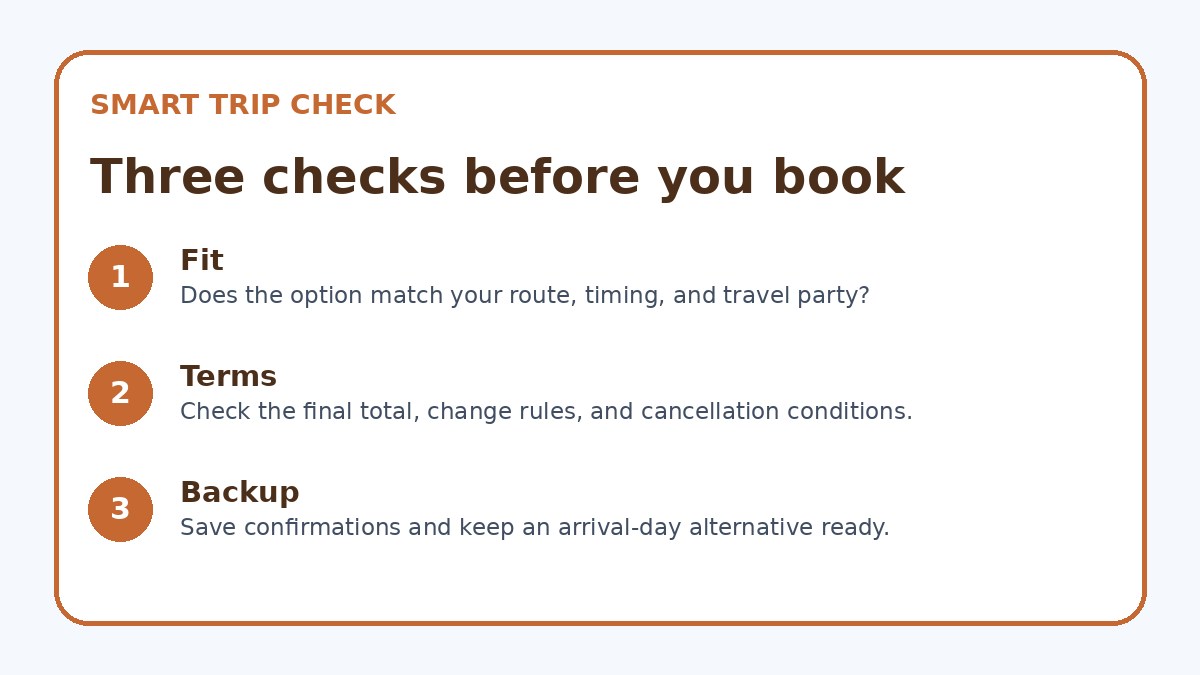
Meeting-point clarity: reduce handoff friction
Business travelers often need crisp, reliable meeting points to avoid wasted minutes. Private transfers give specific instructions: a driver waits at the arrivals hall or an agreed exit with a name board. That clarity matters for small teams with tight schedules or when arriving at busy times. Still, read the provider’s pickup instructions carefully and confirm how they handle missed pickups; if directions are vague, a promised private pickup can turn into a frustrating search through crowds.
Public transport requires fewer handoffs but more navigation: you will follow signs to buses, metro lines or train platforms and find the appropriate exit at your destination. If your schedule includes a colleague meeting you at a station or your hotel lobby, public arrival may be simple. For new arrivals unfamiliar with Lisbon’s airport layout or who want a guaranteed handoff to a chauffeur, the private option reduces the risk of miscommunication and the small but real cost of being late to a meeting.
Destination-side drop-off fit: door-to-door vs nearest stop
Consider where you need to end up. Many hotels and downtown offices are tucked into streets with limited vehicle access or pedestrian-only zones, where a driver may only drop you at the nearest legal stopping point. Ask the transfer provider whether they can drop directly at your entrance or only at a nearby curb; knowing this helps compare door-to-door convenience against public transit plus a short walk. If meeting locations require building security checks or passage through a lobby, a private driver can often remain nearby while you complete formalities.
Public transport often deposits you at a transit stop that may be a short walk or a final-mile taxi away. If your meeting is in a business park or a district poorly served by metro, the final connection can add complexity and time. Balance the predictability and privacy of a private drop against the flexibility and sometimes faster central access of Lisbon’s metro and suburban rail network. If you are booking ground transport for multiple stops during a day, calculate cumulative transfer times rather than single-leg convenience.
Airport Transfer & Local Mobility questions travelers ask
Should I pre-book a private transfer for a morning meeting in Lisbon?
If your morning meeting has little margin for lateness, pre-booking a private transfer reduces uncertainty because a driver will expect you and can monitor flight delays. Before you book, confirm the provider’s policy for flight delays, waiting time included in the price, and where the driver will meet you in the arrivals area. If you’re traveling light, departing from a central station by metro may be equally punctual, but it requires navigating the airport and making the final short connection to your meeting address.
Is public transport in Lisbon easy to use with business luggage?
Lisbon’s metro and many buses are walkable with typical business luggage, but transfers, stairs and crowded peak periods increase friction. Check whether your arrival station has lifts or escalators and whether the final stop is within a short walk of your hotel or office. For single travelers with small roller bags, public transit is often efficient. For groups, multiple large suitcases, or when you must avoid walking between stops, a private vehicle or taxi will usually be less stressful.
What should I verify on a private transfer booking page before paying?
Look for explicit details: flight-monitoring inclusion, waiting-time allowances and fees for extra waiting, driver contact method, pickup location inside or outside arrivals, cancellation and amendment terms, and whether the price covers tolls or parking. If the supplier lists restricted drop-off locations or pedestrian-only zones, ask how final delivery to a door will work. If you prefer, compare current availability on a platform like Trip.com, but always verify those specific operational terms on the provider’s final booking confirmation page.
Final decision note
For business travelers deciding between public and private Lisbon airport transfer options, the right choice depends on luggage, party size, arrival reliability, and where you must be after landing. Private transfers buy you a single point of contact, clearer handoffs and often easier luggage handling—valuable when punctuality and comfort matter most. Public transit can be faster, cheaper and more flexible for solo travelers with light bags going to central locations, but requires navigation and an allowance for final-mile connections. Use the checklist above while you have flight and hotel details open, verify provider delay and pickup rules, and keep a backup plan for late or off-schedule arrivals.
Continue planning
Check current options and final conditions
Use the provider page to confirm live availability, the final total, cancellation terms, and every condition that matters to your trip.
This evergreen planning guide was created with AI-assisted drafting and a structured quality review. It does not display live prices, schedules, availability, visa guidance, or provider rankings. Verify current details before booking. Some links are affiliate links; we may earn a commission at no additional cost to you.