If your trip to Bangkok includes extra suitcases, sporting equipment, or bulky shopping, driving might seem convenient—but only if fuel and mileage rules don’t turn convenience into costly surprises. The practical answer: consider renting only if your route needs (multiple suburban drop-offs, early/late airport transfers, or island-day trips) clearly outweigh taxi/ride-hail convenience and storage limits. Before you book, confirm three things on the rental page: how fuel is charged (full-to-full, prepaid, or refuel fee), the included mileage and overage rate, and any special allowances for oversized luggage or roof boxes. Also check the insurer’s wording about coverage when cargo blocks visibility or exceeds stated capacity. If these terms are unclear or add substantial extra fees, you’ll usually be better off relying on taxis, van transfers, or luggage-friendly shuttle services inside Bangkok.

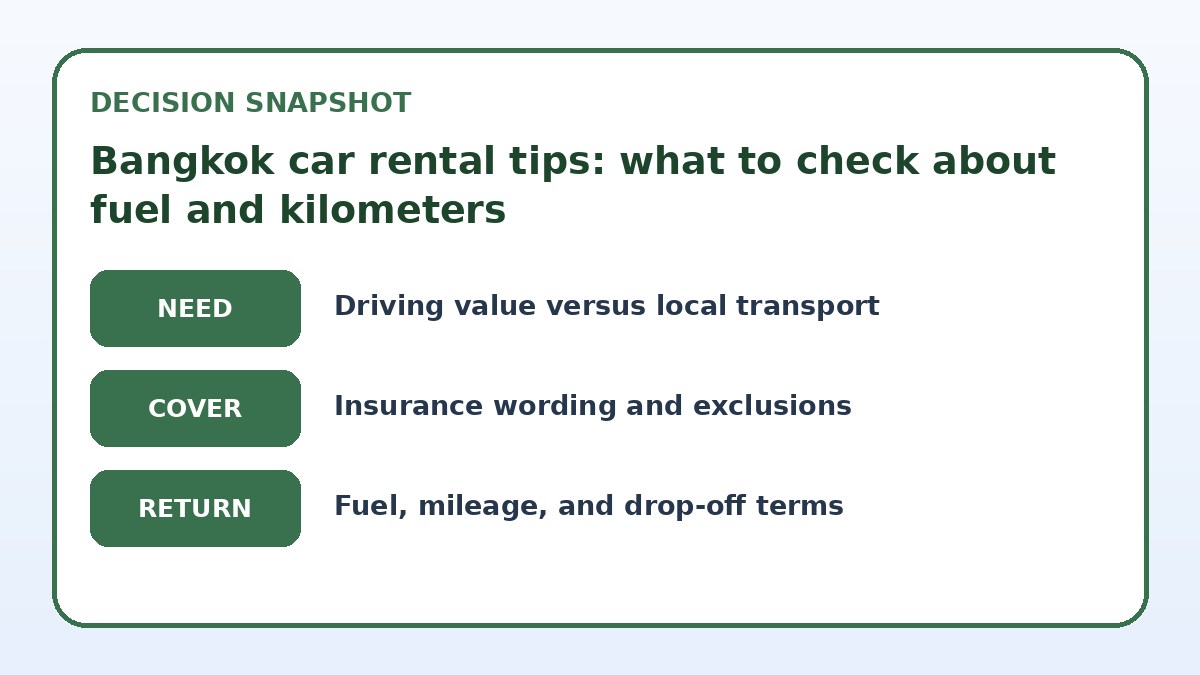
Decide if driving truly improves your Bangkok trip
Start by mapping your realistic travel pattern in Bangkok and surrounding provinces: where you’ll pick up and drop off luggage, how often you’ll stop, and whether you’re crossing to non-urban areas. Driving makes the most sense when you need multiple independent stops outside central Bangkok—temples or markets with bulk purchases, day trips with bulky gear, or onward overland journeys to Kanchanaburi or Hua Hin where public transport is infrequent. If your plan is mostly within central districts with narrow streets and heavy traffic, the time and stress of parking plus fuel and mileage costs often outweigh the convenience.
Factor luggage handling into the route value: a compact sedan might suit two large suitcases, while surfboards, golf bags, or multiple suitcases may require an estate, SUV, or rooftop carrier. Larger vehicles increase fuel consumption and may carry higher insurance deductibles or require special disclosure. Crunch the numbers comparing estimated rental plus fuel and overage fees against repeated taxi or van transfers; include the intangible costs—traffic delays, parking fees, and navigating Bangkok’s one-way streets. If the rental’s fuel and mileage terms look restrictive or expensive, treat driving as a flexible option rather than a necessity.
Decide whether driving earns its place
| Mobility strategy | Best for | Cost or friction to check |
|---|---|---|
| Rent a car for the whole trip | Multiple suburban stops and onward road legs with bulky gear | Higher fuel use, parking hassle, and risk of mileage overage or refueling charges if not managed |
| Short-term rental only for bulky legs | Using a car just for specific day trips or intercity segments where luggage is needed | Extra pickup/return time and possible one-way fees; needs careful scheduling and fuel checks |
| Taxi/ride-hail and luggage-friendly airport transfer | Mostly inner-city travel with occasional bulky items or single large airport transfer | Potentially higher per-trip fares for oversized items but no mileage or fuel management responsibility |
| Private van or shuttle services | Groups with many large bags or equipment moving between cities or to resorts | Less flexibility on timing and routes; must confirm baggage size limits and extra-cost items |
Check live rental choices only after the route test
Use the exact driver, dates, pickup point, and return plan to compare current conditions.
What to verify about fuel policies and refueling fees
Fuel policy language varies and matters. On the final booking page and rental agreement look for explicit terms: full-to-full (you return with a full tank), prepaid fuel (often nonrefundable), or charged-at-return (supplier refuels at an administrative rate). If the supplier charges a refueling administrative fee, verify the per-liter or percentage markup used to calculate the charge. Also check whether the policy tolerates partial fills, whether showing proof of refueling is required, and how disputes are handled.
For travelers with heavy luggage, remember the fuel consumption effect: heavier loads and roof-mounted carriers raise fuel use, which can amplify costs under prepaid or charged-at-return arrangements. Ask whether the quoted fuel cost assumes normal load and driving conditions. If the provider allows return of the car at different locations, confirm the fuel policy still applies the same way—different return branches can sometimes apply different handling or fees. When in doubt, request the exact contract clause or screenshot from the booking page before you finalize.

Compare the full rental conditions
Confirm insurance wording, exclusions, deposit, fuel, mileage, and return terms on the final page.
Mileage caps, overage charges, and how they affect bulky-luggage trips
Mileage rules come in three common forms: unlimited miles, a daily kilometer allowance, or a total-trip cap. For trips with extra luggage you may be tempted to detour or explore further; if the rental uses a capped allowance, calculate your planned kilometers plus a buffer for congestion detours and wrong turns. On the final booking screen and the rental contract, note the allowed kilometers per day or per rental and the specified per-kilometer overage fee. Compare that per-km fee to likely taxi or minivan rates so you can decide whether a rental still saves time or money.
Also check whether cross-province or border travel is permitted under the mileage and insurance terms. Some suppliers restrict distance from urban centers or require notification for long trips and charge extra for extended-use. For heavy luggage that might require slower speeds or longer routes, extra kilometers can accumulate quickly. If the overage rate is high or the agreement lacks clarity, plan a mixed approach: book a rental for only the legs that truly need it and use taxis or private transfers for intra-city travel.
Car rental terms to verify
- On the rental provider’s final booking page, screenshot and note the exact fuel policy phrase (full-to-full, prepaid, or charged-at-return).
- Confirm the included mileage limit and calculate expected kilometers plus a 10–20% buffer to estimate overage exposure.
- Ask the supplier in writing whether rooftop carriers, surfboards, or golf bags need special disclosure and whether they affect insurance coverage.
- Check the pickup and return locations and hours, and confirm whether after-hours drop incurs a handling or refueling fee.
- Read the insurance exclusions for cargo-related claims and record the deductible amount you would pay for damage involving luggage.
- Compare the total estimated cost (rental, fuel, overage, insurance, and any bag fees) to taxi/van transfer quotes for your exact route.
Insurance wording, pickup/return friction, and a non-driving fallback
Insurance wording is where many surprises hide. Check whether the policy excludes damage caused by overloaded cargo, unsecured rooftop racks, or items obstructing rear visibility. Note the excess/deductible amounts and whether collision damage waiver (CDW) or theft protection is included or optional. If you buy additional cover, confirm it explicitly references baggage-related incidents and denies no cover when luggage shifts and damages bumpers, doors, or roof racks. Always screenshot the insurance summary on the booking page and save it until the car is returned.
Pickup and return friction also matters more with extra luggage: look at airport pickup logistics, shuttle wait times, and whether the supplier loads luggage for you or expects self-service at curbside. Verify where fuel returns are accepted and whether after-hours drop-off triggers an extra handling fee. If the rental terms or operational details are messy, or if insurance excludes luggage-related damage, consider the non-driving fallback: book door-to-door airport or hotel transfers, luggage-friendly taxis, or private vans that specialize in bulky items. Trip.com can be used to compare current transfer availability and supplier pages, but always read the provider’s final booking terms yourself.
Car Rental & Road Trip questions travelers ask
Will extra luggage increase fuel costs and how should I plan for it?
Yes, heavier loads and rooftop carriers increase fuel consumption, so estimate higher fuel use when comparing options. On the rental page, check whether fuel is prepaid or charged on return and whether administrative refuel fees apply; if fuel is prepaid and you return part-empty you usually forfeit remaining credit. For full-to-full policies, budget extra for the final fill-up based on heavier consumption. When possible, avoid rooftop carriers unless necessary because they add aerodynamic drag and often attract extra surcharges or insurer exclusions—verify any mention of rooftop gear on the provider’s terms before booking.
How do mileage limits work and when is unlimited mileage essential?
Mileage limits are either daily or total for the rental period; exceeding them triggers per-km charges stated in the contract. Unlimited mileage is useful if your plan includes long day trips or uncertain routing, reducing the risk of surprise bills. If unlimited isn’t offered, calculate your planned route distance using mapping tools, add a buffer for detours, and multiply by the supplier’s overage rate to see if the rental remains cost-effective. Always confirm the exact kilometer allowance and overage fee on the provider’s final booking page before committing.
Can luggage-related damage be excluded from standard insurance?
Yes—some insurers explicitly exclude claims where cargo was improperly secured, overloaded, or caused visibility obstruction. The rental contract or insurance summary will list exclusions and the deductible you’d owe for covered damage. If you plan to transport bulky items, request written confirmation that those items are covered or buy supplemental protection that mentions cargo incidents. Save screenshots of the insurance wording from the booking page and bring them when you pick up the vehicle; if the wording is ambiguous, ask for a clarified clause in writing before you sign.
Final decision note
For travelers with extra luggage in Bangkok, a rental car can be worthwhile but only with careful checks on fuel policy, mileage allowances, and insurance wording. Start by asking whether driving materially shortens or simplifies your itinerary compared with taxis or private transfers; if it does, request exact contract language on fuel charging, per-kilometer overages, and cargo-related insurance exclusions on the booking page before you finalize. If terms are unclear, expensive, or place heavy liability on you for luggage incidents, prefer short-term rentals for specific legs or book luggage-friendly transfers and vans. These steps minimize unexpected fees and keep your trip focused on travel, not damage claims or refueling disputes.
Continue planning
Check current options and final conditions
Use the provider page to confirm live availability, the final total, cancellation terms, and every condition that matters to your trip.
This evergreen planning guide was created with AI-assisted drafting and a structured quality review. It does not display live prices, schedules, availability, visa guidance, or provider rankings. Verify current details before booking. Some links are affiliate links; we may earn a commission at no additional cost to you.