For couples deciding how to get from Seoul to Gyeongju, the practical choice comes down to how each option fits your day, luggage, and comfort preferences — not just travel time. Start by choosing between KTX/high-speed rail, intercity express trains, express coaches (long‑distance buses) or a combined approach that uses Seoul metro or airport links to reach the longer-distance terminal. Think in terms of end-to-end travel: how you get to the departure point in Seoul, how you move from the arrival station in Gyeongju to your hotel, and where luggage or a disrupted connection could add stress. This article lays out the station and terminal fit for couples, explains luggage and transfer friction, highlights timing flexibility, and gives a realistic disruption backup so you can book with confidence and focus on enjoying time together rather than logistics.
Choosing the mode: rail, coach, or a mixed plan
Start by matching your priorities. If minimizing the number of transfers and walking with luggage is the main goal, pick services that leave from central Seoul terminals and arrive in central Gyeongju, so a short taxi or local bus completes the journey. Couples who value comfort and a faster on‑the‑move experience may lean toward high‑speed or intercity trains, which typically provide more consistent ride quality. If budget and fewer intermediate transfers inside Seoul matter more, long‑distance express coaches that depart from a single bus terminal can be simpler despite longer road travel time.
Consider a mixed plan if you want flexibility: take Seoul metro or an airport link to a main departure station, ride a train or coach to Gyeongju, then use local transport to reach your accommodation. The mixed approach is useful when your Seoul hotel is far from the main long‑distance terminal or when evening arrival times narrow options for onward public transport. When comparing, list every leg — home to station, station to ride, arrival to hotel — and pick the option with the fewest friction points for both of you.
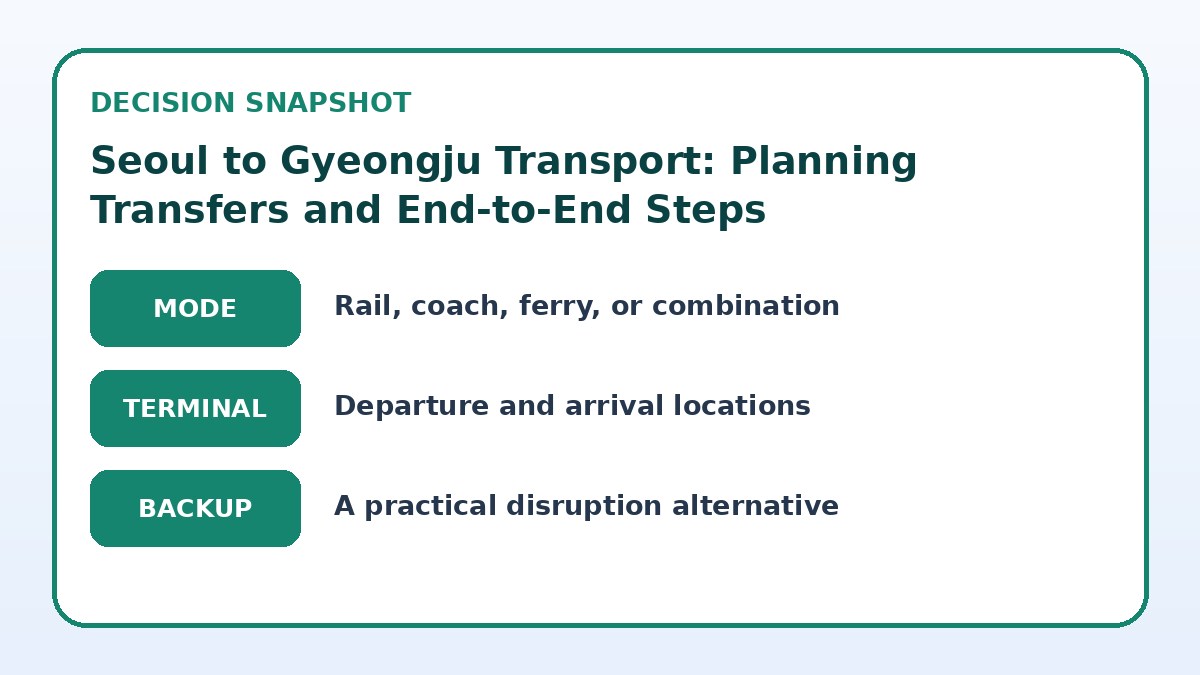
Choose the end-to-end journey plan
| Journey approach | Best for | Friction to check |
|---|---|---|
| Direct high‑speed or intercity train (single rail leg) | Couples who want fewer transfers and predictable travel conditions | May require metro or taxi to reach the train station from your Seoul hotel and again on arrival in Gyeongju |
| Express coach from a major Seoul bus terminal | Couples starting near a bus terminal or preferring a single departure point in the city | Road traffic adds variability and arrival points may be outside hotel clusters, increasing last‑mile steps |
| Mixed plan (metro or taxi to departure, then train or coach) | Couples balancing convenience and schedule choice when hotels are far from main terminals | Adds an internal transfer leg in Seoul and requires careful timing to avoid congestion or missed connections |
| Flexible same‑day contingency (bookable later service + taxi backup) | Couples prioritizing low stress and willingness to accept longer door‑to‑door time | Potentially higher cost and longer travel time, but much lower risk of difficult transfers |
Check live intercity options
Look beyond the ride itself and compare terminals, transfers, luggage, and arrival fit.
Terminal fit and station transfer logistics for couples
Inspect where each service departs and arrives in Seoul and Gyeongju. Central train stations are usually within easy taxi distance of hotels and tourist areas, which reduces the need for extra transfers. Bus terminals may be efficient if your departure point is near a terminal, but they can require transferring from metro lines or a short taxi ride. For couples, a single step from platform to taxi or a shuttle can be worth choosing a slightly slower service. Look at station maps ahead of time to see stairs, elevators, and the location of taxi ranks relative to ticket counters — these details matter when balancing romance and practicality.
Also account for train versus bus terminal layouts: trains often have larger concourses and clearer platform signage, while bus terminals can be a cluster of gates serving many routes. If either of you carries bulky luggage, check whether the terminal has escalators or elevators and whether staff assistance is typically available. Many couples prefer boarding at a station with an easy, well‑marked path to street level and nearby taxi ranks to avoid navigating complicated terminal corridors after a long journey together.
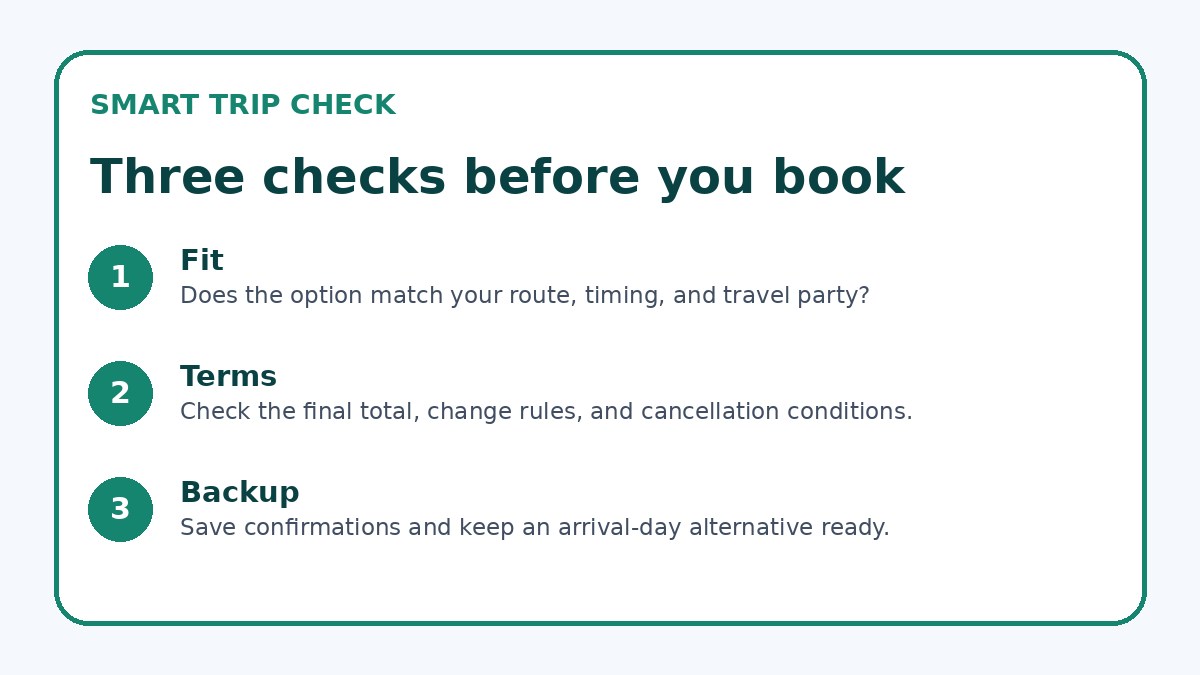
Luggage, timing flexibility, and how to reduce transfer friction
Luggage changes increase friction. Pack to minimize the number of heavy bags you carry between modes. If you must bring larger suitcases, choose departure and arrival points with elevators, wide corridors, and taxi stands or rideshare access right outside. Time your departure to allow 30–60 minutes buffer for transfers inside Seoul — more if you need to move between metro lines, a train station and a bus terminal, or if you expect to hit rush‑hour crowds. For couples, split tasks: one handles luggage while the other buys tickets or confirms directions to speed moves.
Choose services with predictable departure points when you need schedule flexibility. Trains can reduce variability from traffic but sometimes require extra metro transfers to reach the station; buses depart from fixed terminals but are subject to road delays. If you want flexibility in either direction, aim for departures spaced across the day rather than a single early or late slot, so a missed connection can often be replaced by the next hourly service without frantic rebooking. Remember to verify the final provider booking page for exact boarding gates, terminal names, and allowed luggage dimensions before you finalize any reservations.
Compare the practical alternatives
Use the final page to confirm what is actually offered on your dates and save a workable fallback.
Intercity travel checklist
- Confirm exact departure terminal and gate on the provider's booking page and screenshot them for offline access.
- Plan the full door‑to‑door itinerary: hotel to departure terminal, main leg, and terminal to your Gyeongju accommodation.
- Check terminal maps for elevators, escalators and taxi ranks to verify manageable luggage transfers and minimize stairs.
- Reserve an early or mid‑day service with a 30–60 minute buffer to allow for metro or traffic delays in Seoul.
- Identify at least one later train or coach and the nearest taxi/rideshare pickup at arrival as a disruption backup.
- Share all booking confirmations, maps, and contact numbers with your partner and keep them on your phone and printed copy.
Disruption backup and door-to-door contingency planning
Plan a clear backup that gets you to your Gyeongju accommodation with minimal stress. Identify an alternate departure terminal in Seoul that is accessible by a single taxi or a short metro ride from your hotel. Note a few later services on both train and coach routes and the nearest 24‑hour taxi ranks or rideshare pickup points at your expected arrival station in Gyeongju. For couples, having one person keep booking details and the other handle navigation reduces confusion when plans change.
Also map local options in Gyeongju for the last mile: guesthouses and many hotels can help arrange pickups, local buses serve central stops, and taxis are commonly available outside major stations. Keep digital copies of reservation confirmations and station maps, and screenshot the arrival terminal layout in case of mobile connectivity issues. If a preferred service is disrupted, switch to the simplest alternative that reduces additional walking or luggage moves, even if it takes slightly longer; preserving calm and time together will usually outweigh saving a few minutes.
Rail & Intercity Transport questions travelers ask
Should couples prefer train or coach between Seoul and Gyeongju?
There’s no single right answer — choose based on what you value most. Trains can reduce variability caused by road traffic and often mean a smoother ride with fewer stops, which helps if you want to relax together. Coaches may start from a convenient terminal near your Seoul neighbourhood and can be simpler if you want one departure point without moving through multiple metro lines. Evaluate the whole journey: how you’ll reach the departure terminal in Seoul and how you’ll travel from the arrival point in Gyeongju to your accommodation to decide which fits your day and luggage needs.
How should we handle luggage to make transfers easier as a couple?
Pack strategically: bring one larger suitcase and a smaller carry bag that one person can manage while the other handles tickets and directions. Choose services with easy street‑level access, elevators, and nearby taxi ranks to reduce stair carries. If you’re unsure about station layouts, check official station maps and look for photos of exits and taxi stands. Agree on roles before you move through crowded areas — one person steers and one moves the bags — so you minimize stops, avoid blocking concourses, and keep the transfer efficient and low stress.
What concrete steps should we take if our planned service is delayed or cancelled?
First, consult the provider’s official booking page and on‑site staff for confirmed alternatives. If you can’t get an immediate replacement on the same service, switch to the simplest option that reduces transfers—typically a later direct service or a taxi to a nearby accessible terminal. Keep a list of alternative departure times, nearby train or bus stations, and taxi ranks at hand. If you’ll arrive late in Gyeongju, pick accommodation near the arrival station or inform your hotel about a late check‑in. For peace of mind, set aside a small contingency fund for a taxi or private transfer if public options become impractical.
Final decision note
When planning Seoul to Gyeongju transport for a couple, focus on minimizing the number of moves and the physical effort required between modes. Choose the service that gives you the simplest door‑to‑door path: central departure and arrival points, easy access to taxis or local buses, and station layouts that handle luggage without stairs. Build small buffers into your timing and keep a clear backup plan that includes later services and taxi options. Verify terminal names, boarding gates and luggage rules on the provider’s final booking pages before you confirm. With those checks done, you can pick the route that leaves more time and energy to enjoy Gyeongju together.
Continue planning
Check current options and final conditions
Use the provider page to confirm live availability, the final total, cancellation terms, and every condition that matters to your trip.
This evergreen planning guide was created with AI-assisted drafting and a structured quality review. It does not display live prices, schedules, availability, visa guidance, or provider rankings. Verify current details before booking. Some links are affiliate links; we may earn a commission at no additional cost to you.