Practical answer first: if you need maximum on-the-day freedom, choose a fully refundable or flexible rail or coach ticket that explicitly allows same-day changes; if you can commit to a time, a semi-flexible ticket with a modest change fee often saves money while keeping a simple backup option. For many solo travelers between New York City and Washington, DC, the trade is between door-to-door convenience, luggage and transfer friction, and how disruptive delays or cancellations would be to your plans. This guide compares modes and planning approaches—rail, coach, ferry combinations where available, and mixed-mode itineraries—so you can decide based on terminal fit, luggage needs, and how much flexibility you genuinely need. Read on for clear decision checkpoints, disruption backups, and an actionable checklist to use before you book.
Choosing the right mode: rail, coach, ferry, or a mix
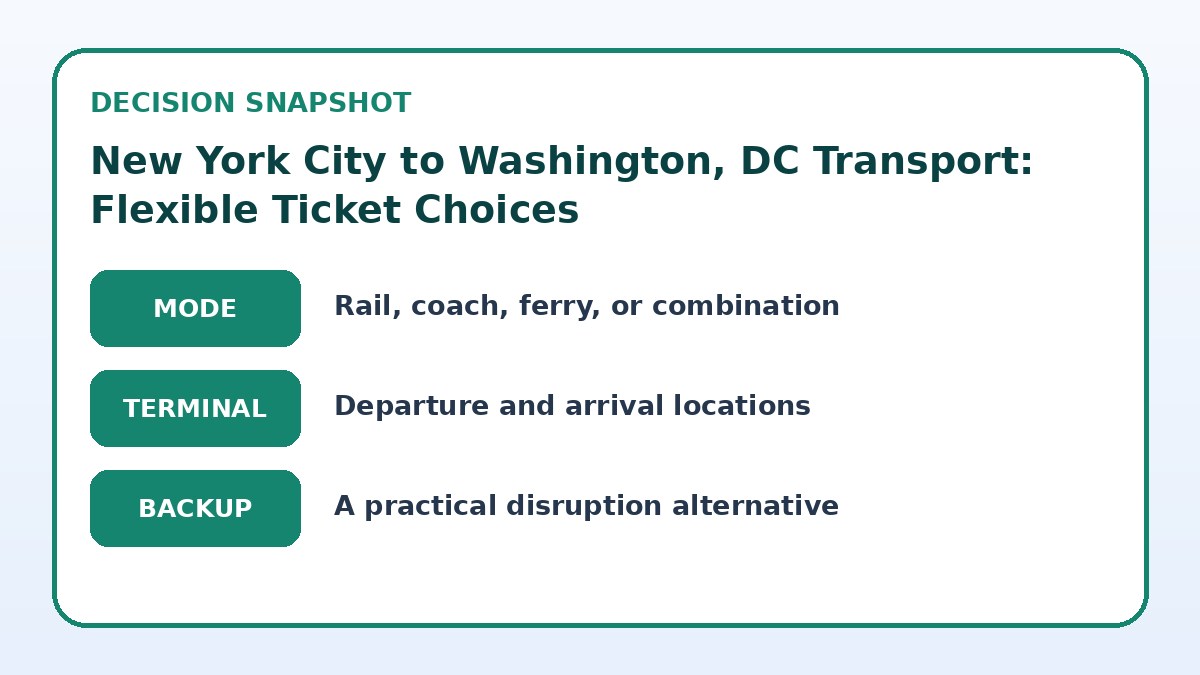
Start by matching the mode to your door-to-door priorities. Trains generally land in central terminals with onward transit and taxi options, which reduces first- and last-mile friction; coaches may stop at peripheral hubs or curbside points that change your transfer time and luggage handling. If a ferry option exists as part of a multimodal routing, treat it as a transfer—ferries can be scenic but typically add fixed departure times and potential weather dependencies. For solo travelers, factor in how comfortable you are managing luggage across transfers, whether you value onboard workspace or power outlets, and whether you need reliable seat availability for a specific departure.
Next, weigh frequency and flexibility against total travel time. High-frequency services let you pick looser arrival windows and rely on a next-available seat during the day, while reserved-seat services with specific fares require stricter planning. Mixed-mode routes—such as a train plus a shuttle or coach segment—can improve door-to-door time but also multiply the number of tickets and the complexity of refunds or rebookings. For any provider you consider, always verify the exact fare rules, change fees, and the provider’s policy on transfers and missed connections before you buy.
Choose the end-to-end journey plan
| Journey approach | Best for | Friction to check |
|---|---|---|
| Buy a fully refundable ticket on a single mode (train or coach) | Travelers who want maximum schedule freedom and minimal transfer risk. | Higher upfront cost and potentially limited availability on popular departures. |
| Book a semi-flexible reserved seat with change fees | Solo travelers with somewhat firm plans seeking lower cost with moderate flexibility. | You’ll save money but face fees for changes; read exact change and reissue rules before buying. |
| Use high-frequency coach or walk-up rail services without reservations | Those who prefer same-day travel and don’t want to commit to a time in advance. | Space is not guaranteed; luggage handling and terminal fit can vary and transfers may be harder. |
| Build a mixed-mode itinerary (train + coach/ferry) with staggered tickets | Travelers optimizing door-to-door time who accept a more complex plan. | More points of failure—missed connections may not be protected and refunds become fragmented. |
Check live intercity options
Look beyond the ride itself and compare terminals, transfers, luggage, and arrival fit.
Terminal fit and luggage/transfer friction
Terminal fit matters more than raw travel time. A service that arrives within walking distance of your accommodation usually beats a faster option that drops you at a remote stop needing a taxi or long bus transfer. Consider how you’ll handle luggage at each end: trains often have designated luggage areas, coaches may have hold space with staff handling, and combined itineraries can require you to reclaim and recheck bags between segments. Solo travelers carrying heavier gear or multiple bags should prefer fewer transfers, or choose services that explicitly list luggage allowances and handling procedures on the booking page.
Also think about the physical transfer between modes: is it an indoor station transfer or an outdoor curbside change across busy streets? Does your chosen terminal have quick taxi or rideshare access that you trust? When booking, map the walking route and estimate time needed to get from arrival platform or curb to the next departure. If connections are tight, pick tickets that allow ticketed transfers or select a later primary departure with an easy backup—this reduces the stress and the chance of lost or delayed luggage complicating the next leg of your trip.
Timing flexibility and fare rules to compare
Timing flexibility is the core decision for solo travelers. Compare fare classes side-by-side: refundable/flexible fares, semi-flexible fares with change fees, and saver/nonrefundable fares. Ask yourself how likely plans are to change and whether you can absorb a change fee or need a full refund. For moderately flexible needs, a fare that permits same-day exchanges with a fee might be ideal; for unpredictable schedules, choose fully refundable or open-dated tickets even if the nominal cost appears higher. Importantly, read the provider’s exact wording on rebooking windows, required proof for changes, and any differences between cancellations and voluntary changes.
Also confirm how providers handle missed connections or delays. Some operators allow rebooking on the next service free of charge if your original carrier causes the delay; others treat each ticket independently. If you plan to combine different providers, recognize that protection for missed connections is less likely unless you buy a through-ticket or an explicit transfer guarantee. Before booking, check the official booking page for notes about same-day reissues, standby policies, and whether online or station staff must authorise changes to ensure you won’t face unexpected restrictions when plans shift.
Compare the practical alternatives
Use the final page to confirm what is actually offered on your dates and save a workable fallback.
Intercity travel checklist
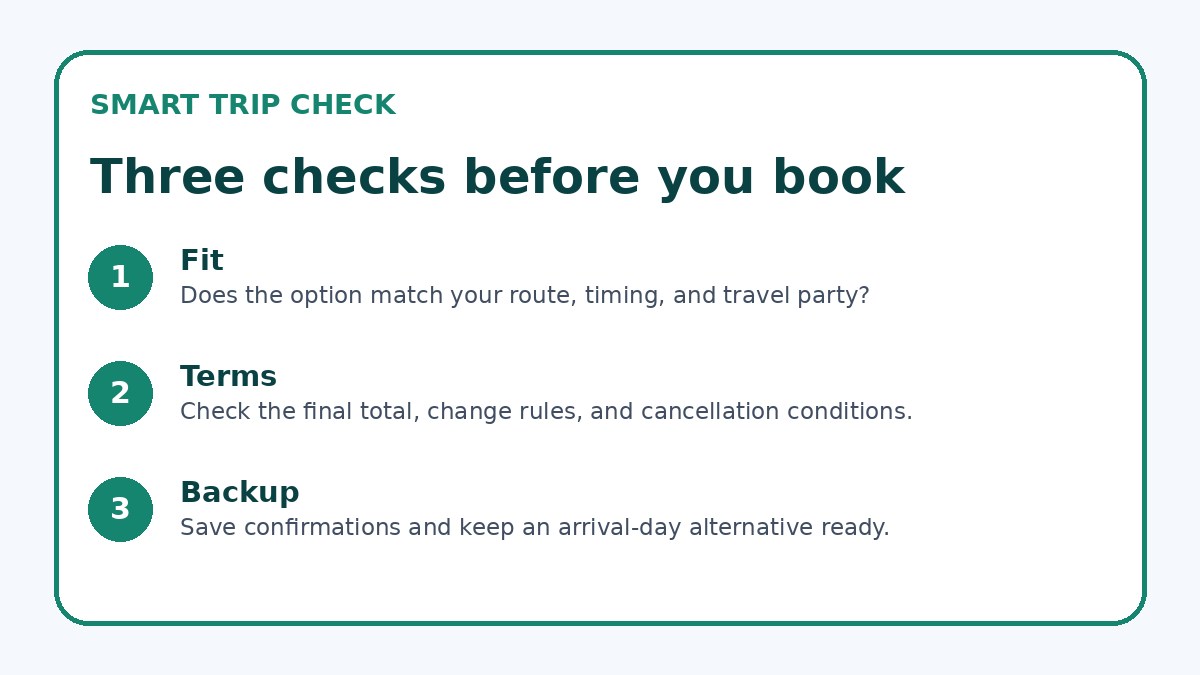
- Verify the fare’s exact change, cancellation, and refund policies on the provider’s official booking page before purchasing.
- Map door-to-door travel time including walking, transfers, and likely taxi or rideshare waits from each terminal to your lodging.
- Confirm luggage allowances, storage options, and whether you must reclaim and recheck bags on mixed itineraries.
- Identify one concrete backup option (later same-day departure, alternate operator, or different mode) and note its schedules.
- Save customer-service contact details and station desk hours to your phone and carry a screenshot of your ticket and policy.
- If you need peace of mind, choose a fare explicitly labelled refundable or flexible even if it costs more upfront.
Disruption backup: practical on-the-ground contingency planning
A disruption backup plan should be concrete and testable. Pick one realistic alternate: a later departure on the same mode, a different operator with flexible rebooking, or switching modes (for example, from train to coach) if timetables and terminals permit. Write down or save the phone number and web link for the provider’s customer service and the times when station ticket desks open. If you rely on public transit or rideshare to reach a terminal, have a backup taxi or app downloaded with payment set up to avoid delays if regular transit runs are suspended.
Also plan financial and accommodation contingencies: know whether your fare can be refunded and how long a refund might take, and consider booking refundable accommodation or a flexible last-night hotel if a delay could push you into an extra overnight. For solo travelers, personal safety considerations matter—identify well-lit waiting areas, official customer service points, and where to find staff if you need in-person assistance. Finally, if you want a quick search to compare availability and rules before purchase, Trip.com can be used as one option to view current conditions, but always confirm policies on the operator’s official booking page.
Rail & Intercity Transport questions travelers ask
How do I decide whether to book a refundable ticket or risk a cheaper nonrefundable fare?
Think about how likely your plans are to change and how disruptive a missed connection or delay would be. If you have fixed commitments—meetings, event entry times, or tight onward connections—a refundable or flexible ticket reduces stress and may save money indirectly by avoiding fees, unexpected overnight stays, or rebooking costs. If your schedule is firm and you’re comfortable with the risk, a nonrefundable fare can be economical but make sure you have a realistic backup plan and understand the provider’s policies for same-day changes or missed services.
Can I mix different operators and still expect protection if I miss a connection?
Not automatically. Protection for missed connections is common when you buy a through-ticket or the same operator handles both legs; when you hold separate tickets with different providers, each handles disruptions independently. If you plan mixed bookings, build in generous connection margins, purchase fully refundable segments where disruption would be costly, or choose operators that explicitly offer protected connections. Always check each operator’s official language on missed connections and rebooking options before you commit.
What’s the best way to handle luggage as a solo traveler on this route?
Aim to minimize transfers and choose services with clear luggage policies. Use a single-piece, manageable bag if possible so you can move quickly between terminals and through transfer points. If your itinerary requires reclaiming and rechecking bags, allow at least extra time for handling and factor it into your door-to-door schedule. Confirm whether coaches load luggage into a hold and whether trains have designated racks or staff assistance. Keep valuables and essentials in a carry-on you control at all times.
Final decision note
For solo travelers between New York City and Washington, DC, the right ticket flexibility balances how often plans change against the logistical friction of transfers and luggage. If schedule changes are likely or a missed connection would be expensive, prioritize refundable or clearly flexible fares and pick services that simplify door-to-door transfers. If you can commit to a time, semi-flexible fares with known change fees can save money while retaining some flexibility. Whatever you choose, verify exact fare rules, luggage policies, and customer-service options on the provider’s booking page, identify a realistic backup, and use the checklist to avoid last-minute surprises.
Continue planning
Check current options and final conditions
Use the provider page to confirm live availability, the final total, cancellation terms, and every condition that matters to your trip.
This evergreen planning guide was created with AI-assisted drafting and a structured quality review. It does not display live prices, schedules, availability, visa guidance, or provider rankings. Verify current details before booking. Some links are affiliate links; we may earn a commission at no additional cost to you.