Practical answer first: for couples, use San Francisco’s shoulder seasons—late spring (April–May) and early fall (September–October)—to target lower crowd levels and more flexible hotel and experience options without sacrificing weather. Before you decide whether a packaged deal (flight+hotel/tours) is worth it, compare the exact same dates, number of travelers, room type, baggage rules, and cancellation terms. Bundles can save time, but savings depend on what’s included and how change-friendly the package is. If your travel style values flexibility—late-night ferry rides, open-ended neighborhood exploration, or last-minute Michelin reservations—favor separate bookings or fully refundable bundles. Always check the provider’s final booking page for exact cancellation windows, transfer policies, baggage allowances, and whether taxes or resort fees are added at checkout.
Test package value fairly
| Booking approach | Best for | Tradeoff to check |
|---|---|---|
| All-in-one package (flight + hotel + transfer) | Couples wanting a single purchase and guaranteed transfer logistics | Potentially less flexibility for individual components and risk of restrictive change rules |
| Flight + hotel bundle, separate activities | Couples who want core logistics tied together but will plan local activities independently | May still incur penalties to change one element; activities need separate bookings and timing coordination |
| Separate bookings for flight and hotel, bundled tours bought early | Couples prioritizing flexible travel dates with secured experiences | Higher administrative overhead and small chance of losing bundle-style savings |
| Fully separate bookings for flights, hotels, and activities | Spontaneous couples who value change-friendly policies and pick-and-choose upgrades | Requires active management and careful price comparisons to avoid hidden extra costs |
Check current package and separate options
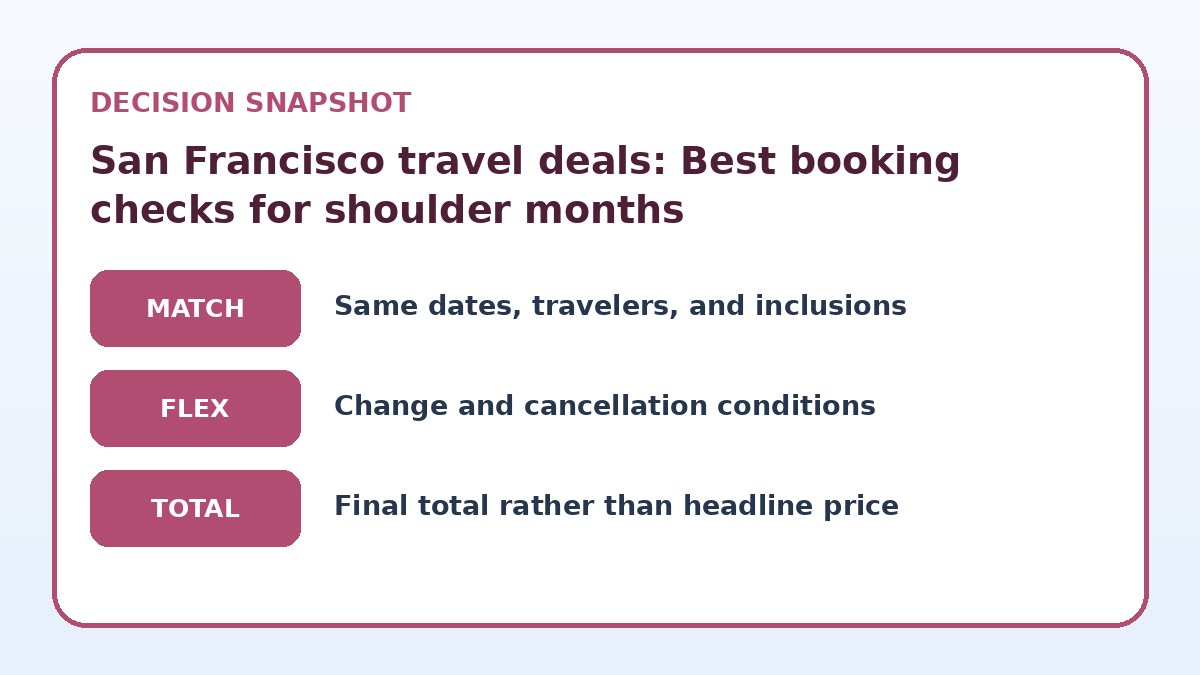
Use identical dates, travelers, room needs, baggage, and flexibility so the comparison stays meaningful.
What to compare before judging a package
Start by listing everything the package claims to include, then match it line-for-line with the separate-booking scenario. For flights that might be part of a bundle, note cabin class, fare rules for changes and cancellations, and the number of checked bags. For hotels, compare room category, nightly rate, taxes, resort charges, and whether breakfast or wi-fi are actually included or just advertised. Tours and transfers should be compared on group size, pickup/drop-off logistics, and whether admission fees are included or added later.
Couples should add traveler-specific details to this checklist: bed type, early check-in or late checkout needs, and seat preference on flights. When comparing dates, use identical arrival and departure times and the same number of hotel nights. If a package includes a rental car, check driver age restrictions and insurance terms. These apples-to-apples comparisons prevent being misled by packages that look cheaper but lose value through narrower inclusions or inflexible change policies.
Inclusions, exclusions, and the trick of false savings
A bundle that advertises a low headline rate can omit essential extras that you would otherwise buy separately: checked baggage, airport transfers, city taxes, or attraction reservations. For a couple weighing romance against convenience, missing inclusions such as guaranteed late checkout or breakfast can mean additional outlays at the hotel. Always tally up the final cost after adding realistic line items you expect to need, not just the advertised base price. This reveals real parity between package vs separate bookings and helps spot false savings.
Watch for conditional inclusions: vouchers that require advance booking, third-party suppliers with their own cancellation rules, or tours that operate only on specific days. If breakfast is listed 'included', verify whether it is a continental buffet or a credit toward à la carte ordering. For any claimed transfer, check pickup location specifics. If uncertain, ask the provider directly and insist on written confirmation on the booking page; this is where differences show up and where Trip.com or other comparison tools can show current availability but won’t replace verifying final terms.
Look past the headline total
Compare inclusions and change conditions before deciding whether a package is genuinely useful for this trip.
Deal comparison checklist
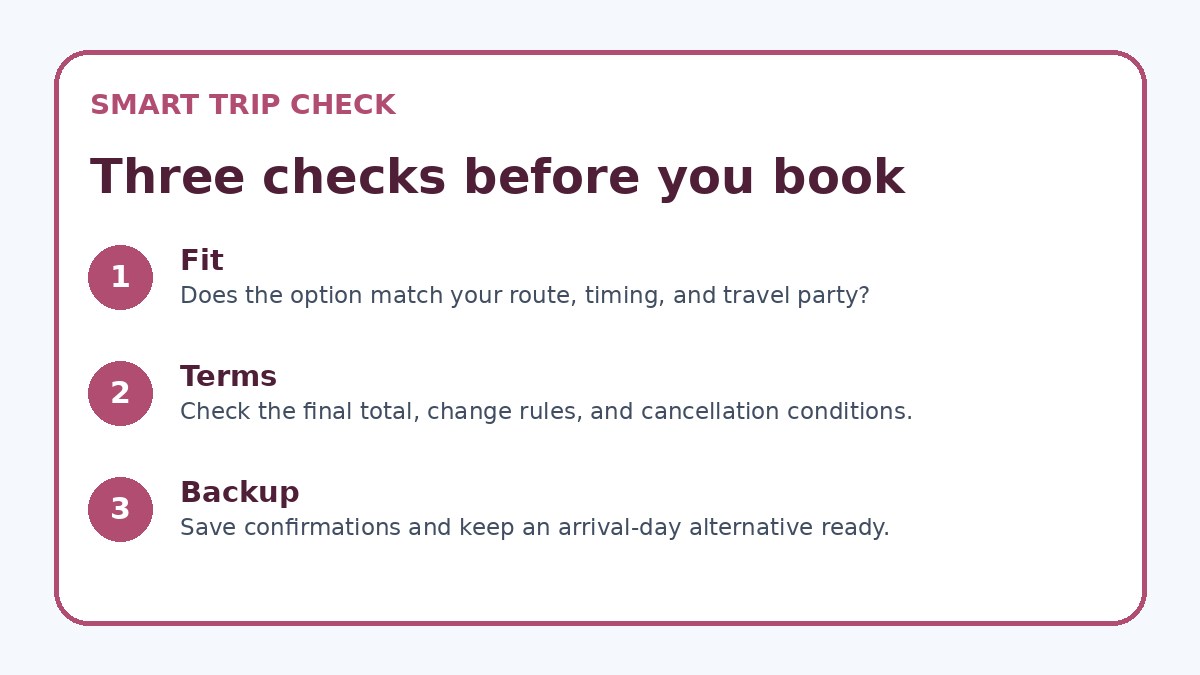
- Match identical travel dates, number of travelers, and room type when comparing package vs separate bookings.
- Verify exact cancellation and change penalties on the provider’s final booking/confirmation page before committing.
- Add likely extras—checked bags, city taxes, transfers, breakfast—to both package and separate totals for apples-to-apples cost.
- Confirm whether bundled experiences require advance time slots and if vouchers need redemption before arrival.
- Check how loyalty benefits, upgrades, or points apply to packaged rates and request written confirmation.
- If using a comparison site like Trip.com, follow links to the supplier’s checkout to validate all fees and terms.
Flexibility and traveler-specific value for couples
Couples often value spontaneity—late dinner reservations, surprise stops for photos on the Golden Gate, or switching museums based on mood. If that describes you, prioritize refundable fares and flexible hotel rates even if they cost a bit more. Bundles that lock both flight and hotel together can impose penalties for partial changes. Evaluate whether the bundle allows altering just one component without canceling the entire package. If your plans include an open-ended day for wandering neighborhoods like the Mission or Noe Valley, ensure you won’t face heavy fees for date or room-type switches.
Conversely, if your trip is tightly scheduled—specific concert dates, a booked culinary tour, or a fixed anniversary dinner—a bundled deal that guarantees seats and room types can reduce logistical friction. For value-minded couples comfortable committing to plans in advance, bundles that include pre-booked experiences or transfers can be worth it. The key is aligning the flexibility structure of the offer with your tolerance for change: conservative plans favor bundles with firm inclusions; spontaneous travel favors separate, changeable reservations.
Final terms, verification, and booking checklist
Never treat advertising language as final. The crucial place to inspect is the provider’s checkout or confirmation page where cancellation windows, refund mechanics, and the identity of third-party suppliers are spelled out. Look for precise deadlines (e.g., full refund if canceled X days before arrival), whether taxes and fees are collected at booking or at property, and the steps required to make a change. For bundled bookings, confirm whether changing one element requires reissuing the whole package and whether that triggers any supplier fees.
Ask direct questions before purchase and save written responses. If loyalty program points, upgrades, or elite benefits matter, verify how those are applied to packaged rates. Check baggage and seat-selection rules for bundled flights, and confirm the transfer provider’s pickup point. If you use a comparison site like Trip.com to find deals, treat its listings as a starting point and follow through to the supplier’s final page to validate all terms.
Travel Deals & Booking Strategy questions travelers ask
Are shoulder seasons in San Francisco reliably quieter and cheaper for couples?
Shoulder months typically bring fewer visitors than peak summer, which can make restaurant reservations easier and reduce crowds at popular sites. However, savings and crowd levels vary by specific dates and local events; always compare the same dates and verify hotel occupancy rules and fare availability on the provider’s booking page before assuming cost or crowd benefits.
If I find a bundled deal labeled as a 'package', what exact terms should I inspect before booking?
Inspect the bundle’s cancellations and change policy for each included element, baggage allowances, pickup locations for transfers, taxes and fees timing, and whether third-party vendors handle any services. Confirm whether altering one element forces reissuance of the entire package and ask how refunds are processed. Save any written clarifications displayed on the final checkout or confirmation page.
How should couples decide between refundable rates and lower nonrefundable savings?
Weigh your tolerance for change against the marginal cost difference. If your plans can shift—work, weather, or event changes—refundable or flexible rates reduce stress and potential penalties. If your schedule is fixed and nonrefundable options free up budget for experiences you’ll definitely use, the savings can be worthwhile. In all cases, calculate worst-case penalty costs and compare them to the refundable premium.
Final decision note
For couples planning San Francisco travel deals around shoulder seasons, the central question is whether you value convenience and a single checkout or prefer modular flexibility. Start by comparing identical dates, travelers, room types, and inclusions; check cancellation windows and third-party supplier rules on the provider’s final booking page. If spontaneous wandering and last-minute dining matter, favor refundable or separate bookings. If a streamlined, pre-planned trip reduces stress, a bundle with clear, written inclusions can be smart. Use comparison tools like Trip.com to surface options, but always validate the final terms on the vendor’s official booking page before committing.
Continue planning
Check current options and final conditions
Use the provider page to confirm live availability, the final total, cancellation terms, and every condition that matters to your trip.
This evergreen planning guide was created with AI-assisted drafting and a structured quality review. It does not display live prices, schedules, availability, visa guidance, or provider rankings. Verify current details before booking. Some links are affiliate links; we may earn a commission at no additional cost to you.