Practical answer first: if you and your partner land late in Seoul, pick a hotel area that minimizes transfer stress and gives you immediate comfort—either near the airport/express train for the fastest door-to-door option, or in a central neighborhood (Myeong-dong, Jongno) if you prefer arriving straight into the heart of the city. Choose based on how late you arrive, how tired you are, and what you want to do the next morning. Focus your search on Seoul hotels that explicitly offer late check-in, 24-hour front desk service, and flexible cancellation. Before booking, verify the hotel's official late check-in policy, whether the front desk is staffed overnight, and the practical route from your arrival point; check live transport options on the provider’s page and confirm whether you need to arrange a taxi or shuttle.

Check live stays in the areas that fit
Use your dates and party size to compare current rooms after you narrow the neighborhood fit.
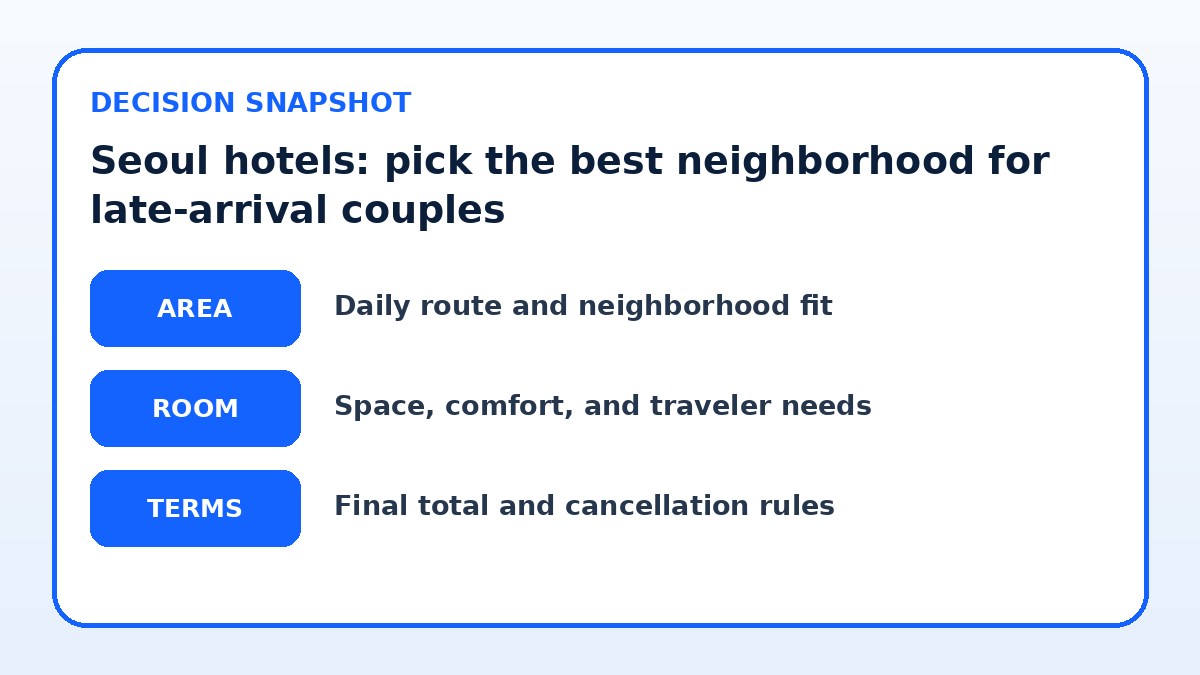
Neighborhood fit: match your first-night needs
Decide whether your priority is minimizing transfer time, having nightlife nearby, or being in place for early morning plans. If you both want to sleep as soon as possible, airport-adjacent hotels or those within easy reach of the AREX (Airport Railroad Express) are practical. If you land late but want to stroll or eat late, neighborhoods such as Hongdae or Itaewon offer late-night dining and a livelier street scene. Couples who expect to explore museums and palaces early the next day will favor central neighborhoods—Myeong-dong, Jongno, or Insadong—because they put you a short taxi or subway ride from major morning attractions.
Consider also the emotional tone you want on arrival: a calm, quiet hotel near the airport or a riverside hotel in Yeouido promotes decompression, while a boutique stay in a historic neighborhood fuels excitement. Check whether the area is well lit and has 24-hour convenience stores or cafés, which helps for late arrivals. Think about language support and staff availability—some districts have more internationally oriented hotels with English-speaking staff and explicit late-check-in procedures, which reduces friction if you’re tired or jet-lagged.
Choose an area-selection strategy
| Area approach | Best for | Tradeoff to check |
|---|---|---|
| Airport-area or AREX-adjacent hotels | Couples arriving very late who want the fastest transfer and immediate rest | Less access to central nightlife and longer morning travel into the city core |
| Central districts (Myeong-dong, Jongno, Insadong) | Couples planning to start sightseeing early and who prefer being in the historic core | Potentially more late-night transit complexity and busier streets at night |
| Nightlife neighborhoods (Hongdae, Itaewon) | Couples who want late dining, bars, and a lively first-night atmosphere | More street noise and fewer quiet, hotel-focused options for immediate sleep |
| Business or riverside areas (Yeouido, Gangnam) | Couples wanting a quieter arrival with stylish hotels and good daytime transit links | Can feel empty late at night and may require a taxi from late-night transport hubs |
Daily-route friction: transfers, luggage, and rest
Map your arrival point (Incheon Airport, Gimpo, or a late-night train) to likely hotel neighborhoods. If arriving at Incheon and you want minimal hassle, an airport-area hotel or a hotel near a line served by the AREX avoids a multi-leg taxi-plus-subway journey. For downtown hotels, compare the number of transfers and the likelihood of needing a taxi at night—some subway lines end earlier, and late buses can be slow. For couples carrying heavy luggage, a single taxi ride beats multiple transfers; factor that into the nightly cost and your desire for convenience.
Think through the first 12 hours: can you eat immediately? Will you want to change and walk out, or just sleep? A hotel with an on-site restaurant or 24-hour room service takes pressure off late-night navigation. Also check simple amenities that reduce friction: luggage storage if you arrive very early, early breakfast options if you plan to start the day quickly, and in-room coffee kettles or minibars so you can relax without hunting for stores. Confirm these features on the hotel page rather than assuming they exist.
Now compare like with like
Keep the same dates, guests, room needs, and cancellation preferences while you compare the final choices.
Room and party needs: privacy, sleep quality, and comfort
For couples, room layout and noise control matter more on a late arrival than on a daytime check-in. Look for rooms advertised as ‘quiet’ or on higher floors, and request a late-check-in note in the reservation to reduce the chance of being assigned a noisy street-facing room. If you value privacy, a suite or a larger room with a separate seating area helps you settle without feeling cramped. If you plan to nap and then go out again, check whether the hotel offers flexible housekeeping times so you won’t be disturbed at odd hours.
Consider bed size, blackout curtains, and climate controls; these features affect how quickly you fall asleep after a long day. For shared travel styles—romantic break, anniversary, or a relaxed weekend—think about small extras that improve the night: bathtub or hydrotherapy options, in-room music or streaming access, and private balconies. Verify smoking policies and whether rooms can be guaranteed non-smoking. Always confirm the room type and special requests on the booking page and contact the hotel directly if the site’s instructions are unclear.
Hotel booking check before payment
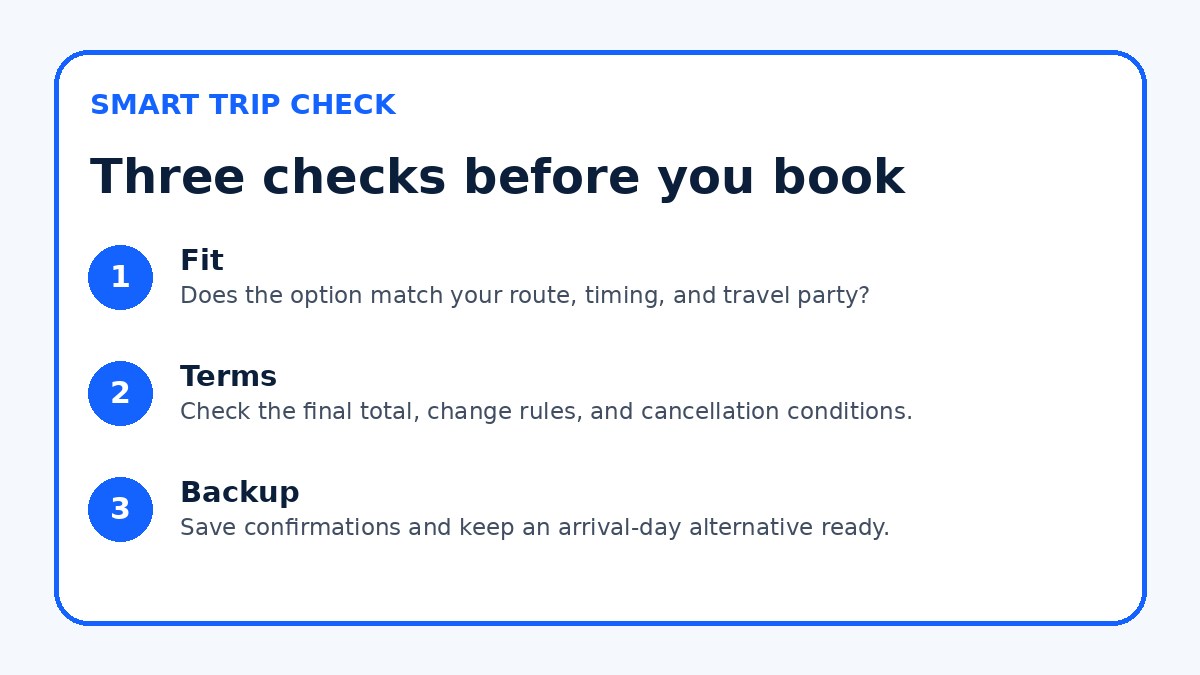
- Confirm the hotel’s exact late check-in policy and whether 24-hour reception is available before booking.
- Request a late-arrival note on the reservation and confirm the hotel has recorded your expected arrival time.
- Verify transfer options from your arrival point (airport or train station) and whether a hotel shuttle or preferred taxi is suggested.
- Choose a room type that prioritizes quiet (higher floor, inner courtyard, or specified ‘quiet room’) and note that request in booking.
- Check payment, deposit, and ID requirements, and ensure your credit card will be accepted at check-in.
- Ask the hotel about on-site late dining, in-room snacks, or 24-hour convenience options so you can eat without navigating late streets.
Final booking terms: what to check before you hit Reserve
Before booking any Seoul hotels, verify three things on the hotel’s live booking page: the exact late check-in policy and whether 24-hour reception is confirmed; the cancellation and modification window that applies to your reservation; and the practical route information for your arrival time, including whether the hotel runs a shuttle or recommends a reliable taxi service. If the site lists a ‘late check-in’ option, read the fine print to see if it requires pre-notification. When in doubt, message or call the property so they record your expected arrival time.
Also check payment and identification requirements—some hotels pre-authorize cards or require a deposit on arrival. Confirm any ID or registration details the hotel will request at check-in, and whether they accept foreign credit cards without extra forms. If you need an early checkout or baggage hold the next day, add that request to the reservation notes. Finally, compare the hotel’s own policy to third-party booking pages; if there’s a discrepancy, trust and verify with the hotel before relying on special arrangements.
Hotel Guide questions travelers ask
I arrive at Incheon after midnight—should I book near the airport or downtown?
If your priority is minimizing travel time and exhaustion, an airport-area hotel or one near the AREX express path reduces the number of transfers and shortens the trip from the terminal to bed. If you and your partner are comfortable taking a late taxi and want to wake up in the heart of Seoul to start sightseeing, a downtown hotel can make the following morning more convenient. Check the hotel’s late check-in policy and confirm how the hotel recommends traveling from the airport at that hour; if the hotel runs a shuttle, ask whether you need to reserve a pickup.
How do I ensure I won’t be turned away if my flight is delayed?
Before you book, look for explicit language about late check-in or 24-hour reception on the hotel’s booking page. If that information isn’t clear, contact the hotel directly and ask them to note your estimated arrival time in the reservation. Keep proof of that communication (email confirmation or a messaging record) and bring a screenshot when you arrive. If you booked through a third-party site, confirm the hotel has the same instructions on its own site; discrepancies are common, so direct confirmation is the safest step.
What room features should couples prioritize after a late arrival?
Prioritize a comfortable bed, blackout curtains, and good climate control to help you recover quickly from travel fatigue. For privacy and space, consider a larger room or one with a seating area so you can relax without feeling cramped; a tub or in-room amenities like a kettle and mini-fridge add convenience for late-night snacks and drinks. Also request a quiet room away from elevators or noisy streets, and confirm any special requests—such as late turn-down service or late breakfast options—directly with the hotel before booking.
Final decision note
For couples handling a late arrival in Seoul, the quickest path to a good first night is choosing a hotel area that matches your immediate needs: fastest transfer, late-night dining, quiet recovery, or early sightseeing. Narrow your shortlist by confirming late check-in and 24-hour reception, requesting a quiet room, and double-checking transfer recommendations with the hotel itself. Use the neighborhood comparisons here to rule out areas that will add stress on night one, then verify the hotel’s terms on its live booking page—don’t assume policies shown on third-party sites are complete. With a few confirmations before you book, you can turn a late arrival into a smooth, restful start to your trip together.
Continue planning
Check current options and final conditions
Use the provider page to confirm live availability, the final total, cancellation terms, and every condition that matters to your trip.
This evergreen planning guide was created with AI-assisted drafting and a structured quality review. It does not display live prices, schedules, availability, visa guidance, or provider rankings. Verify current details before booking. Some links are affiliate links; we may earn a commission at no additional cost to you.