If you’re planning a family trip from Brisbane to Sydney, the single most useful question is: which combination of comfort, transfers and flexibility will make the journey smoother for everyone? For many families the answer is simple—choose the mode that minimizes transfers and daytime travel, and gives reliable space for luggage, strollers or car seats. Trains give room to move and restful seats; coaches tend to be cheapest and go direct; driving gives ultimate door-to-door control; and an intermodal plan (train or coach plus short flights or ferries locally) can reduce city traffic and overnight accommodation needs. Below I explain how to weigh terminal fit, luggage and transfer friction, timing flexibility, and backup plans for disruptions so you can make a decision that matches your family’s energy levels, ages and itinerary priorities.
Terminal fit and end-to-end transfers
Terminal fit means how a chosen mode connects with your start and end addresses: a train or coach that arrives into a city-center terminal usually reduces taxi or rideshare time to family-friendly hotels, whereas airports and some ferry terminals can add an extra transfer leg. Families with young children or lots of luggage should prioritise options that terminate close to accommodation or have frequent, short shuttle links rather than single-weekly arrivals that force an overnight stay. Consider where your luggage and prams will be stored when you arrive; a single transfer from platform to hotel is far easier than multiple handoffs between buses, ferries and taxis.
Evaluate your door-to-door time, not just the advertised ride duration. A seemingly fast route that requires a long walk with bags, a complicated station change, or an infrequent shuttle may be worse for tired kids than a slightly longer, direct coach or drive. If you need child restraints, check where those transfers happen—some coach or train stations are easier for installations than small regional car-rental counters at out-of-town depots. Plan a realistic timeline that includes restroom and snack stops for little ones when comparing terminals.
Choose the end-to-end journey plan
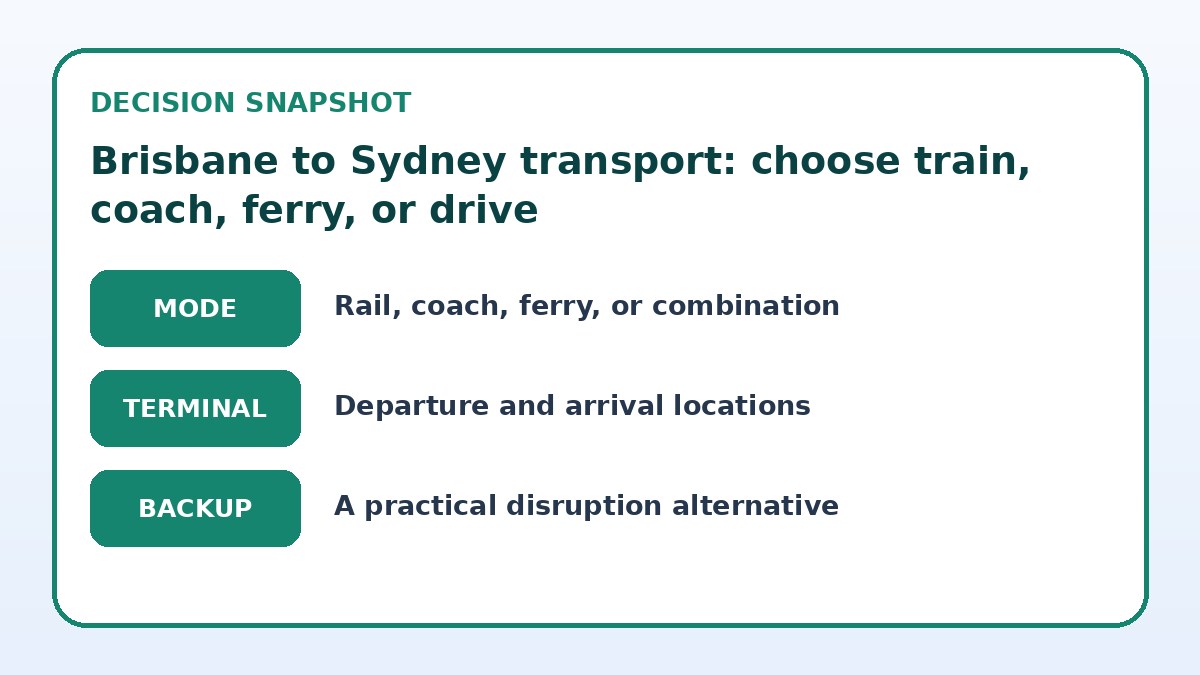
| Journey approach | Best for | Friction to check |
|---|---|---|
| All-rail journey (trains both ways) | Families who prioritise onboard space, predictable central-city terminals, and fewer road stops. | May require station changes and is less flexible for rural drop-offs or door-to-door needs. |
| All-coach ride | Families seeking direct, single-ticket routes with minimal planning and straightforward single-step transfers. | Less space to move on long trips and tighter baggage rules can complicate travel with bulky gear. |
| Drive door-to-door (rental or private car) | Families needing full control over schedule, stops, and baggage with the ability to carry car seats and pets. | Driver fatigue, parking in cities, and longer overall travel times in traffic are potential downsides. |
| Mixed plan (one-way public transport, one-way rental/drive) | Families who want to combine relaxing travel with car flexibility at the destination for day trips. | Requires more bookings and careful coordination of pick-up/drop-off locations and luggage transfers. |
Check live intercity options
Look beyond the ride itself and compare terminals, transfers, luggage, and arrival fit.
Luggage, car seats and transfer friction
Practical handling of luggage and car seats often decides the trip. Trains usually offer generous luggage areas and space to move, which helps with restless children; coaches can be convenient but expect strict rules for carry-on items and hold luggage handling on departure and arrival. Driving eliminates handoffs entirely but means loading and unloading multiple times and the mental load of navigation and fatigue management. Wherever possible, reserve or confirm space for bulky items and ask providers about policies for car seats and strollers before booking.
If you plan to mix modes, map every handover: station platform to coach bay, coach station to taxi rank, or train platform to ferry terminal. Each transfer increases the chance of delay and lost items. Give yourself at least 30–45 minutes buffer for each planned handover when travelling with children, and pack a small ‘arrival bag’ with essentials—snacks, wet wipes, a change of clothes and medication—so you don’t need to unpack suitcases mid-transfer.
Timing flexibility and family rhythm
Family-friendly travel often means travelling at times that match your children’s sleep patterns or activity levels. Daytime travel may be better for toddlers who nap on the move, while older kids might handle night travel if you can secure comfortable seats or sleepers. Check frequency: trains and coaches with several departures per day offer flexibility to move plans if a child is unwell or a flight is delayed; single daily departures constrain you. For driving, flexibility is maximum but so is exposure to fatigue and traffic variability—plan driver shifts and comfortable break points.
Factor in local peak travel times and school holiday crowds: departures that fall into peak windows can be busier and more stressful, especially for families needing adjacent seats or extra luggage space. If you need guaranteed adjacent seating or a sleeping compartment, verify those options before booking. Also, add a small cushion to arrival times so you can manage check-in without rushing; being late for a hotel with kids often creates more complications than adding modest travel time.
Compare the practical alternatives
Use the final page to confirm what is actually offered on your dates and save a workable fallback.
Intercity travel checklist
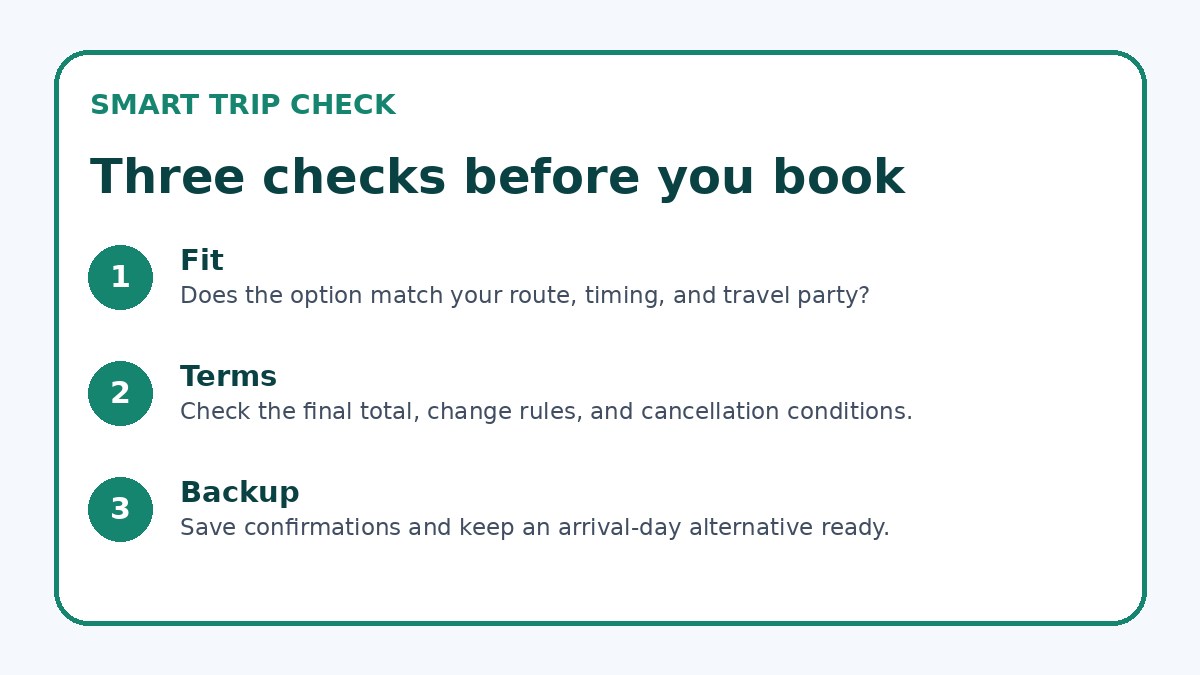
- Map door-to-door time: add transfer, traffic, and check-in windows to advertised ride durations before booking.
- Confirm car seat and stroller policies with the operator and reserve space or bring your own properly approved seats.
- Pack an accessible arrival bag with snacks, wet wipes, medication, chargers and a change of clothes for children.
- Screenshot or print all tickets and contact numbers in case mobile connectivity or battery fails during travel.
- Allow at least 30–45 minutes buffer for every planned transfer when travelling with young children or heavy luggage.
- Verify cancellation and change rules on the provider’s official booking page and consider insurance for multi-leg journeys.
Disruption backup and simple contingency plans
Always have a backup plan for delays and cancellations: know alternative departure times, keep a list of nearby hotels for emergency overnight stays, and save contact details for rental car agencies and coach operators. Families should also carry scanned copies of booking confirmations and take screenshots of any mobile tickets in case of roaming or dead battery issues. If you’re combining modes, staggered bookings (e.g., leaving longer gaps between leg changes) reduce stress and give room to catch the next connection without rebooking everything.
Decide what you value most in a disruption: speed of re-routing, minimal fuss, or guaranteed transport that can be changed on short notice. For example, a flexible rental car gives immediate control but adds the burden of driving; having a pre-identified local taxi or ride app reduces the time standing in a queue. Before finalising any booking, verify cancellation and change policies on the provider’s official booking page and consider travel insurance that covers multi-leg intermodal journeys.
Rail & Intercity Transport questions travelers ask
Can a family realistically travel Brisbane to Sydney without driving?
Yes. Rail and coach options connect Brisbane and Sydney and can be organised as door-to-door trips using public transport, taxis or rideshares at each end. Families should prioritise services that terminate near central hotels to avoid extra transfers. Check seating and luggage policies and plan realistic transfer buffers—children, strollers and car seats increase the time needed between connections. If you want local mobility at the destination, book a one-way car hire or pre-arranged local transport rather than adding extra long transfers during the main intercity leg.
How do I decide between a daytime or overnight option with kids?
Match the travel window to your children’s routines: daytime travel lets kids nap in public transport spaces and breaks are easier; overnight services can save daytime and hotel costs if your family sleeps well on the move. Consider onboard amenities—space to stretch, toilets and sleeping berths—and the number of transfers required at odd hours. If a leg forces an early morning or late-night transfer at both ends, a daytime option with a slightly longer ride may be less disruptive. Always allow extra time for arrivals with small children to manage hotel check-in.
What should I prioritize when mixing modes, like train one-way and drive return?
Prioritise minimizing handovers and aligning pick-up/drop-off locations. Choose meeting points that are simple, central and have easy luggage access. Confirm the rental company’s drop-off options if you end the drive in a different city, and check public transport arrival stations for convenience to rental counters. Leave generous buffers between scheduled connections, pack essentials separately for the leg where you won’t have immediate access to your main luggage, and verify provider policies about cross-state returns or intercity drop-off fees on their booking pages.
Final decision note
For families travelling between Brisbane and Sydney, the right choice balances door-to-door simplicity against flexibility and the needs of children. Trains and coaches are low-stress when arrivals are central and transfers are few; driving offers control but adds fatigue management and parking concerns; mixed plans can combine the benefits of both. Always plan around terminal convenience, luggage handling and realistic transfer buffers, and verify seating, car seat, and cancellation details on the provider’s booking page before you pay. If you want to compare current schedules and availability in one place, you can optionally check Trip.com, but always confirm details with the operator you plan to use.
Continue planning
Check current options and final conditions
Use the provider page to confirm live availability, the final total, cancellation terms, and every condition that matters to your trip.
This evergreen planning guide was created with AI-assisted drafting and a structured quality review. It does not display live prices, schedules, availability, visa guidance, or provider rankings. Verify current details before booking. Some links are affiliate links; we may earn a commission at no additional cost to you.