Practical answer first: if your priority is minimizing risk of missed meetings, choose a slightly more convenient itinerary with a later check-in and a flight that reduces connection steps — accept a modest loss in flexibility to reduce stress. If flexibility matters more because your meeting schedule may shift, pick a fare with generous change options even if it adds a connection or longer total travel time. On the Sydney to Auckland route you’ll commonly weigh nonstop versus one-stop timing, baggage transfer reliability, and fare conditions that affect same-day swaps. Before you search, lock your exact travel dates, meeting times in Auckland, whether you’ll check luggage, and whether you need airport lounges or lounge access. Those details change which tradeoffs make sense: a tight mid-morning meeting favors a direct morning flight; an open schedule favors a refundable or changeable ticket.
See live routes for your exact travel day
Compare direct and connecting choices with the same baggage and traveler details.
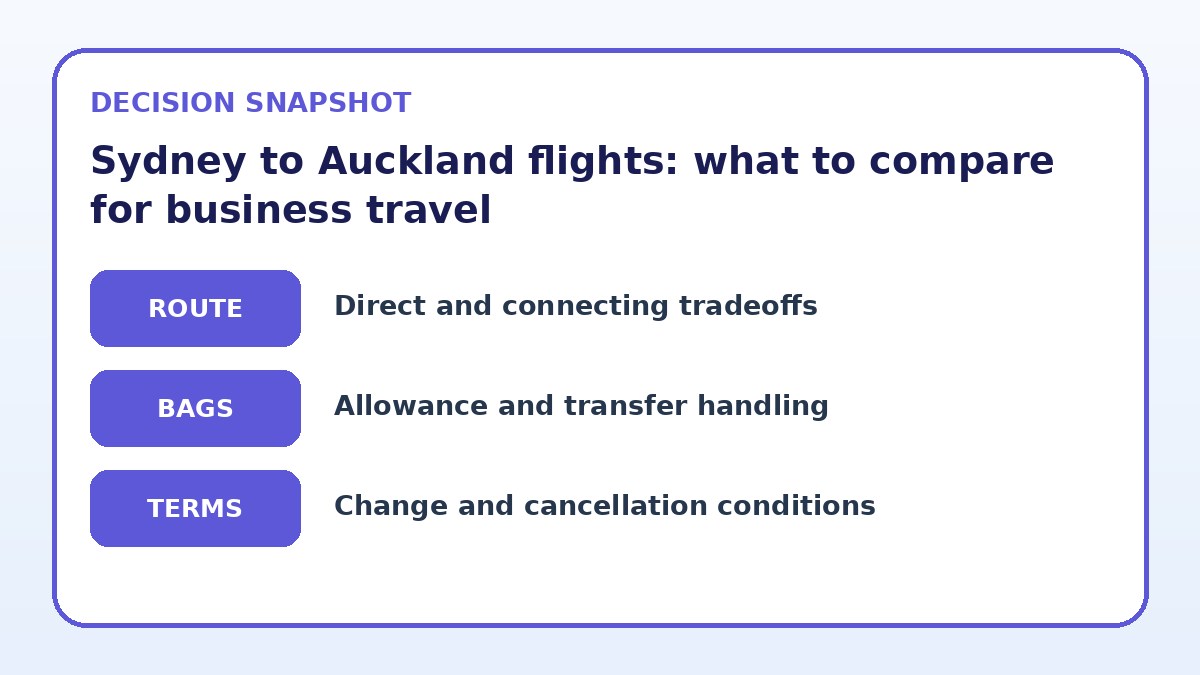
Routing: direct versus one-stop and why it matters
On the decision between direct and connecting itineraries, think in terms of control versus options. A direct service usually reduces the number of things that can go wrong between Sydney and Auckland — fewer transfers, simpler baggage handling, and fewer variables to manage when you need to get to a meeting on time. For many business travelers, that reduction in complexity is worth a higher fare or less advantageous schedule because it decreases the probability of missing ground-level commitments.
A one-stop itinerary can offer more schedule choices, potentially lower fares, or better departure/arrival slots that match unusual meeting hours. But it increases connection risk: baggage may need to be rechecked, and a tight domestic-to-international or international-to-international connection means you should add buffer time. When comparing options, compute door-to-door time, verify minimum connection times shown on the carrier or travel agent page, and prefer connections with a single terminal change when possible.
Baggage and connection risk: how to evaluate practical impact
Baggage rules and how carriers handle transfers vary significantly and affect convenience. For checked bags, confirm whether the same ticketing record covers both legs (through-checked) or whether you must collect and recheck in transit. Through-checked baggage lowers connection risk and stress; if your itinerary splits across different tickets or alliances, you may need to reclaim baggage and pass through departure security, which adds time and uncertainty.
Carry-on-only travel reduces baggage transfer dependence but imposes packing discipline. If you must check bags, choose itineraries with longer connection windows or book on an itinerary marketed by a single carrier (or partnership) to increase the chance of through-checked bags. Always check the provider’s final booking page for exact weight, size limits, fees, and whether priority handling or expedited transfer options are offered, especially for short layovers.
Compare flight-selection strategies
| Flight strategy | Best for | Risk to check |
|---|---|---|
| Direct premium ticket (higher fare, nonstop) | Travelers prioritizing reliability and short transfer risk | Higher cost and less flexibility if meeting times change |
| Cheaper basic fare on direct flight | Fixed schedule travelers with light luggage and low change probability | Often restrictive change/refund rules and limited baggage allowance |
| One-stop flexible-fare itinerary | Travelers needing changeable tickets and more schedule options | Longer travel time and increased connection/baggage risk |
| Mixed-carrier or multi-ticket strategy | Cost-sensitive travelers willing to manage transfers for savings | Higher chance of missed connections and no through-checked baggage |
Recheck the complete itinerary
Confirm airports, connection handling, baggage, and change conditions before deciding.
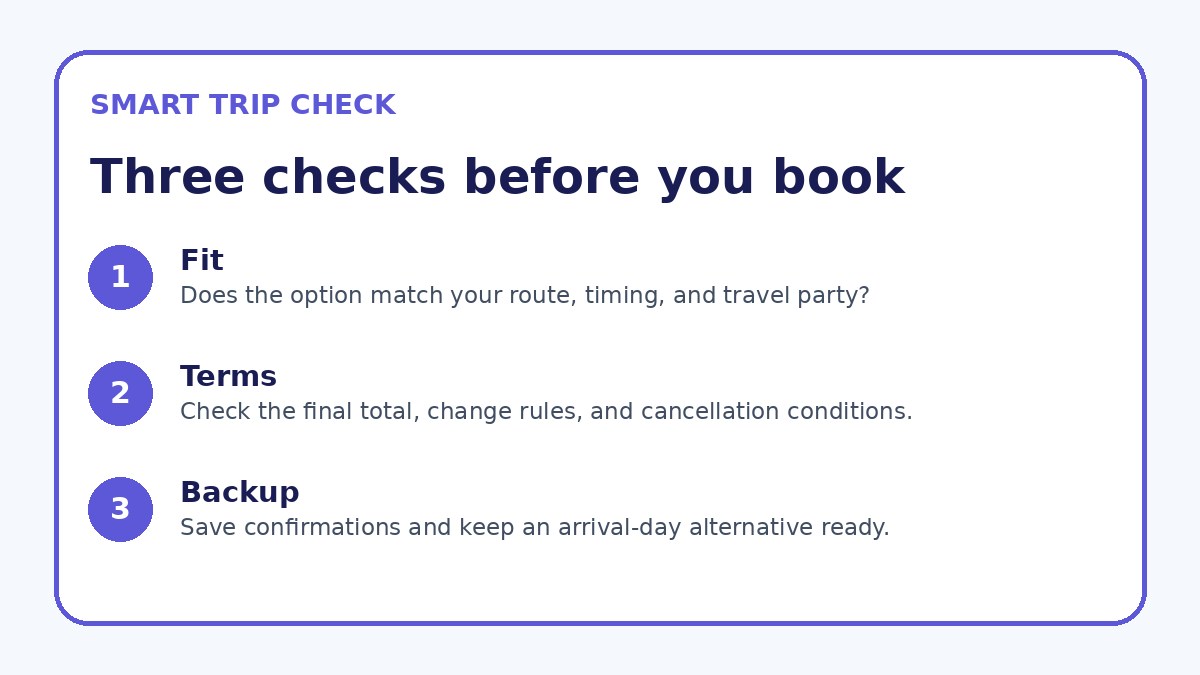
Schedule fit: matching flights to meeting windows
Start by working backwards from the meeting: what arrival time gives you a comfortable buffer for immigration, baggage, transfer to central Auckland, and a short pre-meeting prep window? For an important morning meeting, an overnight flight arriving early, or an early direct service, reduces same-day risk. If your meeting is late afternoon or can be moved, a midday flight with more flexible change policies may be preferable because it reduces overnight accommodation needs and allows same-day returns if schedules shift.
Consider outbound and return symmetry: a flight that leaves Sydney late enough to cover a full workday can be high value, but it may be less flexible if meetings extend. Balance the cost of lost flexibility (non-changeable cheap fares) against the benefit of convenience (direct, well-timed flights). Make a short matrix listing meeting start times, preferred arrival buffer, and acceptable latest departure from Sydney so you can check which published schedules actually meet those constraints.
Flight details to verify
- Confirm exact travel dates, meeting start/end times in Auckland, and the minimum arrival buffer you require before each meeting.
- Decide whether you can travel carry-on only or need checked baggage, then check exact size and weight limits on the carrier’s booking page.
- Compare direct and connecting itineraries for total door-to-door time and required connection windows, prioritizing single-terminal changes when possible.
- Read the fare conditions on the airline’s final booking page for change fees, refund rules, and whether changes yield travel credit or reissue.
- If booked on multiple tickets or different carriers, plan at least a generous buffer for bag pickup and recheck or choose through-ticketed options.
- Check corporate travel policy and frequent flyer benefits to see if they offset fare or convenience differences (baggage, lounge access, priority handling).
Fare conditions: what to check and why it changes choices
Fare rules are the invisible decision drivers. Before finalizing a booking, read the fare conditions on the booking page: change penalties, whether changes allow open-dated credits or only revalidation, refundability details, and whether name changes are permitted. For business travelers who face schedule volatility, a slightly higher fare with flexible or free-change terms can save time and expense if meetings move. Also confirm what taxes or reissue fees apply and whether your corporate travel policy will cover the fare class.
Corporate benefits and frequent flyer status can change the value equation. Lounge access, priority boarding, or generous baggage allowances might make a less flexible fare acceptable because they reduce airport friction. Whatever you choose, verify ticketing carrier rules (not third-party summaries) for the final authority on changes and refunds. If using a travel agent or an OTA such as Trip.com to compare options, always click through to the airline’s booking page to confirm final conditions before purchase.
Flight Guide questions travelers ask
Is it better for business trips to pick a direct flight even if it costs more?
Direct flights reduce variables: fewer transfers, simpler baggage handling, and less risk of missing appointments. For critical meetings where timing and reliability matter more than cost, many business travelers accept a higher fare for those benefits. However, if your schedule is fluid and you may need to change dates at short notice, a more flexible fare—direct or connecting—can be smarter. Compare the value of reduced travel stress and time saved against the incremental fare and check the airline’s change policy before booking.
How much connection time should I allow when my itinerary has a stop?
Connection time should reflect the terminals involved, whether you need to clear immigration or recheck baggage, and the typical on-time performance of the carriers. For domestic-to-international or international-to-international transfers, add a generous safety margin beyond published minimums. If you must collect and recheck bags, allow extra time for queues. When in doubt, prioritize connections that leave at least an hour more than the carrier’s stated minimum connecting time and prefer same-terminal changes to minimize transit time.
What fare rules are most important to business travelers on this route?
Look first for change and cancellation terms: does the fare allow free changes, credited changes, or only paid reissues? Next, confirm baggage allowances and whether priority services are included. Also check the reissue timeframe and whether taxes or service fees apply to changes. Finally, verify if the fare is ticketed by a single carrier or multiple carriers, because multi-carrier tickets may complicate refunds and reissues. Always confirm these details on the airline’s official booking page rather than relying solely on third-party summaries.
Final decision note
For business travelers between Sydney and Auckland, the right choice balances how fixed your meetings are against how much airport complexity you will accept. If timing is paramount, favor simpler itineraries with fewer or no connections, even at a higher fare. If meetings can move, prioritize fares with flexible change rules and allow a longer travel window to reduce cost. Prepare exact dates, meeting times, baggage needs, and corporate policy constraints before searching so you can compare actual itineraries on equal terms. Finally, verify all fare and baggage rules on the carrier’s booking page (or your corporate travel desk) before you buy — Trip.com can be a place to compare availability, but the airline’s page is the definitive source for final ticket conditions.
Continue planning
Check current options and final conditions
Use the provider page to confirm live availability, the final total, cancellation terms, and every condition that matters to your trip.
This evergreen planning guide was created with AI-assisted drafting and a structured quality review. It does not display live prices, schedules, availability, visa guidance, or provider rankings. Verify current details before booking. Some links are affiliate links; we may earn a commission at no additional cost to you.