The practical answer: for most solo travelers moving between Osaka and Kyoto, trains deliver the clearest door-to-door balance of frequency, low transfer friction, and ease of luggage handling; coaches can be cheaper with fewer transfers if you’re near coach terminals, while waterborne and bicycle combinations make sense only for scenic or leisure-minded itineraries. Start by thinking about where you’ll start and finish in each city, how much luggage you’re carrying, and whether timetable flexibility or a relaxed scenic route matters more. This article compares the modes that matter for planning end-to-end travel—terminal fit, luggage and transfer friction, timing flexibility, and what to do if disruptions happen—so you can pick the option that best fits your solo trip priorities.
Terminal fit: where you start and finish matters
Choosing the right mode begins with terminals. In both Osaka and Kyoto, central train stations sit within walking or short taxi distance of many hotels and tourist areas; that makes rail attractive for solo travelers who want straightforward door-to-door routing. Coaches and long-distance buses often use dedicated terminals that may be farther from your accommodation, requiring an extra transfer or local bus ride. If you’re staying near a waterfront or a riverside quay, mix-and-match ferry legs may connect pockets of both cities but expect fewer daily departures and additional walking between piers and streetside pickup points.
Map your exact addresses against station and terminal locations before deciding. Pin the walking times, taxi fares you’re comfortable with, and any luggage lifts or escalators at stops if you have heavy bags—solo travelers don’t have a companion to lift cases. Confirm station entrances and exit names so you don’t end up at the wrong side of a sprawling station complex. If your hotel sits beside a major coach terminal, a direct coach may eliminate transfers, but if it’s closer to a rail station, trains will likely reduce total travel friction.
Choose the end-to-end journey plan
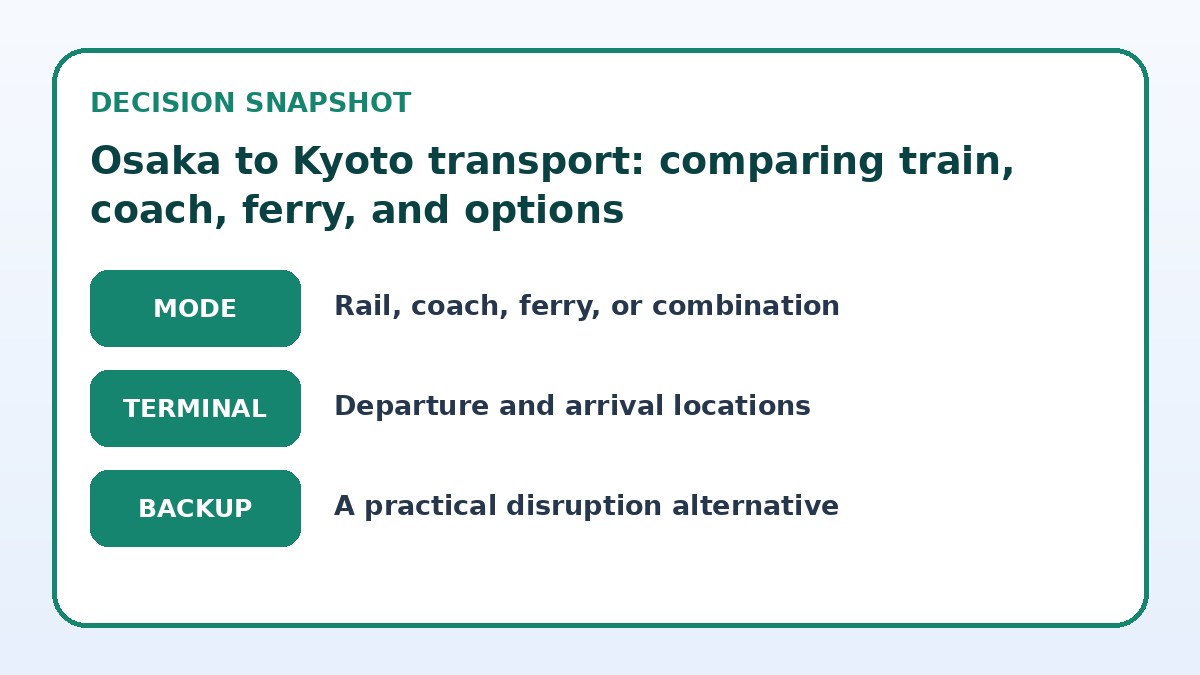
| Journey approach | Best for | Friction to check |
|---|---|---|
| Frequent urban trains (multiple departures) | Solo travelers who prioritize flexibility, short transfers, and reliable door-to-door routing. | May be crowded at peak times and requires handling your luggage between station exits and hotels. |
| Point-to-point coaches (direct terminal routing) | Those who want fewer changes and supervised luggage storage when staying near coach terminals. | Coach terminals can be farther from central hotels, adding a local transfer or extra walking. |
| Ferry-connected or scenic mixed routes | Leisure travelers valuing scenery and a relaxed pace over strict schedule flexibility. | Fewer departures, more transfers, and higher chance of weather-related disruption or added walking. |
| Rail plus short taxi/rideshare (hybrid door-to-door) | Solo travelers seeking speed with minimal time carrying luggage over short distances. | Higher cost than pure public transport and depends on taxi availability at termini. |
Check live intercity options
Look beyond the ride itself and compare terminals, transfers, luggage, and arrival fit.
Luggage and transfer friction: practical barriers for solo travelers
The amount and type of luggage you carry changes the equation. Trains between Osaka and Kyoto typically offer level boarding and luggage space in carriages or overhead racks, but you should plan for stairs or crowded platforms during peak hours. Coaches may offer underfloor luggage bays that reduce carrying on and off, but you’ll need to label and check bags and be present for loading and unloading. Ferries and multimodal routes can mean multiple short transfers—pier to bus stop to station—so a single-roll suitcase on wheels is far easier for those itineraries than a heavy backpack.
Think through door-to-door transitions: how long is the walk from the station to your lodging, are there escalators or elevators, and will you need to manage luggage alone? If you have mobility constraints or a lot of gear, prioritize modes with minimal transfers and clear step-free access. Carry a compact, reliable trolley bag or backpack with shoulder straps so you can adapt from short stairs to longer walks. If using coach or ferry, verify luggage allowances and whether baggage is supervised; check the provider’s final booking page for the latest rules before you travel.
Timing flexibility and frequency: pick what matches your schedule
If your trip depends on schedule flexibility—late arrivals, early departures, or last-minute changes—frequency matters. Trains commonly run often throughout the day between big urban centers, making them useful when you value short wait times and multiple recovery options after a missed connection. Coaches can be plentiful but are often concentrated at peak times and may sell out for special events. Ferry legs and combined leisure routes tend to have limited daily departures, so they require more rigid planning and buffer time for unexpected delays.
Check timetables and expected headways for the segment you’ll use and plan at least one alternate route for the same travel window. When comparing direct versus connecting options, include connection margins and station transfer times in your calculations to avoid unrealistic plans. Solo travelers should favor options with straightforward frequency so you’re not stranded waiting for a rare departure. For any provider, verify the real-time schedule and operating days on the final booking page—services and seasonal timetables can change.
Compare the practical alternatives
Use the final page to confirm what is actually offered on your dates and save a workable fallback.
Intercity travel checklist
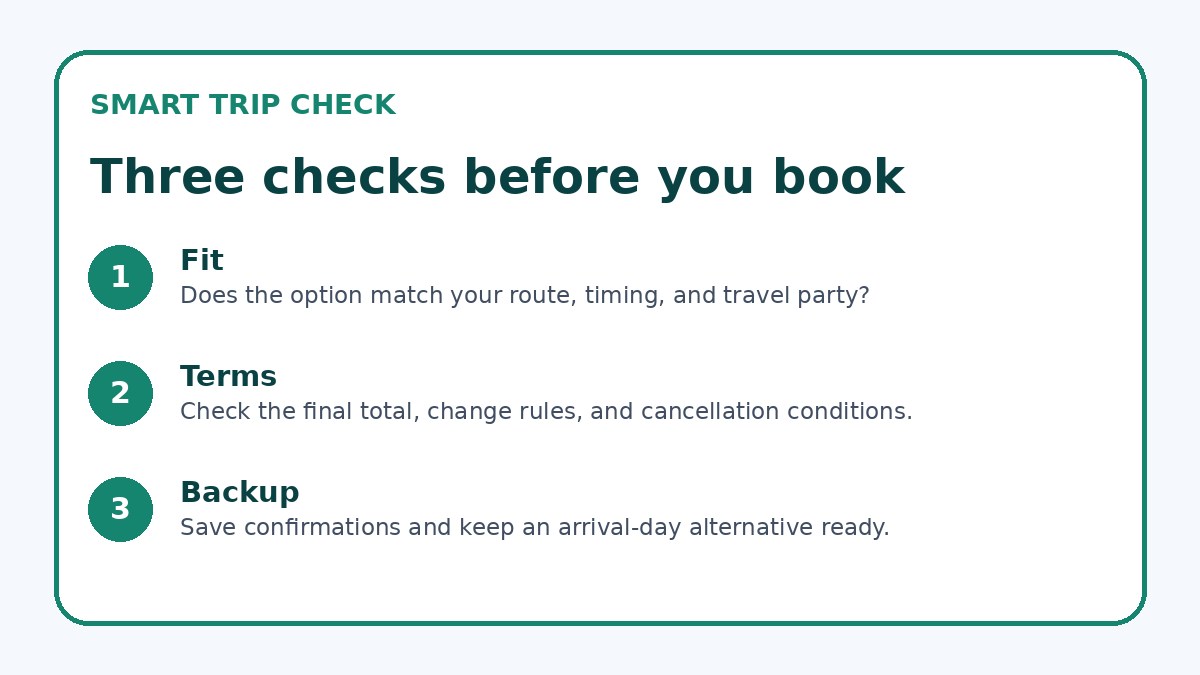
- Locate exact station, coach terminal, and pier addresses for your start and end points and note walking times to your accommodation.
- Check luggage rules and storage options on the provider’s final booking page and choose a carry style that matches transfers.
- Compare timetable frequency for your travel window and pick a primary and immediate backup departure.
- Plan an emergency last-mile option (taxi app or local cab number) and set aside a contingency fund.
- Save screenshots of tickets, platform or berth details, and station exit names for offline access.
- Confirm accessibility features at stations or terminals if you need elevators, ramps, or assistance, using the provider’s official information.
Disruption backup: simple contingency plans that keep you moving
Before you leave, identify two backup options: an alternate rail service, a coach route, or a taxi/rideshare app that covers the corridor. If your first choice is a train and it’s delayed or canceled, know whether a nearby coach terminal or a different line offers connections you can reach with a short taxi ride. For ferry or multimodal plans, have a land-only alternative circled—situations like high winds or maintenance can suspend water services at short notice. Save screenshots of key route maps, station exit names, and booking references so you can show them to station staff if needed.
Record emergency contacts and local transport help desks, and be prepared to buy a last-mile taxi if time is tight—solo travelers benefit from a small emergency fund for that possibility. If you rely on timed reservations like a seat on a premium train or a reserved coach seat, double-check the provider’s change and refund policies on their official booking page before committing. Practicing flexibility and having two credible fallbacks keeps your day intact and reduces stress when urban services hiccup.
Rail & Intercity Transport questions travelers ask
Is the train always the fastest way from Osaka to Kyoto for a solo traveler?
Not always; trains often offer the best balance of speed and frequency, but total door-to-door time depends on where you start and finish. If your accommodation is far from the nearest rail station or right beside a coach terminal, a coach or short taxi might be quicker overall. For scenic or leisure trips, a ferry-mixed route can take longer but be preferable for the experience. Before booking, compare total travel time including transfers, walking, and waiting—and verify schedules on the service provider’s final booking page.
Can I take a lot of luggage on coaches or ferries between these cities?
Luggage allowances and handling differ by mode and operator. Coaches often have underfloor bays that reduce how much you carry, but you may need to tag and supervise your bag during loading and unloading. Ferries and mixed-mode journeys usually require moving luggage on and off multiple times, so lighter, wheeled suitcases or backpacks are easier for solo travel. Always check the specific operator’s booking page for up-to-date baggage policies, size and weight limits, and any charges before you finalize your reservation.
What should I do if my planned service is canceled or delayed?
Have at least two alternative routes mapped: another train line, a coach departure, or a taxi option that gets you to your destination. If a scheduled ferry is canceled due to weather, switch to a land route rather than waiting for a rare next sailing. Keep contact details for the operator and customer service handy, and show booking confirmations to staff for rebooking help. If you purchased timed reservations, check the booking page for change and refund procedures so you know your rights and options during disruptions.
Final decision note
For solo travelers weighing Osaka to Kyoto transport options, start with where you’re coming from and going to, then match the mode to your priorities: trains for frequency and minimal transfers, coaches for direct terminal routing if convenient to your lodging, and ferries or mixed routes when scenery is the point of the journey. Take a practical view of luggage, transfer steps, and how rigid your schedule is. Always verify schedules, luggage rules, and refund/change policies on the provider’s final booking page before you book—Trip.com can be a place to compare current availability, but confirm details with the service itself. With two fallback routes and a simple emergency plan, you’ll keep your solo itinerary smooth and adaptable.
Continue planning
Check current options and final conditions
Use the provider page to confirm live availability, the final total, cancellation terms, and every condition that matters to your trip.
This evergreen planning guide was created with AI-assisted drafting and a structured quality review. It does not display live prices, schedules, availability, visa guidance, or provider rankings. Verify current details before booking. Some links are affiliate links; we may earn a commission at no additional cost to you.