Practical answer first: couples should compare total cash costs, exact inclusions, cancellation and change terms, and traveler-specific value (room type, seat class, extras) before choosing a bundle. In Toronto, shoulder seasons—spring and fall—can offer lower crowding, more temperate weather, and better availability of desirable rooms and restaurants, but the real savings depend on how a package aligns with your dates and needs. Start by fixing your travel dates, desired neighborhoods, and non-negotiable activities, then request or assemble identical itineraries for a package and for separately booked flights, hotels, and activities. That side-by-side makes it far easier to spot false savings from marginal room upgrades, restrictive tickets, or bundled fees. Below I’ll walk you through the inclusions, flexibility, traveler-specific value, and final terms to check, plus practical decision rules for couples planning around Toronto shoulder seasons.
Test package value fairly
| Booking approach | Best for | Tradeoff to check |
|---|---|---|
| Bundled package (flight + hotel + extras) | Couples wanting one-stop booking and standard inclusions without detailed customization | Less flexibility for changes and less control over specific room or seat options |
| Flight + hotel booked separately | Couples prioritizing control over cabin and room choices with mixed refundability | Requires more time to compare and manage separate reservations and policies |
| Hotel-first booking with separate flights | Couples seeking a specific neighborhood or property during shoulder-season availability | Flight options may be more expensive or less convenient if not booked simultaneously |
| Self-assembled trip: flights, hotel, activities individually | Couples who want maximum customization, refundable options, and tailored experiences | Higher planning effort and potential loss of package customer-service consolidation |
Check current package and separate options
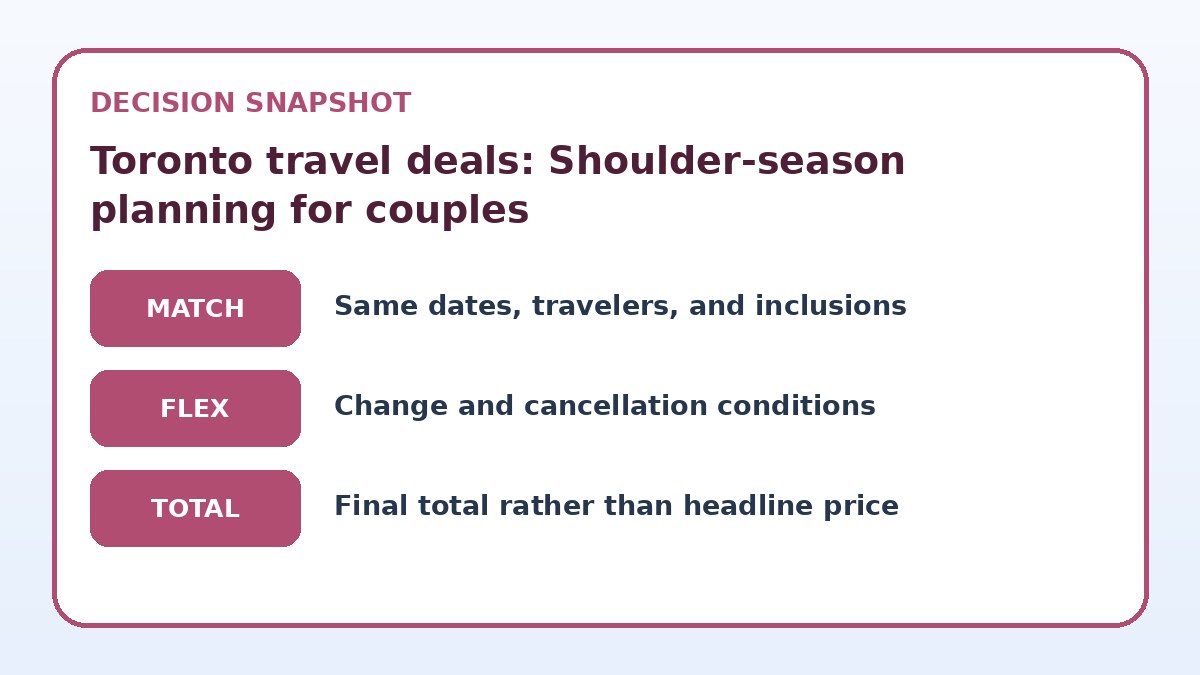
Use identical dates, travelers, room needs, baggage, and flexibility so the comparison stays meaningful.
What to compare before judging a Toronto package
Before you decide whether a package is worth it for a Toronto trip, make a checklist of the exact components to compare: flights (class and change rules), hotel (category, bed type, view, and specific cancellation policy), ground transfers, meals included, and any attraction tickets or experiences. For couples, add preferences such as early check-in, quiet room location, or specific dining reservations that package descriptions often omit. Ask for the supplier’s exact room code or rate plan and the airline fare basis—these are the details that determine whether the bundled price truly matches the value of separate bookings.
Next, align the dates and traveler details between package and separate quotes: same arrival and departure times, same number of travelers, and the same room occupancy. If a package uses a lower-occupancy room or a different check-in/out schedule, its headline saving can vanish. When you request or obtain a package, insist on written confirmation of every inclusion and on seeing the supplier’s final booking terms. That final page is where change fees, luggage allowances, and other restrictive clauses appear, so verify those items before you assume a package is the better deal.
Inclusions: what couples gain or lose in bundles
Bundles often include conveniences: one checkout, combined customer service, and sometimes extras like airport transfers or attraction tickets. For couples traveling to Toronto in shoulder seasons, bundled extras can be useful—an included ferry or museum ticket can save time and guarantee entry on busy weekend days. But not all inclusions add equal value: a complimentary breakfast matters more if your itinerary has many early starts, whereas a transfer matters less if you prefer public transit and want to pay only for rides you take.
Pay attention to the quality and specificity of included items. A package may advertise “breakfast included” without spelling out whether it’s a buffet, full hot breakfast, or continental offering; similarly, a listed “city tour” might be a voucher with limited availability. For couples with precise preferences—quiet rooms, dietary needs, or private tours—confirm whether inclusions are easily altered or upgraded, and if so, at what cost. Always ask whether included tickets are date-specific, refundable, or exchangeable, especially when planning around the variable weather of shoulder seasons.
Look past the headline total
Compare inclusions and change conditions before deciding whether a package is genuinely useful for this trip.
Deal comparison checklist
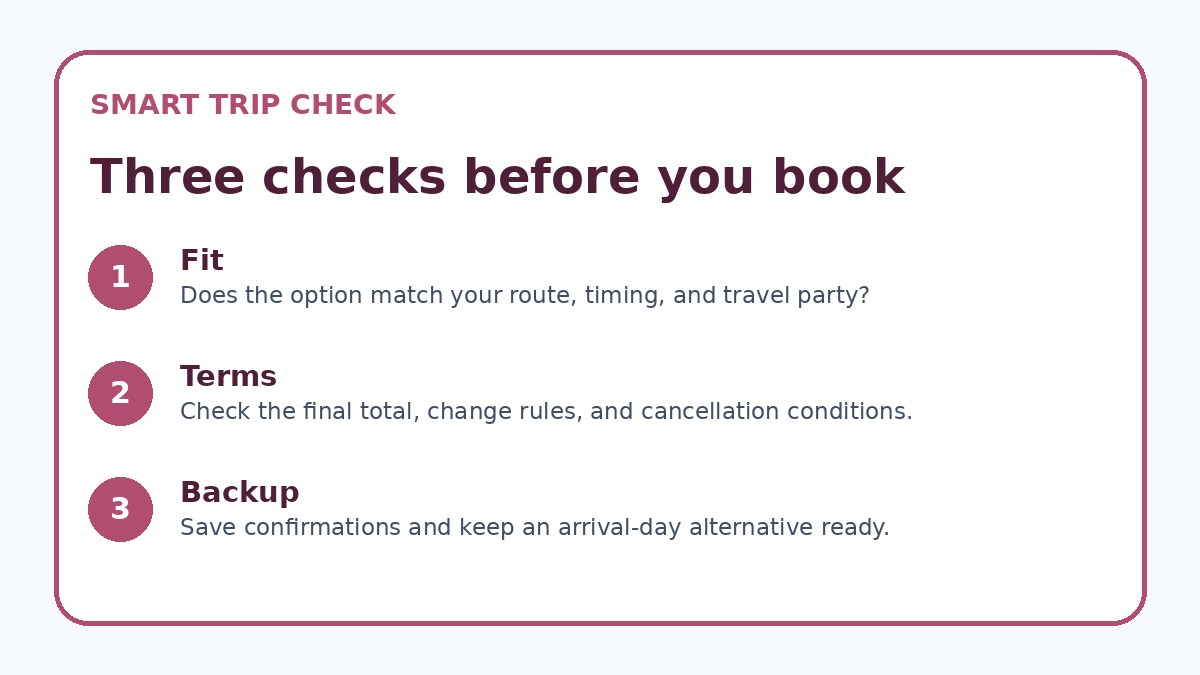
- Fix your travel dates and preferred Toronto neighborhood before requesting package or separate quotes.
- Ask the package provider for exact room codes, fare bases, and all inclusions in writing.
- Compare the same dates, travelers, room type, and seat class across package and separate quotes.
- Verify cancellation and change fees on the final booking page of each supplier before paying.
- Confirm whether included attraction tickets or transfers are date-specific, refundable, or transferable.
- Decide which components must be refundable (flight or hotel) and purchase accordingly.
Flexibility and traveler-specific value for couples
Flexibility tends to tip the balance for couples whose dates aren’t locked or who value refundable options. Separate bookings let you mix refundable hotels with low-cost nonrefundable flights, or vice versa, to create a tailored risk profile. If you anticipate adjusting plans—extending a romantic stay in Toronto when the weather is unexpectedly lovely—separate hotel bookings often let you add nights or switch rooms more easily than a fixed package that ties you to specific dates and room inventory.
Traveler-specific value also includes cabin choice, seat assignment, and specific room features that matter to couples—king bed, quiet corner room, or a suite with a view. Packages sometimes assign rooms or economy fares by default, and upgrades may be limited or expensive. If these features are important, request exact room and fare codes in a package quote, or consider booking the flight and hotel separately so you control cabin and room selection directly and can secure perks like lounge access or guaranteed late checkout for your couple’s comfort.
Final terms: what to verify on the booking page
The supplier’s final booking page contains the legally binding details that decide whether a package suits your trip. Look for change and cancellation deadlines and fees, whether the package price is fully refundable under certain conditions, and what happens if one traveler cancels. Confirm luggage allowances, seat-change fees, hotel check-in/out times, and whether any included attraction tickets are date-locked or transferable. These specifics determine how forgiving the booking will be if your plans shift during Toronto’s unpredictable shoulder-season weather.
Also verify contact and claims procedures: who handles refunds and changes—the package operator or the individual hotel and airline—and the expected timelines for refunds. If a package includes third-party experiences, check whether vouchers expire on arrival or on a specific date. When in doubt, ask the seller to email the exact terms, and compare those terms to the separate suppliers’ policies. You can optionally cross-check availability and conditions on a comparison site such as Trip.com, but always treat the supplier’s final booking page as authoritative.
Travel Deals & Booking Strategy questions travelers ask
Is shoulder-season travel to Toronto actually cheaper for couples?
Shoulder seasons often reduce crowding and improve availability for desirable rooms and dining, which can lead to lower overall stress and sometimes lower costs. Whether the trip is cheaper depends on the specific travel dates, the day-of-week pattern of your stay, and how you book components. Compare identical itineraries—same dates, room category, and flight class—across a package and separate bookings to measure real savings. Also factor in intangible value for couples, such as quieter restaurants and easier table reservations, which may be worth paying a bit more for.
If a package looks cheaper, how do I avoid falling for false savings?
To avoid false savings, insist on seeing and comparing the detailed inclusions and the supplier’s final cancellation and change terms. A lower package price may come with a worse room category, restrictive flight fare, or nontransferable vouchers. Match every element—arrival and departure times, bed type, included meals, and extras—and calculate the full cost of optional upgrades the package forces you to accept. If any terms are unclear, ask for them in writing and compare those exact terms with what you’d get by booking separately.
How should couples decide whether to prioritize flexibility or upfront savings?
Start by assessing your likelihood of change: if work, weather, or health make schedule shifts plausible, prioritize flexibility—choose refundable hotels or flexible flight options—even if the upfront price is higher. If your dates are firm and you can accept nonrefundable terms, prioritize upfront savings. Couples should also weigh intangible needs—romantic room features, late checkout, or proximity to specific attractions. Often a hybrid approach works: book a refundable hotel for the first nights and secure the lowest-cost flight or remainder nights once your plans firm up.
Final decision note
For couples planning a Toronto trip around shoulder seasons, the decisive step is a careful like-for-like comparison: same dates, room category, cabin choice, and cancellation terms. Bundles can simplify booking and sometimes include useful extras, but they can also obscure room quality and restrict changes. Separate bookings offer greater control and customizable refund options that may suit couples who value specific room features or flexible dates. Use the checklist above to gather identical quotes, verify final booking terms, and decide whether convenience or control best matches your travel risk tolerance and relationship priorities in Toronto’s shoulder months.
Continue planning
Check current options and final conditions
Use the provider page to confirm live availability, the final total, cancellation terms, and every condition that matters to your trip.
This evergreen planning guide was created with AI-assisted drafting and a structured quality review. It does not display live prices, schedules, availability, visa guidance, or provider rankings. Verify current details before booking. Some links are affiliate links; we may earn a commission at no additional cost to you.