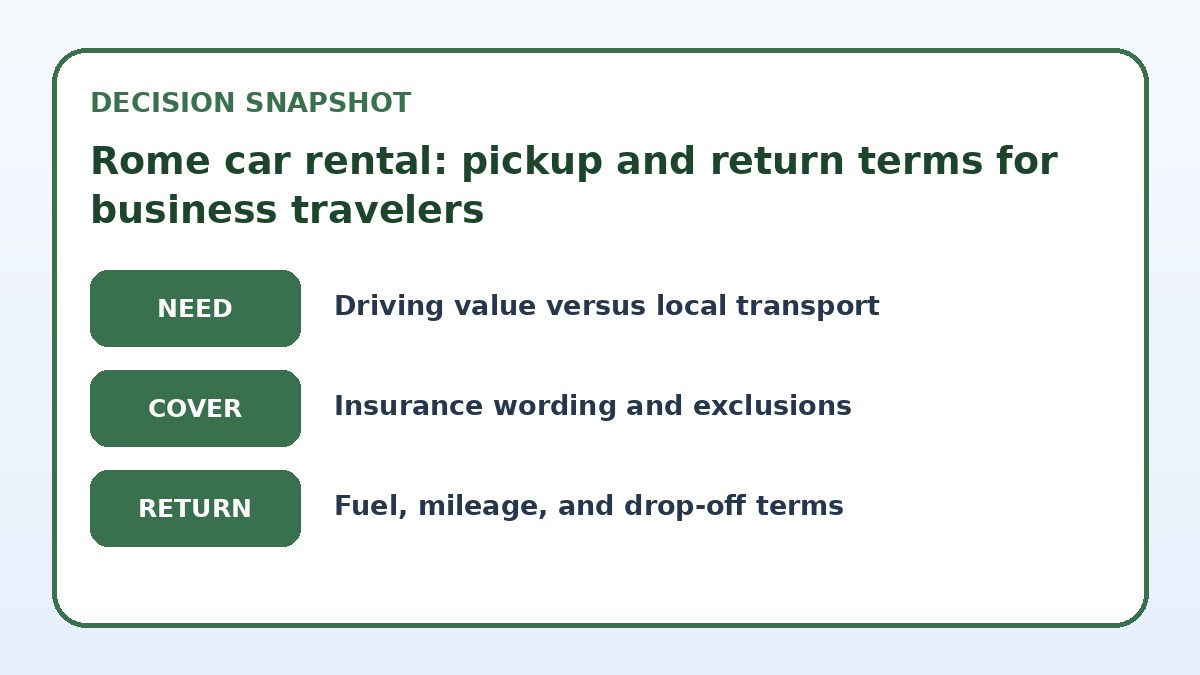
Short answer first: for most business trips confined to central Rome, driving is more hassle than helpful; however, if your itinerary includes meetings outside the Aurelian Walls, clients in multiple suburbs, or last-mile connections to sites without reliable taxis, renting can save time. The real decision hinges on three practical checks when booking: exact pickup and return locations and their operating hours, insurance and liability wording, and penalties for late or off-hour returns. This article explains those checks, shows when driving genuinely improves a business schedule, compares four mobility strategies, and gives a non-driving fallback. Read the pickup and return verification checklist closely before you confirm — and when provider-specific claims appear on booking pages, verify them directly on the final vendor contract, noting terminal addresses, grace periods, fuel policy, and the insurer named on the rental agreement.
Route value: when driving in Rome helps your business trip
Driving adds real value when your schedule has multiple meetings outside central Rome, when you must transport proposals or equipment, or when you need predictable travel times on peripheral roads where taxis and transit are slow or infrequent. For example, jobs in the EUR business district, Fiumicino-area clients, or construction sites in outskirts can involve routes that public transit connections don’t serve efficiently. Consider door-to-door travel time, parking availability at each meeting, and whether you can chain appointments geographically to avoid backtracking. Translate subjective convenience into minutes saved across the day to justify the rental cost and the time you’ll spend on pickup and return.
Conversely, central Rome’s limited traffic zones (ZTLs), narrow one-way streets, and paid parking increase complexity. If most stops cluster inside or near the historical centre, walking between meetings, short taxi hops, or metro rides often beat the combined time and stress of driving and parking. When calculating route value, check where each meeting is relative to ZTL boundaries and whether the building offers guest parking or validated parking permits; these practical details often decide whether a car improves or slows your itinerary.
Decide whether driving earns its place
| Mobility strategy | Best for | Cost or friction to check |
|---|---|---|
| Full rental car for entire trip | Travelers needing control, equipment transport, or many suburban meetings | Parking, ZTL rules, fuel policy, and return logistics add time and administrative burden |
| Short-term rental for peripheral legs only | Itineraries with a few outlying appointments combined with central meetings | Requires coordinating pickups/returns with meeting times and possibly extra transfer segments |
| Taxis and licensed private drivers (NCC) | Quick, door-to-door service without parking or ZTL stress for individual transfers | Can be costly for many stops; surge pricing and availability vary by time and area |
| Public transit and micromobility (metro, tram, bike/scooter) | Dense central schedules where walking and rapid transit beat traffic delays | Limited late-night service, luggage inconvenience, and no door-to-door flexibility |
Check live rental choices only after the route test
Use the exact driver, dates, pickup point, and return plan to compare current conditions.
Insurance wording: what to check on the rental contract
Insurance descriptions can be misleading in summary listings. On the final booking page and the rental contract, verify the specific coverages: collision damage waiver (CDW) limits, excess amounts or deductible, theft protection scope, and whether any damage exclusions exist for tires, windshields, undercarriage, or signage. Also confirm whether the policy includes roadside assistance and whether it applies across Italian regions. If your company has a corporate policy or your corporate card offers secondary coverage, match those terms to the rental’s primary coverage so you understand which gaps, if any, you must fill.
Pay special attention to named drivers and cross-border permissions if you may travel to nearby regions or countries. The contract should list permitted drivers, age restrictions, and surcharge rules. Note how claims are handled: is there an on-the-spot authorization hold, and what documentation is required to process damage claims? When provider-specific insurance terms are shown, write down the insurer name and the exact policy number or code to verify with your corporate risk manager before accepting the rental.
Compare the full rental conditions
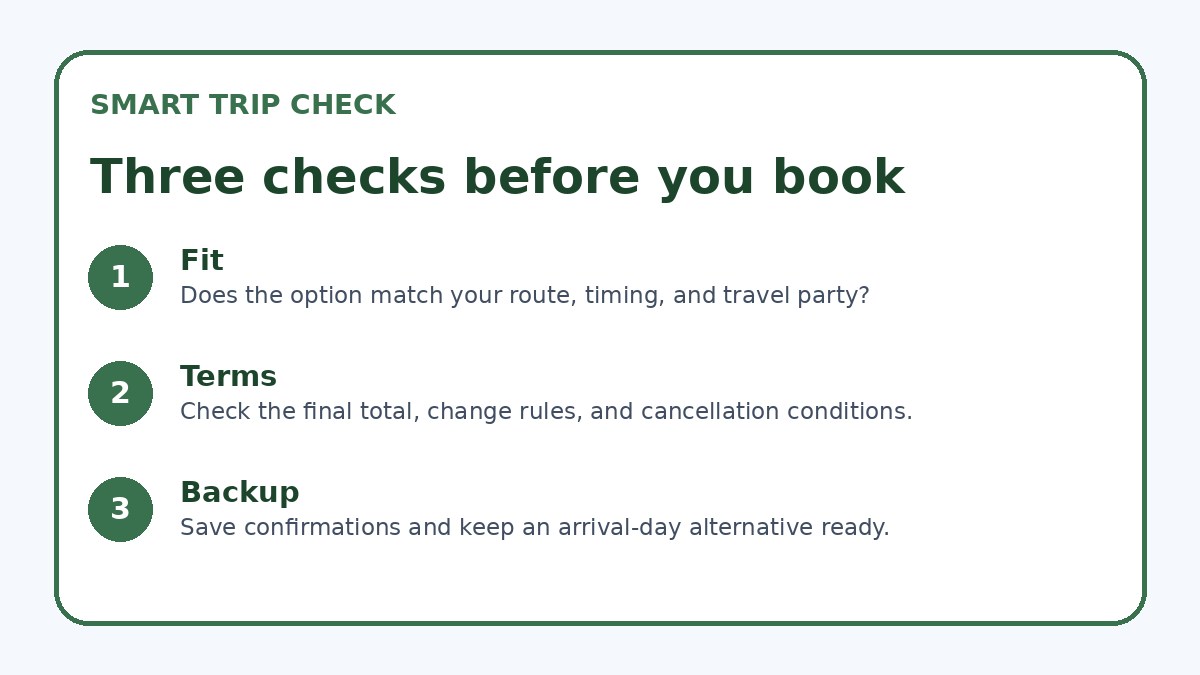
Confirm insurance wording, exclusions, deposit, fuel, mileage, and return terms on the final page.
Pickup and return friction: common pain points and how to avoid them
Pickup friction often comes from terminal locations, office hours, and mandatory check-in procedures. Airports and rail stations host many desks but expect queues, verification of corporate documentation, and sometimes shuttle transfers to offsite depots. If you arrive outside the rental desk hours you must pre-arrange after-hours pickup or risk waiting. At city addresses, small agencies can have limited hours or require phone collection. Confirm the exact street address for the vehicle pickup, required ID and cardholder presence, and whether the vehicle is dispensed from a lot or an offsite depot — all of which affect the time cost before your first meeting.
Return friction centers on fuel policy, grace periods, late-return fees, and inspected damage claims. Know whether the rental uses full-to-full fuel policy, requires a minimum fuel level, or charges inflated refueling fees. Ask the provider for the official grace period minutes after the contracted return time and whether late returns trigger hourly or daily rates. If returning after hours, confirm drop-box procedures and how they document return condition to avoid surprise damage claims. Always photograph the car with timestamps at both pickup and drop-off and retain the drop-off receipt or email confirmation.
Car rental terms to verify
- Confirm the exact pickup and return address and opening hours on the final booking page; note whether the desk is in-terminal, offsite, or requires a shuttle.
- Verify insurance details: CDW limits, excess/deductible amounts, theft protection scope, and which insurer underwrites the policy.
- Check named-driver rules, age restrictions, and whether corporate or personal cards provide primary or secondary coverage.
- Note fuel policy and any refueling service fees; plan to return full on a full-to-full policy or document agreed fuel level at pickup.
- Ask the provider for the official late-return grace period and late-fee schedule; request written confirmation of after-hours drop-off procedures.
- Photograph the vehicle’s condition with timestamps at pickup and drop-off and save the written or emailed return receipt for claims disputes.
Non-driving fallback: reliable alternatives for busy business travelers
If renting looks like net friction, several alternatives reliably support business itineraries in Rome. Taxis and app-based private cars (licensed NCC drivers) offer door-to-door service without parking headaches, useful for single transfers or evening moves when public transit is less convenient. For predictable, short intra-central trips, the metro and tram networks can be faster than surface traffic, particularly during peak hours. Trains connect Rome to Fiumicino and Ciampino airports and to major suburban hubs; evaluate express train schedules and platform proximity relative to your appointments.
For multi-stop days that require flexibility without a driver’s headaches, consider a hybrid approach: reserve a short rental only for the peripheral legs and use taxis or ride-hailing in the center. Alternatively, coordinate with local meeting hosts to use company or client-provided vehicles. When comparing these options, quantify total door-to-door time and potential wait times, and check cancellation and no-show policies for private drivers. If you want current availability across multiple modes, you may optionally glance at Trip.com for comparisons, but always verify operational details on each provider’s booking page.
Car Rental & Road Trip questions travelers ask
Can I pick up a rental in central Rome and return it at the airport, and what should I verify?
Many companies support one-way rentals between city locations and airports, but contract terms vary. On the booking page, verify that one-way returns are allowed for your chosen car class and note any one-way surcharge. Confirm the airport return location (terminal, lot, or offsite depot), after-hours return rules, and whether the return requires a shuttle. Also check fuel policies and the grace period for late returns to avoid unexpected fees. If the booking shows a different insurer or terms at confirmation, read the final rental agreement closely before accepting.
What insurance documentation should I bring as a business traveler?
Bring your driver’s license, the credit card used to reserve the car, and any corporate insurance or rental coverage documentation that states policy numbers and coverage scope. If your company’s card provides rental insurance, carry a copy of the corporate policy summary and contact info for the insurer. Also have authorised driver names if the company requires them listed. When collecting the vehicle, confirm the insurer named on the rental contract matches what you were quoted and note any exclusions such as tires or windshield damage.
How do ZTL (limited traffic zone) rules affect pickup and return choices within Rome?
ZTL zones restrict vehicle entry in central areas during set hours, enforced by cameras and fines. If any pickup or drop-off location is inside a ZTL, check whether temporary access permits exist or whether the rental company will register the vehicle to avoid fines. Confirm who is legally responsible for ZTL fines in the rental agreement and whether the provider charges administrative processing fees for infractions. If meetings fall inside a ZTL, a taxi or a short walk from outside the zone may save time and eliminate the risk of fines and administrative headaches.
Final decision note
For business travelers, the question isn’t whether Rome car rental is available but whether it meaningfully improves productivity versus alternatives. Use your itinerary map to score minutes saved, then verify three contract pillars before booking: precise pickup/return logistics, the insurer and excess wording, and late-return or off-hour policies. If many meetings sit inside the historical centre or near transit hubs, consider taxis, licensed private drivers, or transit as less frictional choices. When a rental is justified, prefer a short-term or targeted pickup plan that minimizes time spent collecting and returning the vehicle. Always confirm provider-specific terms on the final booking page and save all documentation and timestamps to protect yourself from surprise charges.
Continue planning
Check current options and final conditions
Use the provider page to confirm live availability, the final total, cancellation terms, and every condition that matters to your trip.
This evergreen planning guide was created with AI-assisted drafting and a structured quality review. It does not display live prices, schedules, availability, visa guidance, or provider rankings. Verify current details before booking. Some links are affiliate links; we may earn a commission at no additional cost to you.