Practical answer first: choose the neighborhood that minimizes your daily commute to the offices or venues you’ll visit, then filter hotels in that area for room features that support focused work and good rest. For many business travelers in Paris this means prioritizing proximity when meetings are tightly scheduled, and prioritizing room comfort (quiet, reliable desk space, blackout curtains) when you have evening calls, jet lag, or recovery time between meetings. Balancing the two requires turning vague preferences into firm criteria — maximum door-to-door commute time, minimum bed/desk standards, and acceptable tradeoffs on services like breakfast or flexible check-in. This article helps you shortlist one or two Paris areas quickly, then select rooms and booking terms that reduce daily friction and keep you productive.
Check live stays in the areas that fit
Use your dates and party size to compare current rooms after you narrow the neighborhood fit.
Neighborhood fit: choose your daily hub, not the landmark
Start by mapping where most of your obligations will be. Business travelers often gravitate to recognizable districts like the 8th, 1st, or La Défense, but the right choice is the area that cuts your door-to-door time. If you have a single office or conference venue, a neighborhood within a 20–30 minute door-to-door radius by metro or taxi will reduce stress. If your schedule includes evening dinners in a different arrondissement, adjust your hub to minimize late-night transfers.
Consider the rhythm of your day: morning commutes often determine punctuality, while evenings affect rest and availability for calls. Areas near major rail stations (Gare du Nord, Gare Saint-Lazare) are convenient for multi-site trips but bring more street-level bustle. Conversely, residential arrondissements like the 7th or parts of the 16th offer quieter rooms but may require longer transfers. Make a simple map with pins for meetings, dining, and transport to visualize which neighborhood best aligns with your priorities.
Choose an area-selection strategy
| Area approach | Best for | Tradeoff to check |
|---|---|---|
| Closest-to-meetings approach | Travelers with tightly scheduled, single-location meetings | May limit evening options and quieter rooms; fewer alternative transport lines |
| Transit-hub approach | Travelers with multiple daily sites or regional rail connections | Higher street noise and busier public spaces, but excellent route redundancy |
| Quiet-residential approach | Travelers prioritizing rest, long evening work sessions, or jet-lag recovery | Longer transfers to central business venues and fewer late-night transport options |
| Central-flex approach | Travelers who want walkable restaurants and multiple metro lines for evening plans | Typically higher rates and potential for more foot traffic and noise |
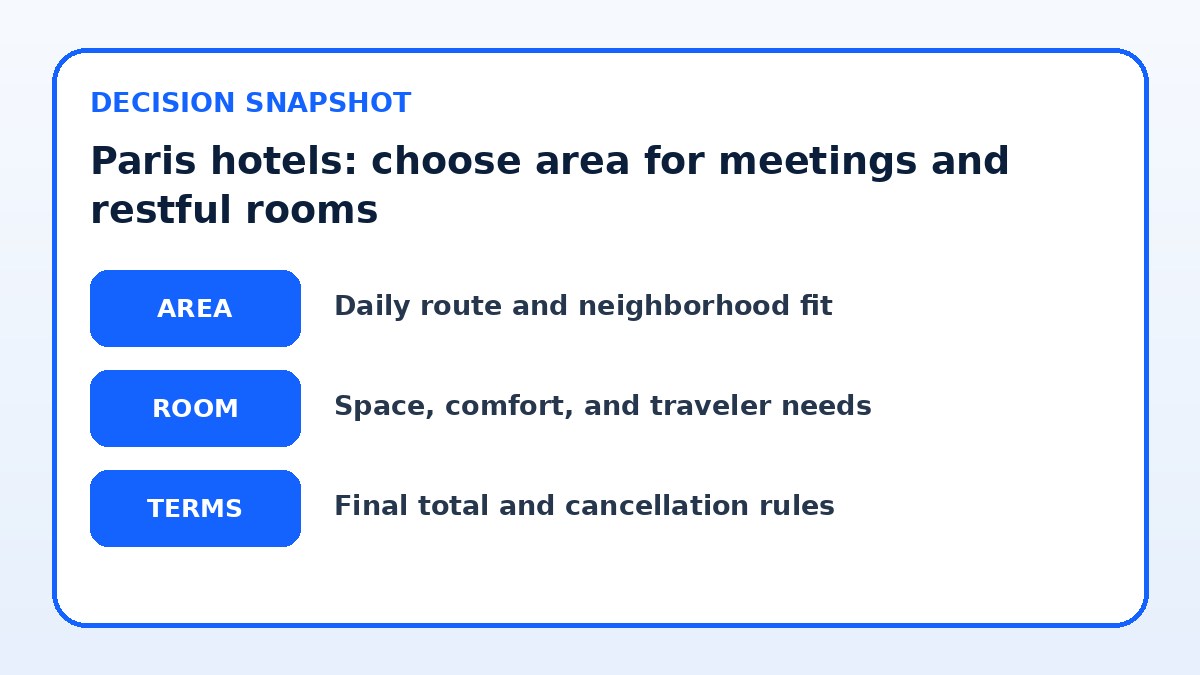
Daily-route friction: transit lines, taxis, and walking distances
Paris’s metro network is dense but not always the fastest door-to-door option, especially with luggage or at off-peak hours. Evaluate routes by total door-to-door time including walking to stations and any transfers. If you rely on taxis or rideshares for early or late travel, check typical pickup areas from your chosen neighborhood; some arrondissements are easier for drivers to reach than narrow, one-way-street locations. For multi-site business days, prefer neighborhoods served by two or more major lines to reduce the risk of a single disruption derailing your schedule.
Also factor in walking distance from station to hotel and from hotel to meeting venues. A hotel two stops away on the same line can be faster than one stop with a complicated transfer. If you're carrying work materials or prefer to avoid metro crowds, prioritize neighborhoods with quick taxi access or nearby regional rail connections. Make a test run mentally: imagine a 7:00 a.m. commute and a 9:30 p.m. return — which neighborhood feels less likely to add friction?
Now compare like with like
Keep the same dates, guests, room needs, and cancellation preferences while you compare the final choices.
Room and party needs: work setup, sleep quality, and companions
Define the room features that make you productive and rested. For solo business travelers, a comfortable, well-lit desk, reliable high-speed Wi‑Fi, good chair ergonomics, and multiple power outlets are essential. If you frequently take video calls, prioritize rooms with background lighting options and a quiet location away from elevators and street-facing windows. When traveling with a colleague or partner, evaluate room size, separate sleeping arrangements, and whether a second workstation or adjoining rooms are available.
Noise and sleep quality deserve as much attention as in-room tech. Ask whether the hotel provides soundproofing details, blackout curtains, and HVAC control at the room level. If jet lag or late meetings are likely, a room on a higher floor and away from busy streets will help. When booking, inspect photos for desk space and power access, and read recent guest comments specifically about Wi‑Fi reliability and noise rather than overall ratings.

Hotel booking check before payment
- Map your primary meeting addresses and mark neighborhoods that are within your acceptable door-to-door commute time.
- Filter hotels in shortlisted neighborhoods for rooms with a dedicated desk, multiple outlets, and clear photos showing workspace.
- Confirm flexible cancellation and check-in/check-out policies on the hotel’s booking page before finalizing your reservation.
- Ask the hotel or check reviews specifically about Wi‑Fi reliability, soundproofing, and HVAC controls at room level.
- Plan at least two transit routes from hotel to key venues (metro and taxi) and check walking times from nearest stations.
- Request or verify quiet-room placement (higher floor, courtyard-facing) and any extra business services you expect to use.
Final booking terms: flexibility, verification, and what to confirm
Before you commit, verify three practical items on the provider’s booking page: cancellation and modification policy, check-in and check-out flexibility, and the hotel’s Wi‑Fi speed or business center access. Policies change often; do not rely on third-party summaries. If your schedule might shift, choose a rate that offers free cancellation or reasonable change terms. If early check-in or a late departure matters, confirm availability or request a guaranteed early/late option where possible.
Also check whether the property charges extra for essentials like high-speed wired connections, printing, or breakfast — these add friction if you planned on them being included. Ask how the hotel handles urgent needs: laptop-printing, courier pick-up, or late-night room service. If the booking platform doesn’t list these details, call the hotel directly or use a reputable booking agent to confirm. Trip.com can be used to compare live availability and policies, but always verify final terms on the supplier’s booking confirmation page.
Hotel Guide questions travelers ask
Should I book near a train station like Gare du Nord for convenience?
Booking near a major station can be convenient if you plan multi-site travel, arrivals from other cities, or early departures. However, stations bring higher street noise, more foot traffic, and sometimes longer hotel check-in waits. Weigh whether ease of regional connections outweighs the potential for disrupted rest and make sure rooms in that zone explicitly advertise soundproofing or quiet-room options. Confirm the hotel’s distance from the station entrance and typical taxi access on the booking page.
How can I be sure the Wi‑Fi will support video calls and file uploads?
Hotels rarely publish consistent speed guarantees, so verify two things: whether the property offers a business-grade connection or wired Ethernet in rooms, and whether recent guest feedback mentions stable video calls. If the booking page lacks specifics, ask the hotel directly what upload speeds or wired options they provide and whether there is a fee. As a backup, plan for a secondary option like a portable hotspot or a nearby co-working space when booking — knowing the alternatives prevents surprises on critical call days.
Is it better to prioritize a central arrondissement or quieter residential ones?
There’s no single answer; it depends on your schedule and tolerance for evening travel. Central arrondissements minimize travel time between diverse meeting locations and dining options but can be noisier and busier. Residential arrondissements offer calmer rooms that support rest and focused work but add transit time to central meetings. Decide by listing the cost of extra commute time in lost productivity or stress, then choose the neighborhood that balances that cost against the value of better sleep and quieter work conditions.
Final decision note
Shortlist one or two neighborhoods in Paris by anchoring your decision to the location you’ll visit most often, then apply room-level criteria that support productivity and rest. Use transit redundancy as a tie-breaker: if two areas give similar commute times, pick the one with better metro or taxi options. When you’ve narrowed it down, inspect photos for desk space, confirm quiet-room placement, and verify flexible booking terms and Wi‑Fi details on the hotel’s booking page. With those checks complete you can book confidently, knowing you balanced daily friction with the comfort needed to perform well on business.
Continue planning
Check current options and final conditions
Use the provider page to confirm live availability, the final total, cancellation terms, and every condition that matters to your trip.
This evergreen planning guide was created with AI-assisted drafting and a structured quality review. It does not display live prices, schedules, availability, visa guidance, or provider rankings. Verify current details before booking. Some links are affiliate links; we may earn a commission at no additional cost to you.