If you and your partner want to pick an area in Hong Kong that fits your trip style, choose first by daily routine: evenings for dining and harbor views, daytime walks and markets, or easy transit for day trips. For a compact romantic stay with skyline views, a central waterfront district suits; for food-focused couples who live for hawker stalls and late-night bars, a lively street-level neighborhood works better; for quiet, leafy mornings and longer hotel stays, a quieter residential area is the better pick. This guide gives the quick decision up front, then explains tradeoffs—walking distance to sights, noise and nightlife, hotel room size vs. price, and how transit friction will affect daily plans. Use the comparison rows to decide which decision approach matches your trip, then read the booking checklist and FAQs to finalize what to verify before you open live hotel inventory.
Check live stays in the areas that fit
Use your dates and party size to compare current rooms after you narrow the neighborhood fit.
Neighborhood fit: vibe, noise and what you’ll do together
Think of a neighborhood as the stage for most of your trip’s moments. If your idea of a great night is rooftop drinks and harbor views, pick a waterfront-focused area where many hotels position rooms toward the skyline. If you prefer late-night street food, neon-lit alleys and bars, a vibrant commercial neighborhood with pedestrian-level energy will feel more alive after dark. Couples who prioritize slow museum mornings, long café breakfasts, or stretched-out hotel relaxation should lean toward quieter residential districts or areas with boutique hotels that emphasize comfort and space.
Noise and pace are part of the vibe and should match your tolerance. Busy commercial streets deliver convenience and nightlife but often come with street noise and light; quieter neighborhoods give you more private moments but might require a short ride for late-night dining. Consider what you do together most—sightseeing, food-hunting, shopping, or lounging in your room—and choose a neighborhood that supports those shared plans so you’re not repeatedly commuting to the parts of the city you actually want to be in.
Choose an area-selection strategy
| Area approach | Best for | Tradeoff to check |
|---|---|---|
| Choose by evening vibe (waterfront vs nightlife) | Couples who plan most nights around dinner, drinks, and sunset views | May accept higher night noise or smaller rooms in exchange for atmosphere |
| Choose by daytime access (museum/shopping proximity) | Couples prioritizing daytime walking itineraries and cultural visits | You might need to transfer farther for late-night dining or shows |
| Choose by transit hub convenience | Couples planning day trips or multiple airport/train transfers | Neighborhoods near hubs can be busy or less characterful in the evenings |
| Choose by room size and quiet | Couples staying longer, celebrating, or needing privacy and larger suites | Quieter, residential areas can add travel time to central sights and nightlife |
Daily-route friction: walking, transit and logistics
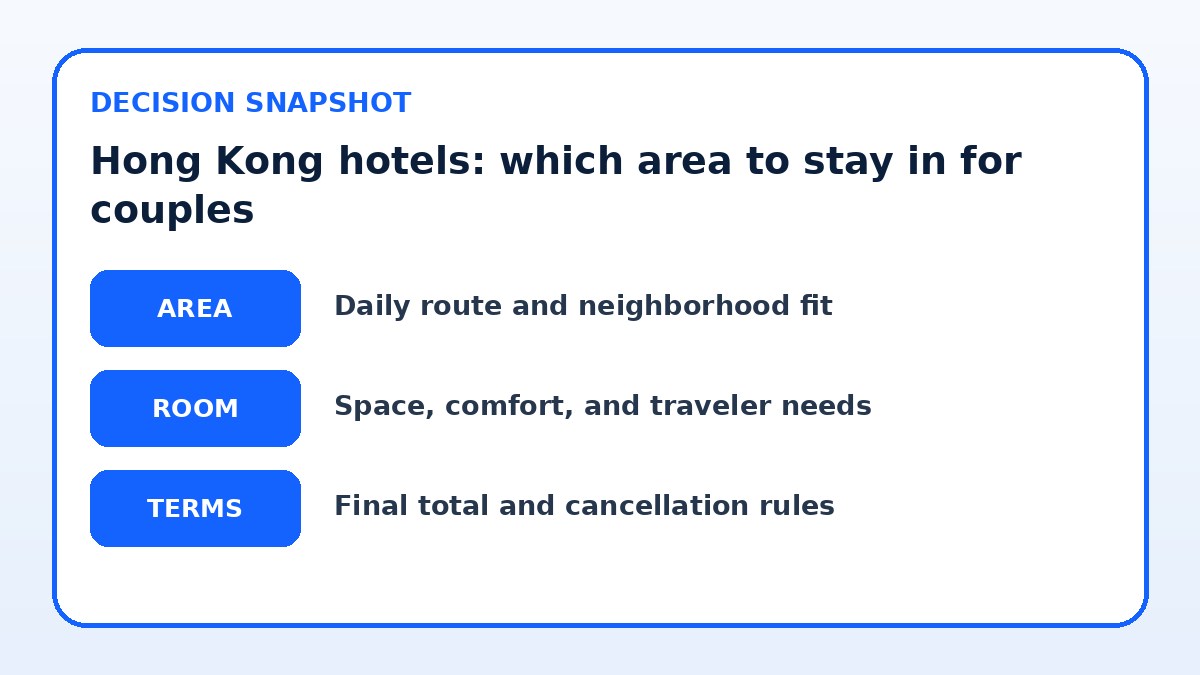
Daily-route friction is how much time and effort you’ll spend getting from your hotel to the things you want to do. Couples who want to maximize relaxed time should prioritize areas with good walking connections to evening restaurants and attractions. If your itinerary includes several day trips outside central districts, stay near a major transit hub or interchange so transfers are simpler. For anyone with limited mobility or who dislikes crowds, choose neighborhoods with direct station exits and convenient street-level routes to avoid long stair or escalator sequences.
Remember peak-time travel in the city can affect your mood as a couple; avoid hotel locations that force repeated long commutes during rush hours. Check transit station proximity on a map—being a five-minute walk from a station is substantially different than needing to navigate three blocks with luggage. When comparing listings, verify walking routes and transfer counts on the provider’s site to estimate typical door-to-door times for your planned daily routes rather than relying on single-case travel-time claims.
Now compare like with like
Keep the same dates, guests, room needs, and cancellation preferences while you compare the final choices.
Room and party needs: size, bed type and privacy
Hotels in denser commercial neighborhoods often prioritize compact rooms to fit more units in the building, while hotels in mixed residential or business districts may offer larger suites and better separation between sleeping and living areas. Couples who value space for changing, unpacking, or a private in-room dinner should filter for suite or junior-suite options and confirm bed configurations before booking. If you’ll be celebrating a special occasion, call or message the hotel to confirm what room types allow for privacy and extra touches—then verify those options on the booking page.
Privacy and noise isolation are also tied to building type and floor level. Street-facing rooms are great for people-watching but can be noisier on busy nights; higher floors often reduce street noise and give better views. For couples who expect early check-ins, late check-outs, or in-room dining, choose properties whose booking terms clearly state these options, and double-check the hotel’s final reservation page to confirm any amenity or service availability mentioned in listings.

Hotel booking check before payment
- Map your typical evening route and confirm your shortlisted hotels are within a comfortable walk of your planned restaurants or bars.
- Check the exact room type, bed configuration, and whether photos or descriptions match the provider’s final booking page.
- Confirm refund and change policies that apply to your rate, and note any cutoff times for free cancellations.
- Ask the hotel directly about early check-in, late check-out, luggage storage, and any extra fees those services may carry.
- Verify public transit station exits and typical transfer counts for your day-trip destinations to estimate door-to-door travel times.
- Read recent guest comments for noise, construction, or access issues, and verify any concerns with the hotel before finalizing.
Final booking terms: what to verify before you reserve
Before you book, check refundable vs. non-refundable policies, the exact room type and bed configuration, and what taxes and service charges are applied at checkout. Hotel websites and booking platforms sometimes present room features differently; always match the room name with the included amenities and read the final price breakdown on the provider’s booking page. If you need a twin or extra bed, or you want connecting rooms, confirm availability directly with the hotel and verify any additional service fees rather than assuming they are included.
Also verify arrival logistics: whether the hotel offers luggage hold for early arrival, late-night check-in procedures, and recommended transport from major arrival points. For transfers or taxis, check the hotel’s advice and read recent guest notes on restrictions like temporary building works or nearby construction that could affect access. If uncertain, use a comparison tool such as Trip.com to view current availability and provider terms, but treat that as a convenience for comparison rather than a guaranteed source of static details.
Hotel Guide questions travelers ask
Which Hong Kong neighborhood gives the best balance of romance and convenience for couples?
A waterfront district near the harbor tends to balance romance and convenience: many hotels orient toward skyline views and are within walking distance of promenade areas, piers, and evening dining. This layout supports relaxed nights and straightforward walks after dinner, plus decent transit links for daytime explorations. If you prefer livelier late nights with street food and bars, a central commercial neighborhood will be more active but may require short transfers for quieter mornings.
How can couples judge whether a hotel room will be big enough and private enough for a special stay?
Look beyond star ratings: filter listings for suites or rooms with separate living areas and read the detailed descriptions on the booking page. Verify bed type and room square footage if provided, and ask the hotel to confirm whether the room faces the street or a quieter courtyard. For special requests—flowers, champagne, or late-checkout—contact the hotel directly and confirm any surcharges on the final reservation screen before you pay.
What transport tips help couples avoid wasted time between the hotel and activities?
Prioritize proximity to stations or direct transit lines that serve your primary day-trip and evening destinations. Use a map to count transfers and check transfer complexity—stairs, long corridors, or multiple modes add friction. If you plan to return late, also verify the ease of nighttime taxis or rideshares from the neighborhood. For arrival logistics, confirm recommended transfer options on the hotel’s booking page and check for luggage handling or late-arrival procedures.
Final decision note
Pick the Hong Kong neighborhood that matches the rhythm of your trip: waterfront for views and short evening walks, lively commercial areas for late-night food and bars, transit hubs for day-trip efficiency, or quieter residential districts for larger rooms and privacy. Use the comparison rows to choose a decision approach—vibe, daytime access, transit convenience, or room size—then narrow your shortlist by checking walking routes, room details, and booking terms. Before completing a reservation, confirm the exact room type, bed configuration, cancellation and change policies, and any arrival or service notes on the provider’s final booking page so there are no surprises when you arrive.
Continue planning
Check current options and final conditions
Use the provider page to confirm live availability, the final total, cancellation terms, and every condition that matters to your trip.
This evergreen planning guide was created with AI-assisted drafting and a structured quality review. It does not display live prices, schedules, availability, visa guidance, or provider rankings. Verify current details before booking. Some links are affiliate links; we may earn a commission at no additional cost to you.