Practical answer up front: before you choose between a package or separate bookings for Queenstown, compare the cancellation and change rules, which items are refundable, and whether the provider lets you alter names or dates without heavy fees. Those three checks usually decide whether a bundled deal actually gives value to a first-time visitor who may need flexibility. Start by matching the same dates, travelers, and inclusions across any options you consider, then confirm the firm final terms on the supplier’s checkout page. This article walks through what to compare, how different bundling approaches weigh on flexibility and traveler-specific value, and which contract clauses to verify before you hit pay—so you can book with clearer expectations and fewer surprises.

Test package value fairly
| Booking approach | Best for | Tradeoff to check |
|---|---|---|
| All-in-one package (flight, hotel, activities) | Travelers who want one point of contact and coordinated logistics. | Often limited by the most restrictive component’s cancellation rules and third-party supplier terms. |
| Flight + hotel bundle only | Those seeking convenience for transport and lodging but flexibility for local plans. | May still lock in flight change fees even if hotel is flexible; activity choices remain separate. |
| Separate bookings for each element | Travelers needing maximum flexibility to change individual plans or swap vendors. | More time-consuming to manage and potentially higher coordination responsibility if issues arise. |
| Hybrid: book core items bundled, extras separate | Visitors who want guaranteed arrival logistics but flexible activity scheduling. | Requires careful tracking of which items are protected by the bundle’s policies and which are not. |
Check current package and separate options
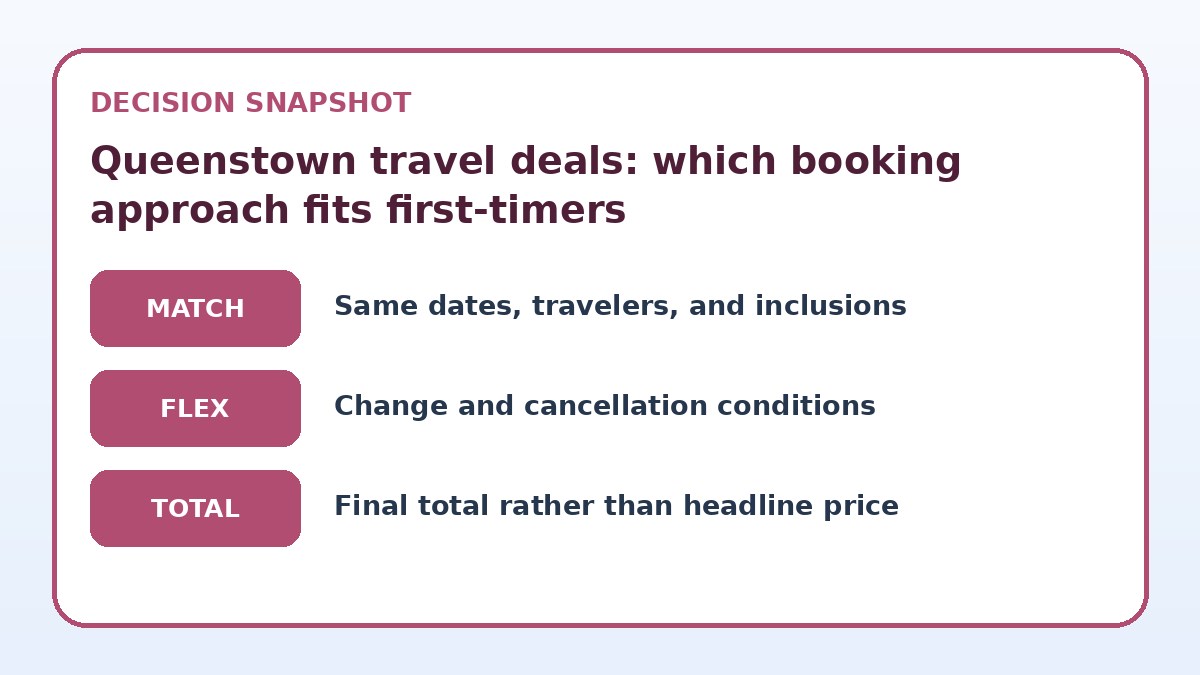
Use identical dates, travelers, room needs, baggage, and flexibility so the comparison stays meaningful.
What to compare before judging a package
When evaluating a package for Queenstown travel deals, start by lining up identical search parameters: same arrival and departure dates, same number of travelers, and the same room type or activity difficulty level. If a package appears cheaper, check whether the price assumes nonrefundable fares, prepaid attraction tickets, or group transfers that lock you into specific times. Bundles can mask restrictive terms in the headline rate, so treat the quoted total as only a starting point. The crucial task is to itemize each component and compare its cancellation and change rules rather than comparing total prices alone.
Next, force a side-by-side review of deadlines and penalties. Record the final refund deadlines, the percentage refunded after the deadline, and any flat administrative fees for cancellations or name changes. Don’t forget to check whether flight tickets within a package allow date changes or require full reissue with fare differences; flights commonly carry separate airline rules that override the package provider’s general policy. Finally, confirm whether any third-party suppliers used in the package have independent conditions you must follow to claim a refund.
Inclusions: what usually restricts flexibility
Packages often bundle elements suppliers treat differently: hotels, inter-island or regional flights, guided tours, equipment hire, and transfers. Guided experiences and prepaid tour operators typically sell nonrefundable tickets or set tight cut-off windows for refunds. Equipment hire and small-operator activities can carry strict no-show rules because they must staff guides and maintain bookings. If the quoted package price includes such items, the overall flexibility will be constrained to the strictest individual component’s terms—meaning a flexible hotel booking won’t help if the activity is locked and nonrefundable.
Check the fine print for voucher expiry dates, blackout periods, and transfer time guarantees. A bundled transfer included at a particular pick-up time may be non-changeable, which matters if your flight is delayed or if you want to arrive earlier or later. Also confirm which party handles refunds—some packages require you to claim directly from the tour operator, not the package seller, and that can lengthen processing times. Make a checklist of inclusions and label each as refundable, changeable, or nonrefundable before you decide.
Look past the headline total
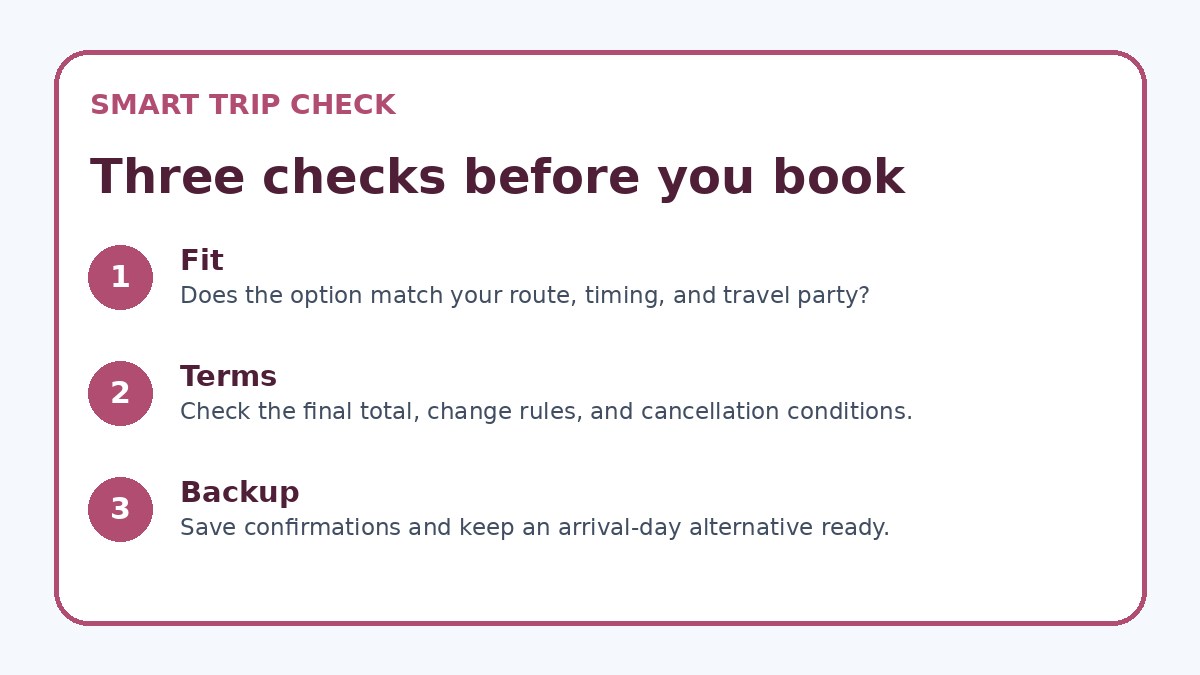
Compare inclusions and change conditions before deciding whether a package is genuinely useful for this trip.
Deal comparison checklist
- List every component you plan to book (flights, hotel, transfers, activities) and record cancellation deadlines for each.
- Compare refunds and change fees for identical dates and traveler names across package and separate booking quotes.
- Open the seller’s final checkout page and save or screenshot the complete cancellation and refund policy shown there.
- Confirm whether refunds come from the package seller or the underlying supplier and note expected processing timelines.
- Ask the seller in writing about name changes and transferability of bookings before you pay.
- Decide whether to buy travel insurance that covers your specific change/cancellation risks and verify insurer claim requirements.
Traveler-specific value: who benefits from bundles
Bundles can be valuable for travelers who prioritize convenience over ultimate flexibility: first-timers who want a single point of contact for transfers, lodging, and activities may appreciate coordinated logistics. For families or groups unfamiliar with local transport, having an arranged transfer and prebooked activities reduces planning stress. However, if any traveler in the party has an uncertain schedule—work commitments, flexible dates, or health considerations—the inflexibility of bundled components can be costly. Weigh how likely each traveler is to need a change; if even one person is uncertain, separate bookings for that person’s elements may be wiser.
Solo travelers or those on short, fixed schedules may also find packages simpler, but they should still confirm what happens if an activity is canceled by weather or the operator. Determine whether the package seller provides rebooking assistance or immediate refunds in those cases. If you value the option to swap activities or upgrade accommodation mid-trip, separate, modular bookings for activities and hotels usually preserve more freedom to adapt without triggering package-wide penalties.
Final terms: exactly what to verify at checkout
Before completing any purchase, open the supplier’s final checkout page and read the full cancellation and change policy shown there. Look for precise deadlines (for example, refunds available up to X days before arrival), any percentage refund brackets, and whether taxes or supplier fees are refundable. Confirm who issues refunds—your card issuer, the package seller, or the underlying vendor—and check expected processing timelines. Also verify whether travel insurance is required by the seller to receive a refund, or if the seller offers an optional refundable rate with a different cost structure.
Other contract items to verify include name-change rules and the process for transferring a booking to another traveler, the exact date and time restrictions for included transfers, and whether any portions are voucher-based with expiry dates. If the package mentions third-party suppliers, click through to those suppliers’ terms as well; differences there can override the package seller’s general statements. If you need current availability or alternative options, you can compare listings on Trip.com as one of several places to confirm the provider’s presented terms, but always rely on the seller’s final booking page as authoritative.
Travel Deals & Booking Strategy questions travelers ask
Is a bundled Queenstown package more flexible than booking each part separately?
Bundled packages can be simpler but are not inherently more flexible. Flexibility depends on the strictest cancellation or change policy among the included components. A hotel with a flexible rate won’t offset a prepaid, nonrefundable tour inside the bundle. To assess flexibility, itemize each included service and read its specific terms. If flexibility is important, consider booking high-risk items (flight, key activities) with refundable or change-friendly options, and keep lower-risk items bundled only if they share similarly lenient terms.
What exact clauses should I verify on the seller’s final booking page?
On the final booking page, verify: the cancellation deadline(s) in calendar date format; the refund amount or percentage after each deadline; any administrative or reissue fees; name-change and transferability rules; voucher expiry dates; and whether third-party vendors have separate policies. Also check who processes refunds and the stated timeline. If any clause is unclear, ask the seller to confirm in writing before paying so you have a record of the terms that applied at purchase.
How can I avoid being misled by a low headline price on a package?
Avoid false savings by comparing the same dates, traveler count, and inclusions across all options. Break down the package price into line items and compare each component’s refundable and nonrefundable elements. Watch for excluded taxes, mandatory fees, or required add-ons that raise the effective cost. If the package uses promo language about savings, insist on seeing the cancellation and change terms for the lowest-priced rate; sometimes the cheapest rate is the least flexible or nonrefundable.
Final decision note
First-time visitors planning Queenstown travel deals should treat flexibility as a measurable feature rather than an assumption. Always line up identical dates, traveler names, and inclusions when comparing package versus separate bookings, and prioritize reading the seller’s final checkout terms. Decide which elements you need to be able to change—flights, key activities, or transfers—and choose the booking approach that keeps those elements flexible even if it means paying a bit more. Use a checklist to capture deadlines, refund sources, and name-change rules before you book; that preparation reduces stress and helps protect your trip investment.
Continue planning
Check current options and final conditions
Use the provider page to confirm live availability, the final total, cancellation terms, and every condition that matters to your trip.
This evergreen planning guide was created with AI-assisted drafting and a structured quality review. It does not display live prices, schedules, availability, visa guidance, or provider rankings. Verify current details before booking. Some links are affiliate links; we may earn a commission at no additional cost to you.