Practical answer up front: most solo travelers pick either an overnight sleeper train or a daytime coach for a direct, low-hassle trip from Bangkok to Chiang Mai; consider mixed options only if you want a scenic detour or have specific timing/luggage needs. Start by matching terminals to your start and finish points, then weigh luggage friction and transfer complexity. If you value sleeping comfortably on the move and minimizing night transfers, a sleeper train that drops you near Chiang Mai town is usually simplest. If you need daytime flexibility, shorter transfers, or lower walking and baggage handling, a reputable coach departing from a central bus terminal can be the better door-to-door choice. Ferry segments are rarely direct for this northbound route but can be useful as part of a wider multi-stop itinerary; factor extra transfers and extra verification of schedules and terminals before booking.
Terminal fit and door-to-door practicality
Terminal choice determines how door-to-door your trip will feel. Bangkok’s rail and long-distance bus departures use different hubs; trains use the main railway station while coaches use one or more major bus terminals. For Chiang Mai, the main arrival points are centrally located but vary in walking distance to guesthouses or neighborhoods. Solo travelers should map the exact terminals to their arrival and accommodation addresses and compare transfer modes—public taxi, ride-hail, or shared minivan—because a cheaper seat on a distant terminal can cost time and effort in transfers.
Pick terminals based on when and where you need to arrive rather than only the advertised route. If you have heavy luggage or arrive late at night, choose the option that minimizes walking and unlit transfers, even if the vehicle ride costs slightly more. Also consider accessibility: some terminals require steps or long platforms that make moving bags harder. Finally, factor in how easy it is to get a safe, metered taxi or ride-hail app at arrival time; this often decides whether a supposed ‘central’ arrival is actually practical for solo travelers.
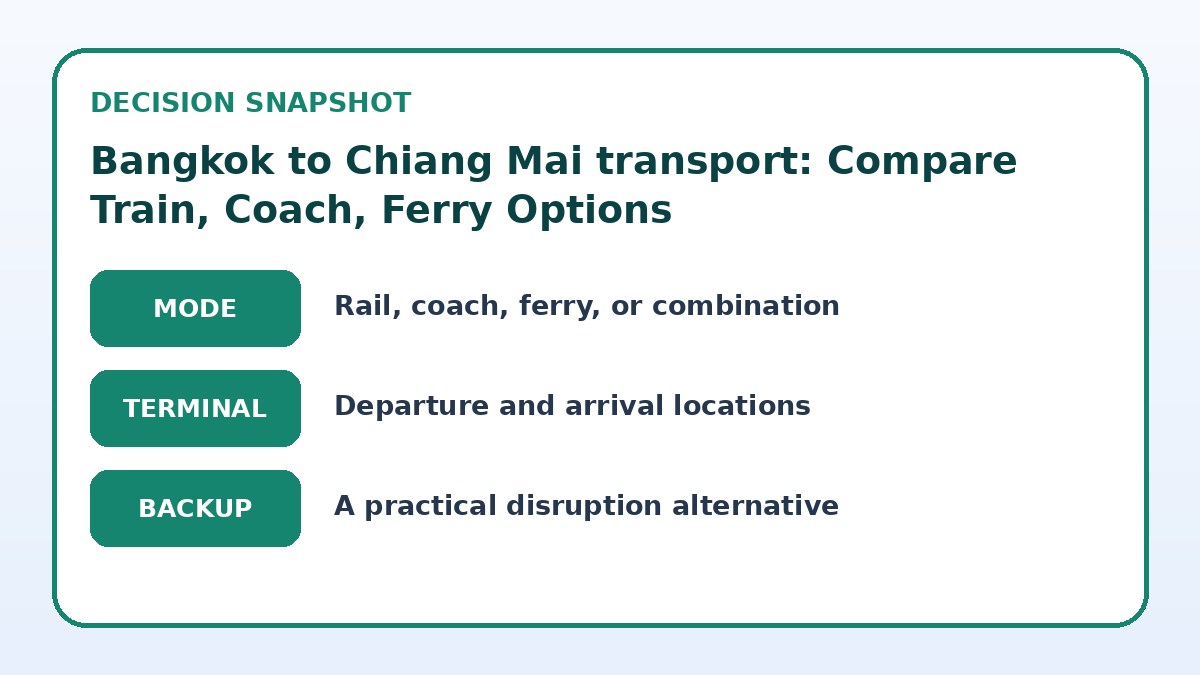
Choose the end-to-end journey plan
| Journey approach | Best for | Friction to check |
|---|---|---|
| Direct overnight sleeper train | Solo travelers who value night travel, minimal daytime lost, and central arrival in Chiang Mai | Less daytime flexibility; may require carrying luggage on and off platforms at night |
| Direct daytime coach from central bus terminal | Travelers prioritizing daytime arrival, easy last-mile transfers, and simpler luggage handling | Longer daytime hours on the road; possible traffic delays approaching Bangkok or Chiang Mai |
| Mixed itinerary with scenic ferry or coastal detour | Travelers turning the trip into a multi-stop adventure who accept extra transfers for variety | Adds connection complexity, more luggage moves, and requires careful schedule verification |
| Split travel (train+coach or short flight plus land leg) | Those needing bespoke timing or accessing remote start/end points where direct services aren’t practical | Higher coordination effort and multiple bookings; increased risk if one leg is delayed |
Check live intercity options
Look beyond the ride itself and compare terminals, transfers, luggage, and arrival fit.
Luggage, transfers, and solo-traveler friction
How much baggage you carry changes the best choice. Trains and coaches both have luggage areas, but access and handling differ: trains may have larger under-seat or carriage storage but require carrying bags along platforms and potentially up stairs. Buses often allow easier access at highway stops but can be crowded boarding and disembarkation moments. If you plan to bring a large backpack or a checked suitcase, choose the service with easier curbside drop-off and a short, direct walk at each end to avoid repeated lifts and public exposure late at night.
Think about transfers between terminals and your accommodation too. A coach that arrives at a terminal with frequent ride-hail options reduces friction for a solo traveler compared with a remote station arrival that needs a scheduled shuttle. Also assess whether your accommodation offers late check-in or baggage hold; if not, arriving early in the morning or late at night matters. Bring a compact lock and a lightweight strap to secure bags, and keep valuables in a small daypack you carry on board.
Timing flexibility and daytime versus overnight tradeoffs
Daytime coaches give you flexibility: you can leave earlier or later, stop for breaks, and disembark quickly if your plans change. They also make it easier to stay connected and manage anxiety if you prefer daylight travel. However, a daytime coach adds to travel time on the clock. An overnight train compresses travel into sleeping hours and may save a night’s accommodation cost, but it reduces your arrival-day flexibility and can be disruptive if you sleep poorly on moving trains.
When choosing, match your sleep needs, onward itinerary, and safety comfort. If you aim to arrive early in Chiang Mai to check into a hotel or join a daytime activity, select a service that gets you there at the right hour—even if it means a daytime coach or a connecting itinerary. For solo travelers who prefer to maximize daytime sightseeing upon arrival, an overnight sleeper can be a practical option. Always plan a cushion for potential delays, and check mobility and accessibility provisions for night arrivals.
Compare the practical alternatives
Use the final page to confirm what is actually offered on your dates and save a workable fallback.
Intercity travel checklist
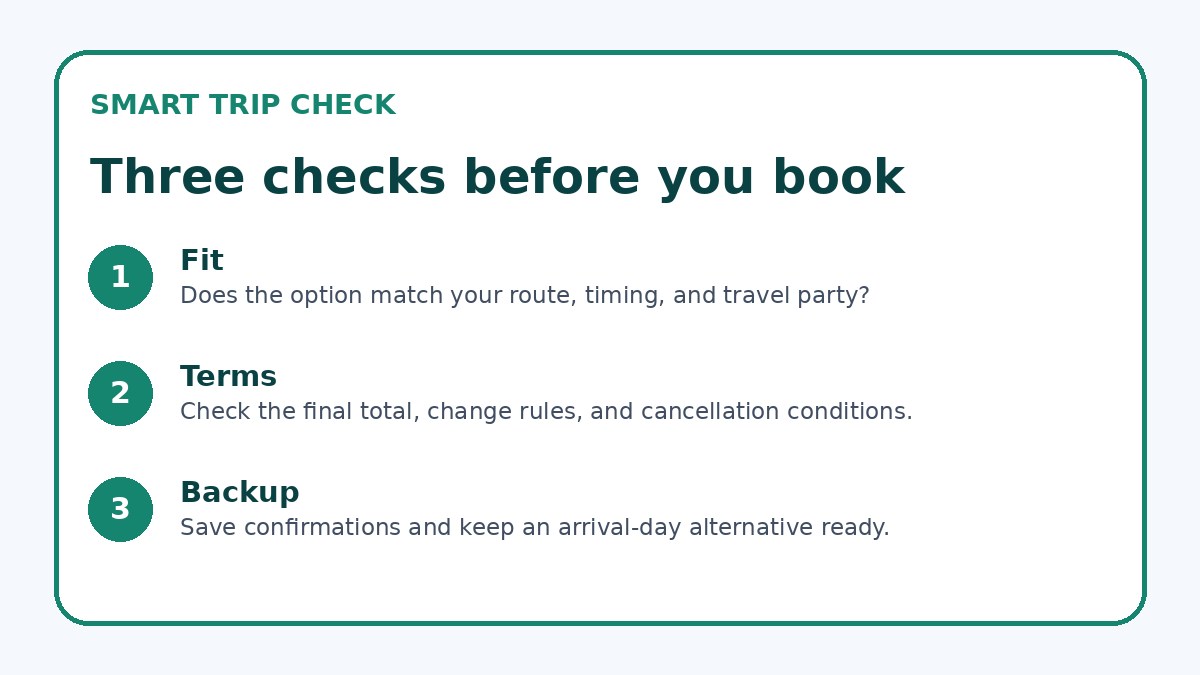
- Map exact departure and arrival terminals against your accommodation and note the usual ride-hail or taxi options from each terminal.
- Confirm luggage limits, storage access, and whether staff will help with heavy bags; pack a small daypack for valuables and essentials.
- Check the operator’s final booking page for change, refund, and missed-connection policies before committing funds.
- Build at least a two-hour buffer for transfers between modes or when arriving late at night; have a local-currency backup for taxis or storage.
- Save offline copies of tickets, terminal addresses, and a contact phone number for your accommodation and a local friend or host.
- If adding a ferry or scenic detour, re-verify both legs’ schedules 24–48 hours before travel and plan overnight stops conservatively.
Disruption backup and what to verify before booking
Prepare for delays, cancellations, and unexpected terminal changes by building a clear backup plan. Before you book, read the operator’s final booking page to confirm refund windows, change fees, and how they handle missed connections. Also note alternative departure times from the same terminal, local transport options nearby, and contact details for help. For combined or multi-leg plans, check how each provider handles missed connections—some allow rebooking on the next service, others do not.
On travel day, share your itinerary with a trusted contact and keep electronic and printed copies of tickets and terminal addresses. Have a small buffer of local currency for unexpected taxis or storage and know the nearest hotel or hostel options in case you must wait overnight. Finally, if you combine a ferry or scenic detour with rail or coach legs, verify both sets of schedules the day before departure; these segments are more likely to be affected by weather or seasonal adjustments.
Rail & Intercity Transport questions travelers ask
Is the overnight train from Bangkok to Chiang Mai safer for a solo traveler than a coach?
Safety depends more on timing, terminal, and personal habits than on vehicle type. Overnight trains can feel safer because they reduce nighttime road exposure and often arrive near central Chiang Mai. Coaches keep you on main roads during daylight or evening and may be preferable if you’re uncomfortable sleeping in transit. For both options, secure your valuables, keep a phone charged, and choose seats or berths near staff when possible. Check the operator’s arrival terminal and how easy it is to get a reliable taxi at your arrival hour.
When does adding a ferry make sense on this northbound route?
A ferry makes sense only if you’re intentionally building a multi-stop itinerary that includes Thailand’s coast or islands; there’s no direct coastal ferry route that shortens Bangkok–Chiang Mai travel. Use ferries for scenic detours, but expect extra transfers and schedule verification needs. For a solo traveler, ensure overnight stops align with ferry times and that you can handle luggage transfers between docks, stations, and accommodations. Always check the ferry operator’s live schedule and confirm connections on both ends before booking the next land segment.
How should I plan a disruption backup for a combined trip with different operators?
First, allow time buffers between legs—several hours if operators are independent. Read each operator’s terms on their final booking page to understand rebooking and refund options. Keep alternative transportation options listed (later buses/trains, local flights, or nearby bus terminals) and a small emergency fund for taxis or last-minute stays. Share your itinerary with someone at home, and save contact numbers for both operators and your accommodation. If possible, book flexible tickets for at least one leg so you have a known fallback if the other is delayed.
Final decision note
Choose the mode that fits your priorities: trains if you want to travel overnight with a central arrival, coaches if you prefer daytime travel and simpler last-mile transfers, and mixed or ferry-containing routes only when you deliberately plan detours. For solo travelers, the practical wins usually come from reducing terminal transfers, minimizing late-night walking with luggage, and verifying operator policies before booking. Always prepare a disruption backup by allowing buffers, keeping contact and ticket copies, and knowing alternative services. If you’re comparing options online, use the operator’s final booking page for definitive terms and consider checking Trip.com as one of several places to view current availability before you commit.
Continue planning
Check current options and final conditions
Use the provider page to confirm live availability, the final total, cancellation terms, and every condition that matters to your trip.
This evergreen planning guide was created with AI-assisted drafting and a structured quality review. It does not display live prices, schedules, availability, visa guidance, or provider rankings. Verify current details before booking. Some links are affiliate links; we may earn a commission at no additional cost to you.