If you and your partner want the benefits of quieter streets, softer weather and lower rates without sacrificing flexibility, planning Vancouver travel around the shoulder seasons can be smart—but only if you compare packages correctly. The practical answer: always line up the same dates, same travelers, and the exact inclusions before judging a bundle’s value. Start by checking refundable vs nonrefundable rules, what taxes or resort fees are included, and whether any prepaid activities carry strict change penalties. For couples, traveler-specific factors like bed type, room privacy, and transfer times matter. This guide walks through what to compare, how to read booking terms, and the tradeoffs between bundled savings and separate bookings so you can choose the option that preserves romance, time, and your budget.
Test package value fairly
| Booking approach | Best for | Tradeoff to check |
|---|---|---|
| All-in-one package (flight + hotel + transfers + activities) | Couples who prioritize convenience and a simple booking process. | Often less flexible for date or activity changes and requires careful fine-print review to confirm inclusions. |
| Flight + hotel bundle only | Couples wanting simpler logistics while keeping activities flexible. | May save time but can hide fees; you still need to verify transfer and activity availability separately. |
| Book flights and hotel separately; add transfers/activities à la carte | Couples who want maximum control over schedule, upgrades, and specific experiences. | Takes more time to coordinate and may miss small bundled discounts but preserves flexibility. |
| Hotel-first booking with refundable flights booked later | Couples prioritizing accommodation choice during shoulder-season availability shifts. | Risk of rising flight costs or limited flight options if refundable fares are not available when you book. |
Check current package and separate options
Use identical dates, travelers, room needs, baggage, and flexibility so the comparison stays meaningful.
What to compare first before deciding on a package
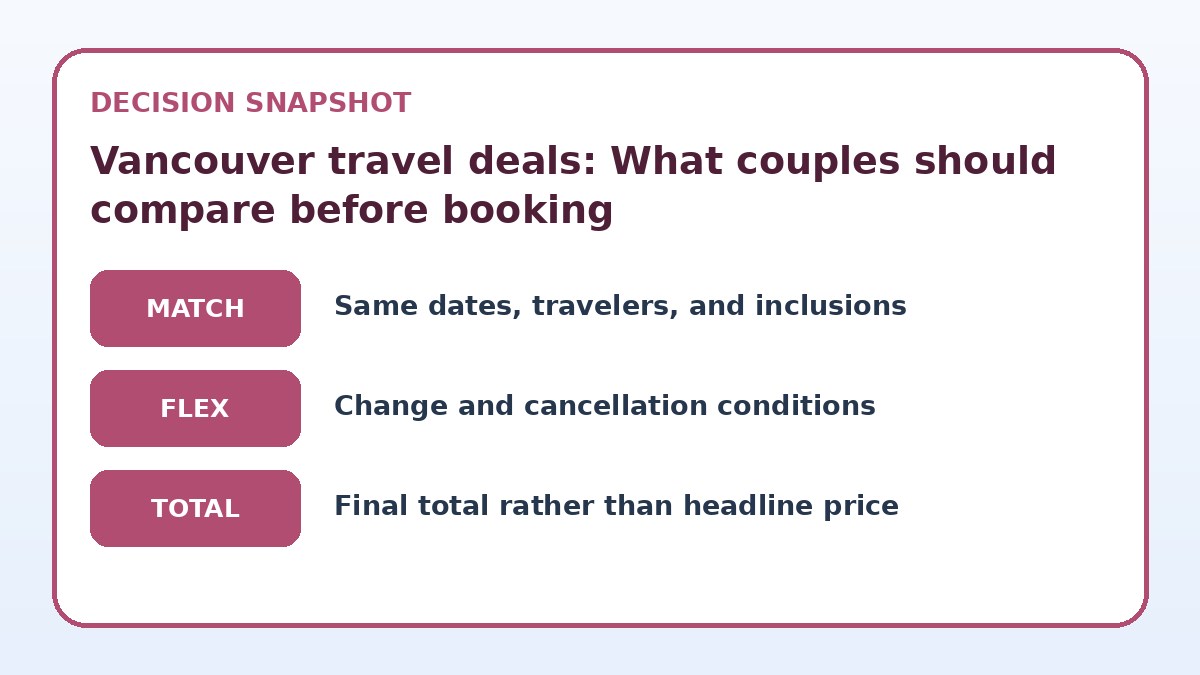
Before you consider a package, line up the exact items you will compare. That means choosing firm travel dates, confirming it’s two adults, and picking the same room type and flight class for each option you assess. Also decide whether you need airport transfers, daily breakfast, or specific activities such as a harbor cruise. If your dates are flexible within a shoulder-season window, create a shortlist of three date pairs and compare each across package and separate booking options to see where value shifts. This keeps the comparison apples-to-apples and makes it easier to detect true savings versus marketing language.
Next, gather the booking terms that most affect couples: cancellation and change rules, how name changes are handled, and whether suppliers permit splitting or combining reservations. Couples often want flexibility for late arrivals or one partner extending the trip; if that matters, check whether tickets or rooms are transferable or refundable. Also look at deposit requirements, how taxes are applied, and whether a provider charges additional guest fees for two adults sharing a room. Small fine-print differences here can erase apparent savings or create unexpected restrictions.
Inclusions: what really matters for couples in shoulder seasons
Included services can determine whether a ‘deal’ actually suits your trip. For couples, think beyond headline items: is breakfast a continental spread or a hot buffet? Are transfers private or shared? Does the package guarantee late checkout on quieter shoulder-season days, which can be a nice perk after an early flight? Confirm whether activities are time-specific with penalties for rescheduling; many shoulder-season operators run fewer tours, and strict time slots can reduce flexibility. Also check whether local taxes, tourist levies, or resort charges are bundled or added later at checkout, as these affect the final cost and comparability.
For romantic travel, inclusions that reduce friction often provide outsized value: a private transfer means more time together and less waiting; a room upgrade or guaranteed king bed contributes to comfort. But if the package locks you into a set itinerary or prepaid meals you don’t want, it can be a drawback. When evaluating inclusions, list what you need to feel relaxed and which extras you’d rather choose a la carte. That will guide whether a bundled package matches your priorities or if separate bookings give you better control over the couple’s experience.
Look past the headline total
Compare inclusions and change conditions before deciding whether a package is genuinely useful for this trip.
Deal comparison checklist
- Set firm travel dates (or a three-date shortlist) and use them for every price comparison across options.
- Compare the same room type, bed configuration, and flight class or fare basis when evaluating bundles versus separate bookings.
- Open the provider’s final checkout page and copy the full cancellation, change, and refund policy into your notes.
- Confirm which taxes, resort fees, and service charges are included or will be added at payment time.
- Identify each third-party supplier in a package (transfers, tours) and verify their availability and change rules directly.
- Decide on travel protection: check what it covers, how it applies to bundled bookings, and whether it’s refundable.
Flexibility and traveler-specific value: reading the fine print
Couples should place big weight on flexibility clauses when traveling in shoulder seasons, because weather and schedules can shift more than in peak months. Scrutinize change and cancellation windows, whether refunds are full or partial, and if suppliers allow date swaps without penalties. Note how credits are issued—some bookings produce vouchers rather than cash refunds—and whether those credits expire within a short window. If either partner’s schedule might change, prioritize options with generous change policies, or buy add-on travel protection that explicitly covers missed connections and weather-related trip adjustments.
Traveler-specific value means understanding who benefits most from each option. For example, if one person values a guided nature tour while the other prefers urban food walks, combined packages might not serve both unless activities are selectable. Also check room bedding configurations, quiet-room requests, and proximity to the neighborhoods you want to explore; a lower price isn’t useful if the hotel’s location forces long commutes and lost time together. Make a simple scorecard of flexibility, comfort, and preferred activities to quantify which booking approach aligns with your priorities.
Final terms and verification steps before you hit book
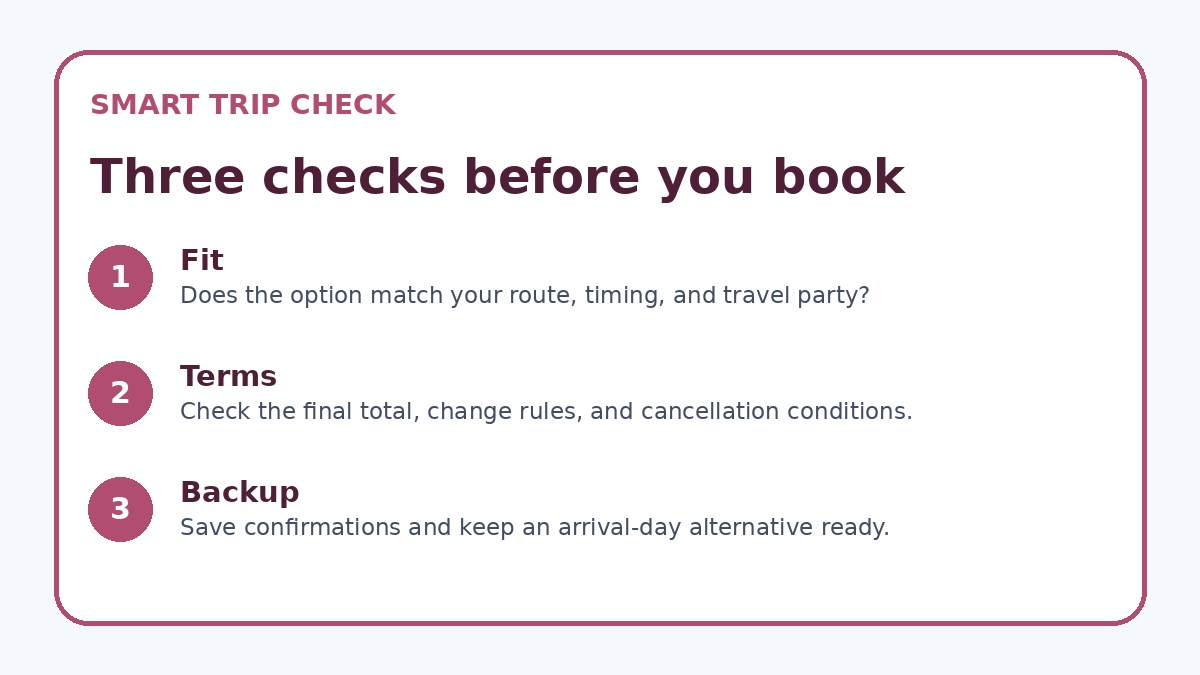
Before booking, verify every claim on the provider’s final checkout page. Confirm total price including taxes and fees, see exact cancellation and change policy text, and check whether the booking shows as refundable, partially refundable, or nonrefundable. If the package claims included activities, open each activity’s vendor listing to confirm availability and their change rules. For transfers, verify pickup and dropoff details and ask how late arrivals are handled. If a special rate requires prepayment, note whether that amount is refundable and how long the rate holds against price changes.
Also confirm identity and name-change policies—many travel services charge for changes to passenger names or require government IDs at check-in. If you’re using a travel package that bundles third-party services (tours, ferries, attractions), identify each third party and check their operating season and hours. Finally, compare the same combination of items on a separate booking path to ensure any perceived savings are real; Trip.com can be an optional place to check current availability and provider terms, but rely on the provider’s final booking page for contractual details.
Travel Deals & Booking Strategy questions travelers ask
When are Vancouver’s shoulder seasons, and why do they matter for couples?
Shoulder seasons in Vancouver typically fall between the busier summer months and the coldest winter periods, making spring and fall attractive for couples who prefer fewer crowds and a calmer pace. Travel during these times can mean easier restaurant reservations, quieter attractions, and potentially better room availability for romantic neighborhoods. That said, shoulder-season weather can be variable; prioritize flexible booking terms and plan indoor and outdoor activities to keep the trip enjoyable regardless of a rainy day.
How can couples avoid false savings when comparing Vancouver travel deals?
To avoid misleading comparisons, always match the same dates, number of travelers, room/seat classes, and exact inclusions when evaluating options. Check the final total including taxes and fees on the provider’s checkout page, and read the full cancellation and change rules. Beware of packages that advertise inclusions but reserve the right to substitute or charge fees later. If a package bundles third-party activities, open those vendors’ booking pages to confirm availability and identical terms before assuming a deal.
Is it better to buy travel insurance for a bundled package or for separate bookings?
Insurance needs depend on your chosen booking approach and the policies of providers involved. Bundles sometimes complicate claims because multiple suppliers may have different refund rules; separate bookings can make claim responsibilities clearer. Whatever you choose, check that the policy covers the types of changes you care about—trip cancellation, interruptions, missed connections, or supplier insolvency—and confirm whether it applies to prepaid activities. Make sure coverage start and end dates match your travel itinerary precisely and that the policy allows claims for weather or schedule disruptions common in shoulder seasons.
Final decision note
For couples planning Vancouver in the shoulder seasons, the right approach balances convenience with flexibility. Start by lining up the same dates and traveler details across every option, then check inclusions, cancellation rules, and third-party vendor terms on the final checkout pages. Bundles can simplify logistics and sometimes save effort, but separate bookings give you more control over activities and room details important to a romantic stay. Use the checklist above to spot false savings and prioritize the protections that matter most for your relationship and schedule. When in doubt, verify everything on the provider’s final booking page and consider refundable options to keep your plans adaptable.
Continue planning
Check current options and final conditions
Use the provider page to confirm live availability, the final total, cancellation terms, and every condition that matters to your trip.
This evergreen planning guide was created with AI-assisted drafting and a structured quality review. It does not display live prices, schedules, availability, visa guidance, or provider rankings. Verify current details before booking. Some links are affiliate links; we may earn a commission at no additional cost to you.