Practical answer first: for most couples building a comfortable multi-city ground-transport plan between Tokyo and Osaka, prioritize one main rail segment (for speed and frequency) and add local trains, taxis or short coach hops at each end to solve 'last mile' logistics. Combine a rail backbone with pre-planned transfers and a clear disruption backup for greater flexibility. Choosing a coach or ferry for part of the route can reduce transfers or create a relaxed travel day, but increases time and can complicate luggage handling. This article helps couples decide which mix fits their pace, budget mindset, and baggage needs, then spells out terminal fit, transfer friction, timing flexibility, and realistic disruption plans so you can build a door-to-door route that feels calm and connected.
How to choose between rail, coach, ferry or a blend
Start by setting the couple's priorities: speed, comfort, scenery, or budget. Rail tends to offer the most frequent departures and direct access to city centers; coaches often provide lower-cost, single-ticket simplicity; ferries give a leisurely option for part of a coastal route. A blended plan uses a fast rail spine for the longest portion and adds coach or local trains where they reduce transfers, approach a preferred neighborhood, or align with sightseeing plans. Couples should also consider how much time they want at each stop versus travel time.
Decide how much transfer complexity you are willing to accept. If you dislike carrying luggage across multiple stations, favor options with fewer platform changes and easier terminal geography. If you enjoy flexibility and potential cost savings, opening yourself to combinations—rail for the main leg and a coach for a scenic detour—can work well. The right choice balances trip pace with the practicalities of where you need to end each day and how you plan to move between stations and accommodation.
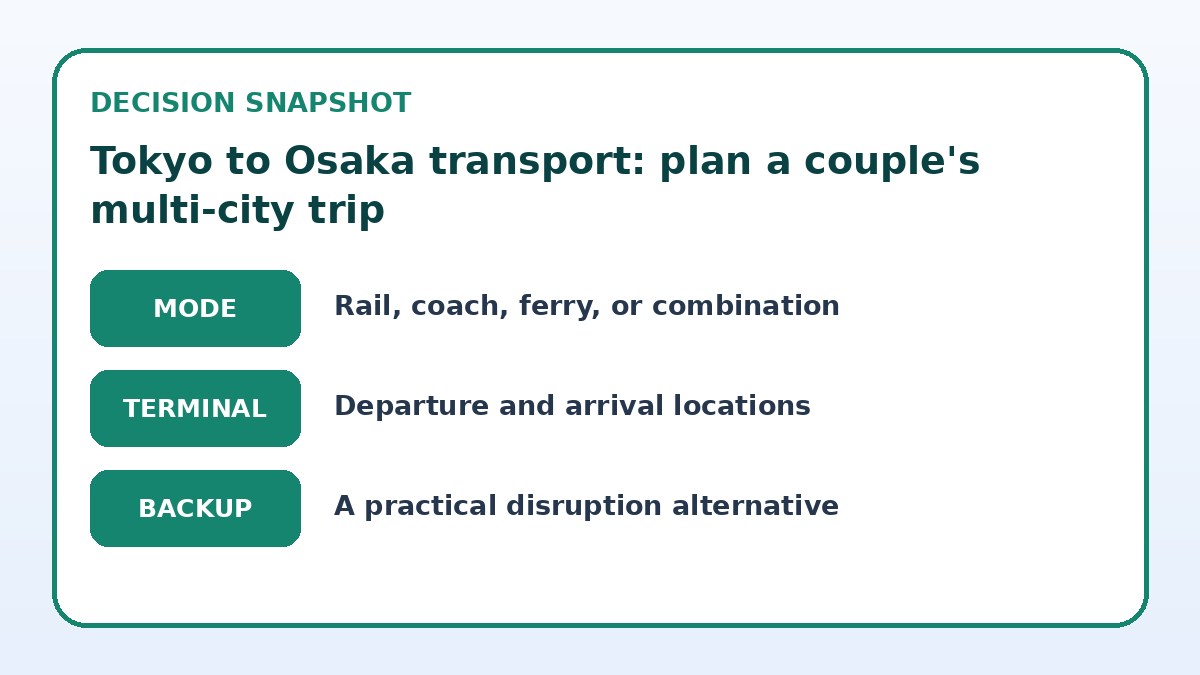
Choose the end-to-end journey plan
| Journey approach | Best for | Friction to check |
|---|---|---|
| Rail backbone with local transfers | Couples who want fast, frequent options and city-center arrivals | May require platform changes and managing luggage on short transfers |
| Coach-dominant route with single transfer | Couples prioritizing a simpler, possibly lower-cost single-ticket day | Longer door-to-door time and less frequent departures than rail |
| Mixed rail and ferry for scenery | Couples seeking a relaxed, scenic segment as part of the journey | Adds complexity and extra boarding/stowage steps for luggage |
| Point-to-point taxi or private transfer between hubs | Couples valuing door-to-door convenience and minimal transfers | Higher cost and possible traffic delays on road-heavy legs |
Check live intercity options
Look beyond the ride itself and compare terminals, transfers, luggage, and arrival fit.
Terminal fit and end-to-end door-to-door planning
Terminal fit means matching arrival/departure points to your real start and end addresses. For couples, that often means preferring stations with straightforward taxi ranks, clear metro links, or short walk distances to hotels. When comparing options, map the station-to-hotel transit door-to-door rather than focusing only on the intercity segment. A cheaper coach that lands at an out-of-center terminal might add a lengthy local transfer that erases any savings, while a train to a central station can leave you minutes from your accommodation.
Plan the last-mile in advance: list the exact exit to use, whether a luggage elevator is needed, and local transit options at the time you'll arrive. If you’re carrying heavy bags or a stroller, check walking distances and the availability of step-free routes. For evening arrivals, verify whether taxis are plentiful or if night metro schedules change. These small details, coordinated between both partners, make the whole journey feel like a single, managed trip rather than a sequence of disconnected rides.
Luggage, transfer friction and timing flexibility
Luggage handling often decides the mode for couples. A simple rule: the fewer handoffs, the smoother the trip. If your route requires several transfers, reduce friction by using roll-aboard cases with easy handles, a shared daypack for essentials, and luggage tags with names and phone numbers. Also plan seat reservations or buy stretch tickets that allow you to sit together when possible—being side-by-side reduces stress and allows one person to manage bags while the other watches for stops or connections.
Timing flexibility affects how tightly you schedule connections. If you prefer a relaxed pace, add 30–60 minutes buffer between scheduled legs to allow for delays, coffee breaks, or leisurely walks through stations. When transfers are unavoidable, pick connections within the same terminal area to avoid crossing multiple platforms or level changes. A flexible plan might choose a slightly later train with guaranteed seats over a tightly timed, cheaper departure that risks standing or missed connections.
Compare the practical alternatives
Use the final page to confirm what is actually offered on your dates and save a workable fallback.
Intercity travel checklist
- Map exact station-to-hotel walking routes and note the preferred station exit and nearby taxi rank for both origin and destination.
- Pack one carry-on daypack with essentials and label all checked bags with names, phone numbers, and your accommodation address.
- Reserve seats together or choose services that allow seat selection to avoid being split during the main leg.
- Identify two alternative departure times and one taxi fallback for every critical connection between Tokyo and Osaka.
- Verify baggage allowances, platform transfer instructions, and any seat reservation requirements on the operator’s official booking page before purchase.
- Agree on a simple decision rule for disruptions (how long to wait, when to take a taxi, and who rebooks) and share it with your partner.
Disruption backups and what to verify before booking
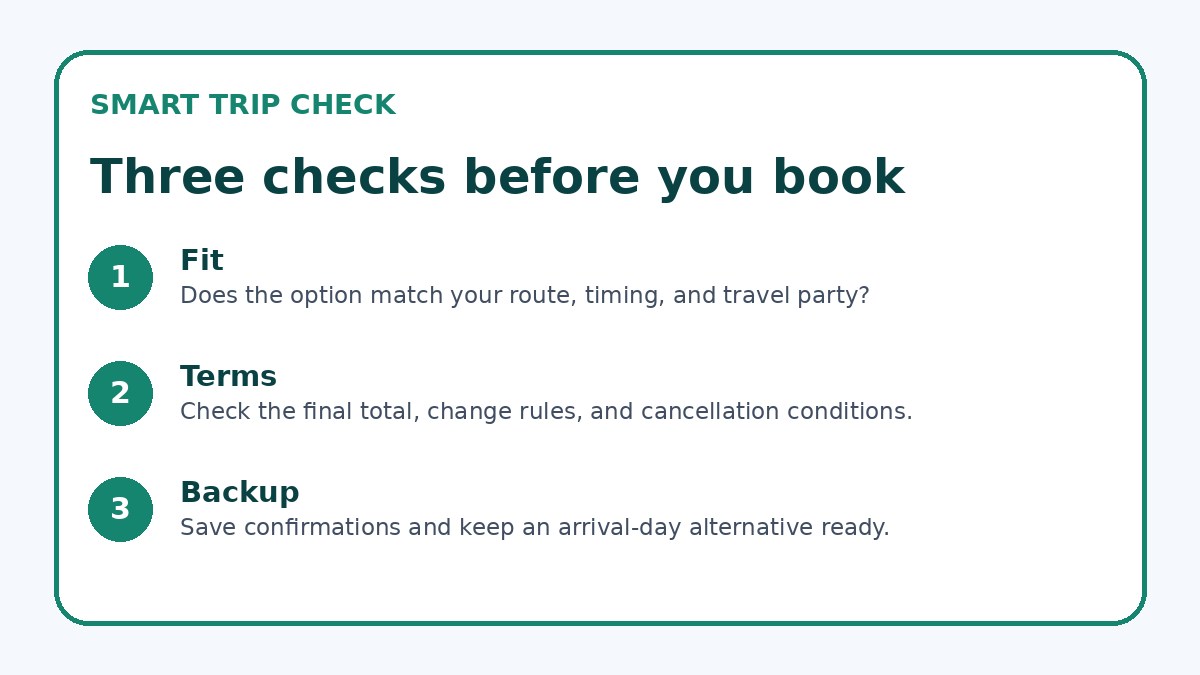
Build at least two disruption backups for each critical junction: an alternative scheduled service (next train or coach), a paid taxi option for the final mile, and a place to wait comfortably if needed. Agree on a simple decision rule as a couple—how long to wait before switching to a taxi, when to accept a later departure, and who will handle phone calls or booking changes. Writing these choices down before travel avoids heated decisions under stress and helps you keep an eye on alternatives in real time.
Before you book anything, verify on the provider’s official pages the exact station names, platform transfer details, baggage allowances, seat reservation options, and cancellation/change policies. For a quick availability check you may look at an aggregator such as Trip.com, but always confirm specifics and final fares on the operator’s booking page. Also check local transit maps and nighttime service notes so your last-mile remains reliable even at off-peak hours.
Rail & Intercity Transport questions travelers ask
Should couples prioritize speed or fewer transfers when going from Tokyo to Osaka?
There’s no single right answer—prioritize based on how you travel best as a couple. If you dislike juggling luggage and prefer calm, choose fewer transfers even if it adds travel time. If you want to minimize time in transit and are comfortable managing quick platform changes, prioritize faster rail options. Evaluate door-to-door impact: a faster intercity leg that ends in a central station can still be the quickest overall if it shortens the last-mile to your hotel. Discuss comfort versus time beforehand and pick the option that both partners find least stressful.
How much buffer time should couples allow between legs to avoid missed connections?
A sensible buffer depends on transfer complexity and time of day. For simple same-station transfers, 20–30 minutes may suffice if you travel light. For transfers requiring station changes, luggage handling, or unfamiliar exits, plan 45–60 minutes. Evening or peak-hour travel may need extra time for crowds. Build in a buffer you both feel comfortable with, then pick trains or coaches that respect that margin rather than choosing the absolute fastest connection. This approach preserves calm and reduces the chance of rushed, costly decisions.
What disruption backups should couples include in their Tokyo–Osaka ground plan?
At minimum, list two viable alternatives: a later scheduled service on the same corridor and a taxi/ride-hailing option for the final mile. Also note a comfortable waiting location—station lounge, cafe, or kiosk—where you can regroup if you miss a connection. Agree who will handle rebooking and keep a screenshot of booking references and important station names in local script to show staff if needed. Knowing these fallbacks ahead of time reduces stress and speeds recovery when plans change.
Final decision note
For couples traveling between Tokyo and Osaka, build a transport plan that treats the journey as a door-to-door project rather than a single ride. Choose a main mode based on your shared priorities—speed, simplicity, or scenery—then layer in realistic transfer plans, luggage strategies, and two disruption backups. Map terminal exits, last-mile options, and seat-reservation choices before you commit. Communicate a simple decision rule with your partner so you can respond calmly to delays. With a rail backbone plus thoughtful local connections or a carefully chosen coach or ferry leg, you can craft a smooth, enjoyable multi-city itinerary that feels more like coordinated travel than a chain of stressful hops.
Continue planning
Check current options and final conditions
Use the provider page to confirm live availability, the final total, cancellation terms, and every condition that matters to your trip.
This evergreen planning guide was created with AI-assisted drafting and a structured quality review. It does not display live prices, schedules, availability, visa guidance, or provider rankings. Verify current details before booking. Some links are affiliate links; we may earn a commission at no additional cost to you.