If you're traveling alone in Budapest, deciding whether to rent a car often hinges on pickup and return conditions as much as on where you want to drive. In many central Budapest itineraries, parking, one-way fees, and narrow streets reduce the upside of a car. But if your plans include day trips to the Danube Bend, Lake Balaton, or rural wine regions, a car can unlock remote sights and flexible schedules. This guide gives a clear, practical verdict for solo travelers: check pickup hours, mandatory documentation, fuel and mileage rules, return inspection procedures, and insurance details before booking. Below you’ll find the core tradeoffs, the key contract language to verify on the final booking page, and a straight-up fallback plan using trains, buses, rideshares, and organized day trips if driving isn’t worth the hassle.
Route value: where a car actually improves your Budapest trip
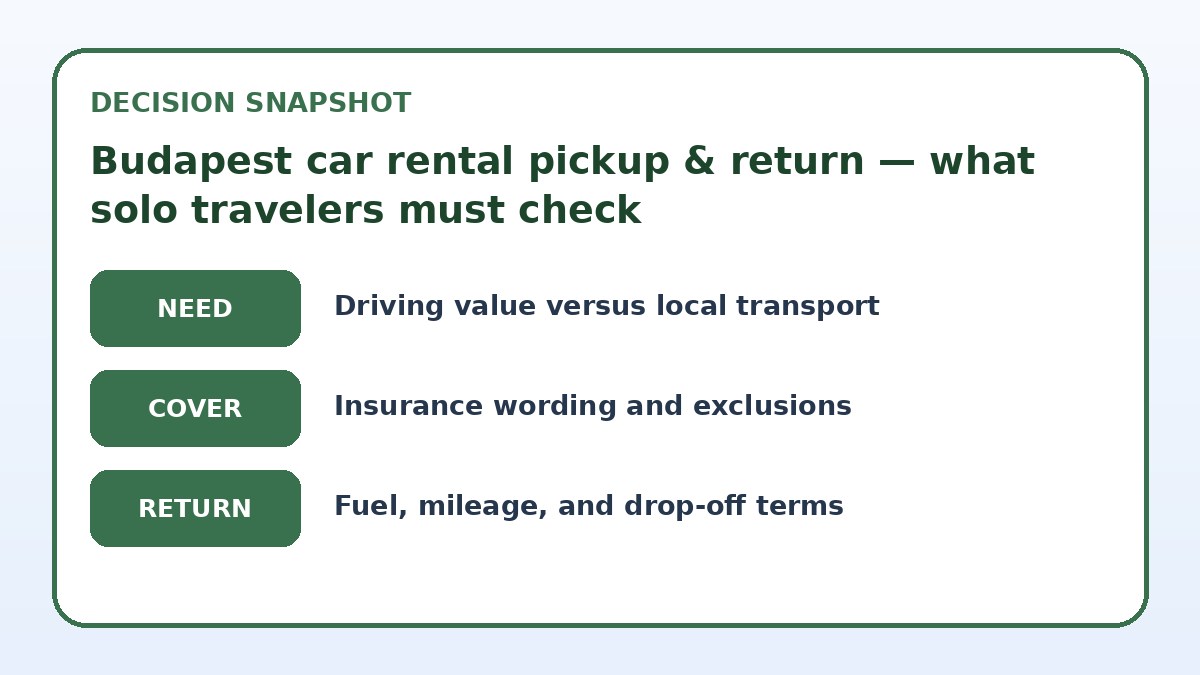
Decide whether a car adds meaningful value by mapping your intended day trips and how isolated each destination is from rail or bus links. The car matters most for flexible, multi-site excursions—small wineries, rural thermal baths, and villages where public transport is infrequent. If your plan features a single overnight outside Budapest or visits to well-served towns on main lines, trains and regional buses often equal or beat the car on travel time and comfort, especially for solo travelers who don't need to coordinate multiple passengers.
Consider also the hidden time costs of city driving: finding legal parking, feeding meters, and navigating narrow lanes can erase advantages on short hops. If you’ll park in Budapest, check whether your accommodation offers secure parking and whether it fits your budget; city center overnight spaces are limited. For long scenic routes and remote attractions where timetables are sparse, the car provides control. Tally travel time, parking hassle, and the value of on-demand stops to decide whether the route payoff justifies renting.
Decide whether driving earns its place
| Mobility strategy | Best for | Cost or friction to check |
|---|---|---|
| Rent a car for independent day trips | Travelers who prioritize schedule flexibility and access to remote sites | Higher pickup/return friction, parking hassle, and potential insurance excesses to manage |
| Trains and intercity buses | Solo travelers seeking low-stress, cost-effective regional travel on fixed routes | Limited schedules and less flexibility to reach very remote attractions |
| Guided day tours and private transfers | Those who want local knowledge, door-to-door service, and no driving responsibility | Less personal freedom on timing and possibly higher per-person cost for small groups |
| Rideshares and taxis for point-to-point needs | Short hops, late-night returns, or last-mile connections without parking concerns | Can be more expensive for long distances and less predictable for multi-stop sightseeing |
Check live rental choices only after the route test
Use the exact driver, dates, pickup point, and return plan to compare current conditions.
Insurance wording: what solo travelers must verify on the booking page
Insurance terms can determine whether a solo traveler is comfortable accepting a rental. Look for exact wording about liability, collision damage waivers (CDW), theft protection, and any excess (deductible) amounts. On the final booking page, confirm whether CDW reduces your excess fully or partially, whether third-party liability is included to local legal minimums, and whether add-on products (zero-excess cover, glass/tyre protection) are optional or bundled. Also verify whether credit-card coverage is accepted by the supplier and exactly what documentation the rental company requires to honor that coverage.
Pay attention to territorial restrictions and cross-border permissions if you plan to drive outside Hungary—these are often buried in contract text and can change insurance validity. Note any driver-age restrictions and single-driver insurance pricing, since solo travelers often pay a premium compared with a second driver. Finally, confirm how claims are handled: whether the supplier holds a security deposit on your card, the timeline for its release, and the process for submitting damage disputes. These specific points are best verified on the supplier’s confirmation page before you finalize booking.
Compare the full rental conditions
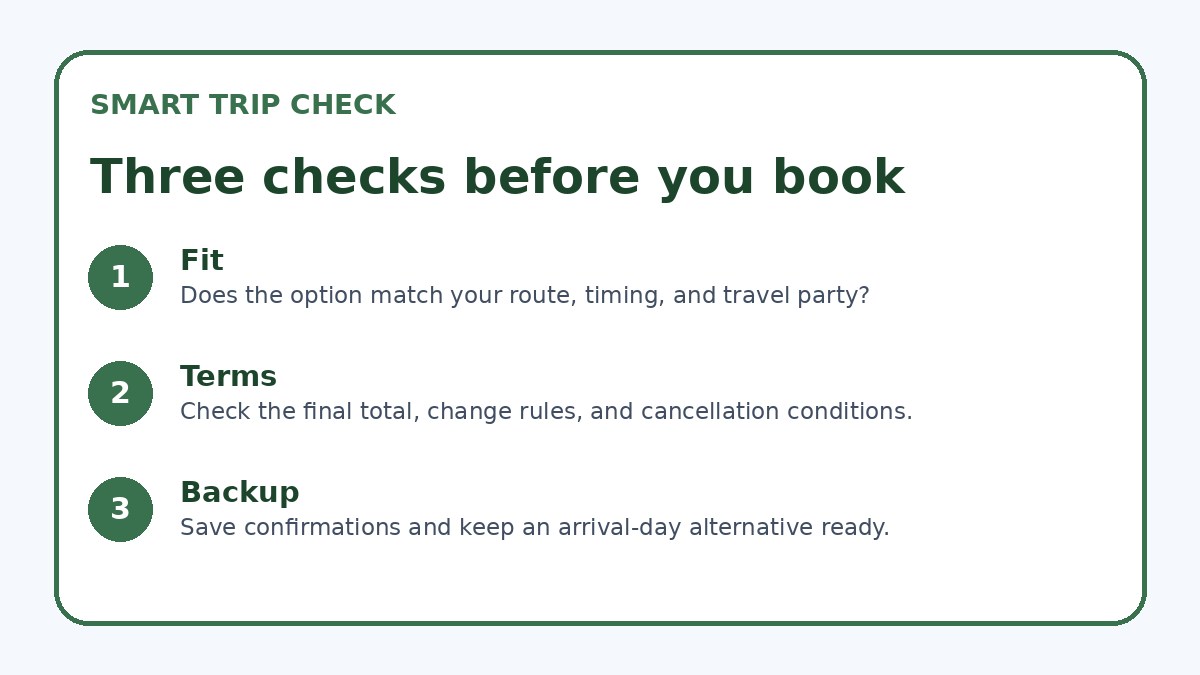
Confirm insurance wording, exclusions, deposit, fuel, mileage, and return terms on the final page.
Pickup and return friction: practical frictions to expect and avoid
Pickup friction can begin with desk location and hours: airport desks usually offer longer opening times than city locations, but airport pickups may include surcharges and long shuttle waits. Check whether the rental desk requires an appointment or offers after-hours pickup. For solo travelers, factors such as late arrivals, single-handed luggage handling, and unfamiliar one-way pickup procedures matter. Confirm the documentation list—driver’s license (what format and whether an International Driving Permit is required), passport, and the card used for the security hold—and the estimated time for a full check-in.
For returns, ask whether there is an out-of-hours drop box and how the company documents the vehicle’s condition on return. Insist on a printed or digital return receipt showing fuel level and mileage to avoid later disputes. Verify fuel-policy detail: full-to-full is usually clearest, but pre-purchase options and penalties for refueling can differ. If returning to an airport, find out whether shuttle transfers or remote lots add time. On the booking page, confirm the supplier’s stated process for post-return damage claims and deposit release timing to avoid unpleasant surprises after you leave Budapest.
Car rental terms to verify
- Confirm the exact pickup address, desk hours, and whether after-hours collection or appointment is required on the booking page.
- Verify accepted documents: driver’s license format, passport, credit card requirements, and whether an International Driving Permit is needed.
- Read the full insurance section and note excess amounts, what CDW and theft protection cover, and any optional zero-excess options.
- Check fuel policy wording (full-to-full, pre-purchase, or charged refuel) and make a plan to return the car with the documented fuel level.
- Ask how the supplier documents return condition and obtain a printed or emailed return receipt showing mileage and fuel to avoid future disputes.
- Confirm cross-border permissions and territorial coverage if you plan to drive outside Hungary, plus any extra fees or paperwork required.
Non-driving fallback: how to get around Budapest without a car
If you opt not to drive, Budapest has a compact, efficient public transport network for city exploration—trams, metro lines, and buses cover most neighborhoods and attractions. For day trips, Hungary’s rail network and intercity buses connect major towns; regional trains are comfortable and often run frequently between Budapest and popular destinations. For harder-to-reach sites, consider guided day tours or private transfers that handle logistics and pickup. These options remove the stress of navigation, parking, and return inspections, and they let a solo traveler relax or meet other travelers during transit.
Rideshare apps and local taxis fill gaps for late-night returns or off-schedule needs, though prices vary by distance and time. If you want the flexibility of a car without the paperwork, compare organized small-group day trips or private drivers for specific excursions; they are usually bookable per person and often include entrance guidance. When you compare non-driving options against a rental, weigh cost, autonomy, luggage handling, and how much you value door-to-door timetable control versus the convenience of leaving the driving to someone else.
Car Rental & Road Trip questions travelers ask
Do I need an International Driving Permit to rent a car in Budapest?
Whether you need an International Driving Permit (IDP) depends on your home country’s license and the rental company’s rules. Many EU and EEA licenses are accepted without an IDP, while licenses from some non-European countries may require an IDP or a certified translation. Always check the supplier’s explicit driver documentation requirements on the booking page before you finalize—look for the section that lists accepted license countries and formats. Carry both your physical license and your passport, and contact the supplier ahead of pickup if you have any uncertainty.
What should I expect for the deposit and card holds when renting solo in Budapest?
Most rental suppliers place a security hold on the card used at pickup to cover potential excess or damages; the amount varies by company and insurance choices. The hold can remain until after the vehicle is returned and any damage checks are completed, which may take days to release. Verify on the booking page the exact hold amount, whether debit cards are accepted, and the stated timeline for release. If using credit-card-provided insurance, confirm that the supplier accepts it and what paperwork is required to avoid larger holds.
How do I avoid disputes over dents or scratches when returning the car?
Document the vehicle’s condition at both pickup and return: take time-stamped photos of all sides, wheel wells, and the interior, and note existing damage on the supplier’s inspection sheet before you leave the lot. At return, insist on an agent walk-around or use an agreed drop-off procedure that provides a written or emailed condition report showing mileage and fuel level. Keep all receipts and the return confirmation. If a dispute arises later, having dated photos and the supplier’s return receipt significantly strengthens your position during any claim or credit reversal.
Final decision note
For most solo travelers staying mainly in Budapest, public transport, trains, and day tours provide smoother, lower-stress mobility than a city-based rental. Rent a car when your itinerary includes multiple rural stops, flexible timing, or destinations poorly served by public transport—then verify pickup hours, insurance excesses, fuel policy, and return documentation on the final booking page. If any pickup or return term feels uncertain or adds significant friction, use guided transfers, private drivers, or regional trains for day trips instead. Before you click ‘confirm,’ read the supplier’s exact pickup and return procedures and insurance wording so your Budapest travel choices match the realities on the ground.
Continue planning
Check current options and final conditions
Use the provider page to confirm live availability, the final total, cancellation terms, and every condition that matters to your trip.
This evergreen planning guide was created with AI-assisted drafting and a structured quality review. It does not display live prices, schedules, availability, visa guidance, or provider rankings. Verify current details before booking. Some links are affiliate links; we may earn a commission at no additional cost to you.