Practical answer up front: for most solo travelers staying in central Sapporo and visiting city highlights, public transport is usually the simpler, lower-friction choice. Driving can make sense if your plan centers on day trips to rural Hokkaido sights, photo stops off the main routes, or flexible timing for remote onsens that lack frequent buses. This guide compares the two approaches against the real decision factors that matter: route value (what you want to see), insurance and liability language to verify, pickup and return friction at airports or city locations, and a non-driving fallback if weather or logistics change. Read this with your specific itinerary in hand and use the checklists to confirm rental contract wording and transit connections on supplier pages before booking.
Route value: where driving actually adds time or cost
Start by mapping what you want to see and how remote each site is. Within Sapporo proper the subway and tram get you to most attractions quickly; traffic congestion, parking searches, and paid parking can add significant time. For single-day routes that extend beyond the city — coastal towns, mountain passes, or scattered onsens — driving can reduce transfers and let you visit several dispersed stops in a single day. Consider whether your priority is flexibility to linger at roadside views or a schedule that tolerates transfer wait times.
Factor in seasonal effects and the type of roads you will use. Narrow rural roads, winter snow conditions, or steep passes increase stress and may require experience driving in Hokkaido conditions. Compare total door-to-door time instead of distance alone: a seemingly short drive can take longer than a bus-train combo when you include parking and urban navigation. If you must rent, choose routes where the driving portion clearly shortens travel time or provides access that public transport cannot reasonably match.
Decide whether driving earns its place
| Mobility strategy | Best for | Cost or friction to check |
|---|---|---|
| Public transit (subway, tram, city buses) | City-focused itineraries and solo travelers seeking low friction and predictable schedules. | Limited reach for remote rural sites and less flexibility for multi-stop day trips outside service areas. |
| Car rental (self-drive) | Day trips to dispersed rural attractions, flexible timing, and routes with limited bus service. | Added responsibilities: insurance wording, parking, winter driving skills, and pickup/return logistics. |
| Taxi and ride-hailing | Short hops, late-night returns, or when mobility speed matters without driving yourself. | Higher per-trip cost and limited feasibility for lengthy multi-stop day trips compared with a rental. |
| Mixed approach (rent for select days, use transit otherwise) | Travelers who want rural access without committing to a car for the whole trip. | Requires careful coordination of pickup/return logistics and may incur extra fees for short-term rentals. |
Check live rental choices only after the route test
Use the exact driver, dates, pickup point, and return plan to compare current conditions.
Insurance wording: what to verify before you sign
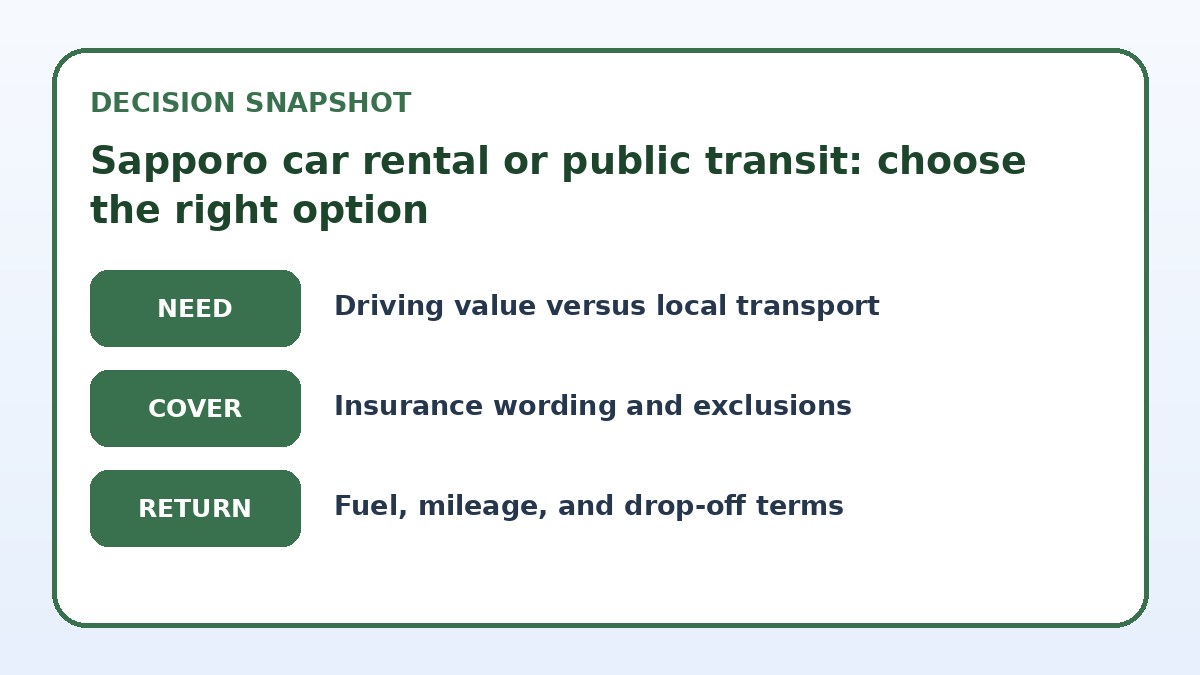
Insurance language matters more than headline coverage amounts. On the rental provider’s final booking page, confirm what the base rate includes and which optional waivers change your financial responsibility after an incident. Look for explicit statements about collision damage waiver (CDW), theft protection, third-party liability limits, and any deductible amounts. If you plan to drive in winter, verify whether tire- or weather-related incidents are covered, and whether roadside assistance is available 24/7 in the areas you intend to drive.
Check the fine print for exclusions that commonly affect tourists: driving on unpaved roads, use by unlisted drivers, or incidents occurring while using the car for professional driving services. If you use a credit card or third-party insurer for secondary coverage, confirm whether that policy requires you to decline the rental operator’s losses-reduction options. Always save screenshots or PDFs of the final booking page and the contract terms that explicitly state coverage, then carry proof while driving.
Compare the full rental conditions
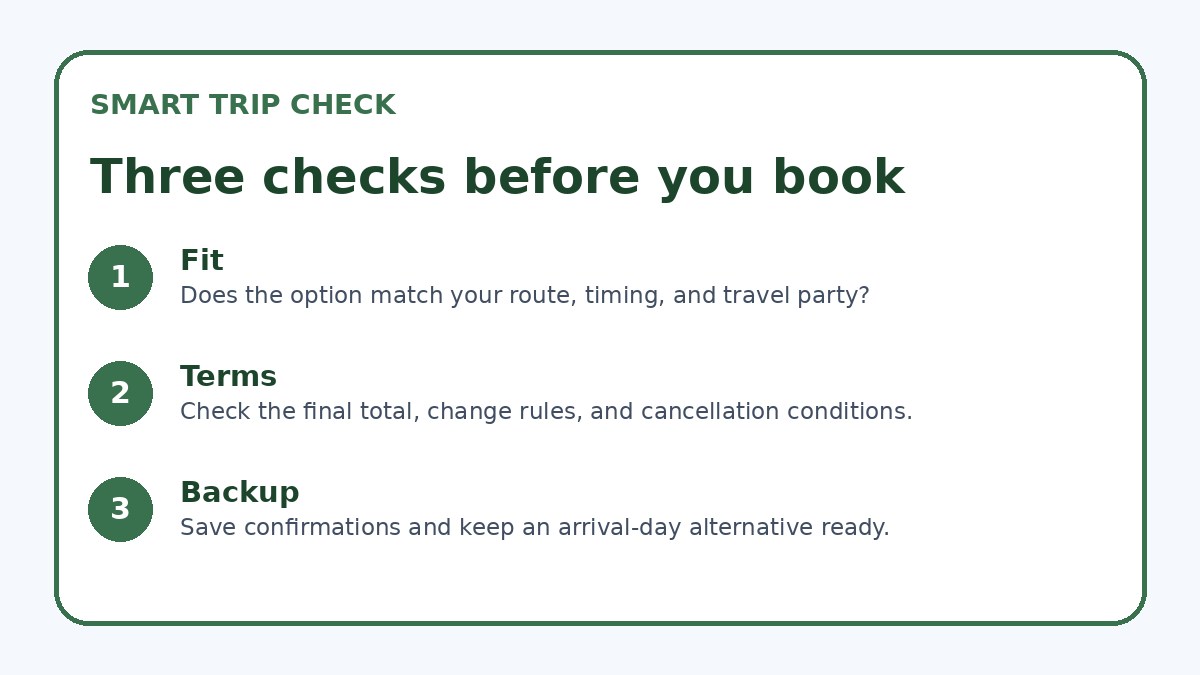
Confirm insurance wording, exclusions, deposit, fuel, mileage, and return terms on the final page.
Pickup and return friction: practical logistics to plan
Pickup location, counter hours, and last-drop policies change the convenience calculus. Airport pickups can be fast, but they sometimes require a shuttle to a remote lot or documentation checks that add time after a long flight. City-center pickup counters may close early, complicating late arrivals. Before you book, confirm the supplier’s exact pickup address, document requirements (driver’s license, IDP if applicable), and the procedure for out-of-hours returns. If the rental provider requires keys left in a drop-box or charges for after-hours returns, factor those costs into your decision.
Returning a car also demands time you may not have on departure day. If you need to catch a train or flight, plan buffer time for fuel refilling, cleaning requirements, and final inspection. Parking availability at your hotel or near pickup points may be limited; verify whether hotels permit overnight street parking or have partnerships with local lots. For stress-free travel, create a pickup-return timeline and confirm any shuttle schedules or mandatory inspections on the provider’s final page before completing payment.
Car rental terms to verify
- Map each planned destination and mark the nearest subway, JR station, or bus stop to compare door-to-door travel times.
- On the rental provider’s final booking page, download and save the full insurance and waiver wording, including deductible amounts and emergency contacts.
- Verify pickup and return addresses, counter hours, and out-of-hours procedures; note any required shuttles or drop-box instructions.
- Confirm whether winter tires or snow-related protections are included or optional for your travel dates before completing reservation.
- Identify local taxi numbers, major bus operator timetables, and the closest rail hub as a non-driving fallback.
- Reserve accommodation with flexible check-in/out or free cancellation for at least the days impacted by a planned rental.
Non-driving fallback: how to plan if driving fails
Always draft a back-up itinerary that uses public transport. Identify the nearest subway or JR stations to your planned stops, check bus operators serving rural points, and note transfer frequencies so you can reshuffle the day if weather, illness, or rental issues arise. For places with sparse service, find the nearest hub town that has frequent connections and design alternate short itineraries from there. Keep offline copies of key timetables and station maps in case mobile service falters.
Reserve flexibility into lodging and activity plans: opt for refundable or easily amended bookings where possible, and allow extra time between activities for unexpected delays. If you depend on a rental for a particular excursion, identify local taxi companies or community shuttle options that can act as a contingency; check their hours and payment methods ahead of time. Having a clear non-driving plan reduces pressure at the moment you must pivot and improves the odds you’ll still enjoy the day.
Car Rental & Road Trip questions travelers ask
Do I need an international driving permit (IDP) to rent a car in Sapporo?
Whether you need an IDP depends on your home country’s driving documents and local rental rules. Many rental companies require either an IDP issued under the 1949 Convention or a Japanese translation of your license for some nationalities. Check the rental provider’s specific driver-eligibility section on their final booking page to see required documents, age limits, and any translation forms. Also verify whether your home-country license must be presented alongside the IDP and whether photocopies are acceptable.
How should I handle insurance if I already have coverage from a credit card or personal policy?
If you have secondary coverage through a credit card or personal auto policy, read both the card’s terms and the rental company’s contract carefully. Some third-party coverages require you to decline the rental operator’s loss-reduction products to keep the card benefit valid, while others are purely secondary and reduce your out-of-pocket expense. On the rental provider’s final booking page, note exclusions and required documentation to activate that coverage in case of a claim. Consider contacting your card issuer directly to confirm exactly what is covered in the rental country.
What should I check about parking and city driving in Sapporo before renting?
Check whether your accommodations offer guest parking, the availability and cost of nearby public lots, and typical parking enforcement practices. In central neighborhoods, on-street parking may be metered or restricted, and some areas use automated lot systems requiring Japanese-language interfaces. Verify where long-term parking for multi-day rentals is allowed and whether your planned stops have visitor parking. If parking is scarce near attractions, the time spent looking for a spot can negate the benefits of renting a car for short city trips.
Final decision note
Deciding whether to rent a car in Sapporo comes down to the mix of places you want to reach and how comfortable you are handling insurance fine print and pickup/return logistics. For most solo travelers whose plans center on central Sapporo’s cultural and culinary highlights, the local public transport network minimizes hassle and expense. Choose a rental when your itinerary requires rural flexibility, multi-stop day trips, or access to locations without regular bus service, but verify insurance terms, winter coverage, and counter procedures on the provider’s final booking page before you commit. Keep a solid non-driving fallback and you’ll be ready to pivot if conditions change.
Continue planning
Check current options and final conditions
Use the provider page to confirm live availability, the final total, cancellation terms, and every condition that matters to your trip.
This evergreen planning guide was created with AI-assisted drafting and a structured quality review. It does not display live prices, schedules, availability, visa guidance, or provider rankings. Verify current details before booking. Some links are affiliate links; we may earn a commission at no additional cost to you.