Your first decision after landing in Busan is simple but crucial: can the group leave the airport together within an hour, or do you need extra time for luggage, stroller folding, and a toddler’s meltdowns? For families traveling in a small party (typically 3–6 people), the fastest, least stressful choice is often a pre-arranged vehicle that matches your luggage and car-seat needs. That gives you a single meeting point, a predictable pickup, and door-to-door drop-off. If your flight might arrive late or is likely to be disrupted, pick a flexible option or one with clear change/cancellation rules. This guide explains how to size vehicles, assess meeting-point clarity, handle disrupted arrivals, and pick a drop-off point that suits family accommodations and mobility needs.
Check options for your arrival details
Use your flight, luggage, party size, and accommodation address to compare current choices.
Luggage and party size: pick the right vehicle
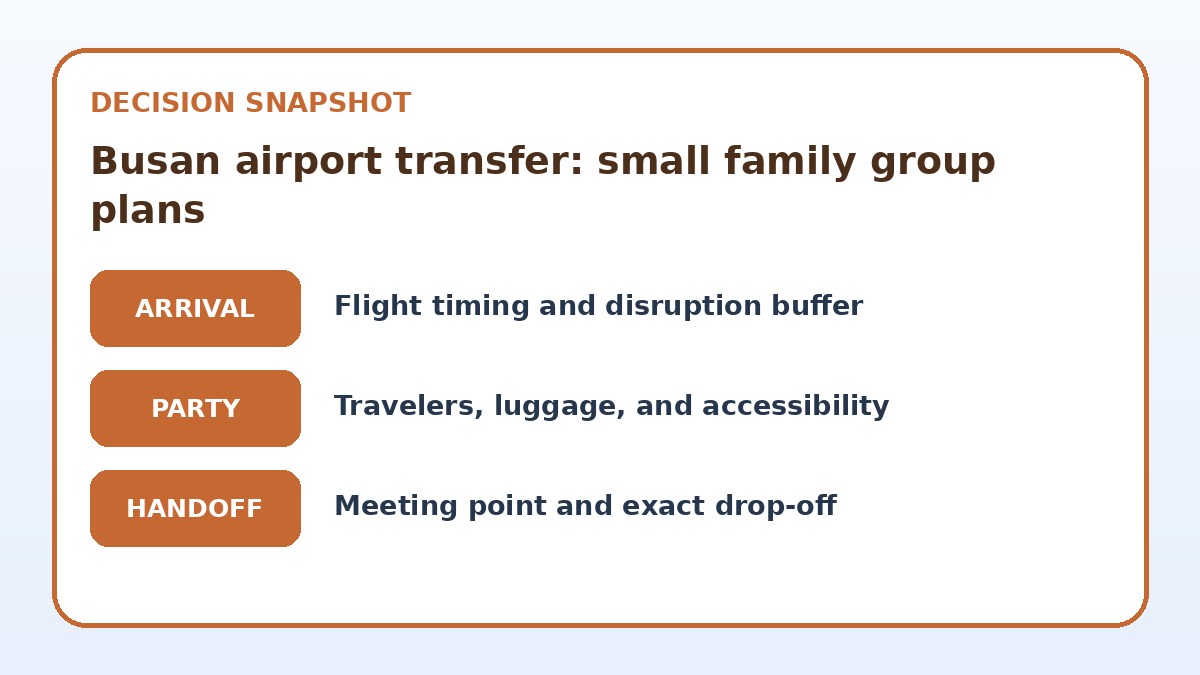
Start by listing exactly who is traveling and what each person carries. Count checked suitcases, carry-ons, diaper bags, and bulky items such as strollers or travel cots. Families often underestimate the space a stroller plus a checked bag will need. For a small family group, a compact taxi might fit four passengers but fail on luggage; a larger MPV, minivan, or multi-vehicle transfer will change the comfort and logistics of the journey. If everyone must travel together for convenience or safety, choose a vehicle with seating for every person and room in the trunk for luggage.
If you need a car seat, check whether the transfer provider supplies one or whether you should bring your own. Installing your own seat usually gives the best fit and peace of mind; if you rely on a provider’s seat, verify the type, installation method, and age/weight suitability on the final booking page. When comparing options, prioritize usable passenger space over vehicle class. A roomy van with clear seatbelts and space to keep an infant carrier accessible is usually better for a family than a cramped premium car.
Arrival details to have ready
- Count passengers and large items now; list each checked bag, stroller, and infant seat before you book a vehicle.
- Ask your accommodation whether short-term curbside unloading is allowed and confirm the exact drop-off coordinates to share with the driver.
- If you need car seats, decide whether to bring yours or request one from the provider, and verify seat type and installation policy on the booking page.
- Save the driver’s contact number and a clear Korean pickup phrase or screenshot to show airport staff if directions are needed.
- Plan a fallback route—name the taxi rank, nearest train service, or shuttle desk—so you have options if the pre-booked transfer is delayed.
- Share the pickup meeting point and expected arrival time with every family member and agree who will carry travel documents and phones.
Late or disrupted arrivals: build flexibility
Expect the unexpected: flight delays, immigration queues, or a lost bag can add 30–90 minutes to your arrival. A transfer that requires a rigid pickup time can become stressful. Look for options that allow a free waiting window (for example one hour after landing) or that let you update pickup by phone or app. If you are booking a third-party transfer, read the provider’s policy on delays and look for contact methods that will work with your phone plan in Korea.
If your group prefers not to pre-book, keep a realistic fallback plan. Know the location of the official airport taxi rank, express train, or a public bus in case a private transfer fails to materialize. For late-night arrivals when public transport is limited, pre-arranged transfer or taxi is typically the practical fallback. If you choose a flexible shuttle or shared service, confirm whether the operator will reassign your booking automatically if your flight status changes.
Match the transfer to your arrival
| Arrival approach | Best for | Detail to verify |
|---|---|---|
| Private pre-booked car or minivan | Families wanting door-to-door service and reliable space for luggage and car seats | Typically less flexible on last-minute schedule changes and may require advance confirmation of flight changes |
| Shared shuttle or group transfer | Budget-conscious families willing to wait for other passengers and share stops | Longer travel time and multiple stops can be tiring for young children; luggage space is often limited |
| Taxis from the airport rank | Late arrivals or families needing immediate departure without prior booking | May require multiple vehicles for larger groups or more luggage; variable vehicle size and car-seat availability |
| Public transport (train + local bus) | Groups comfortable with transferring and wanting the most economical option | Less convenient with lots of luggage or toddlers; schedules and transfers add complexity |
Make the meeting plan clear
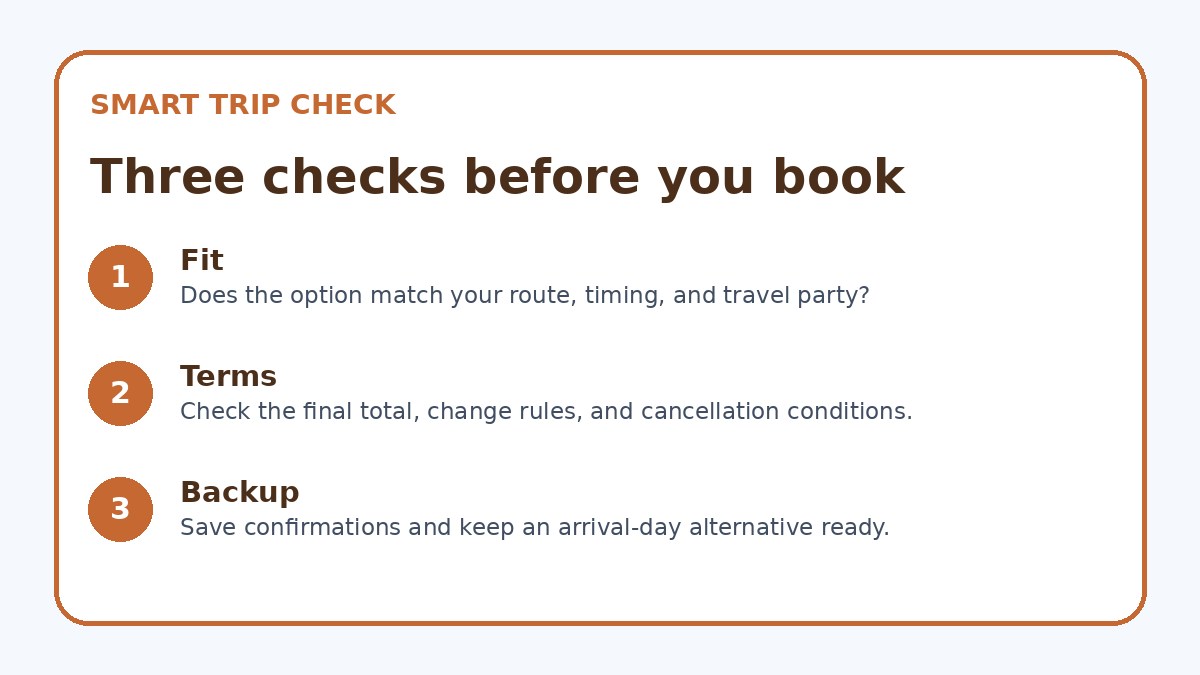
Check the final pickup instructions, waiting conditions, and exact drop-off coverage.
Meeting-point clarity: avoid confusing pickups
Clear communication about where to meet the driver saves a lot of stress. Airports have multiple exit doors, levels, and language barriers. Choose a transfer that names a specific terminal exit, floor (arrival level), and a local landmark such as an information desk or a café. Ask for a driver contact number and agree on a short text or messaging method to send an updated arrival time. For families with young children, having a simple meeting landmark reduces wandering and keeps everyone in one place while you coordinate luggage.
Prepare a printed or screenshot instruction card in Korean with your pickup details and the driver’s name to show staff if needed. If you arrive on separate flights or with staggered arrival times, arrange to consolidate at a single meetup point inside the terminal to prevent missed connections and extra waiting fees. Confirm whether the driver will meet you inside arrivals or at the curb; some airports limit vehicle access and require passengers to walk to a designated pickup zone.
Destination-side drop-off: pick the most family-friendly stop
Not every accommodation has curbside access. Hotels usually have a formal drop-off point but apartments, guesthouses, or rental homes may require a short walk, stairs, or elevators with timing restrictions. Before booking, ask the accommodation whether vehicles may stop briefly to unload—if not, choose a nearby public parking area or request a timed drop-off where passengers and small children disembark safely before the driver relocates the car.
Think about immediate needs on arrival: bathroom breaks, a place to warm formula or reheat food, or accessibility to elevators and luggage trolleys. If you’re traveling with multiple generations, prioritize a drop-off that minimizes walking and stair use even if it adds a few minutes to the driver’s route. Communicate special requests—assistance with stairs, help carrying bags—to the driver in advance so they can prepare or plan a closer curbside stop if possible.
Airport Transfer & Local Mobility questions travelers ask
How do I choose between a private transfer and an airport taxi for my family?
Choose a private transfer when you need guaranteed seating for everyone, space for strollers and luggage, and door-to-door service. Private vehicles are useful if you arrive late, have infants needing car seats, or want minimal walking. An airport taxi can work well for small families with light luggage who prefer on-the-spot travel without pre-booking. Antes of both: confirm vehicle capacity and any child-seat needs on the booking page, and prepare a fallback plan if taxis are scarce at peak times.
What should I do if my flight is delayed and the transfer company has a strict pickup time?
Contact the provider immediately with your updated flight number and new arrival time; many operators allow a free grace period but policies vary. If you cannot reach them, proceed to airport information or the transfer desk to request assistance and ask whether they monitor flight arrivals. Keep a backup option—taxi rank or public transport—ready. Before booking, verify the provider’s change and delay policies on the final booking page and note any required contact method to report delays.
Are there practical ways to make a shared shuttle comfortable for small children?
Yes. Pack a small travel kit with snacks, wet wipes, a blanket, and a favorite toy to keep children calm during longer stops. Reserve seats near the driver or back row if possible to reduce motion sickness and allow quick boarding. Check with the shuttle about luggage limits and whether strollers count as carry-on or checked items—collapsible strollers usually fit better. If time sensitivity is important, factor in the extra stops a shuttle makes and consider upgrading to a private transfer for naps or early bedtimes.
Final decision note
For families arriving in Busan as a small group, the practical choice depends on luggage, car-seat needs, and how much you value door-to-door convenience. Private pre-booked vehicles give the most predictable experience for infants and strollers, while taxis and public transport offer flexibility and cost options if you’re light on luggage and comfortable with short walks. Always verify vehicle capacity, child-seat availability, and delay policies on the provider’s final booking page before committing. If you want to compare current availability and conditions, platforms such as Trip.com can show live options, but use the provider’s terms for final confirmation.
Continue planning
Check current options and final conditions
Use the provider page to confirm live availability, the final total, cancellation terms, and every condition that matters to your trip.
This evergreen planning guide was created with AI-assisted drafting and a structured quality review. It does not display live prices, schedules, availability, visa guidance, or provider rankings. Verify current details before booking. Some links are affiliate links; we may earn a commission at no additional cost to you.