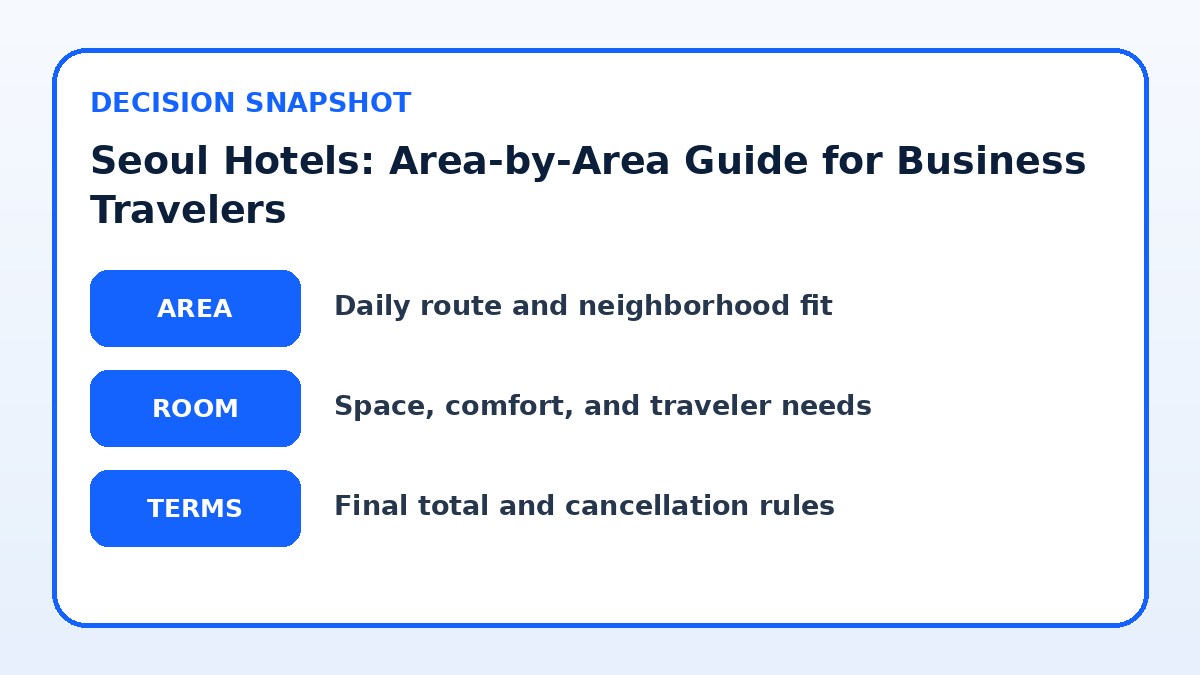
Decide the area first: pick a Seoul neighborhood that matches your meeting locations and morning commute rather than hunting specific hotels. If most appointments cluster around Gangnam, stay in Gangnam/Yeoksam for fewer transfers and later-night dining options; if meetings are downtown near the Seoul Station–Myeongdong corridor, choose Jung or Yongsan for quick rail or shuttle access. For technology or startup visits, consider Mapo/Yeonnam or Digital Media City for a quieter, innovation-focused feel with coworking nearby. If you need easy access to the international airport or intercity trains, Yongsan and Seoul Station areas cut last-mile friction. After you shortlist by neighborhood, compare room layouts, business facilities (desk, outlets, meeting rooms), and cancellation or corporate booking terms on the provider’s final page before confirming.

Check live stays in the areas that fit
Use your dates and party size to compare current rooms after you narrow the neighborhood fit.
Neighborhood fit: which area suits your meeting pattern?
Think of Seoul neighborhoods as commute profiles. Gangnam is best when your schedule clusters around the southern business districts and startup hubs; it has many hotels that cater to business dinners and late meetings. The central districts—Jung, Myeongdong, and the Seoul Station/Yongsan corridor—work well if your meetings are downtown or if you rely on national rail, as they reduce transfers for intercity guests. Mapo and Hongdae are convenient if you expect creative-industry visits or want shorter rides to campuses and cafes that double as informal meeting spaces.
Consider other practical signals: if you’ll meet clients at corporate offices, confirm which subway lines and exits are nearest; if your contacts are university-based, staying near Sinchon or Seongsu saves local travel. Business travelers who need late-night meals or quieter hotel rooms should weigh nightlife noise in Hongdae versus the more sedate streets around business towers. Narrow your shortlist to two neighborhoods—one that minimizes commute time and one that offers a fallback if inventory is limited.
Choose an area-selection strategy
| Area approach | Best for | Tradeoff to check |
|---|---|---|
| Stay near your main meeting cluster (Gangnam, Jung) | Minimizing travel time to the majority of your appointments. | May limit flexibility if last-minute meetings pop up elsewhere in the city. |
| Stay near major transport hubs (Seoul Station, Yongsan) | Easy airport/KTX connections and convenient transfers for intercity work. | Central hotels can be busier and sometimes farther from southern business districts. |
| Stay in innovation or creative districts (Mapo, Seongsu) | Startup, tech, or creative-industry meetings and informal coworking culture. | Fewer large corporate hotels and potentially longer rides to government or downtown offices. |
| Choose a quieter residential business area (Samseong–COEX fringe, Yeoksam) | Undisturbed rest and steady access to conference venues and corporate towers. | Evenings may have fewer dining options and shorter transit windows late at night. |
Daily-route friction: transport and time costs
Estimate door-to-door time for your main route rather than judging by distance alone. Seoul’s subway is extensive and reliable, but transfers and walking between large stations, exits, and buildings can add 10–20 minutes per leg. If your meetings are scattered across the city, staying near a major interchange (Seoul Station, Gangnam, or City Hall) reduces transfer headaches. For airport arrivals or departures, a hotel near Seoul Station or Yongsan can simplify luggage moves because they connect directly to KTX and airport railroad services—verify transfer options on the provider page.
Also factor in end-of-day fatigue: a 30-minute direct ride after a full day is easier to accept than a 20-minute trip with two transfers and a long walk. Check whether your chosen area has convenient late-night transit or reliable taxis; in some districts taxis may be harder to hail during peak nightlife hours. If you plan early-morning meetings, look for hotels that offer early breakfast windows or the ability to request boxed breakfasts to remove a time pressure point from your morning routine.
Now compare like with like
Keep the same dates, guests, room needs, and cancellation preferences while you compare the final choices.
Room and party needs: choose a room that supports work
Clarify how you’ll use the room. If you need to host a one-on-one meeting, request a larger room or a junior suite and check whether the hotel allows visitors in rooms—confirm visitor policies on the booking or hotel page. For focused solo work, prioritize a room with a solid desk, ergonomic chair, abundant power outlets, and a clear description of Wi-Fi speeds or business center availability. If your trip includes a colleague sharing the room, look for twin-bed configurations, or two-bed suites, and double-check bedding and occupancy policies with the hotel before booking.
Don’t overlook noise control and lighting: hotels adjacent to nightlife hubs often have louder evenings; request a room on a higher floor facing away from main streets. Business travelers who require printing or scanning should confirm whether a free business center or in-room printer is available, or map coworking spaces nearby. If you’ll be entertaining clients, review meeting-room rental options, catering rules, and invoice procedures—these are often listed on the property’s official page and should be confirmed directly with the hotel.
Hotel booking check before payment
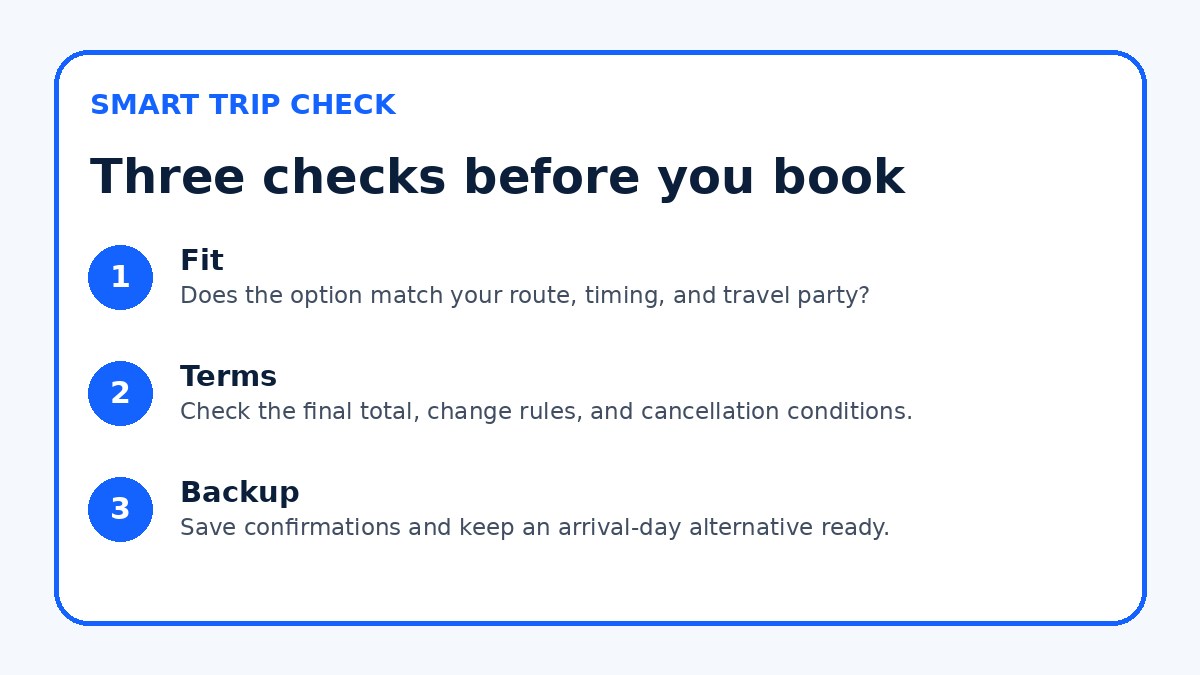
- Map your meeting addresses and mark the nearest subway stations and exits before choosing an area to stay.
- Estimate door-to-door commute times for your main routes, including transfers and walks, rather than judging by straight-line distance.
- Confirm room features: desk size, chair comfort, outlet placement, noise insulation, and whether a work lamp is available.
- Ask the hotel for corporate invoicing options, receipt turnaround time, and any group booking policies if you need them.
- Verify breakfast hours, early check-in/late check-out policies, and whether boxed breakfasts are offered for early departures.
- Check the hotel’s official page for meeting-room availability, AV services, and any visitor-entry rules before booking.
Final booking terms: what to verify before you commit
When you’ve chosen a neighborhood and a shortlist of hotels, compare the booking terms that matter for business travel. Verify the cancellation window and whether corporate rates or invoicing are supported; if you need receipts for reimbursement, confirm the invoice format and how quickly you’ll receive it. Check exact breakfast hours, shuttle schedules (if applicable), and whether early check-in or late check-out can be guaranteed or requested, because these affect meeting-day logistics.
Also confirm the hotel’s stated business amenities—meeting rooms, AV equipment, and reliable Wi-Fi—on the provider’s final booking page instead of relying solely on third-party summaries. If group bookings or multiple rooms are needed, ask about holding blocks and release policies. For final comparison and live availability, you can optionally check Trip.com or other booking platforms, but always confirm any special requests or corporate terms directly with the hotel before finishing payment.
Hotel Guide questions travelers ask
Which Seoul neighborhood is most convenient if I have mixed meetings across the city?
If your meetings are scattered, prioritize a hotel near a major interchange (Seoul Station, City Hall, or Gangnam) to reduce transfers. These hubs connect multiple subway lines and make cross-city trips simpler, cutting the number of changes and long walks. While staying at an interchange may not put you next door to every meeting, it lowers daily-route friction and gives clearer taxi or shuttle options for tight schedules. Check exit numbers and walking distances from the station to typical meeting addresses when deciding.
How should I choose between a business hotel and a boutique property?
Decide by function: pick a business-focused hotel if you need guaranteed meeting rooms, corporate invoicing, early breakfasts, and consistent workspaces. Boutique hotels can offer quieter, more characterful rooms but may lack full-service business centers, meeting spaces, or standardized invoice processes. If you choose a boutique property, confirm business amenities and visitor policies before booking. For hybrid needs, look for boutique hotels with a clear business offering or nearby coworking spaces you can use.
What are the most important room features to request for productive hotel work?
Ask for a solid work desk with a comfortable chair, multiple power outlets near the desk, reliable high-speed Wi-Fi, and a room on a higher floor away from street noise. Good natural or adjustable task lighting and blackout curtains help with early starts and late calls in different time zones. If printing or official scanning is required, confirm an accessible business center or nearby copy service. Always verify these features on the hotel’s booking page or by contacting the property directly.
Final decision note
Make the neighborhood decision before hunting individual hotels: pick the area that cuts travel time to most of your appointments, then shortlist two or three properties in that zone that meet your room and business needs. Factor daily-route friction—transfers, walking distance, and late-night transit—into your choice, and verify all booking terms that matter for work: invoicing, meeting rooms, cancellation windows, and early check-in. Once you’ve narrowed to a handful of options, confirm amenities and policies on the hotel’s official page or by direct contact; use Trip.com or similar platforms to compare live availability, but always finalize special requests with the hotel.
Continue planning
Check current options and final conditions
Use the provider page to confirm live availability, the final total, cancellation terms, and every condition that matters to your trip.
This evergreen planning guide was created with AI-assisted drafting and a structured quality review. It does not display live prices, schedules, availability, visa guidance, or provider rankings. Verify current details before booking. Some links are affiliate links; we may earn a commission at no additional cost to you.