Practical answer up front: for most families traveling Rome to Florence, take the high‑speed train between central stations and plan transfers to and from stations rather than peripheral terminals. Choose departures that arrive and depart from the main city stations you want—Rome Termini or Tiburtina and Florence Santa Maria Novella—so you limit extra taxi or shuttle legs with tired kids and luggage. If your family values door‑to‑door simplicity and fewer handoffs, prioritize trains with minimal platform changes and easy station access; if cost and flexibility matter more, consider coach combinations but expect longer transfer walks or different terminal locations. Read provider pages to confirm where a chosen journey starts and ends, luggage rules, and whether a seat reservation or platform transfer is required.
Terminal fit: choose stations that match your start and end points
Start by matching journey endpoints to where your family actually needs to be in each city. Central stations normally save time because taxis and local buses stop nearby and there are more luggage storage or concierge options. If your hotel is close to a major station, a train that arrives there keeps the final leg simple. Conversely, some coach services use terminals outside the historic centres; those can be cheaper but add an extra taxi or public transport leg that multiplies stress with children and large bags.
Look at how far each terminal sits from your accommodation and what kind of approach it offers—flat sidewalks and lifts are much easier with strollers than steps and narrow alleys. When booking, verify the station name on the provider site and on your booking confirmation because different operators sometimes use nearby but separate terminals. If you must change station types (for example, arriving at a peripheral coach terminal but leaving from the central rail station), plan specific transfer time and a taxi budget to avoid last‑minute scrambling.
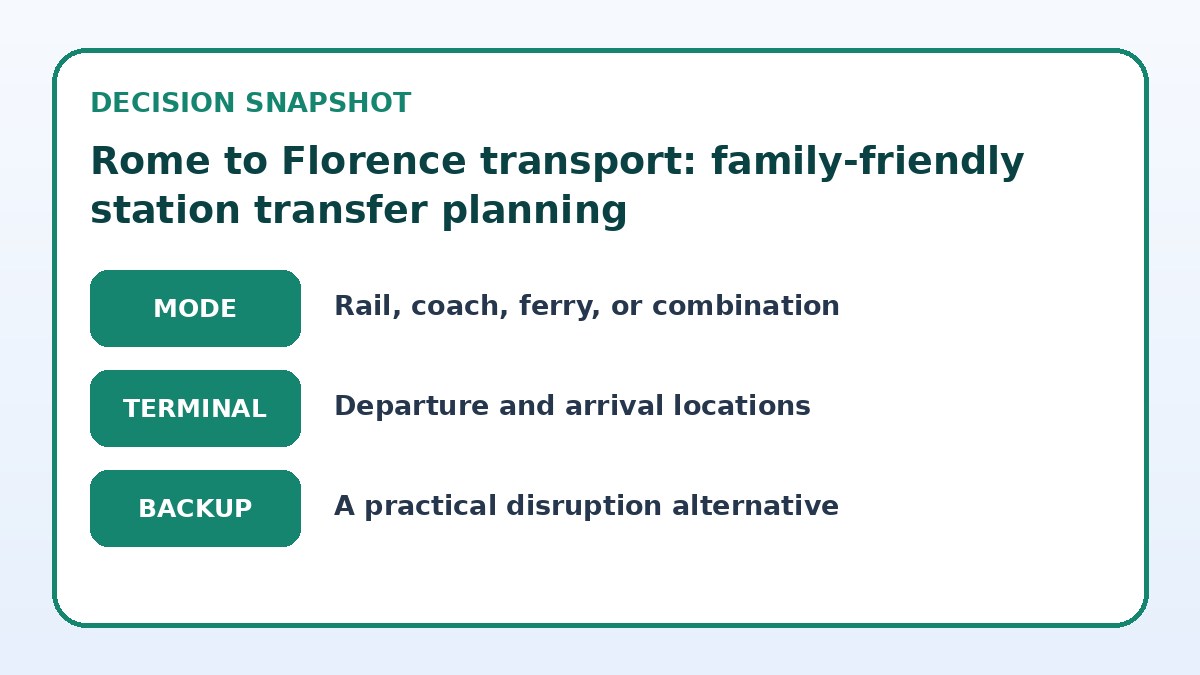
Choose the end-to-end journey plan
| Journey approach | Best for | Friction to check |
|---|---|---|
| Direct high‑speed train between central stations | Families valuing shortest door‑to‑door time and fewer handoffs | May require earlier booking and mindful luggage handling on platforms |
| Coach to peripheral terminal with local transfer | Price‑sensitive families comfortable adding a taxi or shuttle | Longer total travel time and more potential walking with luggage |
| Combination: coach into city + short regional train | Families balancing cost with central arrival and some flexibility | Requires coordinating timetables and extra transfer planning |
| Private transfer or taxi door‑to‑door | Families prioritizing convenience, door‑to‑door simplicity, and minimal walking | Higher cost and potential for city traffic delays during peak times |
Check live intercity options
Look beyond the ride itself and compare terminals, transfers, luggage, and arrival fit.
Luggage and transfer friction: practical packing and handling
Families should assume more friction than solo travelers. Measure what you will carry through stations: strollers, backpacks, suitcases, and a day bag. Choose bags you can wheel or sling easily; a small backpack for essentials and a lightweight wheeled suitcase for each adult eases movement. Check whether your chosen train requires you to lift bags onto a luggage shelf, and confirm any size or number limits on the provider’s page. Some operators list coach luggage hold rules and free items, while others allow only standard‑sized carry items—always verify before you travel.
At stations, look for elevators, ramps, and step‑free routes on station maps and accessibility pages. If you have a buggy, confirm whether the station has ramps from street level to platform or if staff assistance is needed; many major stations offer help but you must request it in advance on certain services. Pack a small emergency kit with snacks, a simple first‑aid item, wet wipes, and a spare change of clothes for toddlers so short delays or a longer transfer won’t derail the day.
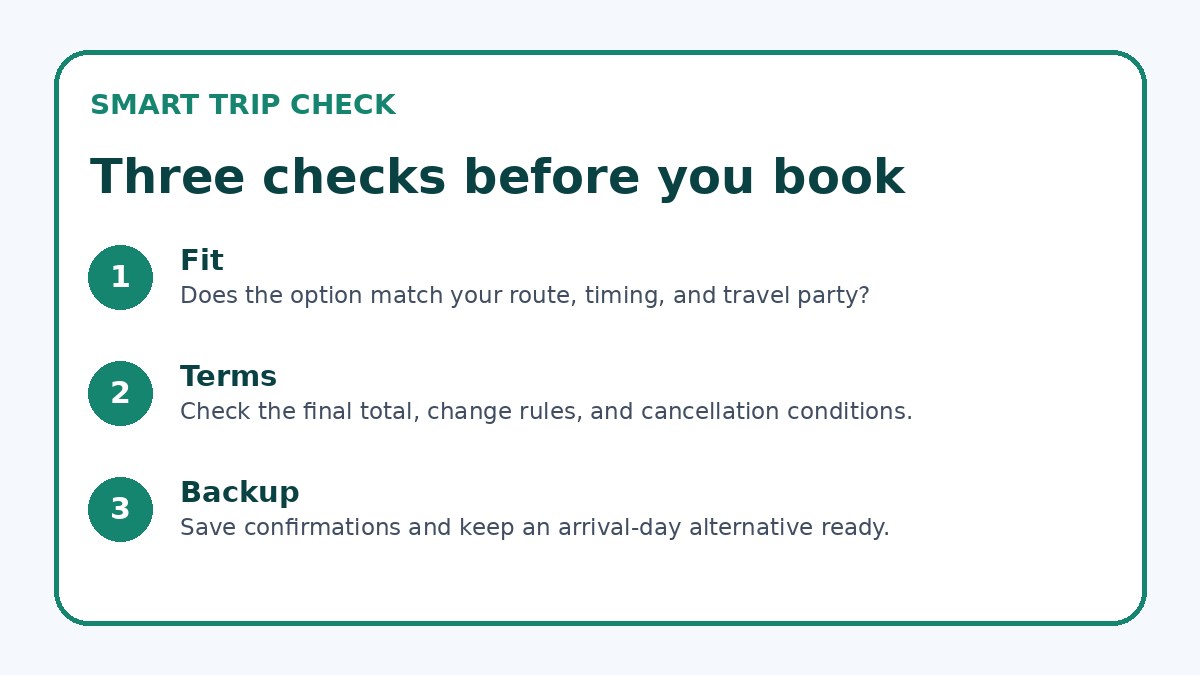
Timing flexibility: building realistic schedules with kids
Build extra padding into every leg: leaving your hotel, walking to the terminal, passing security or ticket gates, boarding, and final transfer. Add at least 30 minutes for simple journeys and 45–60 minutes if you expect to navigate a larger station, have timed seat reservations, or need to change platforms with luggage. Travelling outside peak hours can reduce crowds but check that the fewer services still connect cleanly. Where a direct option exists, weigh the benefit of fewer transfers against a slightly longer ride if it keeps boarding and alighting simple for everyone.
Consider splitting the day with a longer break if your child naps or needs rest, or choose a later departure that aligns with family routines to avoid overtired meltdowns on the move. When comparing options, look at total door‑to‑door time rather than just in‑vehicle time. Use public transport planners, hotel concierge advice, or Trip.com as a quick cross‑check for current availability, then confirm boarding points, platform arrangements, and luggage rules on the carrier’s final booking page before you commit.
Compare the practical alternatives
Use the final page to confirm what is actually offered on your dates and save a workable fallback.
Intercity travel checklist
- Confirm the exact departure and arrival station names on the provider’s booking page and map before finalizing.
- Measure luggage and stroller size; choose bags that are easy to wheel and lift on platforms if necessary.
- Build at least 30–60 minutes buffer for station navigation, restroom stops, and unexpected waits with kids.
- Save local taxi numbers, download a rideshare app, and screenshot your hotel address in the local language.
- Pack a compact family kit with snacks, spare clothes, chargers, and basic medicines for quick emergencies.
- Check train or coach baggage rules and platform access notes on the carrier’s site; verify assistance procedures if needed.
Disruption backup: simple contingency plans that actually work
Have two realistic backups: a) an alternative scheduled service (next train or coach) and b) a paid transfer option such as a taxi or rideshare. For families, the taxi backup is often the most practical because it removes walking and platform changes; save a local taxi number and download a widely used rideshare app before you travel. Keep a printed or screenshot list of your hotel address in the local language to show drivers and staff if your phone data is unreliable.
Prepare small, specific rules so everyone knows what to do if plans change: where to meet if separated, who watches bags, and when to call a parent for help. Register any booked trains that allow free changes or hold a flexible ticket if you anticipate rescheduling; otherwise, know the cost and process of switching on the provider’s site. If you need to rebook because of a disruption, verify the new route’s terminals and transfer needs before accepting it—an alternate journey that lands at a different terminal can add significant time and stress.
Rail & Intercity Transport questions travelers ask
Should families prefer trains or coaches when traveling from Rome to Florence?
Trains often win for families because major stations are centrally located, boarding is straightforward, and total door‑to‑door time can be shorter if you avoid extra terminal transfers. Coaches can be cheaper but frequently use terminals outside city centres that add taxi or bus legs. Decide by comparing the total journey from your door to your destination—include walking time, transfers, and likely wait times. Verify departure and arrival terminal names on the operator site and consider whether a direct train with fewer handoffs is worth a slightly higher fare for your family’s comfort.
How much extra time should I allow at Roman and Florentine stations with kids and luggage?
Allow at least 30 minutes for straightforward trips and 45–60 minutes for larger parties, small children, or if you need to change platforms or stations. Bigger stations have longer walks between entrances, stairs, and busy ticket gates. Factor in time for restroom breaks, snack stops, and to locate lifts or ramps if you have a stroller. If your itinerary requires changing from a coach terminal to a central rail station, add additional transfer time and a taxi buffer to keep stress low.
What disruption plans work best for families en route between Rome and Florence?
Keep two practical backups: the next scheduled service shown by the carrier or a taxi/rideshare to complete the journey. Preload taxi app(s) and save local numbers, and have your accommodation address ready in the local language. If you booked with a flexible fare or an operator that allows free changes, know how to rebook on their site or app; if not, check how to purchase an alternative ticket quickly. Agree on a simple meeting point and roles—who watches bags, who manages tickets—so everyone responds calmly if plans change.
Final decision note
For families, the right Rome to Florence transport choice is the one that minimizes handoffs between modes and reduces walking and luggage lifts. Prioritize central station arrivals and departures when convenience matters, and reserve extra time for station navigation, restroom and snack stops, and unforeseen delays. Prepare simple backups—an alternate scheduled connection and a taxi option—and confirm terminal names, baggage rules, and accessibility details on the provider’s final booking page. A little advance planning around terminals and transfers will keep the trip smoother and leave more energy for exploring Florence with your family.
Continue planning
Check current options and final conditions
Use the provider page to confirm live availability, the final total, cancellation terms, and every condition that matters to your trip.
This evergreen planning guide was created with AI-assisted drafting and a structured quality review. It does not display live prices, schedules, availability, visa guidance, or provider rankings. Verify current details before booking. Some links are affiliate links; we may earn a commission at no additional cost to you.