If you’re bringing more than one large suitcase to Hong Kong, start by choosing the neighborhood—then refine room choices. For most travelers with extra luggage, proximity to major transit hubs (MTR, airport express, ferry piers) and easy hotel entry/exit matters more than being in the absolute trendiest block. That said, some districts offer both larger rooms and straightforward transit links; others save walking time at the cost of tiny rooms and tight corridors. This guide helps you shortlist an area before you open booking pages, weigh daily-route friction against in-room comfort, and set clear booking terms to verify before you complete a reservation. Follow the neighborhood-fit checklist to decide whether to prioritize a short transfer and long walks or a larger room where you’ll spend more time unpacking and staging luggage.
Check live stays in the areas that fit
Use your dates and party size to compare current rooms after you narrow the neighborhood fit.
Neighborhood fit: map your arrival and daily anchor
Begin by thinking of Hong Kong not as a single island but as three practical zones: Hong Kong Island, Kowloon, and the New Territories—each with different transfers and walking conditions. Travelers with extra luggage often favor neighborhoods within a short walk or direct transfer from the Airport Express or major MTR interchanges because a single elevator or level transfer eliminates the repeated strain of staircase or narrow foot-bridge carries. When you map neighborhoods, mark where your flights or ferries will land, where you plan to spend most days, and the nearest MTR lines; that heatmap should drive your shortlist more than nightlife or scenery alone.
Neighborhood fit also depends on arrival time and luggage-handling capacity. If you land late or early, neighborhoods with 24-hour transit access and hotels that advertise late check-in or 24-hour desks are more convenient. For multi-stop itineraries, choose a central anchor with easy cross-harbour connections so you can return and reorganize luggage without long cross-town transfers. Use local mapping apps to preview walking routes from station exits to hotel front doors; distance looks short on paper but can be much longer with stairs, busy junctions, or narrow passageways.
Choose an area-selection strategy
| Area approach | Best for | Tradeoff to check |
|---|---|---|
| Stay near major transit hubs (Airport Express, main MTR interchanges) | Travelers prioritizing minimal transfer time with large suitcases | Rooms tend to be smaller and pricier; urban bustle may mean step-filled sidewalks or shared elevators. |
| Choose city-center neighborhoods with short walking routes (Tsim Sha Tsui, Central) | Visitors wanting quick access to shopping, dining, and ferries | Narrow streets and busy pedestrian flows can increase friction when hauling multiple bags. |
| Book in quieter residential districts (Mid-Levels, Kowloon Tong) | Those valuing larger rooms or apartment-style stays and lower street congestion | Longer transfers to tourist hubs and more complex routes to main transit stations. |
| Opt for hotels offering luggage services and shuttles (airport/park-and-ride) | Travelers who prefer to minimize carrying regardless of neighborhood | Availability of dedicated shuttles or guaranteed porter help should be verified and may not run 24/7. |
Daily-route friction: count steps, stairs and sheltered routes
Daily-route friction is the repeated cost of moving luggage between transport and your room. Even a five-minute walk with heavy suitcases can feel exhausting when repeated several times. When evaluating areas, look for hotels with sheltered sidewalks, fewer level changes, and direct access to MTR station exits or hotel shuttles. Areas with wide, accessible promenades—parts of Tsim Sha Tsui, Admiralty, or parts of Central—generally lower friction, but pockets of steep streets or pedestrian-only lanes can still create surprises.
Don’t assume elevators at every station exit; some MTR exits include long staircases or steep ramps that add time and effort. If you plan activities that require frequent back-and-forth trips (day tours, restaurant hopping, shopping), prioritize neighborhoods where the shortest route from transit to hotel door is step-free or has reliable escalators and covered walkways. Also check whether the hotel offers porter service, luggage hold before check-in, or a concierge that can arrange taxis with easy loading—these services reduce the physical cost of friction even when the neighborhood isn’t perfectly flat.
Now compare like with like
Keep the same dates, guests, room needs, and cancellation preferences while you compare the final choices.
Room and party needs: size, layout and storage matters
A hotel room that works for two travelers and two large suitcases is rare in Hong Kong’s compact inventory; be explicit about what you need. Decide whether you must unpack into drawers and a wardrobe, or whether staging suitcases by the bed or using a luggage rack is sufficient. If you’ll stay several nights and want to unpack, filter for room types described as 'superior,' 'deluxe' or 'suite' and read property details for closet and luggage-storage descriptions. For families or small groups, look for connecting rooms or junior suites that give a separate living area to spread out bags.
Consider your party’s mobility and routines. If anyone has limited mobility, book a room near the elevator and request step-free access in writing. If you’ll be working from the room, prioritize desk space and enough floor area to open luggage without blocking walkways. When in doubt, contact the hotel before booking to request photos or exact room dimensions; verify bed setup and whether rollaway beds or extra storage options are available and permitted, since photos and names alone won’t guarantee usable space.
Hotel booking check before payment
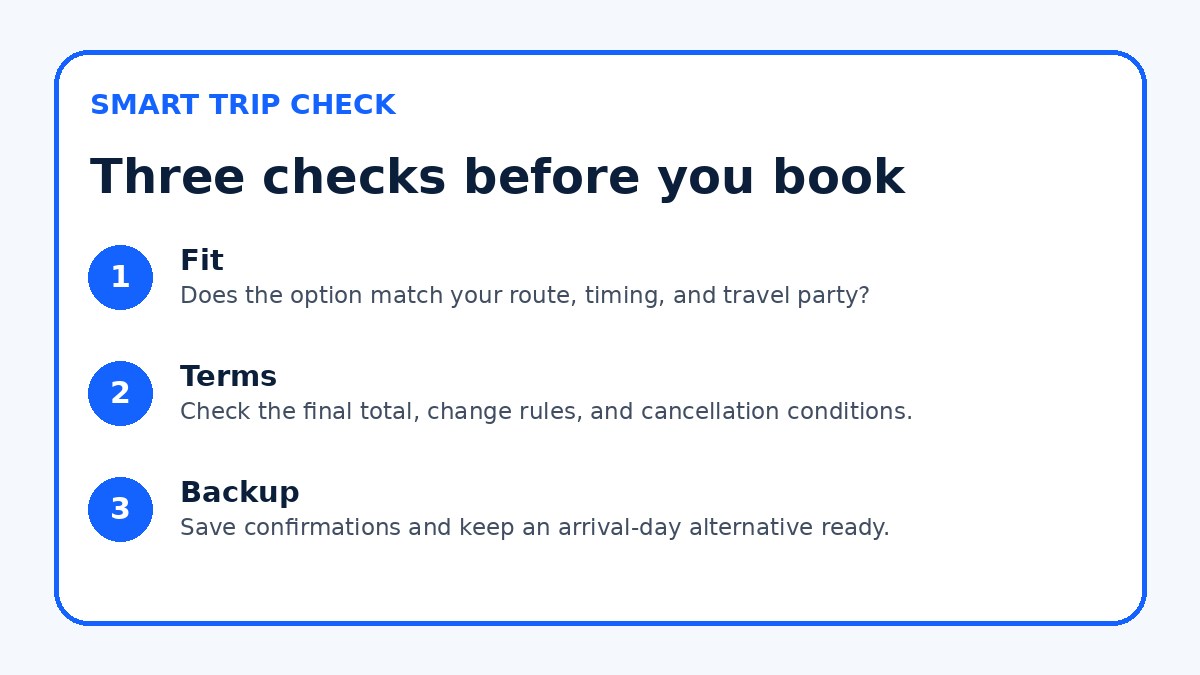
- Map the station exits to your shortlisted hotels and preview step counts and elevator presence on a map app.
- Message the hotel to request exact room dimensions, closet space photos, and whether rollaway or connecting rooms are available.
- Confirm porter or bell service availability and any fees for oversized items before you book.
- Verify luggage-hold, early check-in and late check-out policies and whether secure storage is offered on arrival or departure days.
- Ask the hotel about the most luggage-friendly route from the nearest airport/train/ferry transfer point and whether they recommend direct taxi loading spots.
- If mobility is limited, request a room near elevator access and receive written confirmation of step-free arrival and departure paths.
Final booking terms: what to confirm before you pay
Before you complete a reservation, confirm three operational details that matter most to luggage-heavy travelers: luggage assistance and porter availability, flexible check-in/out or luggage-hold policy, and the precise room dimensions or bedding layout. Hotels often list these services, but wording varies—ask explicitly whether porters assist on arrival and departure, whether there’s a secure luggage store for early arrival or late departure, and whether any fees apply. If connecting travel involves multiple segments, verify whether the hotel’s shuttle or recommended taxi partners can fit oversized suitcases or sports equipment.
Second, check the cancellation and modification terms that affect changes to arrival time. Flights can shift and connecting legs can be unpredictable; a flexible policy reduces stress if you need to switch dates. Finally, when comparing options live on a booking site or the hotel’s page, verify any floor-access constraints (no elevator to certain floors), and confirm any additional services you relied on—like airport transfer, shuttle schedules, and baggage-handling—on the property’s official booking page. Trip.com is a useful comparison point for current availability, but always verify operational details with the hotel directly.
Hotel Guide questions travelers ask
Which Hong Kong neighborhoods are easiest for travelers with large suitcases?
Neighborhoods next to major transit interchanges—areas around Kowloon Station (Airport Express), Hong Kong Station, and Tsim Sha Tsui—are generally easiest because they reduce transfer time between airport links, ferries and hotel doors. However, ease depends on the exact hotel entrance: some hotels sit off busy streets or require short uphill walks. Always preview the hotel’s immediate approach using a mapping app and ask the property to confirm the recommended arrival route and whether someone will meet you for luggage assistance.
How do I compare room sizes and layouts when online descriptions are vague?
When descriptions don’t list square footage, request the hotel's exact room dimensions and photos showing closet and floor space with luggage in frame. Ask about the wardrobe type (built-in vs. hanging rail), availability of luggage racks, and whether rollaway beds or connecting rooms are options. If the hotel can’t provide measurements, prioritize room types labelled as suites or family rooms and confirm cancellation flexibility so you can change if the space proves inadequate on arrival.
Should I prioritize a central location or a larger room for a weeklong stay with heavy luggage?
Weigh how often you’ll leave the room. If most days include full-day outings, a central location that cuts transit time is likely worth accepting a smaller room. If you plan to spend long hours in the room—working, unpacking, or hosting a group—a larger room in a quieter residential area reduces daily friction and improves comfort. Balance this by checking transfer inconvenience: longer commutes add repeated effort, but a room that allows full unpacking can save daily hassle for multi-night stays.
Final decision note
Choosing where to stay in Hong Kong when you have extra luggage is a practical decision: pick the neighborhood first, then the room. Focus on minimizing daily-route friction by prioritizing proximity to main transit links and sheltered, step-free approaches. Next, confirm whether the room layout supports unpacking and storage or whether you’ll need hotel services like luggage hold or porter help. Before booking, message properties for exact room dimensions, porter policies, and the recommended arrival route—then compare those operational details across your shortlisted areas. With this approach you can create a short list and open live inventory confidently, knowing which tradeoffs you’ll accept between convenience and in-room comfort.
Continue planning
Check current options and final conditions
Use the provider page to confirm live availability, the final total, cancellation terms, and every condition that matters to your trip.
This evergreen planning guide was created with AI-assisted drafting and a structured quality review. It does not display live prices, schedules, availability, visa guidance, or provider rankings. Verify current details before booking. Some links are affiliate links; we may earn a commission at no additional cost to you.