If you’re going from Seoul to Jeonju and want a clear, practical decision path, start by choosing between comfort and convenience (train), lower cost and frequency (coach), scenic or unusual routing (ferry plus land), or a private option for flexibility. For most first-time visitors, the relevant questions are: how important is door-to-door time, how much luggage do you have, and are connections acceptable? This article gives the short answer up front — then explains tradeoffs, how to compare direct and connecting options, and what to verify before you book. Read the quick points if you need an immediate recommendation, then use the sections that match your priorities: speed and ease, budget and frequency, scenic or multi-modal trips, and private transfers. Wherever provider-specific details matter, check the operator’s live schedule and booking page; you can also compare providers on Trip.com to see current availability.
Trains: speed, comfort, and what to check
Trains are often the go-to for travelers prioritizing travel time and onboard comfort. When comparing services, separate direct and connecting options: direct trains reduce hassle but may be less frequent; connecting services can be faster overall if they use a higher-speed segment for part of the route. Consider seat classes and luggage allowances — ergonomic seats and space matter on a longer daytime run, while night services may have different seating or couchette arrangements. For first-time visitors, look up station names in both Korean and English so transfers and exit numbers are clear.
Before booking, verify departure and arrival stations, platform transfer requirements, and whether you need a reserved seat. If options list intermediate stops, check whether you’ll need to change trains at a major hub; the connection time matters. Confirm baggage rules and whether you can bring oversized items without a surcharge. Also compare door-to-door time including the trip to and from stations and any local transit or taxi time; a slightly longer but city-center-to-city-center train could beat a faster option that requires long transfers.
Coaches (long-distance buses): frequency and tradeoffs
Coaches commonly run frequently between major cities and often use dedicated terminals. For budget-conscious travelers or those with flexible schedules, coaches provide many departure times and simple booking. However, public buses are subject to highway traffic and might require longer travel windows in peak hours or holiday periods. Coach terminals can be outside the city center; account for the time and cost to reach your accommodation from arrival terminals. Look for buses with onboard toilets, power outlets, and comfortable seating if you prefer extra convenience.
When choosing a coach, check seating types, luggage allowances, and the terminal addresses at both ends. Pay attention to cancellation and change policies in case your plans shift. If a coach trip lists multiple stops, make sure the bus setting lets you remain onboard or requires a transfer. Consider whether you’d rather pay a little more for a faster express coach with fewer stops versus a slower, cheaper local service. Use a booking platform to compare schedules side by side and verify the operator’s final details before payment.
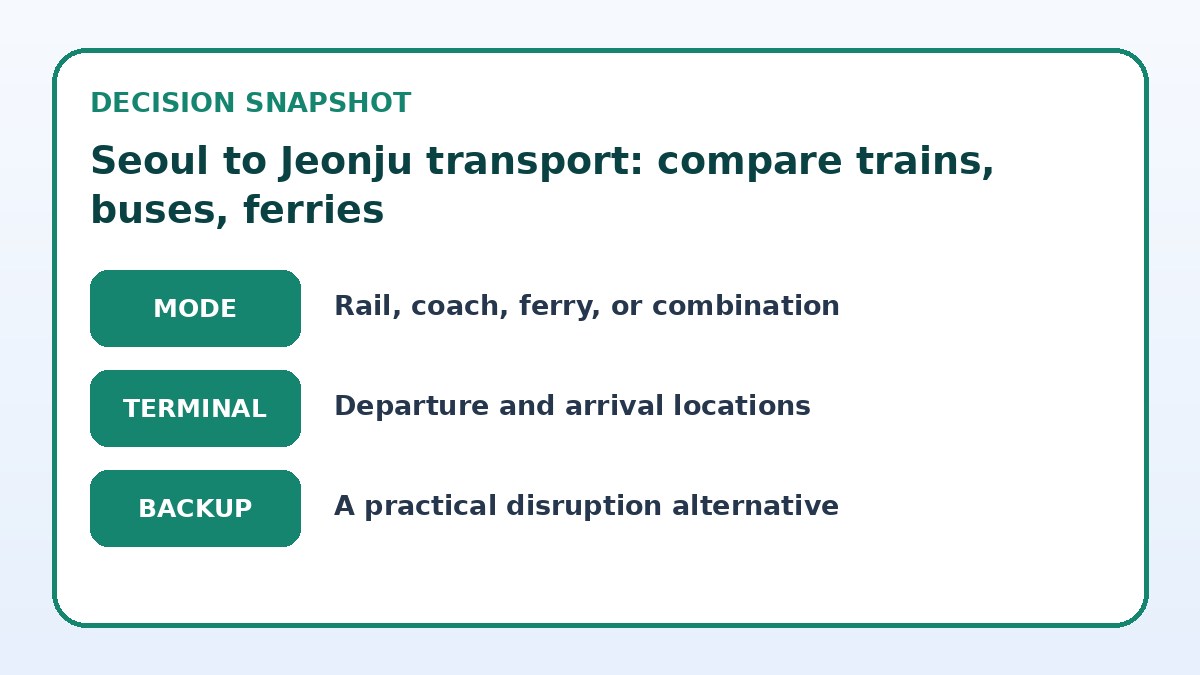
| Approach | Best for | Tradeoff to check |
|---|---|---|
| Train (direct or with connection) | Travelers who prioritize comfort, predictability, and seat space. | May require checking for direct vs connecting services and reserved seats; bookings must reflect luggage needs. |
| Coach (long-distance bus) | Budget-conscious travelers who want many departure times. | Subject to road traffic and potentially longer door-to-door times; terminal transfers may add cost and time. |
| Ferry plus land transport | Travelers seeking a scenic or multi-modal experience. | Slower, with complex transfers and less frequent schedules; weather and seas can affect reliability. |
| Private transfer or rental car | Groups, travelers with lots of luggage, or those needing flexible timing. | Higher cost and responsibilities for driving, parking, and route planning; compare total door-to-door time carefully. |
Ferry plus land routes: scenic but indirect
Taking a ferry as part of the journey from Seoul to Jeonju is not the standard direct route, but combining sea travel with buses or trains can turn point-to-point transit into a scenic mini-escape. This approach tends to be slower and requires multiple tickets and clear transfer times. Ferry schedules are often less frequent than trains or coaches, so a missed connection can add significant delay. Ferries also have different boarding procedures and luggage rules, so review embarkation instructions carefully to avoid last-minute scrambling.
If you favor unique experiences and don’t mind extra transit, map the whole itinerary first: ferry port to train or bus station connections, transfer times, and alternatives in case of cancellations. Seasonal weather and sea conditions can affect services, so treat ferry legs as tentative until you confirm availability. For first-time visitors, weigh the novelty of a sea leg against the simplicity of a single-ticket train or coach — a multi-modal trip can be rewarding, but only when timing is reliable and you’re prepared for handoffs between providers.
Before you book
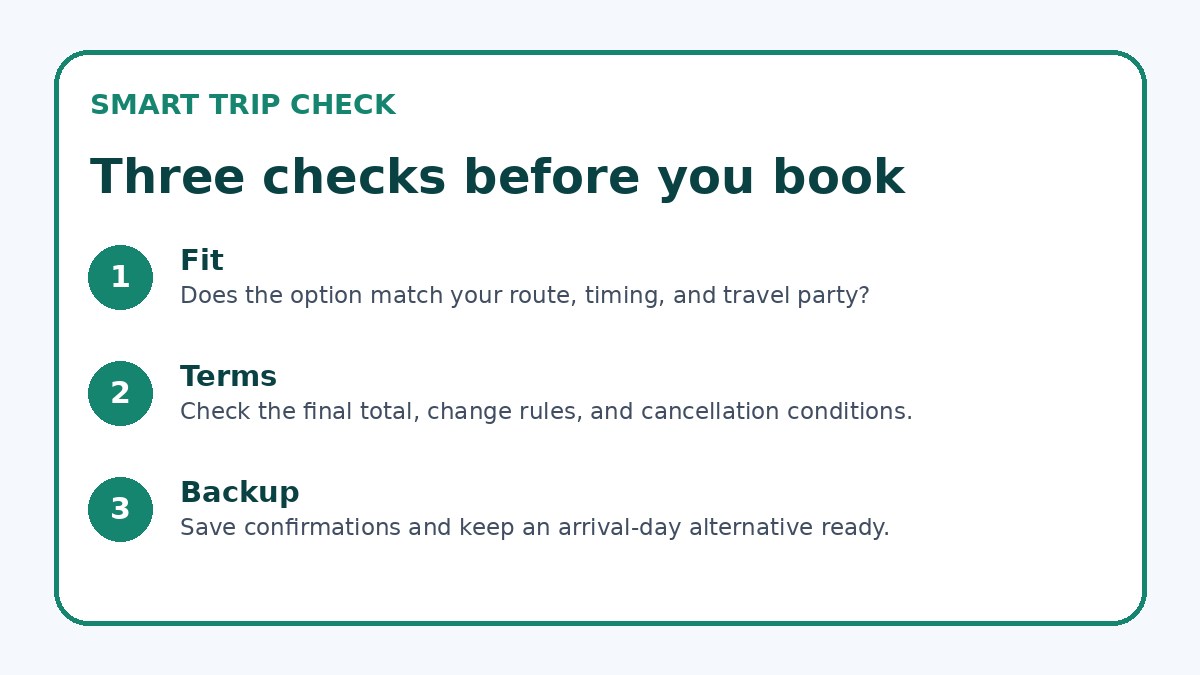
- Confirm departure and arrival stations or terminals in both Korean and English to avoid confusion during transfers.
- Compare total door-to-door travel time, not just in-vehicle time, including station approaches and last-mile taxis.
- Check seat reservation rules, baggage allowances, and any restrictions for oversized items before finalizing a booking.
- Verify refund, change, and cancellation policies on the provider’s official booking page before paying.
- Factor peak travel periods and local holidays into your schedule planning to avoid crowded services or sold-out departures.
- If using a ferry or multi-leg route, build at least 60–90 minutes of buffer between connections to allow for delays.
Private transfers, driving, and special considerations
Private transfers and rental cars offer full control of timing and routes, which is helpful for groups, tight itineraries, or visits to rural spots around Jeonju. Driving eliminates dependence on fixed schedules but adds tasks: navigating, understanding local driving rules, and finding parking. If you choose to rent a car, compare vehicle size for luggage, fuel policy, mileage limits, and insurance options. For one-way rentals, confirm drop-off availability and any cross-location fees — these details are often clarified only on the rental company’s booking page.
Private transfer services vary: some operate fixed-shuttle routes, others provide door-to-door rides on demand. When evaluating a private option, compare total door-to-door time and the final meeting point against public transport convenience. If you rely on a driver’s local knowledge to reach outlying attractions, ask about waiting time charges and whether tolls and parking are included. Always verify cancellation and refund conditions directly with the provider before paying, and consider reading recent traveller feedback separate from promotional claims.
Frequently asked questions
Is the train the fastest way to get from Seoul to Jeonju?
Trains are commonly among the faster fixed-schedule public options because they run on dedicated tracks and offer comfortable seating. However, “fastest” depends on whether a direct service is available and where the stations are relative to your origin and destination. A connection that includes a high-speed segment might reduce travel time compared with a slower direct train. Always compare total door-to-door time and not only in-vehicle duration, and confirm whether listed services are direct or require transfers at major hubs before booking.
Are coaches a good budget choice for first-time visitors?
Coaches often provide lower fares and frequent departures, making them attractive for budget-minded travelers. They can be especially convenient if coach terminals are close to your accommodation. But buses share roads with other traffic, so travel times can vary, and some terminals are farther from city centers than train stations. For a first trip, weigh the savings against the potential for longer or unpredictable travel time, and check whether the coach offers amenities you consider important, like toilets and luggage storage.
Should I consider a ferry as part of the journey?
Include a ferry leg only if you value the experience and have time for extra transfers. Ferries add variety but introduce scheduling complexity and possible weather-related changes. If you plan a multi-modal trip, map every connection in advance, confirm boarding procedures and luggage rules, and have fallback options in case a ferry is canceled. For travelers focused on minimizing hassle and travel time, sticking to direct rail or coach services is usually simpler.
Final planning note
Choosing how to travel from Seoul to Jeonju comes down to which tradeoffs matter most: speed and on-board comfort (favoring trains), frequency and lower fares (coaches), scenic variety (ferry plus land), or flexible timing and door-to-door service (private transfer or car). Start by comparing total door-to-door time and transfer complexity, then confirm station names, seat and baggage rules, and cancellation terms on the provider’s booking page. Use a trusted comparison site such as Trip.com to view current schedules and availability, but always verify details directly with the operator before you pay. Build buffer time for connections and peak travel periods to keep your trip smooth and stress-free.
Continue planning
Check current options and final conditions
Use the provider page to confirm live availability, the final total, cancellation terms, and every condition that matters to your trip.
This evergreen planning guide was created with AI-assisted drafting and a structured quality review. It does not display live prices, schedules, availability, visa guidance, or provider rankings. Verify current details before booking. Some links are affiliate links; we may earn a commission at no additional cost to you.