If you’re flying from Dubai to Sydney for the first time, the practical answer is simple: choose the option that balances your tolerance for travel time, connection risk, and onboard comfort. Direct flights typically shorten door-to-door travel and remove the stress of transfers, while connecting itineraries often open up more departure times, routing options and sometimes lower fares or better loyalty-credit opportunities. For first-time visitors who prioritize simplicity and less transit stress, prioritize direct options where available. If you value flexibility, potential cost savings, or want to break the journey, connecting flights can be smart — but you’ll need to compare layover length, total trip time, baggage transfer rules and the carrier’s minimum connection times. Below you’ll find practical decision criteria, tradeoffs, and a checklist to use when comparing specific Dubai to Sydney flights before booking.
How to weigh total travel time versus comfort
Total travel time is more than just flight hours: include transfer time to and from airports, check-in, security, potential overnight waits and typical local traffic from your accommodation. A direct route removes transfer complexity and usually shortens the itinerary, which benefits travelers who want to maximize time at their Sydney destination or who dislike long waits. Comfort also plays a role: on long-haul routes, seat type, cabin class, and onboard services matter. For many first-time visitors, a longer nonstop flight with a larger seat or better sleep opportunities can be preferable to breaking the journey into segments.
Comparing comfort means checking aircraft type, seat pitch, and whether meal service and entertainment meet your needs — details that change by carrier and aircraft. If you plan to sleep, a slightly longer direct flight in a quieter cabin might be better than two shorter segments with an overnight layover. Conversely, if you want to split the journey to arrive less jet-lagged or to sightsee in a connection city, a deliberate break can refresh you. Use total door-to-door time and expected onboard experience as the primary metrics, not just elapsed flying hours.
Risk and reliability: connection safety nets and transfer pain points
Connecting flights introduce more points of failure: delays on the first leg can jeopardize the rest of your trip, and baggage can be misrouted during transfers. When evaluating a connection, check the minimum connection time the airline guarantees and whether the itinerary is sold on a single ticket. Single-ticket itineraries generally offer more protection: the airline will typically rebook you if carriers within that ticket miss a connection, although each carrier’s protection policies vary and should be confirmed on the booking page.
If your connection requires changing terminals, clearing immigration, or re-checking bags, factor in extra buffer time and the added stress of navigating an unfamiliar airport. Some travelers lower their risk by selecting longer layovers or by booking through carriers with clear through-check baggage policies. For first-time visitors, prioritize connections with reasonable margins and explicit transfer rules you can verify before purchase; avoid tight back-to-back connections unless you know the airports involved well and have contingency plans.
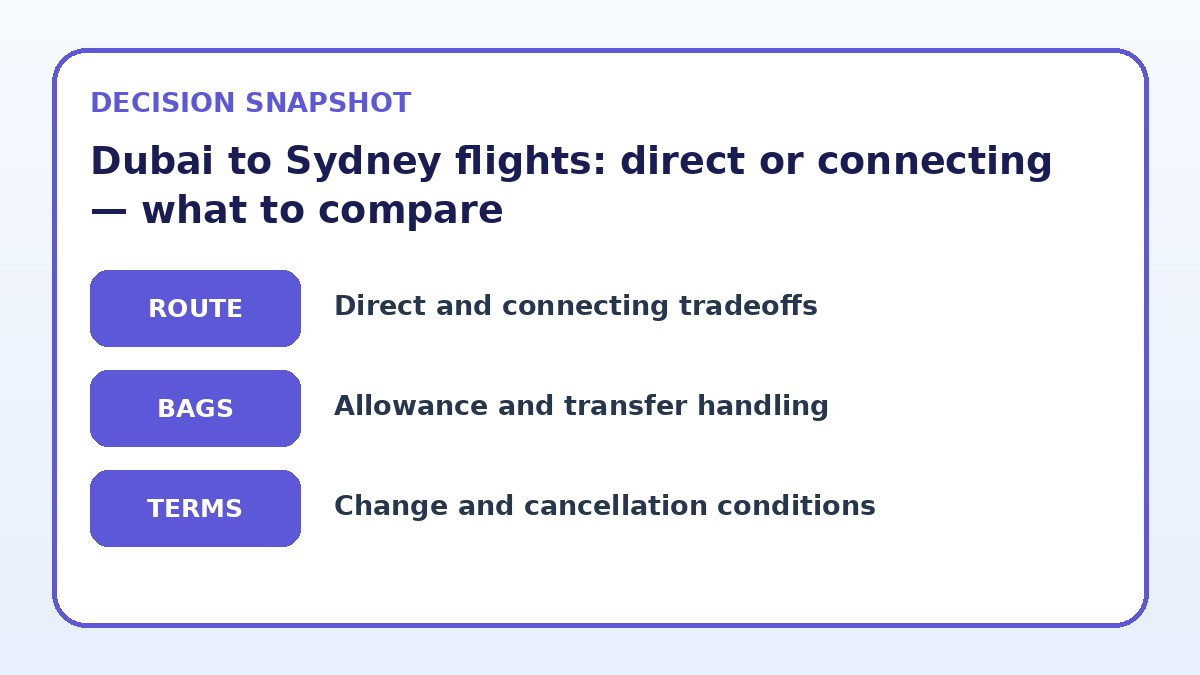
| Approach | Best for | Tradeoff to check |
|---|---|---|
| Direct flights | Travelers prioritizing simplicity, fewer disruptions, and shorter door-to-door time | Fewer schedule choices and potentially less fare flexibility or higher base fares |
| Single-ticket connecting flights | Travelers wanting more schedule options with some protection if the first leg is delayed | Longer total travel time and reliance on the carrier’s through-transfer policies |
| Self-transfer connecting flights | Experienced travelers seeking lower fares or customized layovers and willing to manage risks | Higher risk of missed flights, separated baggage, and no automatic rebooking assistance |
| Planned stopovers (multi-city booking) | Travelers who want to break the journey and visit an intermediate city en route | More planning required — visas, baggage logistics and potential extra accommodation costs |
Cost and loyalty considerations to guide your choice
Price is an obvious factor, but it should be considered alongside what you get for it. Connecting flights can sometimes be cheaper or offer better award availability if you’re redeeming miles, and they might let you accrue frequent-flier credit with a preferred alliance. However, apparent savings can erode once you add checked-bag fees, visa costs for transit countries, and potential overnight accommodation if a layover forces an unplanned stop.
If you value loyalty benefits, check whether the carrier and fare class earn full credit in your program and whether the alliance network supports easy rebooking in case of disruption. Always verify the fare rules, baggage allowances and the specific earning rates displayed on the provider’s final booking page before purchase. For first-time visitors, a slightly higher fare on a straightforward direct itinerary can be worth the reduced hassle and better predictability.
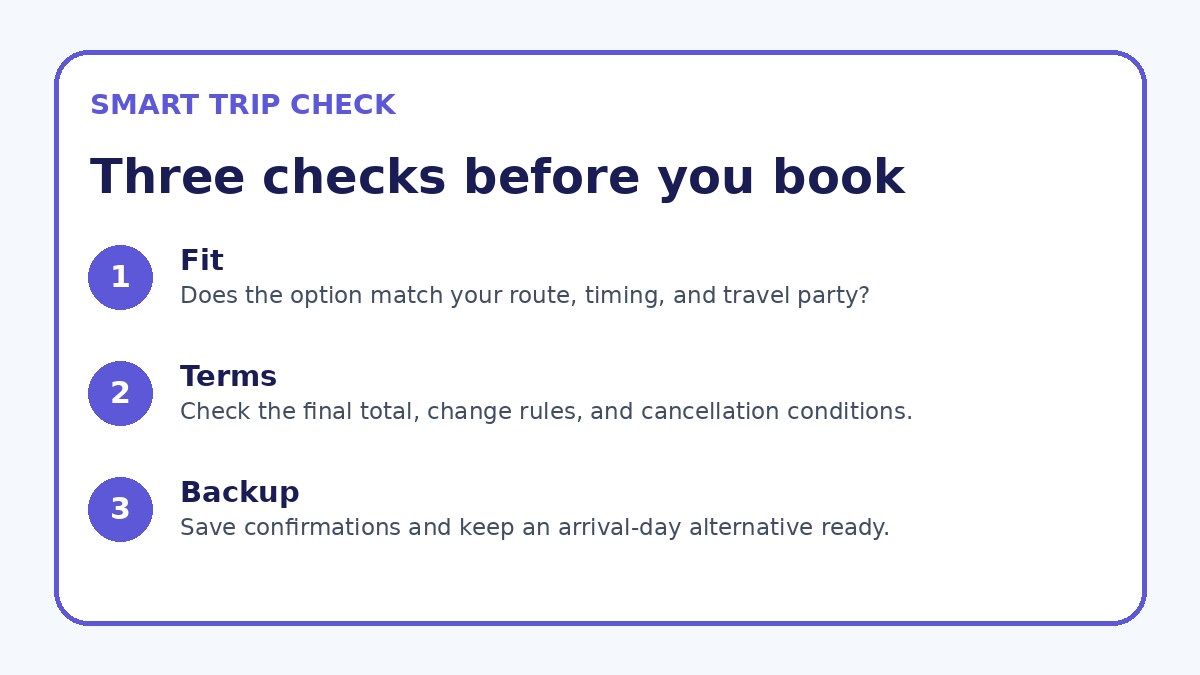
Before you book
- Compare total door-to-door time, not just airborne hours, including transfers and likely airport transit times.
- Confirm baggage rules and whether bags are checked through to Sydney on a single ticket before booking.
- Verify visa and entry requirements for any transit country you’ll pass through, even for short layovers.
- Look up the airline’s minimum connection time and rebooking policy for protected connections on the booking page.
- Decide how much buffer you need for missed connections and select layover lengths that match your risk tolerance.
- If using miles or loyalty benefits, confirm earning rates and upgrade availability for the exact fare class on the carrier’s site.
When a stopover is an advantage and how to plan one
A stopover can turn a long transit into an extra mini-trip. If you’re curious about adding a short city break — say, a night or two in a transit hub — this can break the journey and let you arrive in Sydney refreshed or with a memorable detour. When planning a deliberate stopover, confirm visa requirements for the transit country, how your baggage will be handled, and whether your airline offers layover support or discounted hotel options. These practical checks prevent surprises and ensure the stopover adds value rather than stress.
To plan effectively, target informed layovers: choose a city with straightforward connections to Sydney, allow enough time to enjoy the stop without jeopardizing your onward flight, and keep documents handy. Verify on the airline’s booking page whether the fare supports open-jaw or multi-city routing, and whether changes will incur penalties. For first-time visitors, a planned stopover requires a bit more paperwork and attention but can enrich the trip and reduce the fatigue of continuous long-haul flying.
Frequently asked questions
Is a direct Dubai to Sydney flight always the fastest option?
A direct flight typically has the shortest total scheduled flying time, but fastest door-to-door travel depends on your ground transfers, airport locations and local traffic. A connecting itinerary with a well-timed layover near each airport can sometimes match or beat a longer direct routing when you factor in arrival convenience and check-in procedures. Always add expected travel times to and from airports and potential wait times when deciding which option truly gets you to your Sydney accommodation sooner.
How long should a layover be when flying from Dubai to Sydney?
There’s no single ideal layover length because airport layouts, whether you must clear immigration, and whether bags are checked through all matter. For single-ticket connections at the same terminal, modest buffers (typically a couple of hours) might be enough; if you must switch terminals, clear immigration, or re-check baggage, allow several additional hours. Give yourself extra margin for international connections and consult the airline’s recommended minimum connection time on the booking page to avoid unrealistic schedules.
Can I break my journey without risking my baggage or ticket protection?
You can plan a multi-city booking that intentionally breaks the journey; this often keeps your baggage checked through and retains ticket protection when done on a single itinerary. If you book separate one-way tickets (self-transfers), you usually lose through-check baggage and the carrier’s obligation to rebook missed connections. To preserve protection, choose a multi-city or single-ticket routing and verify baggage transfer and change policies on the airline’s final booking page before confirming.
Final planning note
Choosing between direct and connecting Dubai to Sydney flights comes down to a few clear priorities: how much you value simplicity and fewer touchpoints, how flexible your schedule is, and how comfortable you are managing transfer risks. First-time visitors often benefit from the predictability of direct routes or single-ticket connections that include through-checked baggage and rebooking protections. If you want flexibility, lower costs or a chance to see another city, connecting itineraries and planned stopovers can work well — but they demand more planning, verification of transfer rules, and realistic buffer times. Use the checklist above, verify the carrier’s rules on the provider’s final booking page, and consider Trip.com or other comparison tools for live options while remembering to confirm policies directly with the airline before you pay.
Continue planning
Check current options and final conditions
Use the provider page to confirm live availability, the final total, cancellation terms, and every condition that matters to your trip.
This evergreen planning guide was created with AI-assisted drafting and a structured quality review. It does not display live prices, schedules, availability, visa guidance, or provider rankings. Verify current details before booking. Some links are affiliate links; we may earn a commission at no additional cost to you.