Practical answer up front: set price alerts for flights and hotels to stay informed, but do not book the first alert you receive—always compare the same dates, traveler count, and refundable versus nonrefundable options before buying. For business travel to Washington, DC, that means checking inclusions such as baggage, seat selection, meeting-day flexibility, and hotel cancellation or corporate rates. Use alerts to monitor trends and to flag genuinely useful windows, but treat each candidate booking as a contract you must vet. Before committing, verify the final total price, any change or cancellation penalties, how itinerary changes are handled, and whether the bundle or separate bookings preserve the flexibility you need for meetings or unexpected schedule shifts.
Test package value fairly
| Booking approach | Best for | Tradeoff to check |
|---|---|---|
| All-in-one travel package (flight + hotel + transfer) | Travelers who want a single reservation and consolidated customer service for a straightforward meeting schedule. | May restrict loyalty benefits and can hide restrictive cancellation terms if you don’t verify each inclusion. |
| Separate flight and hotel bookings | Travelers who prioritize airline loyalty, specific hotel programs, or maximum flexibility for unpredictable meeting schedules. | Requires more time to manage and compare totals; invoices and support may come from multiple providers. |
| Flight bundled with hotel but no transfers | Travelers seeking a modest reduction in admin work while retaining control over local transport choices. | Can still mix restrictive terms from one supplier with flexibility from the other; check change policies closely. |
| Alert-driven booking with a short decision window | Travelers who monitor pricing trends and want to act on verified value while keeping a deliberate check against impulse buys. | Requires discipline and time to verify identical dates, inclusions, and final provider terms before committing. |
Check current package and separate options
Use identical dates, travelers, room needs, baggage, and flexibility so the comparison stays meaningful.
What to compare before judging a bundle useful
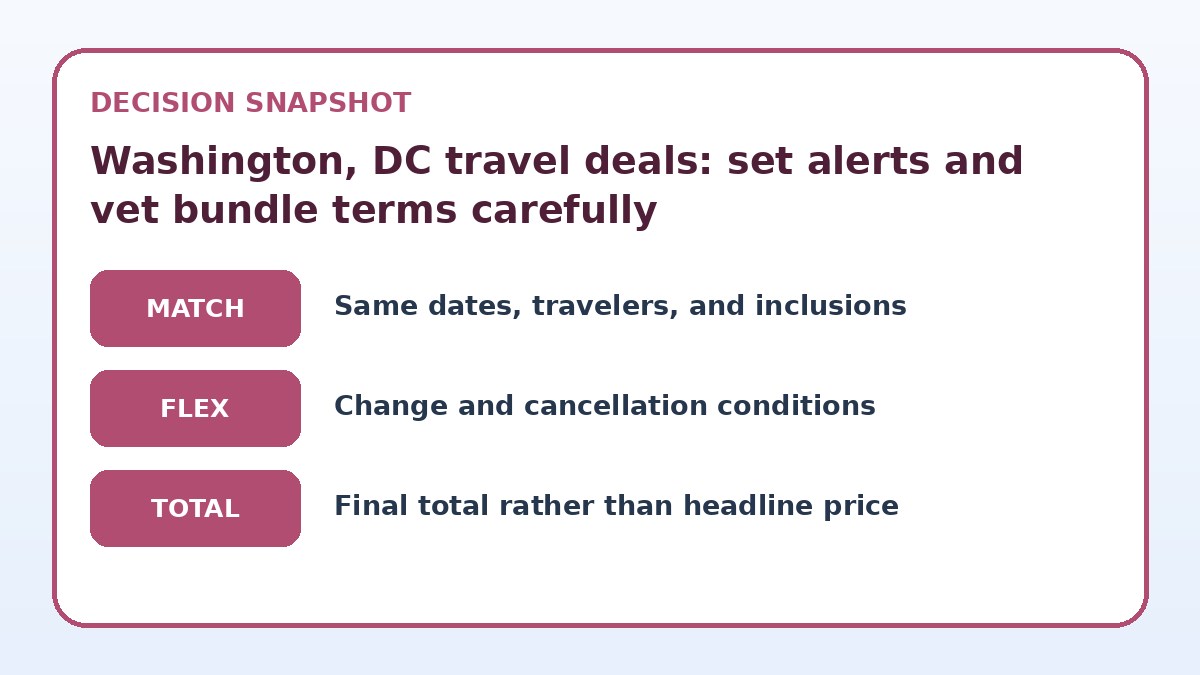
Start every evaluation by fixing the basics: dates (including any buffer days for meetings), number of travelers, room type, and whether you need refundable fares or corporate rate eligibility. A package that looks cheaper can include a restrictive nonrefundable fare or a room category that lacks the workspace, Wi‑Fi reliability, or early check-in you depend on. For flights, check baggage allowance, seat selection, and how changes are handled; for hotels, confirm business-center access, breakfast inclusion, and whether the property enforces business-travel cancellation windows.
Next, compare the final total charges, not just the headline price. Taxes, fees, service charges, and transfer costs sometimes get added at the final booking page. Also check whether any third-party booking terms require contacting the provider directly for refunds or changes — that introduces delay and risk. Only after you’ve aligned these four elements—identical dates, same traveler details, equal inclusions, and equivalent cancellation or change rules—can you fairly judge whether a bundle is actually saving money or adding convenience.
Inclusions and flexibility: the business traveler checklist
For business travelers, flexibility is often more valuable than the lowest sticker price. When an alert suggests a deal, map out which inclusions matter to your trip: checked baggage (if you travel with a presentation kit), priority boarding to ensure seat choice, early check-in or late checkout to accommodate meetings, and reliable Wi‑Fi for remote work. If the hotel or airline offers corporate perks—like waived change fees or negotiated room upgrades—verify eligibility requirements and whether those perks survive a third-party package booking.
Also confirm the provider’s final terms on date changes and cancellations. Low-cost fares bundled with nonrefundable hotel rooms can leave you exposed if a meeting shifts. If you need the option to swap dates without punitive fees, prioritize refundable or flexible fare options, even at a higher upfront cost. Check who you must contact to make changes: the airline or hotel directly, or the package reseller. The extra step of a reseller can delay modifications—an important operational tradeoff for business travelers working on tight timelines.
Look past the headline total
Compare inclusions and change conditions before deciding whether a package is genuinely useful for this trip.
Deal comparison checklist
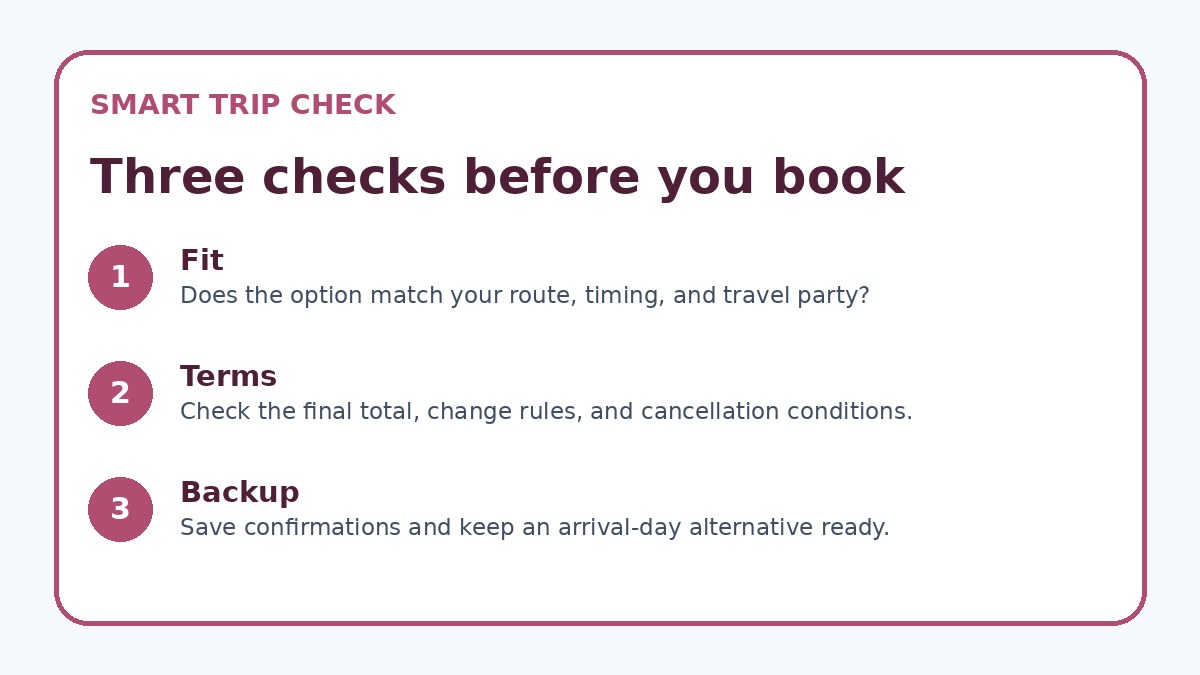
- Fix travel dates and traveler count before comparing alerts or bundles to ensure apples-to-apples pricing.
- Verify baggage, seat selection, and Wi‑Fi or workspace availability on any flight or hotel option.
- Confirm cancellation and change fees on the provider’s final booking page, not just the alert summary.
- Compare total out-the-door price including taxes, service fees, and any transfer or resort charges.
- Check whether corporate rates, loyalty benefits, or expense policies apply to the offered package.
- Set a decision window (24–72 hours) and only book immediately if the option meets your pre-defined flexibility criteria.
Traveler-specific value: when bundling helps and when it hurts
Bundling can simplify logistics—one reservation that includes flights, hotel, and transfer reduces reconciliation and sometimes consolidates customer service. For a single-trip meeting itinerary where timing and routing are straightforward, a bundle with flexible cancellation terms and confirmed transfers can save time and reduce stress. Bundles can also be useful if your employer requires a single invoice or if your travel policy favors specific suppliers included in the package.
On the other hand, bundling can hurt when your needs are atypical: irregular schedules, last-minute meeting changes, or specific airline loyalty and seat preferences. Mixing a nonrefundable bundled hotel with a separate refundable flight can produce false savings if you later change plans. If you rely on loyalty benefits, direct-book incentives, or corporate negotiated rates, check whether those benefits are preserved with the bundle. If they are not, separate bookings might deliver higher net value despite appearing costlier at first glance.
How to use price alerts without succumbing to impulse booking
Treat alerts as research tools. Configure alerts narrowly—same airports, exact travel dates, and number of travelers—so the signals you receive are comparable. When an alert fires, open a private comparison spreadsheet or note with the alert price, the provider’s cancellation policy, baggage inclusions, and any other relevant term. Compare those specifics to separate flight-and-hotel options and to alternative bundles that match the same criteria. If an alert appears to offer a good value, give yourself a short decision buffer—24 to 72 hours—to confirm corporate policy approval, calendar certainty, and whether a refundable or flexible option is available.
Set rules for impulse control: only book immediately if the alert meets pre-defined criteria (for example, fully refundable fare, or a bundle that preserves corporate rate benefits and includes transfers). Otherwise, keep monitoring for a defined window and use the alert trend to estimate whether prices are likely stable. If you must book outside your decision window because of employer constraints, pick the option that preserves the most change flexibility. Finally, when using third-party alert platforms like Trip.com, verify all final terms on the supplier’s booking page before completing purchase.
Travel Deals & Booking Strategy questions travelers ask
How should I set price alerts for a DC business trip without getting overwhelmed?
Create focused alerts: limit them to your exact travel dates and primary airport choices (for example, Reagan National and Dulles if applicable), and set separate alerts for refundable and nonrefundable fares so you compare equivalent options. Use email or app filters to consolidate alerts into a single folder, and limit alert frequency where possible. Establish two decision tiers—one for alerts that meet your flexibility criteria (which you may act on quickly) and another for lower-priority alerts you’ll monitor over several days before deciding.
If a bundle looks cheaper in an alert, what specific terms should I verify before booking?
Open the supplier’s final booking page and confirm the exact inclusions: the airfare class and baggage allowance, seat selection rules, hotel room type and amenities, transfer details, and whether breakfast or Wi‑Fi are included. Crucially, read the cancellation and change policies and find out whether changes must be processed through the reseller or directly with the provider. Also check invoicing requirements if your employer needs a single corporate invoice or specific supplier information for expense reimbursement.
Can using price alerts affect my corporate travel policy or loyalty benefits?
Yes—bundles booked through third parties sometimes disqualify you from earning airline miles or hotel loyalty points, or they may not be eligible for corporate-negotiated rates. Before booking a package, verify with your employer’s travel policy and with the loyalty program’s rules whether the fare or room type qualifies. If corporate compliance or loyalty accrual is essential, prioritize options that explicitly state eligibility or book directly with suppliers after using alerts to identify competitive rates.
Final decision note
For business travel to Washington, DC, price alerts are a practical monitoring tool but not a substitute for careful contract checks. Use alerts to capture potential windows of value, then deliberately compare identical trip parameters—dates, traveler count, inclusions, and change policies—across bundled and separate booking options. Prioritize flexibility and corporate-policy compatibility over headline savings if your schedule is subject to change. When in doubt, verify every essential term on the final supplier booking page (airline or hotel) before you complete a purchase. If you want an extra comparison point, consider checking availability on Trip.com as one of several sources, but always confirm conditions on the provider’s page.
Continue planning
Check current options and final conditions
Use the provider page to confirm live availability, the final total, cancellation terms, and every condition that matters to your trip.
This evergreen planning guide was created with AI-assisted drafting and a structured quality review. It does not display live prices, schedules, availability, visa guidance, or provider rankings. Verify current details before booking. Some links are affiliate links; we may earn a commission at no additional cost to you.