If you're arriving in Gyeongju late and carrying extra luggage, choose a hotel area that minimizes transfers and gives flexible check-in and short-term storage options. Start by narrowing to three neighborhood types: the station/downtown strip (easy taxi or bus access), Hwangnam-dong/Daereungwon area near main sites (walkable but often quieter late), the Bomun Resort zone (if you need bigger rooms or airport-style services), or a guesthouse cluster near the historic center (compact rooms, closer to attractions). Prioritize a property that confirms 24-hour or late check-in, stores luggage securely after check-out, and is straightforward for a taxi driver to find at night. Below you’ll find clear tradeoffs about neighborhood fit, how late arrival changes your daily routes, room and party needs, and which booking terms to verify on the provider’s page before you finish your reservation.

Check live stays in the areas that fit
Use your dates and party size to compare current rooms after you narrow the neighborhood fit.
Neighborhood fit: pick based on arrival logistics
When you land late or arrive after a long train ride, the first question is how many transfers you'll tolerate. Hotels beside Gyeongju Station or on major arteries cut the last-mile friction: a short taxi or bus ride, easy luggage handling, and fewer wrong turns at night. These areas typically have more visible signage and are familiar to drivers, which reduces the chance of being dropped off on the wrong street. If you value a predictable, low-stress transfer from a late bus, train, or taxi, prioritize areas with straightforward vehicular access and 24-hour nearby services.
By contrast, historic-center pockets around Bulguksa/Daereungwon and smaller guesthouse lanes can be pleasant but may present narrow streets, limited nighttime lighting, and stairs or alleyways for the final approach. Bomun Resort-style zones are more car-friendly and often have larger lobbies and luggage-friendly lifts, which is useful when you have oversized cases. Think of neighborhood fit as a tradeoff between proximity to attractions and the physical ease of reaching the property after dark — choose what you want to minimize at the moment you step off the train or out of a taxi.
Choose an area-selection strategy
| Area approach | Best for | Tradeoff to check |
|---|---|---|
| Stay near Gyeongju Station/main roads | Lowest transfer friction for late-night arrivals and clear taxi drop-offs | Slightly farther from some historic sites, may require short daytime transit |
| Historic-center guesthouse lanes | Walkable access to major attractions first thing after arrival | Narrow streets and stairs can complicate late check-in with heavy luggage |
| Bomun Resort and large hotels | Larger rooms, porter service options, easier transport for bulky baggage | Typically farther from the compact historic core; daytime transfers may be needed |
| Mid-town hotels near bus hubs | Balanced access to transit and attractions with visible night-time signage | May offer medium-sized rooms; check storage policies before booking |
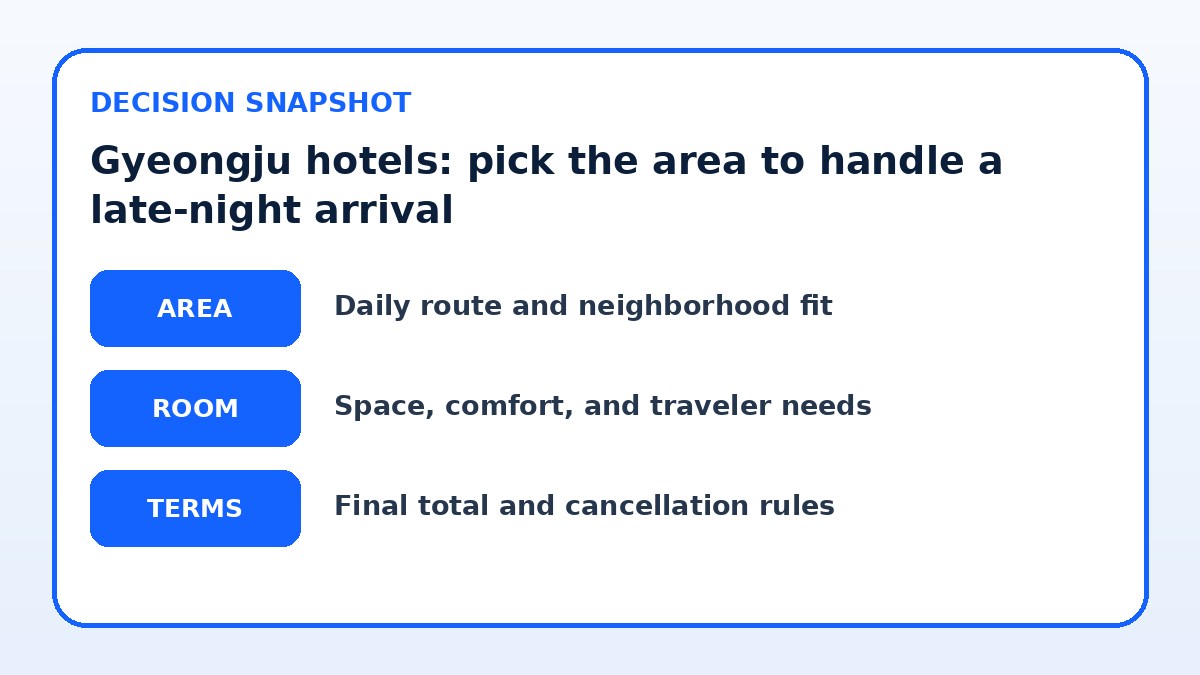
Daily-route friction: how late arrival reshapes tomorrow
Your late arrival decision ripples into the next day. If you want to sightsee early, staying close to the historic core cuts morning transfers and saves carrying time, even if the streets to the hotel are narrower at night. Conversely, a hotel by the station or main roads may require a short daytime bus or taxi ride to reach tombs and museums but rewards you with easier pickups when you’re moving luggage between sites or leaving for another city. Think through where you'll start the next morning and whether you prefer to walk straight out to attractions or need a quick, luggage-friendly hop.
Also consider public transit schedules and the availability of daytime luggage storage if you plan to check out early but leave late. Some hotels will let you store bags after check-out so you can explore unencumbered, while others only allow storage for a limited window. If you have an early entry to a temple or plan a same-day transfer to another region, a hotel with proactive front-desk communication and straightforward directions for late-night arrivals will reduce strain and keep your schedule flexible.
Now compare like with like
Keep the same dates, guests, room needs, and cancellation preferences while you compare the final choices.
Room and party needs: matching space to luggage and companions
Extra luggage changes what room type you need. If you’re traveling solo with two large suitcases, a standard double with closet space and a luggage rack might be enough. For couples or families with multiple large bags, look for rooms advertised as family or suite types with more floor area and a luggage-friendly layout — avoid properties where beds block the walkway and trolley maneuvering is impossible. If stairs or small elevators are likely, request ground-floor rooms or confirm whether the hotel can assist with portering to avoid hauling heavy cases up multiple flights.
Also think about communal spaces. A hotel with a generous lobby, wide corridors, and ground-floor luggage storage will make transfers, late-night check-ins, and early morning departures smoother. If you expect to arrive separately from other travelers in your party, check whether the hotel can accommodate staggered check-ins and keep keys or room access flexible. For those who value in-room facilities after a long trip — such as a minibar or an electric kettle for late snacks — include those needs in your selection criteria so you don’t end up improvising when you first enter the room.
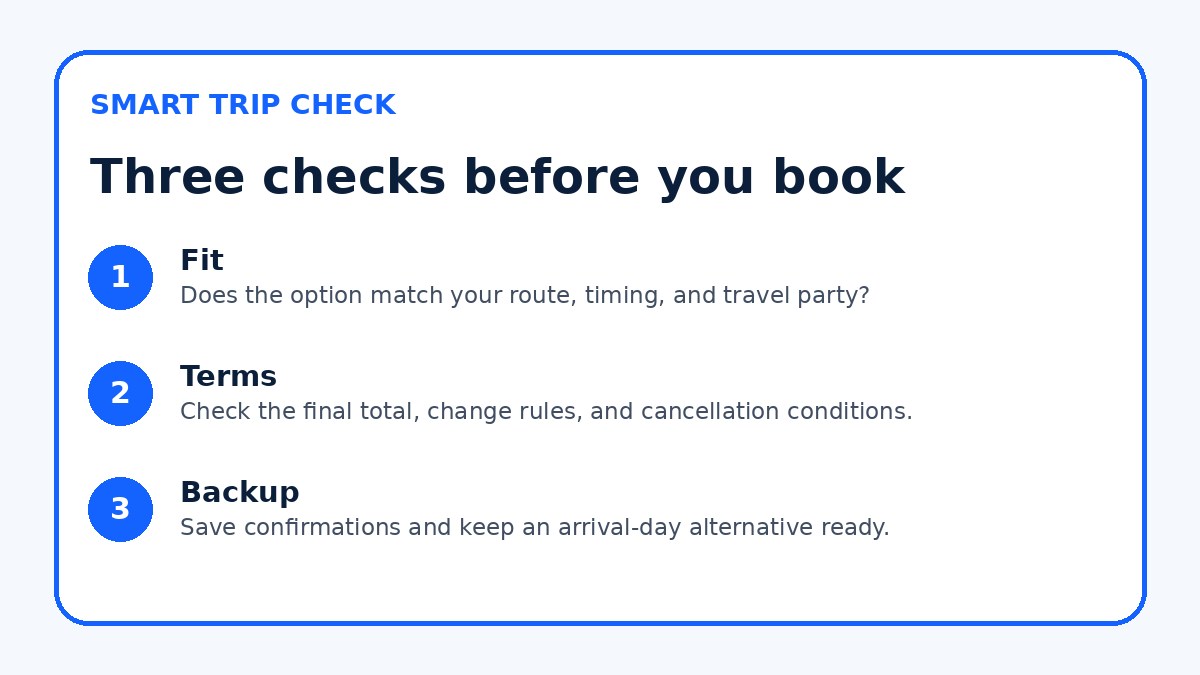
Hotel booking check before payment
- Confirm the hotel’s late check-in policy and whether a 24-hour front desk or key box is available.
- Ask the property whether luggage storage after check-out is free, how long they will hold bags, and where they store them.
- Request a ground-floor room or elevator-equipped room if stairs would make carrying heavy luggage difficult.
- Save the hotel’s Korean address and a map pin to show taxi drivers on arrival at night.
- Verify whether the hotel requires ID, additional forms, or pre-authorization upon late arrival.
- If traveling with a group, confirm flexible or staggered check-in and key collection procedures in advance.
Booking terms and final checks before you reserve
Before you confirm a reservation, verify late check-in procedures and luggage storage explicitly on the provider’s booking page. Look for wording about 24-hour reception, key collection boxes, or late check-in instructions; when phrasing is vague, contact the property directly to avoid surprises. Also check whether the hotel requires ID on arrival, if they have a hold policy for lost items, and whether luggage storage is complimentary or carries a time limit. When provider-specific facts could change, note them and confirm on the hotel’s final booking page or by phone.
If you rely on taxis after a late arrival, save clear address details in Korean and a map link you can show to drivers; some apps and drivers prefer district and building number phrasing rather than attraction names. Trip.com can be a convenient place to compare current availability and conditions, but always verify check-in policy, access instructions, and luggage handling directly with the property. Finally, double-check cancellation terms and whether the hotel will release rooms for no-shows or late arrivals to avoid unexpected rebooking needs.
Hotel Guide questions travelers ask
Can I expect hotels in Gyeongju to hold luggage if I arrive late or leave early?
Many hotels and guesthouses in Gyeongju offer luggage storage, but policies vary by property. Before you book, check the provider’s stated luggage policy on their booking page and, if necessary, contact the hotel to confirm hours and any limits on how long they will hold bags. Also ask whether storage is free or if a fee applies, and whether items are secured or stored in a public area. When in doubt, confirm where stored items will be kept and whether they’re insured under the hotel’s policy.
Should I always choose a hotel near Gyeongju Station for a late arrival?
Choosing a station-area hotel reduces the complexity of a late arrival because it shortens taxi or bus hops and has clearer night-time directions. However, if you want to start sightseeing first thing, staying near the historic core may save time the next morning despite a slightly harder late-night approach. Consider how much you value easy late transfers versus early-morning walking access to sites, and select the neighborhood that aligns with that priority. Verify late-check-in arrangements regardless of location.
How do I handle a late arrival if I need a larger room for extra luggage?
When you need more space for bulky suitcases, search for family rooms, suites, or serviced-apartment options and confirm bed and floor layouts so you can move cases in without blocking exits. Explicitly ask the hotel whether they can provide a luggage rack, extra closet space, or porter assistance at late check-in. If booking through an online channel, review the room description for square footage or sleeping configuration and contact the property directly to clarify how accessible the room will be from the street at night.
Final decision note
A late arrival with extra luggage in Gyeongju is manageable if you choose the right area and verify a few practical details before booking. Start by deciding whether you want minimal transfer hassle (station or main roads), immediate access to morning sightseeing (historic center), or larger rooms and porter-friendly lobbies (Bomun Resort). Confirm late check-in procedures, luggage storage rules, and whether the property can assist with porterage or ground-floor access. Keep clear address details in Korean for taxis and save the property’s late-arrival instructions. Doing these checks will let you shortlist an area and a handful of hotels confidently before you open live inventory to complete the booking.
Continue planning
Check current options and final conditions
Use the provider page to confirm live availability, the final total, cancellation terms, and every condition that matters to your trip.
This evergreen planning guide was created with AI-assisted drafting and a structured quality review. It does not display live prices, schedules, availability, visa guidance, or provider rankings. Verify current details before booking. Some links are affiliate links; we may earn a commission at no additional cost to you.