Practical choice first: if your top priority is minimizing time, choose a direct Toronto to Vancouver flight when schedules and fares fit your family’s budget; if you need a lower fare, more schedule options, or a specific departure airport, a one-stop itinerary can often save money or connect better to local travel plans. Families trade extra time and the stress of an extra connection for potential savings, more seat availability, or better departure times. Before searching, gather exact travel dates, number of adults and children (including infants), baggage needs, and any mobility or meal requirements. Those details change fare rules, seating availability, and connection times during booking. This guide walks through routing, baggage and connection risk, schedule fit, and fare conditions so you can weigh what matters most for your family.
See live routes for your exact travel day
Compare direct and connecting choices with the same baggage and traveler details.
Routing: direct versus one-stop itineraries
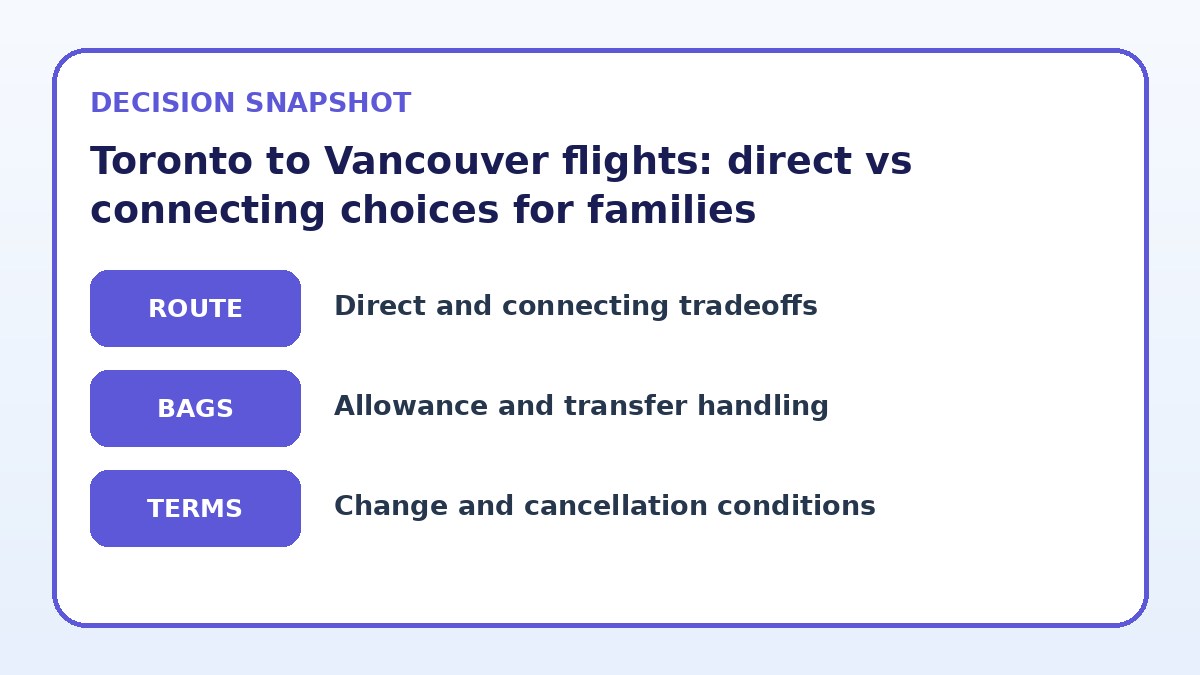
Routing choices shape the whole trip. A direct Toronto to Vancouver flight minimizes time in transit and avoids airport transfers between flights, which matters when you’re juggling kids, strollers, or car seats. For families, fewer takeoffs and landings often mean less disruption to naps and routines. Direct options may depart from Toronto Pearson or another local airport, so verify which terminal and airport match your ground plans. If direct service is sparse on your chosen date, check the available connecting itineraries and how they change total door-to-door time.
One-stop itineraries give you flexibility in departure times and sometimes lower fares, but that flexibility comes with added steps: deplaning, navigating a connecting airport, and possibly changing terminals. If the connection is short, you risk missed transfers; if it’s long, you deal with extra waiting and the need to entertain or supervise children. When comparing routes, estimate the full door-to-door time, including transfer windows, and think about whether your family prefers fewer transitions or a cheaper itinerary that requires more hands-on management.
Baggage and connection risk: what to confirm
Baggage rules and how airlines handle checked bags differ between single-ticket itineraries and separate bookings. On a single ticket with a single carrier or partners, checked bags are usually transferred automatically, which reduces the chance of you lugging suitcases through a busy airport. If you book separate tickets, expect to collect and recheck bags at the connection—even if the connection airport is in the same country. That adds time and complexity, so build a buffer and know whether your stroller or car seat can be gate-checked to avoid repeated handling.
Connection risk also includes missed flights and delays. With connecting flights on one ticket, airlines typically protect your onward travel and rebook you when the delay is their responsibility; with separate tickets, you bear the risk and cost of missed connections. For families, factor in extra time for restroom breaks, diaper changes, and security lines. When you compare options, verify on the airline’s final booking page whether baggage is through-checked, what minimum connection time the carrier recommends, and how transfers are handled between terminals or partner carriers.
Compare flight-selection strategies
| Flight strategy | Best for | Risk to check |
|---|---|---|
| Direct non-stop flights | Families prioritizing shortest travel time and fewer transitions | Often higher fares and fewer schedule options on some dates |
| One-stop single-ticket itineraries | Families seeking lower fares with airline protection for connections | Longer total travel time and potential terminal transfers |
| Separate tickets for each leg | Travelers optimizing price or using distinct loyalty programs | Higher risk of missed connections and need to recheck baggage |
| Mixed routing with a long layover | Families who want a budget option plus a rest break en route | Extend total trip time and require more planning for childcare during layovers |
Recheck the complete itinerary
Confirm airports, connection handling, baggage, and change conditions before deciding.
Schedule fit: matching flight times to family needs
Schedule fit is about daily rhythms. Early morning direct flights may suit families who prefer to travel before the afternoon slump, while evening departures might align with a child’s bedtime if they’ll sleep through most of the flight. Longer connecting windows can be an advantage when you want a relaxed transfer with time for meals or play, but remember that extended layovers also extend total travel time and can fatigue kids. Consider how the flight times interact with nap schedules, airport transfer times, and your arrival plans in Vancouver.
When evaluating schedules, list non-negotiables such as desired arrival time in Vancouver (daylight or evening), maximum total travel time, and acceptable number of takeoffs and landings. For example, families with very young children may prioritize departure windows that avoid overnight disruptions. If multiple adults can share duties during a connection, a one-stop itinerary with a single long layover might work well. Always confirm connection durations and terminal changes on the booking page and add realistic ground transfer time when planning the day.
Flight details to verify
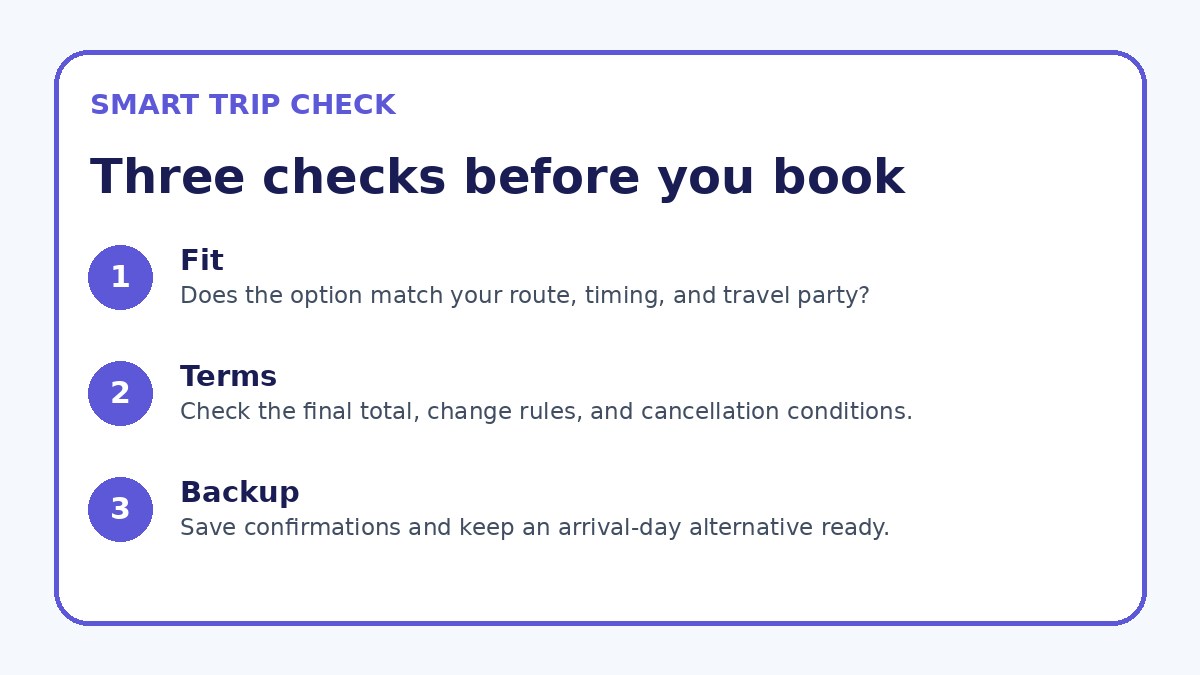
- Confirm exact travel dates, number and ages of passengers, and whether any infant or child requires a paid seat before searching fares.
- Check whether the itinerary is on a single ticket and whether checked bags are through-checked to avoid rechecking at a connection.
- Compare total door-to-door travel time, not just airborne time—include transfers, expected ground transport, and extra buffer for family needs.
- Read fare conditions on the airline’s final booking page: baggage included, seat selection rules, change and cancellation fees, and boarding policies.
- Decide seating needs and reserve seats together early, especially for families who want bassinets, extra legroom, or bulkhead seating.
- Pack a connection kit with snacks, medications, basic wipes, and an extra layer so short delays or gate changes don’t disrupt the kids.
Fare conditions and seat selection: reading the fine print
Fare differences often hide important rules about changes, refunds, seat assignments, and baggage allowances. Low-cost or basic economy fares may restrict seat selection, limit carry-on allowance, or charge fees for checked baggage and changes. For families, the ability to reserve seats together and a reasonable change policy can outweigh a small fare savings. Before you click buy, review the fare conditions on the carrier’s final booking screen: confirm what’s included, whether fee waivers apply for infants or special needs, and what penalties apply for date or name changes.
If you’re mixing carriers or buying separate tickets, verify each leg’s fare rules and whether you can combine protections like through-checking bags or free rebooking in case of disruption. When seat selection is critical, choose fares that allow you to reserve seats at booking or shortly after. Also check boarding policies—some families prefer priority boarding to settle children and strollers before the cabin fills. Use the carrier’s final page or your travel agent to confirm all these conditions rather than relying on third-party summaries.
Flight Guide questions travelers ask
How much extra connection time should I allow when travelling with young children?
Allow more buffer than airlines’ minimum connect times: aim for at least 90–120 minutes for domestic connections when travelling with small children, especially if you must collect and recheck baggage, change terminals, or complete additional security checks. That window lets you account for slow stroller folding, diaper changes, bathroom breaks, and moving between gates. If you prefer a relaxed transfer or need to feed or calm children between flights, choose connections of three hours or more to avoid rushing. Always verify recommended minimum connection times on the airline’s booking page.
Should I book seats in advance for a family trip from Toronto to Vancouver?
Yes—booking seats together is strongly recommended for families so you don’t end up separated on the plane. Many lower fare classes restrict free seat selection; check whether your chosen fare includes seat assignments or whether you’ll need to pay to pick seats at booking. If you need a bassinet, bulkhead row, or extra legroom, reserve as early as possible because family-friendly seats fill quickly. Confirm seat options and any related fees on the airline’s final booking screen before paying, and consider the tradeoff between a slightly higher fare and guaranteed seating together.
What should I verify on the airline’s final booking page before completing payment?
On the final booking page, verify the exact flight routings and connection airports, baggage inclusions and fees, seat assignment rules, and the fare’s change and cancellation terms. Check whether the itinerary is on a single ticket (which usually protects connections and through-checks bags) or separate tickets, and confirm terminal information if available. Look for any infant or lap-child rules relevant to your party, boarding priority options, and whether meals or special assistance are included. If using a third-party site, cross-check key details on the airline’s official page before confirming.
Final decision note
Choosing between direct and connecting Toronto to Vancouver flights for your family comes down to a few clear tradeoffs: time vs. cost, convenience vs. flexibility, and protection vs. risk. Direct flights reduce the number of transitions and usually cut total travel time—valuable with little ones—but may come at a higher fare or limited schedule. Connecting itineraries, especially on a single ticket with partner carriers, can lower costs and offer more departure times while preserving some protection for missed connections. Always prepare exact dates, passenger ages, baggage needs, and seating preferences before searching, and verify baggage transfer, connection handling, and fare rules on the carrier’s final booking page. If you want a single place to compare current availability and conditions, consider checking options on Trip.com as part of your research, but confirm policies on the airline’s site before you finalize anything.
Continue planning
Check current options and final conditions
Use the provider page to confirm live availability, the final total, cancellation terms, and every condition that matters to your trip.
This evergreen planning guide was created with AI-assisted drafting and a structured quality review. It does not display live prices, schedules, availability, visa guidance, or provider rankings. Verify current details before booking. Some links are affiliate links; we may earn a commission at no additional cost to you.