
If you want a straightforward plan with fewer decisions, a vetted package that bundles transport, a hotel near key sites, and guided entries can be the faster path for a first visit to Gyeongju. If you prefer control over pacing, accommodation style, and independent site choices, booking flights or trains, hotels, and local transport separately usually gives more flexibility and often easier customization for multi-day sightseeing. The practical answer: pick a package if you value time-savings, low planning stress, and an organized itinerary; choose separate bookings if you want to tailor where you stay, move at your own pace, or combine Gyeongju with side trips. Below I’ll walk through the tradeoffs, what to verify before you commit, and a short checklist to compare real offers when you start booking.
What a typical package covers and when it helps
Tour packages for Gyeongju often bundle essential elements: transport from a major hub, a centrally located hotel, guided visits to UNESCO and historic sites, and sometimes some meals. For a first-time visitor who prefers not to navigate Korean transit, read the itinerary closely to see which transfers and entrances are handled. A package reduces the number of booking confirmations you manage and can provide a clear daily plan that helps you make the most of limited time.
Choose a package when you want predictability and local orientation. Packages are useful if you arrive with limited Korean language confidence or prefer not to arrange trains, buses, or car rental. That said, always verify what is explicitly included — for example, whether transport is door-to-door or between certain stations, which attractions require separate tickets, and whether free time is built into the schedule.
Advantages of booking transport and hotels separately
Booking your own train or flight and hotel gives full flexibility over when you arrive, how long you stay, and where you base yourself. This is handy in Gyeongju because neighborhoods vary: staying near Bomun Lake or the central historical district changes how easily you access different sets of attractions. Separate bookings let you choose boutique guesthouses, hanok stays, or specific hotels with amenities you value, and you can move between cities at your chosen pace without being tied to a group itinerary.
Separate bookings also let you customize daily rhythm. Want to linger at Bulguksa at sunset, or take an extra day trip to nearby Busan or Andong? You can add or drop segments more easily when you control each leg. However, separate arrangements mean more time spent comparing train schedules, local buses, taxi options, and hotel cancellation terms — so budget planning time for research if you opt for this approach.
| Approach | Best for | Tradeoff to check |
|---|---|---|
| Package tour | Travelers wanting an organized itinerary and fewer booking steps | Less flexibility over hotel choice and daily pacing |
| Separate bookings | Travelers who want control over accommodation, timing, and side trips | More time needed to research schedules and local transfers |
| Hybrid approach (package + free days) | First-time visitors who want guidance plus independent exploration | Requires careful matching of booked days and free-time logistics |
| Self-guided with local day tours | Visitors who prefer independent travel but want expert site explanations | You must coordinate transport separately to and from tour start points |
Key decision criteria: what to compare on any deal
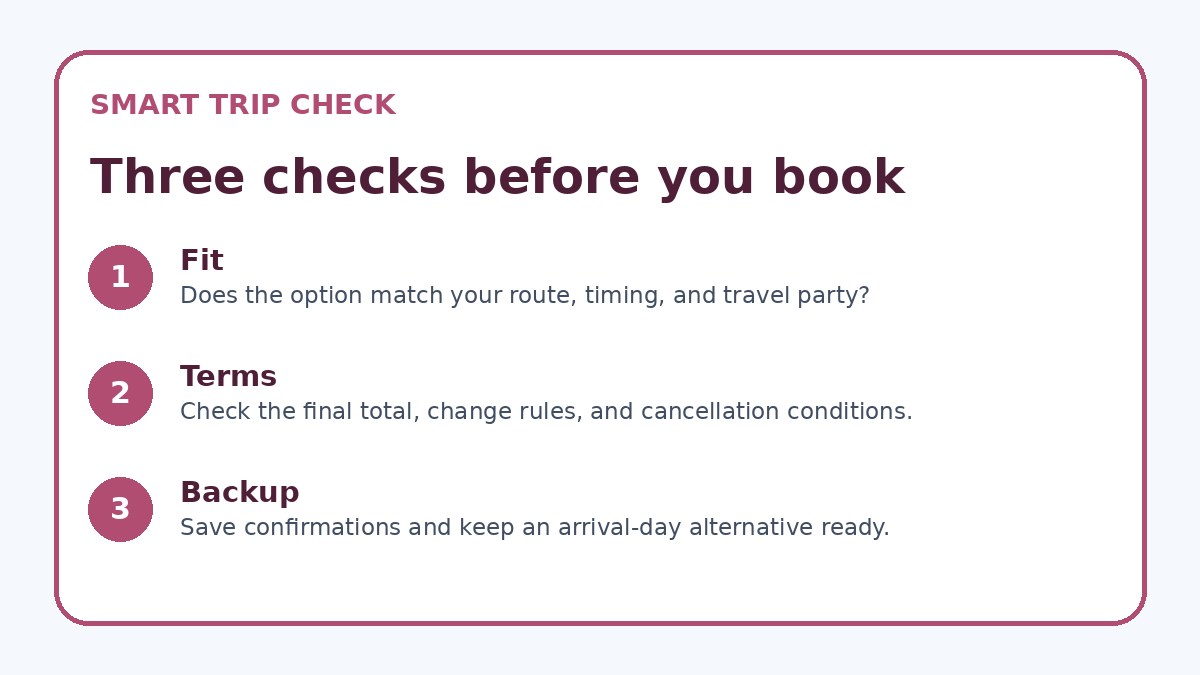
When evaluating a package or separate bookings, focus on these practical criteria: cancellation and change policies, the exact list of inclusions (transfers, meals, entrance fees), pick-up and drop-off points, and who handles on-ground problems. For packages, confirm whether guides speak your language and how free time is organized. For separate bookings, check the proximity of your hotel to bus stops, train stations, and major sites, and review public transport options from your arrival point.
Also compare the total door-to-door time and the number of times you’ll need to move luggage. Packages may list simpler transfers but can include fixed start times; separate bookings might require arranging a taxi or local bus at the end of a long trip. Finally, factor in risk tolerance: how important is flexibility versus the comfort of a prearranged plan? That tradeoff often decides the smartest choice for first-time arrivals.
Before you book
- Confirm whether transfers are door-to-door or to a station and note exact pickup locations.
- Check cancellation and change fees for each component (train/flight, hotel, tour) on the supplier’s final page.
- Verify which attractions and meals are explicitly included in any package itinerary.
- Compare total travel time and number of luggage moves between the package and separate booking options.
- Ask about language support or local emergency contacts if you value on-the-ground assistance.
- Map your hotel location against the sites you most want to visit and check public transit connections.
Practical steps to verify before booking
Before you commit, read the supplier’s final booking page to verify what’s included and what isn’t. For packages, check whether local taxes, museum surcharges, and optional activities are additional. For independent bookings, confirm train or flight change fees, hotel cancellation terms, and whether the hotel offers airport or station transfers and luggage storage. If a provider lists transfers, verify pick-up locations and the procedure if your arrival is delayed.
If language or on-ground support matters, confirm emergency contact methods and whether the package includes a local guide or a 24/7 support line. For routes that might involve connections, compare direct versus connecting transport options and their transfer points. Use a reputable comparison site if you want a quick snapshot, but always cross-check the detailed terms on the operator’s or hotel’s official booking page before finalizing payment.
Frequently asked questions
Will a package save me money compared with booking everything myself?
A package can bundle services to reduce the hassle of separate reservations, but it doesn’t automatically save money. The only reliable way to know is to total the actual components — transport, accommodation, fees, and optional guides — from separate suppliers and compare that sum to the package price. When comparing, include the value of conveniences like transfers or guided tours. Always verify any promotional claims on the provider’s booking page and read cancellation terms before assuming a package is cheaper.
How do I decide where to stay in Gyeongju if I book independently?
Decide which sights you prioritize and match your base accordingly. Staying near the historical district makes walking to major heritage sites easy; Bomun Lake area is better if you prefer resort-style hotels and a quieter lakeside walk. Check transport links from your arrival station or bus terminal and whether your hotel offers luggage storage for early arrivals or late departures. If you plan side trips, choose a location with good access to regional buses or the train station to minimize repeated transfers.
If I pick a package, what specific details should I verify before paying?
Read the itinerary to confirm which transfers, entrances, and meals are included and the exact pickup/dropoff points. Check the language and size of guided groups, free-time windows, and whether there are optional extras that cost more. Verify the supplier’s cancellation and refund rules and how they handle delays or missed connections. If the package lists hotels or transport providers, confirm those names on the supplier’s final booking page and ask about alternatives if accommodations change.
Final planning note
There’s no single right answer for every visitor to Gyeongju. If you value simplicity and time-saved on planning, a package can be the most comfortable path for your first visit. If you want to shape where you stay, extend your schedule, or pair Gyeongju with independent side trips, separate bookings give the flexibility to do that. A hybrid plan — book key transport and one guided day while leaving other days free — often balances convenience with autonomy. Use the checklist above, verify exact inclusions and cancellation rules on the provider’s final booking pages, and choose the approach that matches how much control versus convenience you want on your trip.
Continue planning
Check current options and final conditions
Use the provider page to confirm live availability, the final total, cancellation terms, and every condition that matters to your trip.
This evergreen planning guide was created with AI-assisted drafting and a structured quality review. It does not display live prices, schedules, availability, visa guidance, or provider rankings. Verify current details before booking. Some links are affiliate links; we may earn a commission at no additional cost to you.