If you and your partner are planning a family road trip from Sydney, driving can be the difference between porch-sunset moments and rigid coach schedules. Practical answer first: yes — renting a car often improves flexibility for family-focused itineraries around Sydney because it lets you stop for naps, scenic detours, picnic breaks and baby-changing stops without syncing to timetables. But it’s not always the smoothest or cheapest option; urban pickup, parking, tolls and insurance rules add friction. This guide helps couples decide whether to drive, what route value really looks like for families, how to parse rental insurance wording, what pickup and return headaches to expect, and a clear non-driving fallback so you can make a confident booking decision.
Does driving add real value for your family?
Start by mapping what you want to do and where the kids’ needs sit on that map. Driving adds clear value for itineraries that include coastal loops (like the Grand Pacific Drive), national parks with picnic sites, and towns where buses are infrequent. For daytime beach hops, early-morning wildlife walks, or flexible meal plans around a toddler’s naps, the convenience of a car often outweighs the extra hassle. Couples should weigh whether those moments — an unplanned lookout, a detour to a quiet cove, or a late check-in at a small B&B — are central to the trip’s enjoyment.
If your plan centers on inner-Sydney activities, museums, ferries and compact city neighborhoods, the value of a rental drops. Urban congestion, paid parking and tolls can negate the flexibility you sought. Also consider driving comfort: longer single-leg drives are easier for two adults who can alternate; if the family includes infants or very young children, factor in installation of child restraints and frequent stops. List destinations, check public transport frequency to each, and mark which stops truly require a car to decide if driving materially improves the holiday.
Decide whether driving earns its place
| Mobility strategy | Best for | Cost or friction to check |
|---|---|---|
| Full rental car for the whole trip | Maximizing flexibility, remote beaches, national park access and on-demand stops with family gear. | Higher parking, toll and insurance complexity; extra urban driving stress and potential pickup friction. |
| Short rental segments (hybrid) | Couples who want car days for specific drives but prefer public transport in the city. | Requires careful logistics to time pickups and returns; may lose some spontaneity on non-rental days. |
| Public transport and scheduled family tours | Visitors focused on city sights, ferries and guided day trips without driving responsibility. | Less flexibility, fixed schedules, and limited access to remote spots or late-evening transfers. |
| Ride-share, taxis and point-to-point transfers | Short hops, airport transfers, or couples avoiding parking and long-term rental commitments. | Can be costly for extended exploration and lacks space for bulky family gear and strollers. |
Check live rental choices only after the route test
Use the exact driver, dates, pickup point, and return plan to compare current conditions.
Insurance wording: what to read before you sign
Insurance is where many pleasant plans go sideways. Read policy wording from your rental provider and any intermediaries; key lines to verify are excess amounts, whether the excess is refundable, what incidents are excluded (e.g., driving on unsealed roads), and whether single-vehicle incidents such as theft, windscreen damage or undercarriage impacts are covered. For couples sharing driving, check whether additional drivers are included or charged extra and whether named drivers must be present at pickup. Don’t rely on sales blurbs: get the exact coverage text or a screenshot to compare, and if anything is unclear, ask the supplier to put the clarification in writing.
Also check if your personal car insurance, credit card rental protections, or travel insurance supply overlapping coverage — but never assume. Credit-card benefits often have long lists of exclusions: some refuse cover for SUVs, restrict cover by country, or exclude extra drivers and child-seat damage. Note whether the waiver lowers or eliminates the excess and whether it applies to all damage types including windscreen and tyres. Before booking, make a short checklist of these terms and compare them side-by-side across quotes so you know which policy actually protects you on the road.
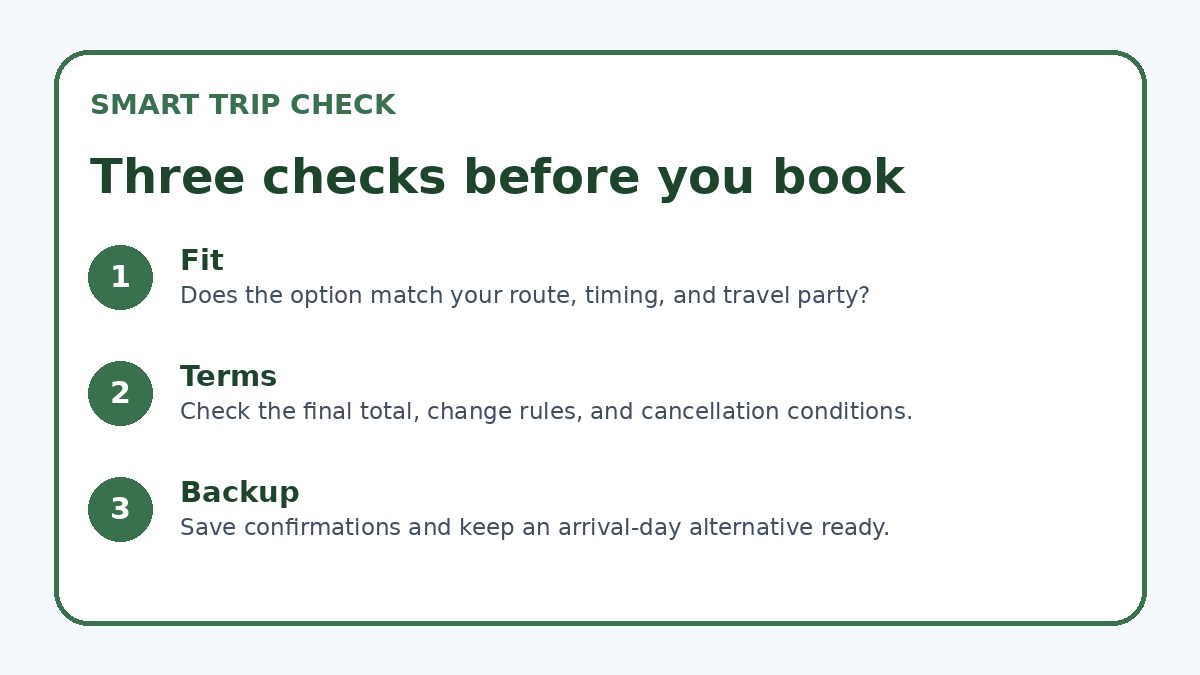
Compare the full rental conditions
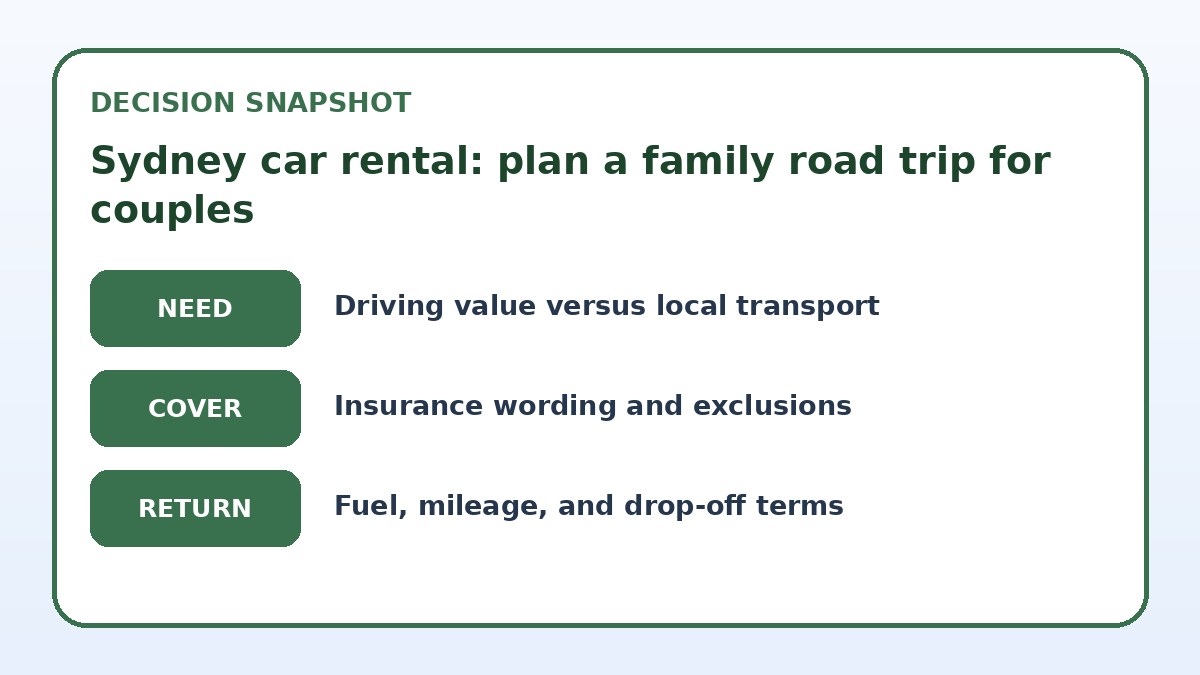
Confirm insurance wording, exclusions, deposit, fuel, mileage, and return terms on the final page.
Pickup, return and other friction points
Pickup and return are where time is lost and patience tested. Airport counters can be busy, so check stated pickup windows and whether off-airport desks are available; some providers store keys at remote kiosks which reduces staff wait but requires extra transfer time. Couples should confirm paperwork needed at pickup — primary driver’s licence, secondary ID, proof of address, and the credit card used for the booking — and whether additional drivers must be present or can be added later. Ask about child-seat availability and any installation services; bringing your own seat might be simpler but requires a larger car and extra luggage space.
Returns need planning too: know the provider’s fuel policy, drop-off hours, and after-hours procedures. Inspect the vehicle carefully with staff and photograph any pre-existing damage with timestamps; both partners should review the condition together to avoid disputes. Check how tolls are handled: some companies add administrative fees to transponder tolls, so ask how toll charges are tallied. Finally, plan for urban parking: check hotel parking spaces in advance and calculate likely parking costs so you’re not surprised by nightly fees that can quickly add up.
Car rental terms to verify
- List every stop you want to make and mark which locations lack frequent public transport service.
- Compare insurance documents line-by-line: excess amount, exclusions, windscreen and tyre coverage, and additional-driver rules.
- Confirm pickup requirements with the provider: required IDs, present drivers, child-seat availability and expected wait times.
- Plan drop-off logistics: after-hours return policy, fuel rules and whether photos will be accepted to document vehicle condition.
- Estimate parking and toll costs for each planned overnight: call hotels to confirm parking availability and ask about daily fees.
- Prepare a hybrid backup: identify train/ferry options and book at least one private transfer for a day where parking or driving would be difficult.
A clear non-driving fallback and hybrid options
You don’t have to choose exclusively between driving and not driving. A practical fallback for couples planning family trips is a hybrid approach: rent a car only for the segments that most require it (coastal days or national park visits), and use Sydney’s ferries, trains and targeted private transfers in the urban core. This approach reduces hotel parking needs, avoids inner-city congestion, and still preserves flexibility for the most valuable driving days. When planning a hybrid trip, sequence your itinerary so rental days start and end close to transport hubs or easy pickup locations to minimize wasted time.
If you decide not to drive at all, build an itinerary around ferries to Manly, trains to the Blue Mountains, and regional buses or guided family-friendly tours for longer excursions. Couples should check service frequency for the specific days you travel, especially for weekend and holiday schedules. Also compare door-to-door private transfers for bulky items or late arrivals — sometimes a short paid transfer is cheaper than a full day rental. Whatever you choose, keep a clear comparison of total time, total cost, and family comfort to make an informed final booking decision.
Car Rental & Road Trip questions travelers ask
Do I need a special licence to rent and drive a car in Sydney as an international couple?
Most international visitors can rent with a full, valid driving licence from their home country. Some suppliers ask for an International Driving Permit (IDP) alongside a non-English licence. Requirements vary by provider and by country of issue, so check the rental company’s documentation rules on their booking page before arrival. If either partner has endorsements or recent driving suspensions, disclose this when booking; policies differ and failing to disclose can invalidate insurance. Always bring the physical licence and your passport to pickup.
Should we bring our own child seat or hire one from the rental company?
Bringing your own seat guarantees compatibility and avoids supplier shortages, but adds luggage bulk and may not meet specific Australian safety standards. Hiring from the rental company is convenient and usually compliant, yet policies on installation, hygiene and charges vary. If you rely on a hired seat, book it in advance and confirm the seat’s age and certification with the provider. Whether you bring or hire, check that your chosen vehicle has the appropriate ISOFIX anchor points or seatbelt routing for proper installation.
How do I check what my credit card or personal insurance covers for a Sydney car rental?
Contact your card issuer and insurance provider directly and request the exact wording for rental vehicle coverage, noting any country exclusions, vehicle-type restrictions and whether additional drivers or damages to tyres/windscreens are excluded. Ask whether the policy reimburses the rental company’s excess or waives it entirely, and whether you must activate coverage by paying for the rental with the card. Save any confirmation emails or policy numbers and bring them to the rental counter. If in doubt, request the rental supplier’s coverage summary to compare.
Final decision note
For most couples planning a family road trip based from Sydney, a rental car delivers tangible benefits: flexible pacing, easier access to beaches and parks, and the freedom to tailor stops around children’s needs. That said, driving introduces costs and operational friction — pickups, parking, tolls and nuanced insurance rules — that make a hybrid approach attractive for many who want the best of both worlds. Decide by listing must-see stops, checking public transport frequency to each, and comparing full-rental versus segmented-rental timelines and expenses. Verify insurance wording, pickup requirements and parking availability before finalizing any booking so you travel with confidence.
Continue planning
Check current options and final conditions
Use the provider page to confirm live availability, the final total, cancellation terms, and every condition that matters to your trip.
This evergreen planning guide was created with AI-assisted drafting and a structured quality review. It does not display live prices, schedules, availability, visa guidance, or provider rankings. Verify current details before booking. Some links are affiliate links; we may earn a commission at no additional cost to you.