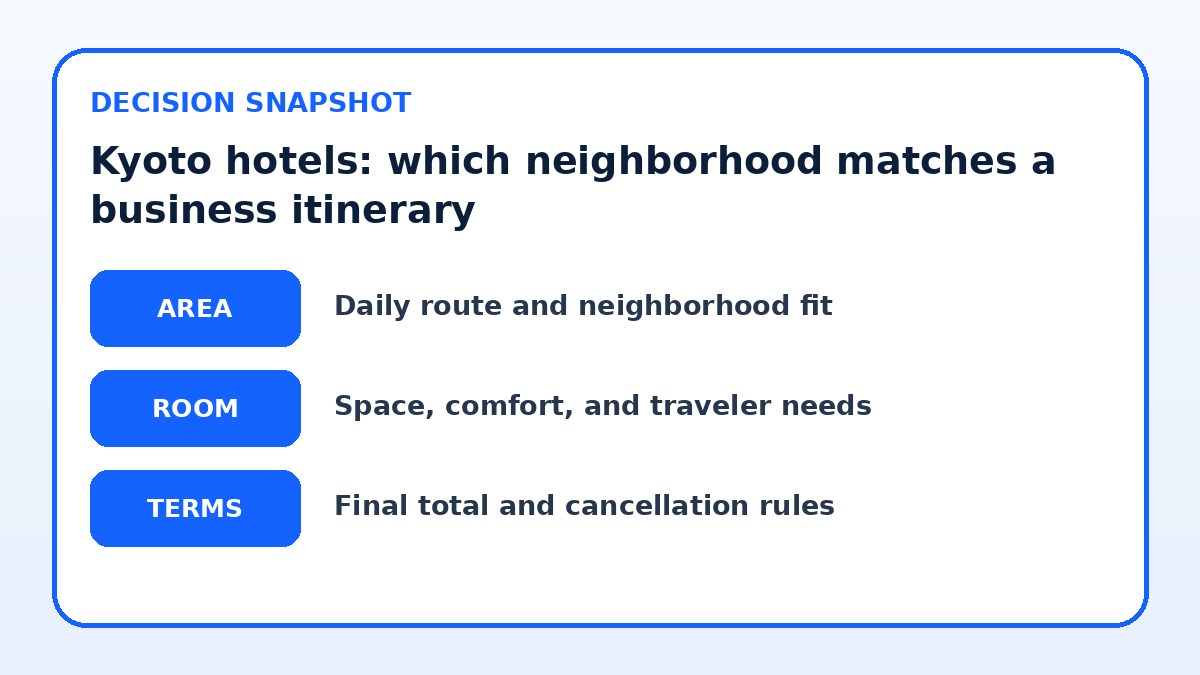
Pick the stay area first: match your top meeting cluster and evening needs, then choose a room type that supports work and rest. For many business trips to Kyoto that means weighing three things equally — proximity to major transit hubs or your meeting addresses, the daily friction of getting between office, client sites and evening plans, and what the room actually offers for focused work and sleep. A central area near Kyoto Station or Karasuma saves commuting time; riverside or Gion neighborhoods offer quieter evenings but may add taxis or subway changes. Decide whether you need a desk and soundproofing more than a view, because space and tranquility often trade off with walkable convenience. This guide gives an actionable neighborhood selector, shows common route frictions, lists room and party needs to prioritize, then explains the booking terms and confirmations to check before you finalize a reservation.

Check live stays in the areas that fit
Use your dates and party size to compare current rooms after you narrow the neighborhood fit.
Neighborhood fit: which area matches your meeting map
Start by mapping each confirmed meeting and the locations you expect to visit most days. If most appointments cluster near Kyoto Station, the Karasuma business corridor, or the Conference/Convention center, choose an area that reduces one-way transfers. That could mean a hotel immediately adjacent to Kyoto Station, or one along the main Karasuma-Kawaramachi axis. For a small number of meetings spread across the city, aim for a central point with the fastest transit connections rather than exact proximity to one appointment — that reduces wasted backtracking and gives you more evening flexibility.
If your schedule includes evening client dinners or visits to Gion or Pontocho, factor walking time and taxi access after work. Some neighborhoods are compact and easy to navigate on foot after a day of meetings; others require a short subway or taxi ride. Prioritize the location that minimizes cumulative friction across typical workdays rather than only morning transfers. This mindset keeps you fresher and more punctual across multi-day schedules, and helps determine whether you need to trade room size for location convenience.
Choose an area-selection strategy
| Area approach | Best for | Tradeoff to check |
|---|---|---|
| Station-first (Kyoto Station area) | Travelers with multiple outside-city connections or heavy luggage | Smaller rooms and less atmospheric evening dining nearby |
| Karasuma/Kawaramachi central axis | Attendees with dispersed city meetings who value transit flexibility | Can be busier and slightly noisier, reducing in-room quiet |
| Higashiyama / Gion (riverside) | Those prioritizing quiet evenings and a traditional Kyoto feel | Longer taxi or subway rides to business districts during day |
| West Kyoto / Professional districts | Corporate visits near industrial or university campuses | Fewer tourist amenities; may require planning for evening meals |
Daily-route friction: transfers, rush hours and evening logistics
Kyoto’s transit options are dense but not always direct between neighborhoods. Estimate how many vehicle or rail changes you’ll tolerate per day and whether you prefer walking segments. If you are attending early morning meetings, check typical peak-hour crowding on the lines you’ll use and plan extra buffer time. For business travelers who rely on taxis for tight schedules, confirm hotel access and likely fares to key meeting areas — this is especially important if meetings stretch across east and west Kyoto, where routes can require longer trips.
Also think about evening routines: returning to the hotel after networking or late dinners can feel very different from daytime travel. Some neighborhoods quiet down earlier, which is ideal for rest but may limit late-night dining or convenience store options. If you plan to work in the room after dinner, consider how late-night noise or hallway traffic might affect concentration. Use the expected daily pattern — commute, meetings, dinner, room work — to decide whether to prioritize a quieter neighborhood or one with late-night amenities and easy taxi access.
Now compare like with like
Keep the same dates, guests, room needs, and cancellation preferences while you compare the final choices.
Room and party needs: what features actually matter for work
Define the room features that support productive work: a comfortable desk, reliable task lighting, multiple power outlets, and strong in-room Wi-Fi. If video calls will be frequent, prioritize rooms with good background options, stable internet, and soundproofing. For solo business travelers a compact but well-equipped room can provide everything needed; for a two-person trip — or when hosting a client briefly in-room — look for a larger layout with a seating area, privacy options, and a separate workspace.
Don’t overlook sleep quality. Thin walls, street-facing windows, and high-floor exposure to construction or nightlife can degrade rest and focus. If you need uninterrupted sleep before major presentations, ask about window type, double glazing, and typical noise levels. Also consider housekeeping timing — a flexible schedule can be important when you need focused morning prep or late-night returns. Confirm these room details on the hotel’s booking page or by contacting the property directly before committing.
Hotel booking check before payment
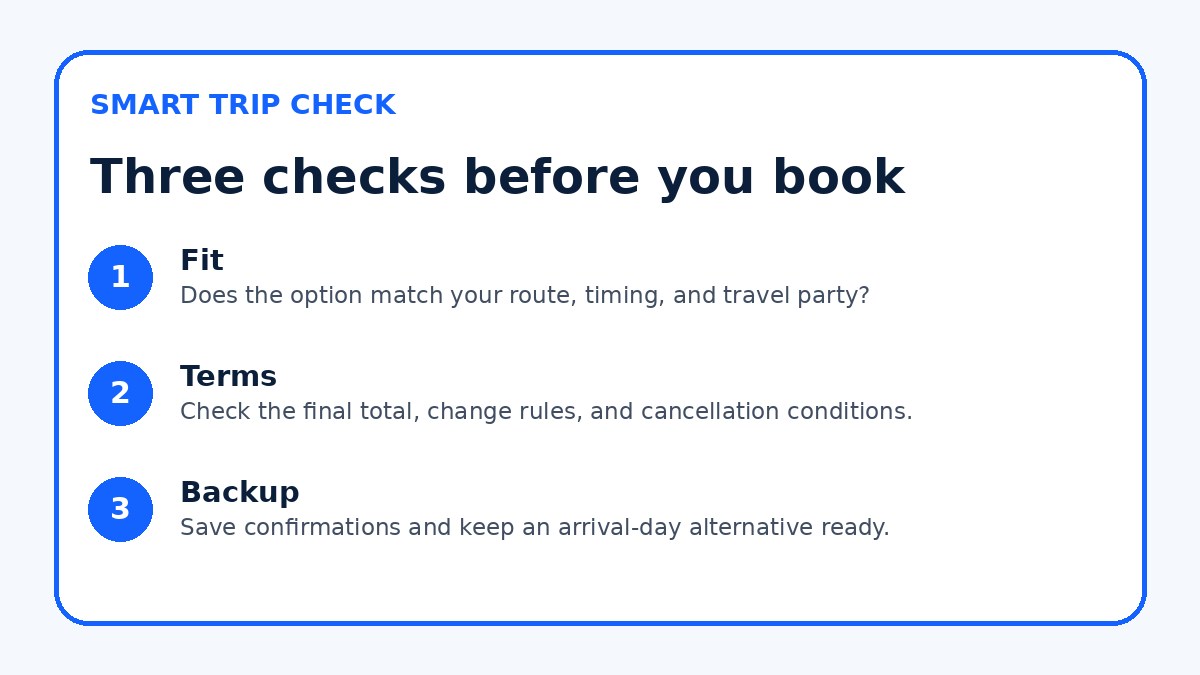
- Map all meeting addresses and mark the area that minimizes one-way transfers.
- List must-have room features (desk, outlets, soundproofing) and search only rooms that list them.
- Compare travel time and number of transfers from shortlisted hotels to your top three meeting locations.
- Confirm cancellation, change policies, and whether the booking includes breakfast or business services.
- Request confirmation of Wi‑Fi speed, desk dimensions, and in-room power layout from the hotel.
- Check arrival logistics (late check-in, luggage hold) and ask for corporate invoice options if needed.
Final booking terms: what to verify before you reserve
Before you finalize a booking, check cancellation and change policies, whether breakfast or a business center is included, and the exact room type and bed configuration. When provider-specific facts could change, verify on the hotel’s page: bed size, room area, internet terms, and whether the room is refundable or prepaid. If you need an invoice or corporate billing, confirm the process and any extra paperwork the hotel requires. Trip.com can be a place to compare availability, but always verify the final conditions on the hotel’s official reservation page.
Also confirm arrival logistics: check-in times, late check-in procedures, and whether the property holds luggage for early arrivals. If you plan to travel directly from Kansai or another airport, compare the transfer options to your shortlisted areas and whether the hotel offers shuttle or expedited arrival services. Finally, request any accessibility or equipment needs — extra adapters, an ironing board, or a meeting room — ahead of arrival; having these confirmed in writing avoids last-minute stress.
Hotel Guide questions travelers ask
Should I prioritize Kyoto Station access or a quieter neighborhood like Gion for a short business trip?
Prioritize the location that reduces your total daily friction: if most meetings or transfers arrive via train or bus, being near Kyoto Station saves time and simplifies logistics. If your schedule has a compact cluster of meetings in eastern Kyoto or you value evening rest to prepare for presentations, Gion or riverside areas can offer quieter rooms and shorter evening walks. Balance the number of morning transfers you’ll face against how much time you’ll spend returning after dinners; map typical routes for two representative days and choose the area that minimizes cumulative stress.
How can I ensure the room I book will be suitable for video calls and focused work?
Before booking, filter rooms explicitly described as having a dedicated desk or workspace and inquire about Wi‑Fi reliability and speed directly with the hotel. Ask whether the room faces a street or courtyard and whether windows are double glazed to reduce noise. Request a room on a higher floor or away from elevators and refuse early housekeeping if you need privacy during calls. If background aesthetics matter, request a room photo or confirm the backdrop policy so you can test visuals ahead of important meetings.
What practical steps should I take if meetings move around the city during my stay?
If your appointments shift between east and west Kyoto, aim for a central corridor like Karasuma or a hotel near a major subway line to reduce transfer complexity. Build 15–30 minute buffers into your calendar for unexpected delays and choose hotels with straightforward taxi access for tight connections. Keep a local transit app and a trusted taxi service contact saved, and opt for flexible booking policies when possible so you can change nights or room types without penalty if your itinerary evolves.
Final decision note
For business travelers in Kyoto the right strategy is pick the area that minimizes your everyday friction, then secure a room that supports work and rest. A station-area hotel economizes transfer time and luggage handling, while riverside or Gion properties give quieter evenings and a more restorative environment — but often at the cost of longer daytime trips. Use the checklist to compare routes, verify room workspace and noise control, and confirm booking terms and arrival logistics before you commit. With the area shortlisted and the room specifics checked, you can book with confidence and focus on the meetings themselves rather than commute headaches.
Continue planning
Check current options and final conditions
Use the provider page to confirm live availability, the final total, cancellation terms, and every condition that matters to your trip.
This evergreen planning guide was created with AI-assisted drafting and a structured quality review. It does not display live prices, schedules, availability, visa guidance, or provider rankings. Verify current details before booking. Some links are affiliate links; we may earn a commission at no additional cost to you.