For families deciding how to travel from Singapore to Penang, the practical choice comes down to how you balance comfort, transfers and the inevitable small needs of kids — extra bags, bathroom breaks, and snack logistics. A single-seat rail or coach leg keeps things simple but may need careful transfer planning at borders and stations; ferries add a scenic break but usually force a change of transport at a port. This guide lays out when a train, coach, ferry, or a combination makes the most sense for families, focusing on door-to-door ease: where you start and end in each city, how many luggage moves you’ll face, timing flexibility for naps and meals, and what to do if a leg is delayed or canceled. Use the checklist and comparison rows to match your group’s priorities — fewer transfers, lower walking distance, better sleeping options, or flexible departure times.
Terminal fit and end-to-end door-to-door planning
Families should start by mapping exact pickup and drop-off points rather than assuming “city center” coverage. Terminals for coaches, ferry terminals, and rail stations can be far from your accommodation, and getting a taxi for a group with luggage may add cost and delay. A door-to-door mindset means measuring time from your front door to the final door at your Penang accommodation, including transfers, immigration stops, and any short transfers between different modes. This matters especially with young children because even a short additional transfer can upend nap plans or mealtimes.
Look at transport options that minimize the number of times you must handle luggage and move everyone between vehicles. Direct coach or express train legs reduce intermediate parking and meet-and-greet complexity; ferries often require a land transfer on each end which can be awkward with toddlers or strollers. For each candidate route, sketch the full chain: home to terminal, terminal to immigration, cross-border leg, arrival terminal to accommodation. That full-chain picture will reveal whether a slightly longer ride with no transfers could be the calmer choice for your family.
Choose the end-to-end journey plan
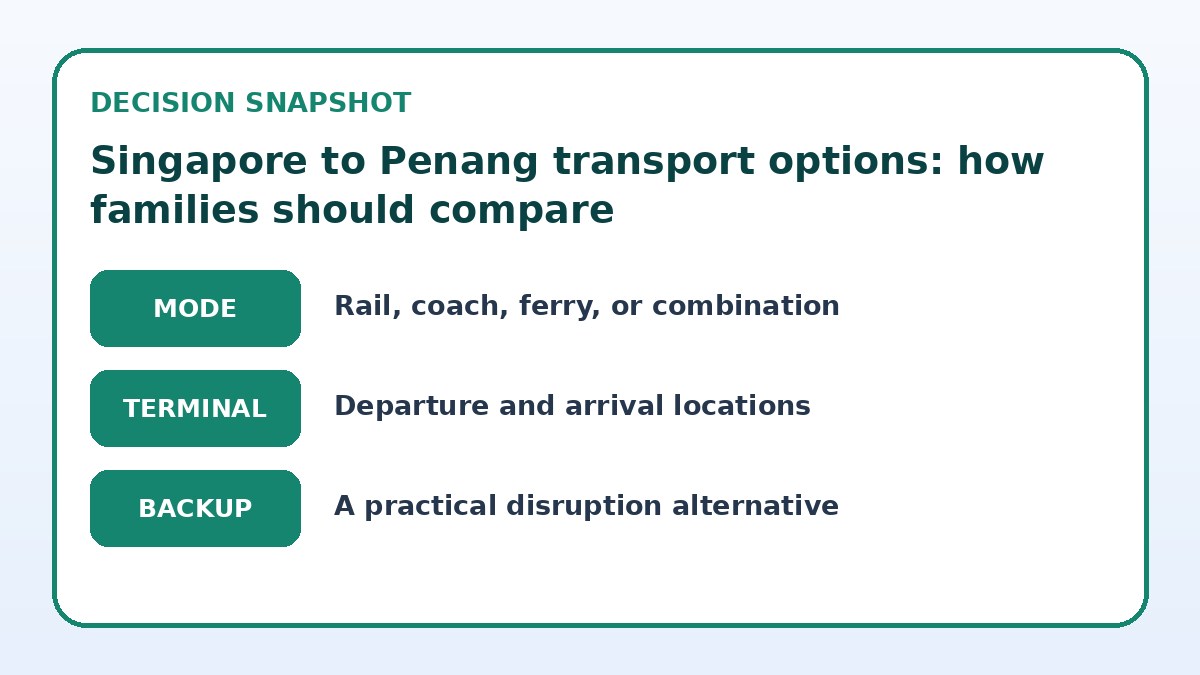
| Journey approach | Best for | Friction to check |
|---|---|---|
| Direct coach or express bus only | Families seeking the fewest transfers and simpler luggage handling from door to door. | Longer on-road time and less opportunity to move around compared with segmented trips. |
| Combination: coach or train plus short ferry leg | Groups wanting a scenic break and who don’t mind one or two extra transfers. | Adds transfer complexity and depends on terminal proximity to your start/end points. |
| Rail-focused route with station transfers | Families that prioritize onboard comfort, space to stretch, and predictability of scheduled services. | May require terminal changes or local transfers, increasing luggage handling and walking distance. |
| Multi-mode hybrid (flexible mix of coach, train and ferry) | Families who value itinerary flexibility and want to split travel into comfortable day segments. | Higher planning effort and more potential points of disruption to manage. |
Check live intercity options
Look beyond the ride itself and compare terminals, transfers, luggage, and arrival fit.
Luggage, transfers and how friction affects families
Count luggage interaction points: every transfer is an extra lift, re-pack and potential mismatch. Trains and coaches usually allow more space for luggage stored under seats or in bays, but you may still need to move bags during a transfer at a station or terminal. Ferries can offer generous internal storage but often require carrying suitcases between pier and vessel; also check whether strollers and car seats are carried onboard or need to be collapsed. If a child’s items must be immediately reachable, pack them in a small day bag that you keep with you during transfers.
Consider how much walking, stairs, and waiting are in each option. Some terminals have elevators and sheltered walkways; others require short outdoor walks between vehicle and ticketing halls. For families with limited mobility or very young children, prioritize options with short, sheltered transfers and on-board restrooms. When comparing choices, also factor in the visibility of staff and assistance services at each interchange — having someone to ask for help can turn a tricky transfer into a manageable one.
Timing flexibility, scheduled comfort, and travel rhythms
Timing flexibility is about more than departure times; it’s about how easy it is to reschedule and stay comfortable if plans change. Coaches and trains frequently offer multiple daily departures on popular corridors; ferries often run fewer sailings, so missing one can mean a long wait. Families who need midday naps or prefer overnight travel should weigh whether a given option allows seat recline, sleeper berths, or predictable quiet. If your children sleep on the move, a longer, uninterrupted coach or rail leg might beat a scenic ferry plus land transfer for overall rest.
Also think about journey rhythm: coach travel can be punctuated by scheduled stops for restrooms and food, while trains may have fewer stops but larger onboard facilities. Ferry crossings can be an activity break — fresh air, space to walk — but also introduce motion for sensitive children. Build padding into your schedule: an extra departure window, buffer time at the arrival city, or an early evening hotel check-in to absorb delays without rushing to evening plans or attractions.
Compare the practical alternatives
Use the final page to confirm what is actually offered on your dates and save a workable fallback.
Intercity travel checklist
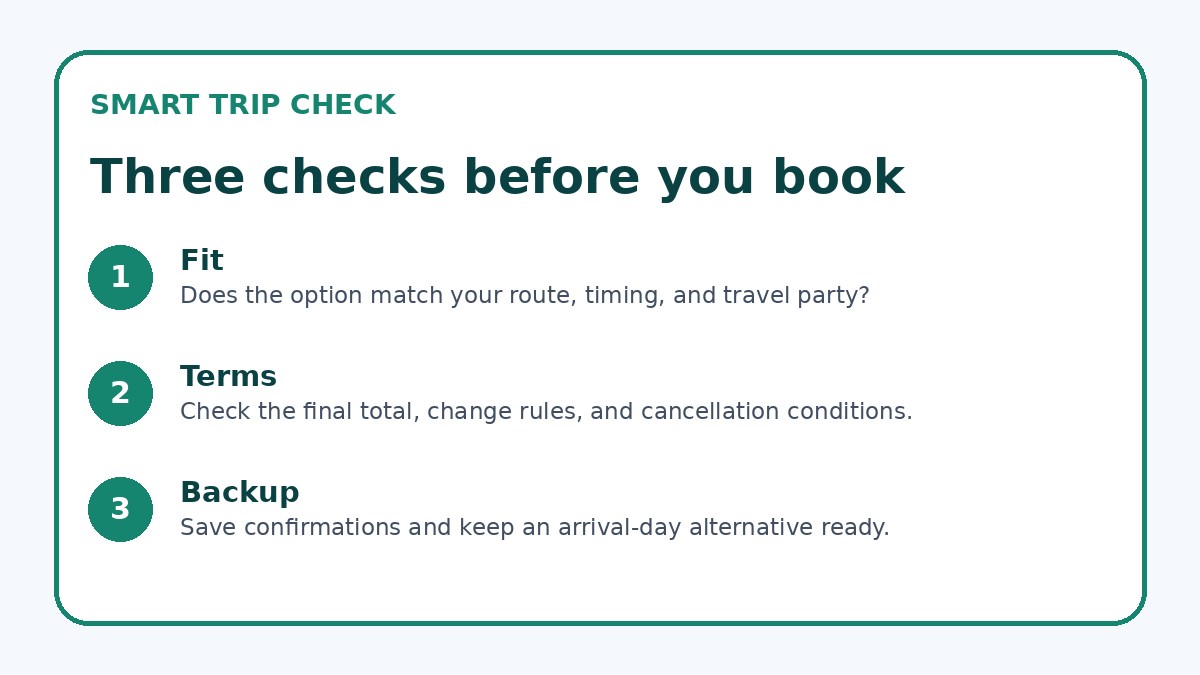
- Map the full door-to-door chain and time each leg including transfer walks and immigration stops before booking.
- Choose accommodations near your arrival terminal or with easy taxi access for a low-friction transfer to your room.
- Pack an easily reachable family day bag with medicines, snacks, chargers, documents and a change of clothes for kids.
- Verify luggage rules and how strollers or car seats are handled on each mode on the provider’s booking page.
- Build at least one buffer departure time and identify alternate departures or nearby terminals if the primary leg is canceled.
- Download e-tickets, local transport apps, and save contact numbers for ticket offices and customer service before you travel.
Disruption back-ups and realistic contingency plans
A practical family plan includes at least two contingency layers: alternate transport options and a local place to wait comfortably. If your primary leg is canceled or delayed, can you switch to a later coach, a different rail service, or a ferry? Identify the nearest terminals that offer alternate departures and check how easy it is to rebook — some services let you change tickets online, others require a ticket office visit. Keep digital copies of tickets and contact numbers, and note local taxi apps or reliable ride services so you’re not stuck hailing on arrival.
For longer delays, have a short-list of family-friendly hotels or lounges near the terminal and know their check-in policies. Pack a compact emergency kit with snacks, medication, chargers, entertainment and basic first-aid — small comforts that avert meltdowns. Finally, assign one adult as the ‘paperwork and timing’ lead to manage tickets, passports, and rebooking while the other cares for the children; clear role division reduces stress when plans change.
Rail & Intercity Transport questions travelers ask
Which mode is easiest for families with toddlers or a lot of luggage?
For many families with toddlers or heavy luggage, a single-vehicle plan—such as a direct coach or an express train with minimal transfers—reduces the number of times you must lift and reorganize bags. You should compare the distance between your accommodation and the departure terminal, availability of help with luggage at stations or terminals, and whether strollers and car seats are permitted onboard. If a ferry route is attractive for scenery, factor in the extra shore transfer; a ferry may be fine, but only if those transfer walks are short and sheltered.
How should I plan travel times around children’s nap and meal schedules?
Align departure and arrival windows with natural sleep or meal times when possible: late-morning departures can allow an early nap at home, while overnight legs suit older children who sleep through longer trips. Look for services that offer seat recline or private cabins if you need uninterrupted sleep time. Also plan flexible meal solutions—bring portable snacks and a refillable water bottle for each child, and identify likely rest stops or onboard food options on the provider’s site so you can avoid waiting until hunger becomes a problem.
What’s the simplest disruption backup when a planned leg is canceled?
The simplest backup is a pre-identified alternate departure on the same route and a nearby hotel or lounge if you need to wait out a long delay. Before you travel, note the next two departure times from a nearby terminal and keep those e-ticket pages accessible on your phone. If digital rebooking is possible, verify the provider’s change policy on their official booking page; if not, know the ticket office or customer service hours so you can arrange a switch in person without juggling kids and bags.
Final decision note
Choosing how to travel from Singapore to Penang with family comes down to prioritizing uninterrupted comfort versus scenic breaks and flexibility. A single coach or rail leg keeps door-to-door logistics simpler and reduces luggage handling; ferries add a pleasant sea-time but usually require extra land transfers. Combine modes when your itinerary benefits from a daytime stop or scenic leg, but plan for added transfer friction. Before booking, map the full chain of movement for each option, verify luggage and stroller rules on the provider’s booking page, and prepare a clear disruption backup. For comparing live schedules and availability, you can check Trip.com or the providers’ official pages, but always confirm final boarding rules and transfer details on the operator’s booking page.
Continue planning
Check current options and final conditions
Use the provider page to confirm live availability, the final total, cancellation terms, and every condition that matters to your trip.
This evergreen planning guide was created with AI-assisted drafting and a structured quality review. It does not display live prices, schedules, availability, visa guidance, or provider rankings. Verify current details before booking. Some links are affiliate links; we may earn a commission at no additional cost to you.