If you travel to Montreal for work, price alerts can save time but also prompt rushed bookings that don't fit your schedule or policy. The practical rule: set alerts to gather options, then pause to compare identical dates, traveler counts, and cancellation rules before committing. Begin by deciding whether you need a package (flight + hotel) or separate bookings; the wrong choice can reduce flexibility and increase last-minute costs. Use alerts to monitor trends and capture a sensible target fare range, not to push an immediate purchase. Keep procurement rules, meeting times, and loyalty benefits in view—those often matter more than a small rate difference. This article walks through what to compare, how to avoid false savings, and a simple decision framework tailored to business travelers heading to Montreal.

Test package value fairly
| Booking approach | Best for | Tradeoff to check |
|---|---|---|
| Prepackaged flight+hotel bundle | When convenience and single-invoice simplicity matter more than flexibility. | May restrict changes, loyalty credits, and hide optional fees that erase headline savings. |
| Separate flight and hotel bookings | Maximizing control: choose refundable rates, retain loyalty benefits, and swap components independently. | Requires more time to compare and manage multiple reservations. |
| Flight-only deal plus hotel booked through corporate program | Business travelers who need negotiated hotel terms while capturing flight savings. | Can limit flight changeability if using a nonrefundable fare found by an alert. |
| Flexible refundable package or refundable separate bookings | High-uncertainty itineraries where changing plans is likely. | Typically higher upfront cost but reduces risk and administrative burdens. |
Check current package and separate options
Use identical dates, travelers, room needs, baggage, and flexibility so the comparison stays meaningful.
What to compare before judging a Montreal package
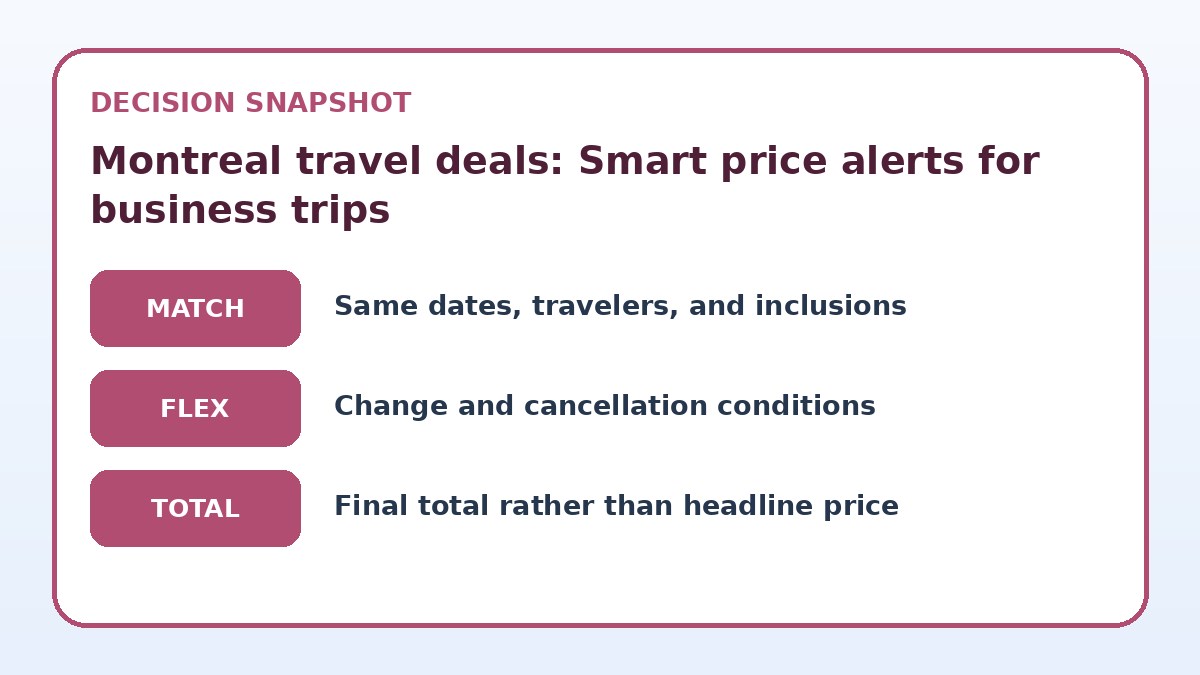
Start every package-versus-separate decision by lining up the apples-to-apples details: same travel dates, same number of travelers, identical baggage allowances, and equivalent check-in times. A package that appears cheaper can exclude basics such as checked bags or airport transfers, making the apparent saving disappear once you add necessary extras. For business travelers, also check whether the fare allows changes without punitive fees—meetings shift and flights sometimes need to move. Confirm whether the hotel included has business amenities you require, such as reliable Wi‑Fi, early check-in options, or an airport shuttle; these can affect daily productivity and incidental costs.
Next, verify loyalty, corporate, and reimbursement implications. Some packages prevent you from earning individual airline miles or claiming hotel loyalty benefits, or they might complicate expense reports because supplier invoices are consolidated. If your employer requires booking through a preferred channel or a travel agency, a seemingly cheap package bought outside that channel can create administrative headaches. Finally, run the same itinerary as separate bookings to compare the out-the-door cost, including taxes, service fees, and any mandatory resort or destination surcharges the package may hide.
Inclusions that change the value equation
Focus on what’s included rather than the headline rate. For flights, inclusion means checked baggage, seat selection, ticket changeability, and meal options when relevant. For hotels, ask whether breakfast is included, what internet speed is provided (crucial for video calls), and whether the rate allows free cancellation or prepayment. Ground transfers or airport parking can swing a package from convenient to costly. If the package bundles a car rental, make sure the insurance terms and mileage limits match your needs; business travelers often prefer arrangements that minimize rental risks and reporting complexity.
Also consider timing and logistics: arrival and departure times can affect whether a single-night hotel stays overlap with meetings, and whether an early arrival will require extra paid nights. Evaluate whether the included services align with corporate expense rules—if the package covers a higher-category room but your policy caps reimbursement, the difference will come out of your pocket. Always itemize inclusions and assign an approximate value to each so you can see whether the package genuinely saves money or merely reshuffles costs.
Look past the headline total
Compare inclusions and change conditions before deciding whether a package is genuinely useful for this trip.
Deal comparison checklist
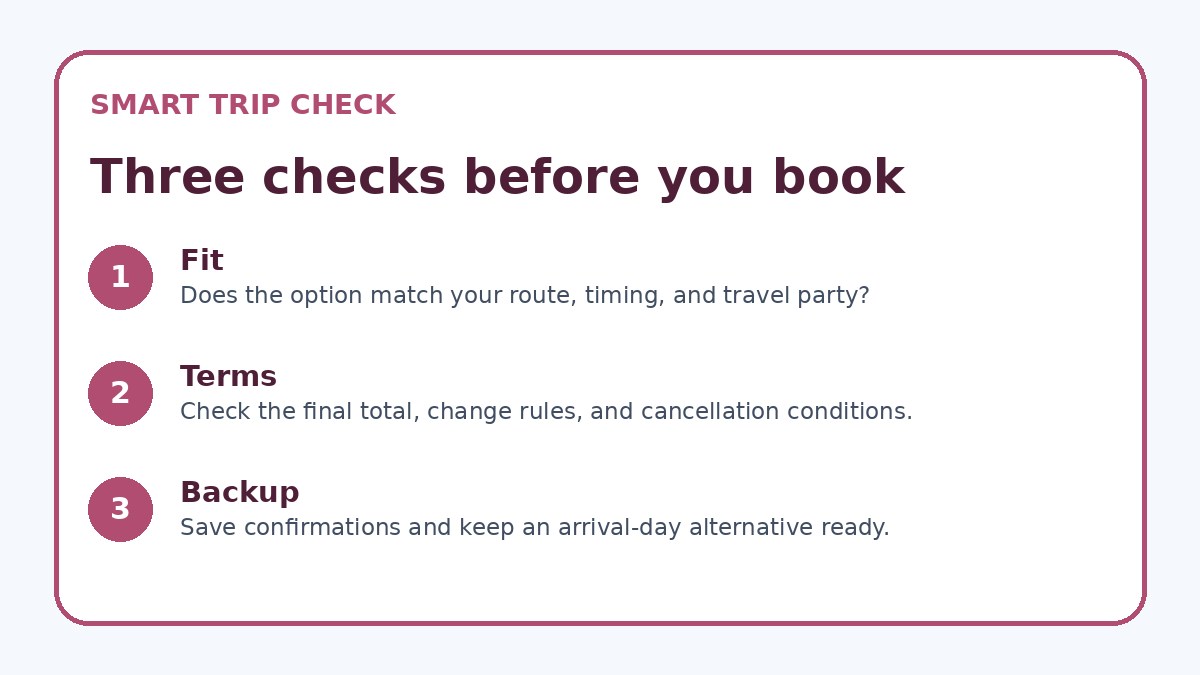
- Match the exact travel dates, number of travelers, and room occupancy when comparing package and separate prices.
- Confirm baggage allowance, seat selection rules, and whether tickets earn or forfeit loyalty credits.
- Verify hotel cancellation policy, check-in/out times, internet speed, and business amenities required for meetings.
- Compare the final total including taxes, service fees, mandatory surcharges, and any third-party transaction fees.
- Check who issues invoices and whether receipts meet your employer’s expense-reporting requirements.
- Save alert histories and screenshots of the offer details so you can justify the booking choice if audited.
Flexibility and traveler-specific value for business trips
Business travel is different: flexibility often trumps the lowest fare. Look for options that allow free changes at short notice, refundable hotel rates, and tickets that preserve elite status credits. Even when an alert reveals a cheaper nonrefundable package, account for the possible cost of last-minute changes—these can exceed upfront savings. If your company requires bookings via a travel manager or has negotiated rates with suppliers, confirm that a package fits those arrangements. If it doesn’t, the administrative friction and potential policy violations make the package less valuable despite price appeal.
Traveler-specific value includes productivity needs and personal preferences that matter during work trips: room quietness for calls, airport proximity for short stays, and loyalty benefits such as lounge access. If you travel frequently to Montreal, maintaining loyalty program progress might be worth paying a few extra dollars rather than taking a disqualifying package. Use alerts to monitor refundable and semi-flexible options so you have ready alternatives that match the unpredictability of business schedules while still taking advantage of good market movements.
Final terms and the verification checklist before booking
Before you click purchase, read the provider’s final booking page closely. Verify the ticket or rate code, cancellation penalties and deadlines, change fees or waivers, what forms of ID and documentation are required, and whether any third-party supplier fees apply. For packages, confirm which supplier issues which component (airline vs. hotel) because that determines where you request refunds or changes. If the offer references loyalty benefits, check the precise language on whether points and elite credits are awarded; when in doubt, call the provider or your corporate travel desk to confirm.
Also confirm payment and invoice details for expense reporting: who invoices you, whether a consolidated invoice will be issued, and whether receipts meet your company’s documentation standards. If you’re using a corporate card, check whether the supplier accepts it without additional surcharges. Finally, if you used a price alert to trigger the booking, save the alert history and screenshots showing the matched parameters; these can be useful for post-booking audits or to justify choices to procurement.
Travel Deals & Booking Strategy questions travelers ask
How long should I watch price alerts before deciding on a Montreal booking?
For business travel, monitor alerts for at least one to two weeks if your trip is not immediate—this helps you understand normal price movement and detect a genuine dip. If your meeting date is fixed within a few days, prioritize refundable or changeable options identified by alerts rather than waiting for a lower fare. Use alerts to establish a reasonable target price range; once a fare falls inside that range and matches your flexibility requirements and corporate policy, treat it as a decision signal rather than an automatic buy trigger.
Are package deals usually better value for short business stays in Montreal?
Packages can be convenient for short trips but aren’t automatically better value. For brief stays, timing and logistics—arrival time, meeting location, and possibility of same‑day changes—matter more than a small price advantage. Check whether the package’s hotel is near your meetings or the airport and whether it includes essentials like Wi‑Fi. Often, booking a refundable hotel rate via your company’s program and a separate flight that preserves flexibility or loyalty benefits provides a better combination of reliability and expense control.
What red flags should I look for on a provider’s final booking page?
On the final page, watch for nonrefundable labels, ambiguous change policies, or third-party booking language that shifts responsibility for refunds. Confirm the exact fare conditions, cancellation deadlines, and whether baggage or seat selection is included. Check invoice details—who will bill you—and any small-print fees like service or processing charges. If loyalty credits or corporate rates are claimed, verify the specific terms; when unclear, contact the provider or your travel manager before completing the booking.
Final decision note
Price alerts are a useful reconnaissance tool for business travelers to Montreal when used deliberately rather than as a trigger for impulsive purchases. The essential habit is to compare like-for-like: matching dates, traveler counts, baggage, and flexibility terms between packages and separate bookings. Prioritize refundability and policy compliance when your itinerary is uncertain or when loyalty and corporate arrangements affect reimbursement. Use alerts to set a target price window, then check final booking pages carefully for cancellation terms, invoice handling, and loyalty implications. With those checks in place, you can benefit from alerts without compromising flexibility, productivity, or company policy.
Continue planning
Check current options and final conditions
Use the provider page to confirm live availability, the final total, cancellation terms, and every condition that matters to your trip.
This evergreen planning guide was created with AI-assisted drafting and a structured quality review. It does not display live prices, schedules, availability, visa guidance, or provider rankings. Verify current details before booking. Some links are affiliate links; we may earn a commission at no additional cost to you.