If you and your partner are deciding how to travel from Osaka to Hiroshima, start by choosing the mode that matches your priorities: time, comfort, scenery, or budget. For most couples the decision narrows to a fast train for speed and convenience, a coach for straightforward door-to-door economy, a ferry if you want a relaxed sea crossing plus a scenic element, or a mixed plan that combines modes to balance cost and experience. This article gives a clear practical answer up front, then lays out transfer friction, luggage handling, timing flexibility and a simple disruption backup for each approach. Read it to compare end-to-end door-to-door practicality — not just the ride time — so you can pick and book with confidence.
Terminal fit and door-to-door logistics
Choosing the right mode starts with where your journey actually begins and ends. Trains typically depart from major central stations in Osaka and arrive at central Hiroshima stations, which often minimizes taxi time and lets you walk to many hotels. Coaches usually use intercity coach terminals that may be a short walk or a brief taxi ride from your accommodation; check the exact terminal location relative to your arrival and departure points. Ferry terminals are less central and may require a longer taxi or local transit ride at each end, so factor the additional ground time into your plan.
For couples, luggage and mobility matter as much as transit time. Stations and coach terminals vary in elevator availability, luggage storage, and staff assistance for carrying bags. If one partner will be handling baggage, verify steps and platform access in advance. Ferries may have size or security limits on carry-on luggage and different boarding procedures; check the operator’s rules on the booking page. Wherever you land, map the shortest, easiest route from terminal door to your accommodation and consider pre-booking a taxi if steps or long walks are a concern.
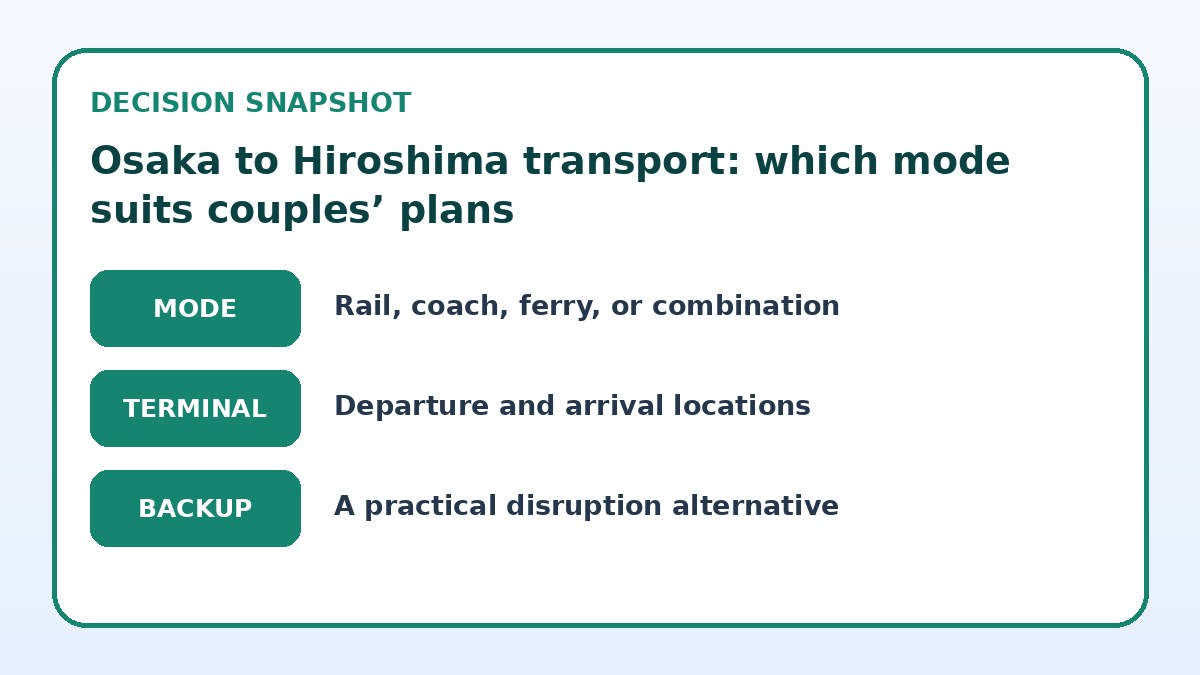
Choose the end-to-end journey plan
| Journey approach | Best for | Friction to check |
|---|---|---|
| Direct train (city-center to city-center) | Couples prioritizing speed, low transfers, and easy access to central hotels | Less scenic than a ferry and can be costlier than a coach when booking flexible fares |
| Intercity coach (single-vehicle, terminal pickup) | Budget-conscious couples wanting single-boarding simplicity and underseat luggage handling | Longer journey times and possible extra ground time if coach terminals are outside the center |
| Ferry (sea crossing plus ground transfer) | Couples who value the journey experience and scenic travel over fastest arrival | More complicated door-to-door logistics and potentially longer taxi or transit links at each port |
| Mixed itinerary (combine modes for cost or experience) | Couples balancing cost, sightseeing, and convenience by combining best segments of each mode | Requires extra transfer planning and wider timing buffers to avoid missed connections |
Check live intercity options
Look beyond the ride itself and compare terminals, transfers, luggage, and arrival fit.
Luggage, transfers and friction for two
Couples often travel with a mix of luggage and things to share; small, frequent transfers multiply friction. Trains with level boarding and luggage racks reduce hassle, but if your trip needs a transfer or local subway ride at either end, that convenience can evaporate. Coaches can be convenient because luggage is stored under the bus and you board once, but factor in longer journey times and potential waiting at terminals. If either partner has mobility limitations, check for step-free access and reserve seats near entrances when possible.
Ferries introduce different friction points: check departure procedures, the distance between the drop-off area and the boarding ramp, and whether you can keep bags with you in the cabin. For mixed itineraries—say a coach to a ferry terminal then a short train—each handoff adds time and potential stress. Build buffer time for immigration-style checks (if any), boarding windows, or seasonal queues. A simple rule for couples: accept one transfer if it significantly reduces cost or increases enjoyment; more than one means you should re-evaluate whether the saved time or money is worth the added friction.
Timing flexibility and scheduling choices
Decide whether departure time or arrival window is more important. Trains often offer frequent departures, making it easier to adjust plans at the last minute—a benefit if you want flexibility for leisurely mornings or late checkouts. Coaches typically run on a fixed schedule with fewer departures per day, so missing a coach can mean a long wait for the next one. Ferries may have even fewer sailings, and they can be subject to seasonal timetable changes; couples who prefer to lock in a specific scenic crossing should book early and confirm times on the operator booking page before committing hotel nights.
If your itinerary includes sightseeing on either side, align the transport option with opening hours and check-in times. For example, arriving early in Hiroshima gives you more daylight for outdoor sites, while an evening arrival might favor a direct train to minimize transfers in the dark. For mixed trips, build wider timing buffers between connections to account for delays. Always verify the final schedule on the provider’s official booking page or a trusted aggregator like Trip.com before paying, since timetables can change.
Compare the practical alternatives
Use the final page to confirm what is actually offered on your dates and save a workable fallback.
Intercity travel checklist
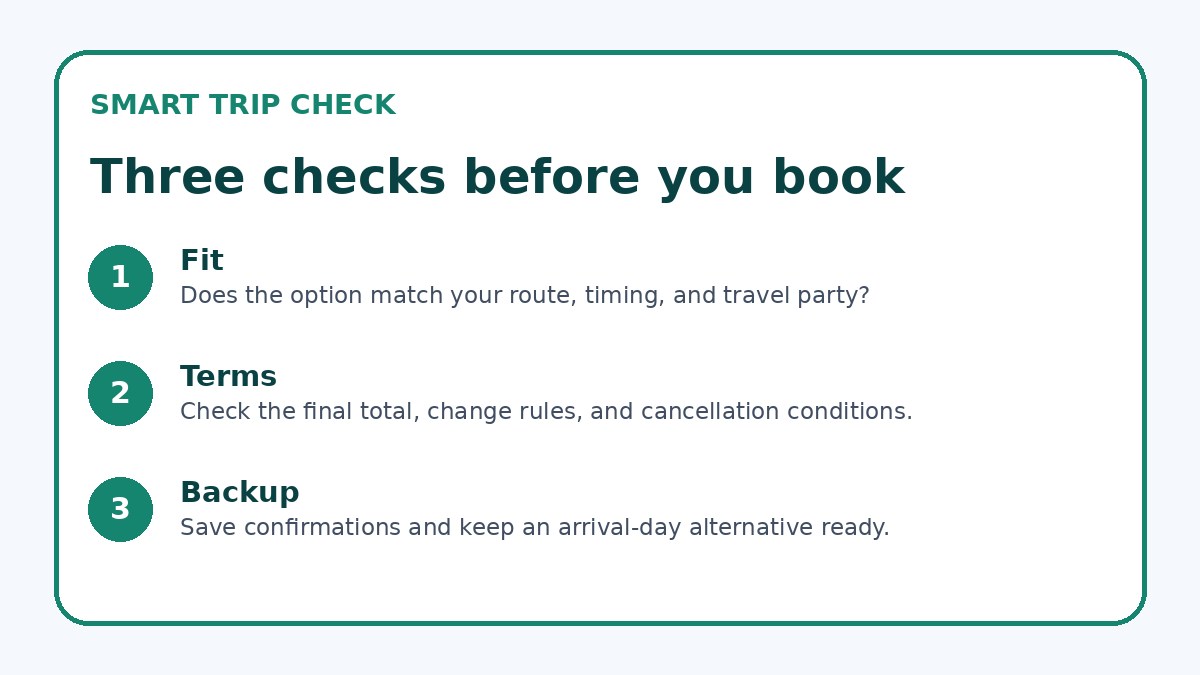
- Map precise terminal locations in Osaka and Hiroshima and estimate taxi or transit time from your accommodations.
- Confirm luggage allowances and boarding procedures on the operator’s official booking page before purchasing tickets.
- Reserve accessible or preferred seating if either partner needs step-free access or wants to sit together.
- Allow at least 30–60 minutes buffer for transfers and unexpected delays between connecting modes.
- Take screenshots or print tickets and contact details; leave an itinerary copy with someone back home.
- Check rebooking and refund policies and consider a travel-insurance plan that covers missed connections.
Disruption planning and backup options for couples
Expect disruptions—delays, cancellations, or heavier-than-expected crowds—and plan a simple backup. For train travelers, identify one or two later trains and the last local transit option to your hotel. Coach passengers should note alternative departure times and local rail options that can substitute for a cancelled bus. Ferry travelers need to confirm the operator’s rebooking policy and whether alternate crossings exist on the same day. Whatever you choose, exchange contact info, take photos of tickets, and leave a copy of your itinerary with someone at home.
Consider mild redundancy: if your connection is time-sensitive, choose a slightly earlier departure to create slack. For couples, splitting responsibilities helps—one person monitors service alerts and booking confirmations, while the other handles luggage and local navigation. Check refund and rebooking policies on the provider’s final booking page before purchasing, and consider travel insurance for peace of mind if you value cancellation protection. A clear backup prevents tension and keeps the trip enjoyable if plans change.
Rail & Intercity Transport questions travelers ask
Should couples prioritize direct trains or a scenic ferry from Osaka to Hiroshima?
Prioritize based on whether you value time or the travel experience. Direct trains are best if minimizing travel time and transfers makes your stay more relaxing. Ferries suit couples who want the crossing itself to be part of the trip and don’t mind extra ground transfers. Ask yourselves: will an extra hour of sea time improve your trip, or will that hour be better spent sightseeing in Hiroshima? Check ferry timetables and terminal locations on the operator’s booking page to see if the schedule fits your overall plan.
How much transfer time should we allow when combining modes?
For mixed itineraries, build generous buffers—more than you might for a single-mode trip. Allow at least 30–60 minutes between scheduled arrival and the next departure for short transfers within a city, and 60–90 minutes for longer transfers such as coach-to-ferry or ferry-to-train where you must move between terminals. Factor in time for ticket checks, security, and carrying luggage. If your connection is tight, consider choosing an earlier option for the first leg or booking a single-provider through-ticket if available; verify connection rules on the booking pages.
What’s the simplest disruption backup for couples traveling this route?
Keep a straightforward backup: identify one later departure on the same mode and an alternative mode (train or coach) that serves the same corridor. If you prefer minimal hassle, book trains with flexible exchange options or note the next coach departures near your arrival time. Photodocument tickets and service alerts, and have a local taxi app or contact saved for last-mile transfers. Always read the provider’s rebooking and refund terms on their official site before booking, so you know your options if plans change.
Final decision note
For most couples the choice between train, coach, ferry, or a mixed plan comes down to priorities: speed and low friction (train), budget simplicity (coach), a scenic journey (ferry), or a tailored experience (mixed). Focus on door-to-door practicality—terminal locations, luggage handling, transfer count, and timing flexibility—rather than just the in-vehicle travel time. Verify schedules, luggage rules, and rebooking terms on providers’ booking pages (and check aggregators such as Trip.com if helpful) before buying tickets. With a clear backup plan and realistic transfer buffers, you’ll arrive in Hiroshima relaxed and ready to enjoy the city together.
Continue planning
Check current options and final conditions
Use the provider page to confirm live availability, the final total, cancellation terms, and every condition that matters to your trip.
This evergreen planning guide was created with AI-assisted drafting and a structured quality review. It does not display live prices, schedules, availability, visa guidance, or provider rankings. Verify current details before booking. Some links are affiliate links; we may earn a commission at no additional cost to you.