Practical answer first: for most first-time visitors to Singapore, you probably don't need a car for city sightseeing, business, or short stays concentrated in the urban centre. Efficient public transport, compact neighborhoods, and abundant taxis or ride-hailing make driving optional. A rental car becomes attractive if your itinerary includes rural or cross-border exploration (Peninsular Malaysia), travelling with lots of gear, or visiting multiple outlying island or nature areas on a flexible schedule. Before you start booking, weigh traffic density, parking availability, insurance needs, and road toll systems against convenience, cost, and the freedom to explore beyond the city. This article lays out the tradeoffs, decision checks, and practical items to confirm on booking pages so you can choose the right approach for your first trip to Singapore.
See current options before you compare the details
Availability and final conditions change. Open Trip.com now or keep reading for the practical comparison.
When a rental car makes sense
Choose a rental car if your itinerary takes you outside Singapore’s dense urban core or includes a multi-day overland segment into Malaysia where flexibility matters. Road access to places such as remote nature reserves on nearby land or multi-stop road trips that would be slow or costly by transit often justify a vehicle. Families traveling with small children, older adults who prefer door-to-door transport, or groups moving lots of luggage or equipment will also find the convenience outweighs the hassles.
Also consider a rental car for bespoke schedules: early-morning wildlife trips, photography sessions at dawn, or multi-destination plans where public transport timings would constrain you. If you plan to use the car primarily for weekend escapes and coastal drives, verify cross-border and island access rules, and ensure the vehicle type suits your luggage and passenger count. Compare a few realistic itineraries: estimate door-to-door time, total fares for taxis or ride-hailing, and parking availability to judge whether the car adds clear value.
When to skip the car and use transit or taxis
If your stay is focused on central areas—Marina Bay, Orchard Road, Little India, Chinatown—public transport and walking are faster and cheaper than driving. Singapore’s MRT network, buses, and plentiful ride-hailing services cover almost all tourist sites efficiently, often avoiding parking fees and traffic stress. For business travelers with tight schedules or leisure visitors who plan to follow standard city routes and use guided tours, the convenience of public transit and short taxi hops usually outweighs the flexibility of a private car.
Another reason to skip a rental is parking: downtown parking can be expensive or limited and residential areas often have permit restrictions. Add the mental load of electronic road pricing (variable charges on certain roads) and owning unfamiliar vehicle controls—drivers used to left- or right-side road rules should practice first. If you want to keep travel simple, book accommodations near an MRT line and use point-to-point ride-hailing for off-network trips; you’ll save time and avoid the administrative details of renting a car.
| Approach | Best for | Tradeoff to check |
|---|---|---|
| Rent a car for entire trip | Multi-day island or overland itineraries and groups with lots of luggage | Higher parking, tolls, and rental admin versus maximum flexibility |
| Rent car only for specific days | City stay with occasional out-of-city day trips | Lower baseline cost but added pickup/drop logistics and daily rental fees |
| Use public transit and taxis | Short stays focused inside the city or business trips | Less privacy and scheduling flexibility but simpler logistics and lower parking hassles |
| Combine transit with one-way car hire or private driver | Travelers who want convenience for particular legs without renting full-time | Potentially higher per-day cost but saves you from long-term rental overhead |
Ready to check the option that fits your plan?
Use your exact dates and traveler details so the provider page can show the current total and conditions.
Costs, rules, and practical limits to check
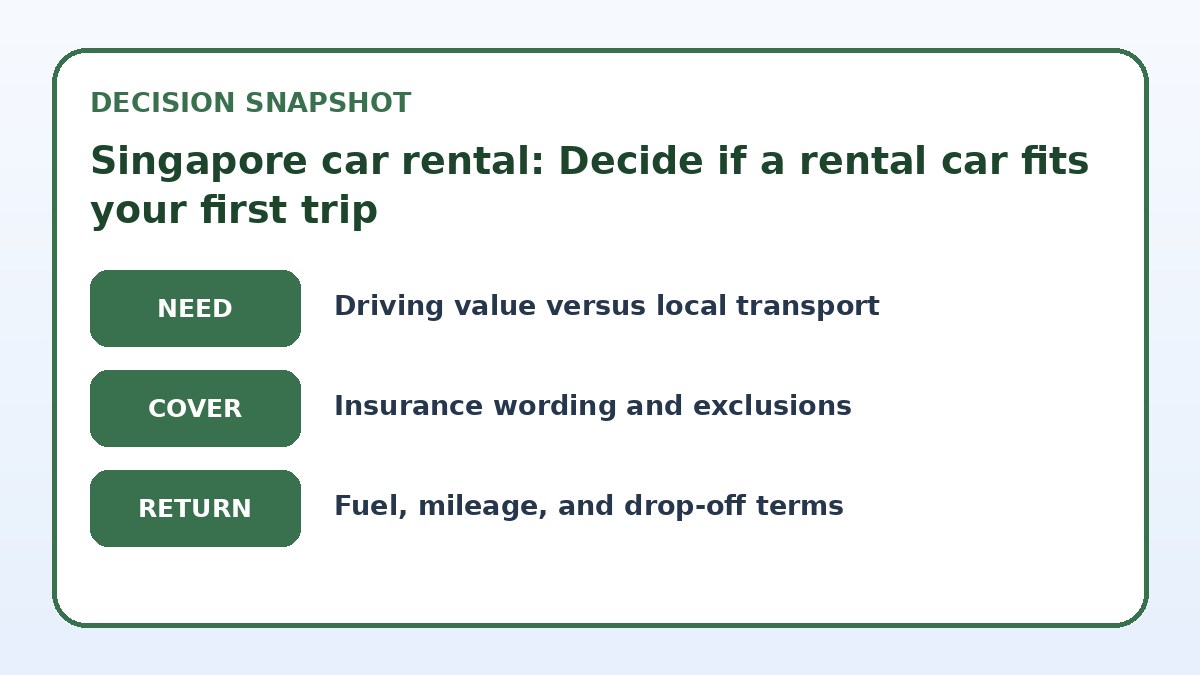
When comparing costs, don’t rely solely on the rental rate. Account for mandatory insurance types, collision damage waivers, security deposit holds, fuel policy, parking fees, and electronic toll or congestion charges. Rental agreements may set age restrictions, require an international driving permit, and impose surcharges for young or senior drivers. Check whether airport pickups carry extra fees and whether one-way rentals or adding an additional driver changes the price materially.
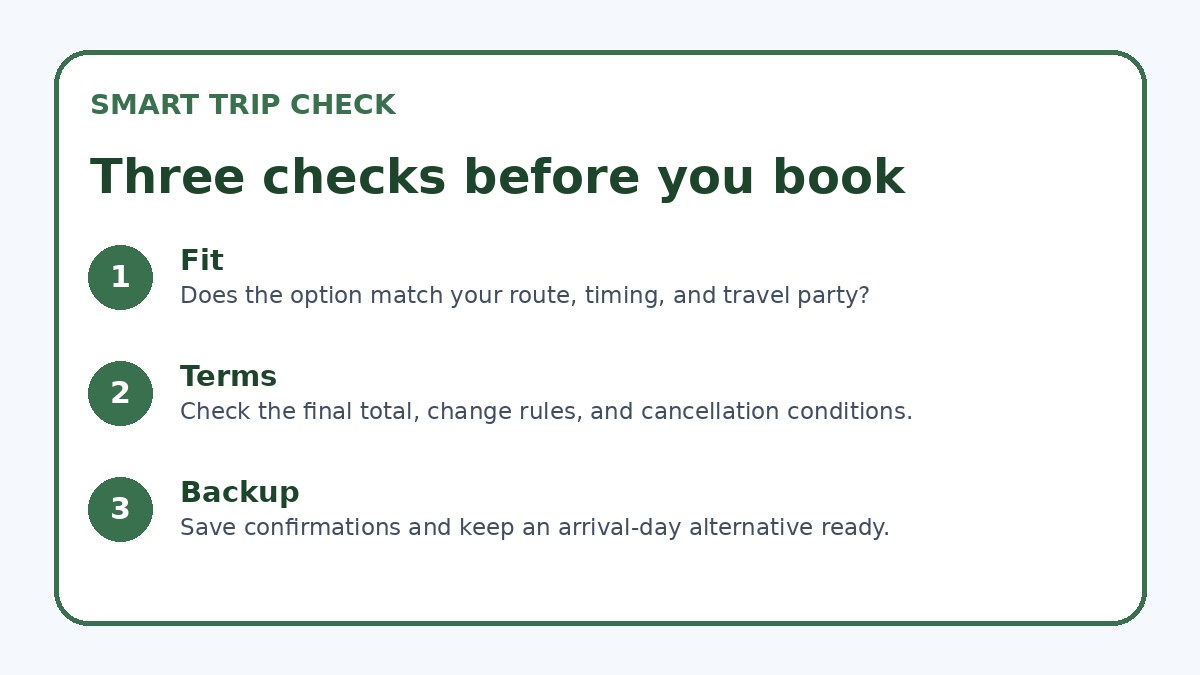
Because rules change, verify three items on the provider’s final booking page: the exact insurance coverage and deductible, permitted cross-border travel and any required permits, and the payment and security deposit process. If you plan to drive into Malaysia, make sure cross-border policies and documentation are explicitly allowed and understand vehicle insurance limits there. Confirm fuel policy and the process for toll and electronic road charge collection so you won’t face unexpected charges on return.
Before you book
- Map your itinerary and mark days where door-to-door travel or remote access requires a car.
- Confirm driver eligibility: minimum/maximum ages, license requirements, and whether an IDP is needed.
- Check the rental agreement for insurance coverage, deductible amounts, and collision/waiver terms.
- Verify cross-border permissions and required documentation if you plan to drive into Malaysia.
- Compare total costs: rental rate plus expected parking, tolls, fuel, and deposit holds.
- Confirm pickup/drop-off details, fuel policy, additional driver fees, and required payment method.
How to compare options and book sensibly
Set up a simple spreadsheet or notes listing your itinerary legs, passenger and luggage counts, door-to-door travel time estimates, and total expected transport fares for both rental and alternatives. For each option, add realistic estimates for parking fees, tolls, and time spent finding parking. Use that comparison to see whether the car saves you time or money, or only adds convenience. Consider hybrid plans: use taxis or MRT inside the city and reserve a car only for the day(s) you need it.
When you’re ready to book, compare local and international rental companies on the items that matter: insurance limits, deposit amounts, permitted mileage, and cross-border rules. Trip.com can be used once as a place to compare current availability and booking terms, but always finalize details on the provider’s booking page. Make sure pickup and drop-off logistics match your accommodation plans, and confirm any additional driver names and ID requirements before arrival.
Frequently asked questions
Can I drive a rental car in Singapore with a foreign license?
Many visitors can drive in Singapore with a valid foreign driving licence, but rules depend on your country of issue and trip length. Some national licences are accepted directly for short stays, while others require an International Driving Permit (IDP) alongside the original licence. Rental agencies also set their own minimum-driver-age and documentation standards. Before booking, check the rental provider’s booking page for specific licence and IDP requirements and confirm whether your licence is accepted for the full intended rental period.
Are there restrictions on taking a rental car from Singapore into Malaysia?
Cross-border travel into Malaysia is commonly allowed by some rental companies but is often restricted or requires prior permission and extra fees. You must verify the provider’s cross-border policy, required permits, and any mandatory insurance extensions on the provider’s booking page. Additionally, border checkpoints can affect timing and vehicle insurance coverage may differ across jurisdictions, so confirm whether roadside assistance and insurance apply while the car is outside Singapore before you drive across.
How should I handle parking and electronic road charges while renting?
Parking in central areas can be limited and metered; many commercial and residential zones require payment or permits. Singapore uses electronic road pricing and toll systems on certain roads and expressways; rental companies typically charge tolls and administrative fees through the booking account or on return. Ask the rental provider how tolls are billed, whether an in-car transponder is installed, and whether the company passes on administrative fees. Confirm these details on the final booking page to avoid surprises on your credit card statement.
Final planning note
For most first-time visitors whose itinerary stays within Singapore’s urban core, a rental car is more hassle than help: public transit, taxis, and walkable neighborhoods usually cover the essentials. Rent a car if your plans demand flexibility to reach remote nature areas, if you’ll cross borders overland, or if you travel with bulky gear or a larger group that makes door-to-door transport measurably easier. Decide by listing your exact travel legs, estimating total transport time and costs for both options, and verifying insurance, cross-border rules, and deposit terms on the provider’s booking page. A targeted short-term hire for the specific days you need often gives the best balance of convenience and cost.
Continue planning
Check current options and final conditions
Use the provider page to confirm live availability, the final total, cancellation terms, and every condition that matters to your trip.
This evergreen planning guide was created with AI-assisted drafting and a structured quality review. It does not display live prices, schedules, availability, visa guidance, or provider rankings. Verify current details before booking. Some links are affiliate links; we may earn a commission at no additional cost to you.