
If you’re traveling solo from Busan to Gyeongju with a suitcase or backpack, choose a ground option that balances comfort, door-to-door convenience, and luggage handling. For the few final decisions that matter most—train vs. intercity bus vs. taxi/shuttle—consider how many bags you have, how heavy they are, where you’ll start and finish in each city, and how much walking or stair-climbing you want. This article gives a clear practical recommendation up front, then explains tradeoffs so you can match the option to your trip priorities. I’ll also cover packing and transfer tactics that reduce hassle at stations, during transfers, and at accommodations, plus what to verify on booking pages before you buy a ticket.
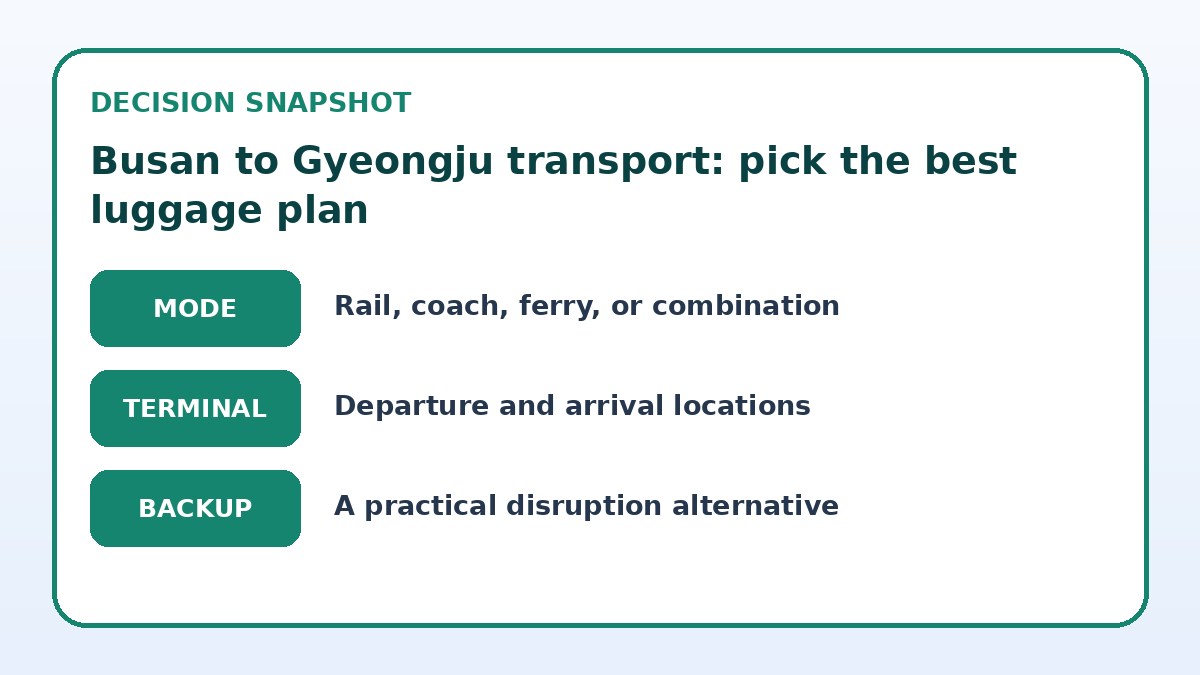
See current options before you compare the details
Availability and final conditions change. Open Trip.com now or keep reading for the practical comparison.
Practical recommendation for solo travelers with luggage
If your top priority is a low-effort journey with luggage and you are traveling alone, take a mainline or regional train that connects Busan and Gyeongju area stations. Trains tend to have designated luggage areas, level boarding at major stations, and predictable stop patterns that reduce last-minute dashes. Select a service that stops at the station closest to your Gyeongju accommodation to limit walking with your suitcase. When you book, confirm the station names and platform access on the provider’s booking page to avoid assuming which stop is closest to your hotel or historic sites.
If you must prioritize door-to-door convenience over cost and have heavy or oversized items, arrange a taxi or airport-style shuttle for the last mile. Many solo travelers combine a train or bus for the bulk of the route with a short taxi from the station to their lodging. Verify luggage and occupancy limits, pickup points, and any advance booking requirements on the carrier’s or operator’s confirmation before you finalize payment. Trip.com can be useful to compare current availability, but always read provider pages for final pick-up instructions.
Comparing trains, buses, and taxis for luggage
Trains: Pros include smoother rides, on-board racks or designated spaces for suitcases, and easy access at major stations. Trains minimize the physical strain of carrying bags up and down multiple station levels if you choose a stop with step-free access. The trade-offs are that some regional services can be crowded at peak times and not every train stops at smaller Gyeongju stations, so you must confirm the exact station name and platform access when booking.
Buses and coaches: Intercity buses often have generous under-vehicle luggage holds, which keeps big suitcases out of your hands during the ride. However, the bus stop in Gyeongju could be a short taxi ride away from your accommodation, creating an extra transfer. Also check how your bag will be handled during loading and unloading—some operators label bags while others rely on you to be on hand immediately when they call stops. For solo travelers, a bus works well when you have one large suitcase and want to avoid carrying it through crowds.
| Approach | Best for | Tradeoff to check |
|---|---|---|
| Regional/Mainline train | Solo travelers wanting predictable onboard luggage storage and minimal transfers | May require a short walk from the station to some hotels or tourist sites |
| Intercity bus/coach | Those with large suitcases who prefer under-vehicle storage | Bus stop may be farther from accommodations, adding a transfer |
| Taxi or shared shuttle | Travelers with heavy or oversized luggage needing door-to-door service | Higher direct cost and potential wait times for shared shuttles |
| Mixed plan (train or bus + taxi) | Balancing cost with convenience for first-time solo visitors | Requires coordinating multiple bookings and transfer timing |
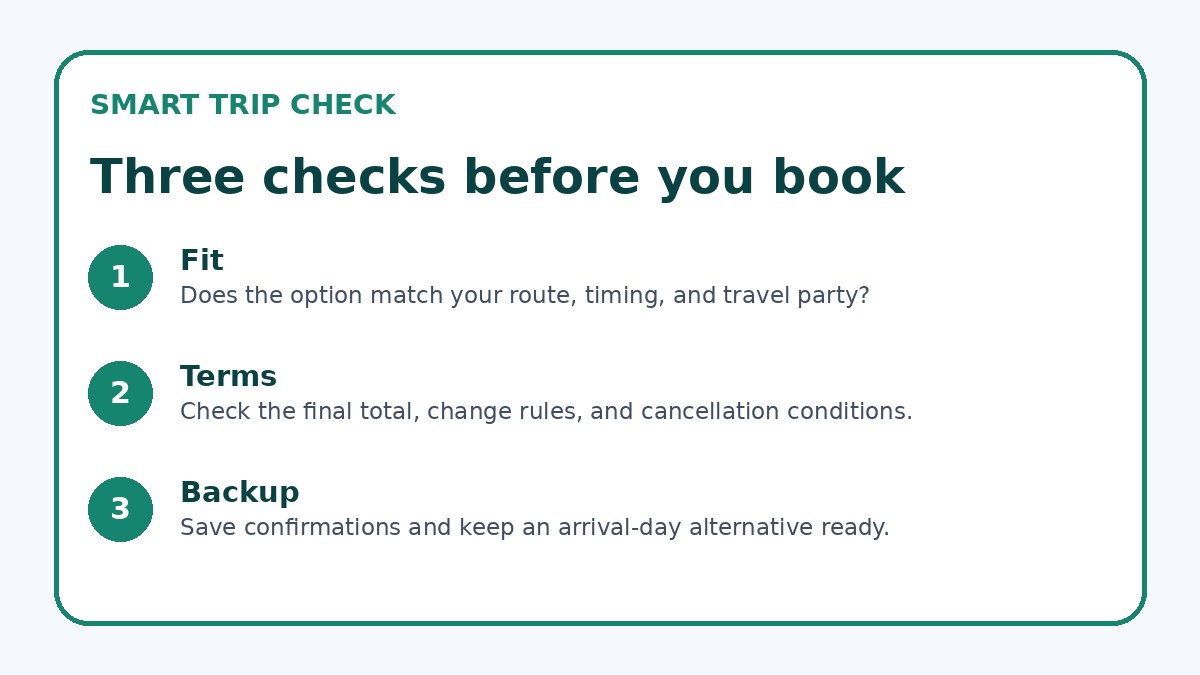
Ready to check the option that fits your plan?
Use your exact dates and traveler details so the provider page can show the current total and conditions.
Packing and transfer tactics to reduce strain
Prioritize luggage choices that make transfers easier: a medium-sized wheeled suitcase with a durable handle, plus a small daypack for valuables and a water bottle, will give you flexibility. Consider packing heavier items low in the case to keep it stable while upright. Use luggage straps or a simple tag with your contact details and return address. When walking between stations and accommodations, keep your daypack on the front in crowded areas and use a luggage belt or strap to keep both pieces connected so you only manage one item at a time.
Arrive early at your departure point to find level-access ramps, lifts, or luggage storage areas if available, and to load bags into the appropriate compartment calmly. If your chosen train or bus provider offers reserved seating, book a seat near doors for quicker boarding and disembarking. For evening arrivals, pre-book a short taxi from the station to your hotel to avoid dragging luggage across dim streets. Always verify luggage dimensions and any special handling rules on the carrier’s final booking page before you travel.
Before you book
- Check the exact station or stop names in Busan and Gyeongju on the provider’s booking page before purchasing tickets.
- Measure and weigh your luggage; confirm dimensions and any carrier luggage rules on the operator’s final confirmation.
- Reserve seats near doors if possible to speed boarding and make luggage handling easier.
- Plan the final-mile transfer from the arrival stop to your accommodation and pre-book a taxi if you’ll arrive late.
- Pack a compact daypack with essentials and valuables so you never need to open your main suitcase in public.
- Arrive at the departure point earlier than usual to find disabled access, elevators, or luggage storage options if needed.
How to choose based on your trip priorities
If saving time between doorways is most important, prioritize services that stop closest to your accommodation even if the ride itself is slightly longer. Compare the total door-to-door journey—not just the in-vehicle time—so you can weigh whether a direct bus that stops far from your hotel still wins over a train that drops you nearer. Map the final station or bus stop relative to your lodging and local transit connections to avoid unpleasant last-mile surprises.
If budget and flexibility matter, buses and regional trains may offer more departure options during the day; however, don’t trade off excessive walking or multiple transfers. When in doubt, choose the option that reduces baggage hand-offs and the number of stairs you must climb. Before booking, confirm the provider’s luggage policy, station names, and any transfer advice on their official page so you don’t rely solely on secondary aggregators.
Frequently asked questions
Can I bring large suitcases on trains and buses between Busan and Gyeongju?
Most trains and intercity buses accept standard large suitcases, but rules vary by operator. On trains you’ll usually find racks or designated spaces; buses often use an under-vehicle hold. Before traveling, check the provider’s luggage dimension and weight policies on their booking or service page. If you have oversized or unusually shaped items, contact the carrier in advance to confirm they can be accommodated or to arrange an alternative like door-to-door transport.
What’s the easiest way to avoid carrying luggage upstairs at stations?
To minimize stairs and heavy lifting, pick services that use stations with elevators or level boarding and choose stops closest to your lodging. When booking, look for station accessibility information and platform layouts on the official pages. If an accessible station isn’t available on your route, arrange a short taxi from the nearest station to your accommodation. Also consider requesting help from station staff when you arrive; many stations can assist with baggage for travelers with limited mobility or heavy loads.
Is it safer to store luggage at Busan or Gyeongju stations for a day of sightseeing?
Short-term luggage storage can simplify sightseeing, but availability and security differ across stations. Larger stations may offer staffed lockers or luggage rooms while smaller stops might not. Before you travel, check the destination station’s services on its official site or the carrier’s information page to confirm hours, size limits, and any identification required. If station storage isn’t available or you need extended hours, consider leaving bags at your hotel (many will hold luggage before check-in) or using a private luggage storage service after confirming their credentials.
Final planning note
For most solo travelers moving between Busan and Gyeongju with luggage, trains are the best first option because they balance onboard storage, smoother rides, and reliable station access. Intercity buses work well if you have a very large suitcase and are comfortable arranging a short transfer on arrival. Taxis or shared shuttles solve the last-mile problem when mobility or late arrivals make public stops impractical. Whatever you choose, verify station names, platform and accessibility information, and luggage rules on the carrier’s final booking page before you pay. A small amount of planning around transfers and packing will make the whole trip far easier and let you focus on exploring Gyeongju once you arrive.
Continue planning
Check current options and final conditions
Use the provider page to confirm live availability, the final total, cancellation terms, and every condition that matters to your trip.
This evergreen planning guide was created with AI-assisted drafting and a structured quality review. It does not display live prices, schedules, availability, visa guidance, or provider rankings. Verify current details before booking. Some links are affiliate links; we may earn a commission at no additional cost to you.