For most couples deciding between flexibility and convenience on Sydney to Melbourne flights, the practical answer is this: pick the option that matches your tolerance for schedule changes and how much airport proximity matters to your plans. If you have fixed commitments—an early check-in at a hotel, an event, or limited time—lean toward the most convenient times and airports that minimise transfers and ground travel. If you want lower stress around sudden plan changes—late nights, extra sightseeing, or varied activities—choose tickets with flexible change or cancellation terms and allow wider departure windows. Before booking, compare total door-to-door time, baggage and seat policies, and the final fare rules on the airline’s booking page. You can use Trip.com to compare availability, but always verify the provider’s final terms before confirming.
See current options before you compare the details
Availability and final conditions change. Open Trip.com now or keep reading for the practical comparison.
Prioritising convenience: what convenience actually means
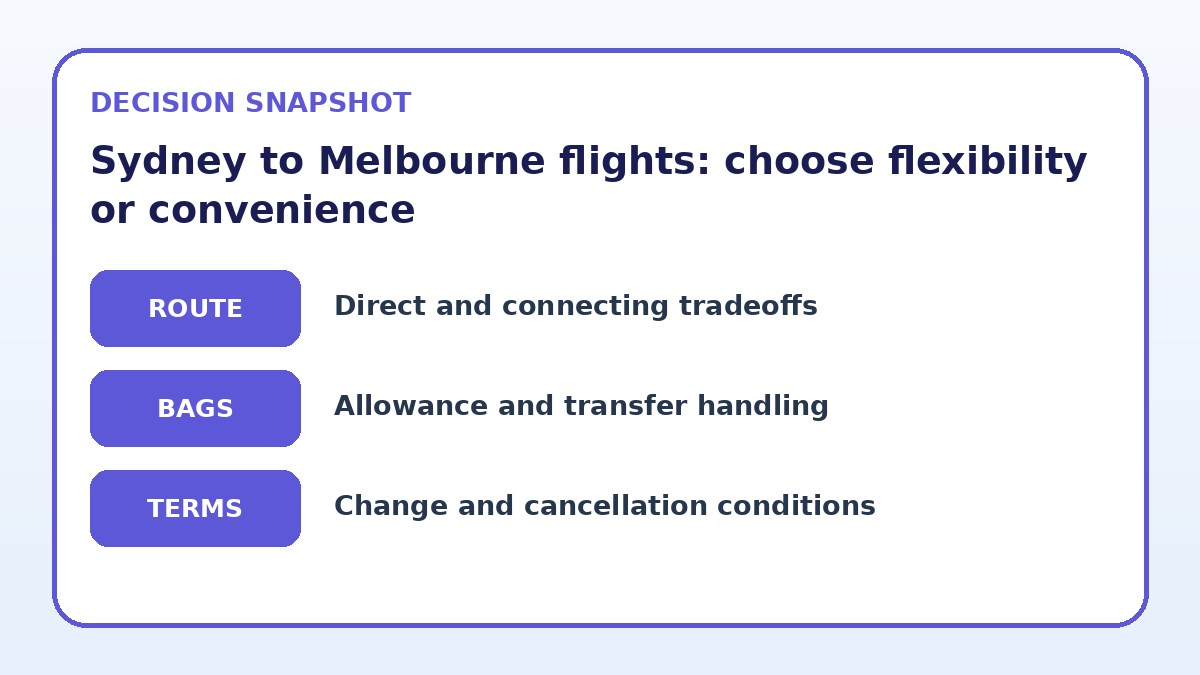
Convenience for couples often means the smallest possible friction between door and destination: shorter transfers, fewer connections, and arrival times that align with hotel check-in or planned activities. Consider which airport terminals are easiest to reach from where you’re staying or where you’ll be after arrival. A flight that lands closer to central areas or at a friendly time can free up an afternoon for a relaxed meal or a walk rather than a rushed taxi ride. Also think about baggage handling—direct options or checked-bag policies matter when you don’t want to juggle luggage across multiple modes of transport.
Convenient flights may come with tradeoffs: they often restrict flexibility on dates or have stricter fare rules that make changes expensive. If a single, smooth travel day is your priority—for example, to make a romantic evening reservation or to avoid stressing parents—convenience should outweigh flexible change policies. Always check final booking pages for specifics like baggage allowances, boarding terminals, and any transfer details. These provider details change often, so verify them directly before you commit.
Prioritising flexibility: when to give schedule wiggle room
Flexibility matters when your plans are likely to change or when you want the freedom to extend or shorten a stay with no heavy penalties. Couples on loosely scheduled trips—weekend escapes with optional activities, or those booking around uncertain events—benefit from fares that allow free or low-cost date changes and reasonable cancellation terms. Flexible tickets also reduce stress from delays and missed connections because you can rebook without large fees. Look for options that offer at least one free or low-fee change and transparent refund procedures, and read the airline’s policy pages for the full details.
Flexible itineraries can mean longer travel times, late-night or early-morning departures, or connections that complicate ground transfers. Flexibility often costs more upfront or comes with fare buckets that have different seat options and baggage rules. If you choose flexibility, balance it with convenience factors you can control—select departure airports with reliable ground transport, pick seats together at booking when possible, and add insurance only after confirming what the airline’s change policy covers. Always verify the final fare rules on the booking page to avoid surprises about penalties or rebooking windows.
| Approach | Best for | Tradeoff to check |
|---|---|---|
| Convenience-first (direct, central airports, set times) | Couples with fixed plans or limited time in Melbourne | Less flexible to change dates; often stricter fare rules |
| Flexibility-first (changeable fares, wide time windows) | Couples with uncertain schedules or multi-day flexible plans | May involve longer or less convenient travel times |
| Hybrid approach (direct when possible, flexible ticket rules) | Couples who want reliability and some leeway to adjust | Can be pricier; requires careful comparison of fare classes |
| Connecting routes timed for convenience and savings | Couples seeking specific departure times or lower fares | Added connection risk and more ground logistics to manage |
Ready to check the option that fits your plan?
Use your exact dates and traveler details so the provider page can show the current total and conditions.
Comparing direct and connecting options for couples
When direct flights are available, they typically offer the clearest convenience: less time in transit and fewer points of potential disruption. For couples who want maximum time together in Melbourne or who prefer to avoid the exhaustion of connections, direct flights are appealing. But don’t assume direct is always the right choice—sometimes a connecting flight can offer better departure times, more flexible change policies, or lower exposure to peak airport crowds. Compare door-to-door travel time and how each option affects your plans for the first and last day rather than judging only by flight duration.
Connecting flights can be useful when you need a specific timing or when flexible fares are limited on direct services, but they add complexity: missed connections, baggage rechecks, and transfer logistics. If you take a connection, allow extra buffer for ground transfers and confirm minimum connection times on the airline’s final booking page. Couples should decide whether extra time together in airports appeals (for leisurely coffee or duty-free browsing) or whether the risk and effort of a connection is unwelcome. Balance these considerations against cost, flexibility, and how tightly your schedule is set.
Before you book
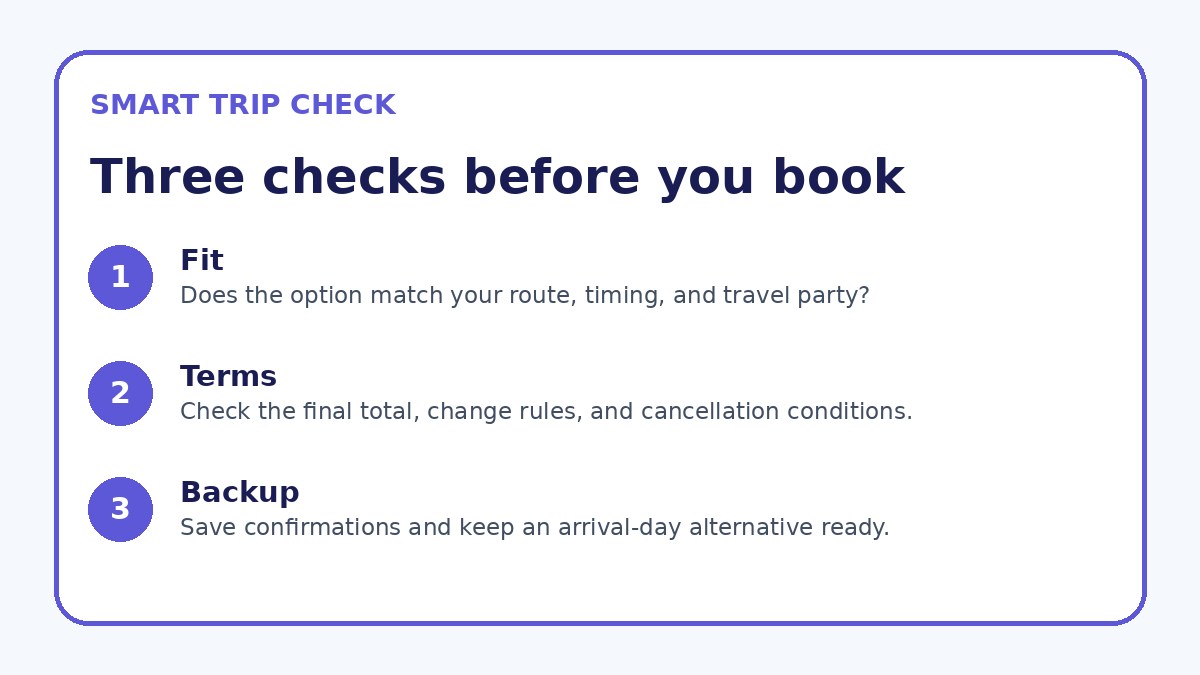
- Decide your top three travel priorities (departure window, arrival convenience, change policy) and list them in order before searching.
- Search for flights that match your priorities and open the airline’s final booking page to read the full fare rules and change/cancellation terms.
- Choose seats together when booking and confirm baggage allowances so you know whether fees or handles differ between fares.
- Plan airport transfers in advance—book a rideshare or transfer service if arriving late or leaving early to avoid wait times.
- If you need flexibility, confirm the exact steps and phone numbers for rebooking or refunds on the airline’s support page.
- Save screenshots or PDFs of booking confirmations, fare rules, and contact details for the airline and your accommodation.
Practical booking checklist: reducing stress for two
Make practical, couple-focused choices during booking: choose seats together, check baggage rules for both of you, and pick flights that leave enough time for your pre-flight routines. Consider transport options at both ends—pre-booked transfers or rideshares can save time and reduce decision stress at arrival. If either partner needs mobility assistance or special seating, arrange this with the airline before travel and confirm on the provider’s booking page. For early arrivals or late departures, check hotel policies so you can coordinate check-in and check-out with your flight times.
Double-check fare conditions and know what you can change without penalties; a quick call to customer service can clarify ambiguous rules on the booking page. If you plan to split activities, think about one-way tickets or open-jaw itineraries that may offer more flexibility. Keep digital and printed copies of travel documents and note contact numbers for the airline and your accommodation. Finally, balance convenience and flexibility by prioritising three non-negotiables—time of day, total travel time, and change/cancellation terms—and choose the option that best matches those priorities.
Frequently asked questions
Should couples always choose a direct flight for convenience?
Direct flights often reduce total travel time and lower the chance of missed connections, which many couples find convenient. However, direct services may not align with your preferred departure or arrival times, and flexible fare options can be limited. If your schedule is fixed—like a wedding or event—direct is usually worth prioritising. If your timing is flexible, compare direct and connecting options for total door-to-door time, fare rules, and the ability to change dates without steep penalties. Always check the airline’s final booking page for specifics you’ll rely on.
How much flexibility is practical for a short weekend getaway?
For short trips, a modest degree of flexibility usually suffices—look for tickets that allow at least one low-cost or free change to avoid major losses if plans shift. Extensive flexibility can increase fare costs and sometimes results in less convenient flight times. Instead, prioritise a departure and return window that suits your core activities and add a flexible fare option only if there’s a reasonable chance you’ll alter the dates. Verify change fees, rebooking windows, and refund policies on the airline’s booking page before finalising any purchase.
What should couples verify on the booking page before confirming?
Before you confirm, verify the total fare breakdown, baggage allowances for each passenger, seat assignments (or fees to reserve them), and the airline’s change and cancellation policy. Check terminal information and whether transfers or codeshares affect boarding procedures or baggage handling. If you require special assistance or have large luggage, confirm those details and any associated fees on the provider’s support pages. Because these details can change, always rely on the airline’s final booking page—and contact customer service for clarification—before completing payment.
Final planning note
Balancing schedule flexibility and convenience when booking Sydney to Melbourne flights comes down to knowing what you value most together as a couple. If your time in Melbourne is tightly planned, prioritise convenience: straightforward flights, sensible arrival times, and minimal ground transfer hassles. If you expect adjustments—late starts, extra sightseeing, or unpredictable commitments—choose fares and itineraries that allow changes with manageable costs. For many couples the ideal solution is a hybrid: a convenient itinerary combined with a fare class that gives limited, affordable flexibility. Compare total door-to-door time, read the airline’s final fare rules, and keep your top three priorities in hand while booking to reduce last-minute stress.
Continue planning
Check current options and final conditions
Use the provider page to confirm live availability, the final total, cancellation terms, and every condition that matters to your trip.
This evergreen planning guide was created with AI-assisted drafting and a structured quality review. It does not display live prices, schedules, availability, visa guidance, or provider rankings. Verify current details before booking. Some links are affiliate links; we may earn a commission at no additional cost to you.