If your flight lands late in Honolulu and you have meetings the next morning, choose a hotel that reduces friction: quick check-in, predictable transport, in-room work options, and a quiet sleep environment. Prioritize hotels near your morning meeting neighborhood, an airport shuttle or simple taxi access, and a clear late-arrival policy so you won’t be left waiting at reception. Decide whether you need an evening meal or simply a stable room to sleep, and check how the hotel handles late arrivals, key access, and breakfast timing. This article walks you through the tradeoffs—location, amenities, transfer reliability—and gives a short checklist so you can book confidently and be productive the next day.
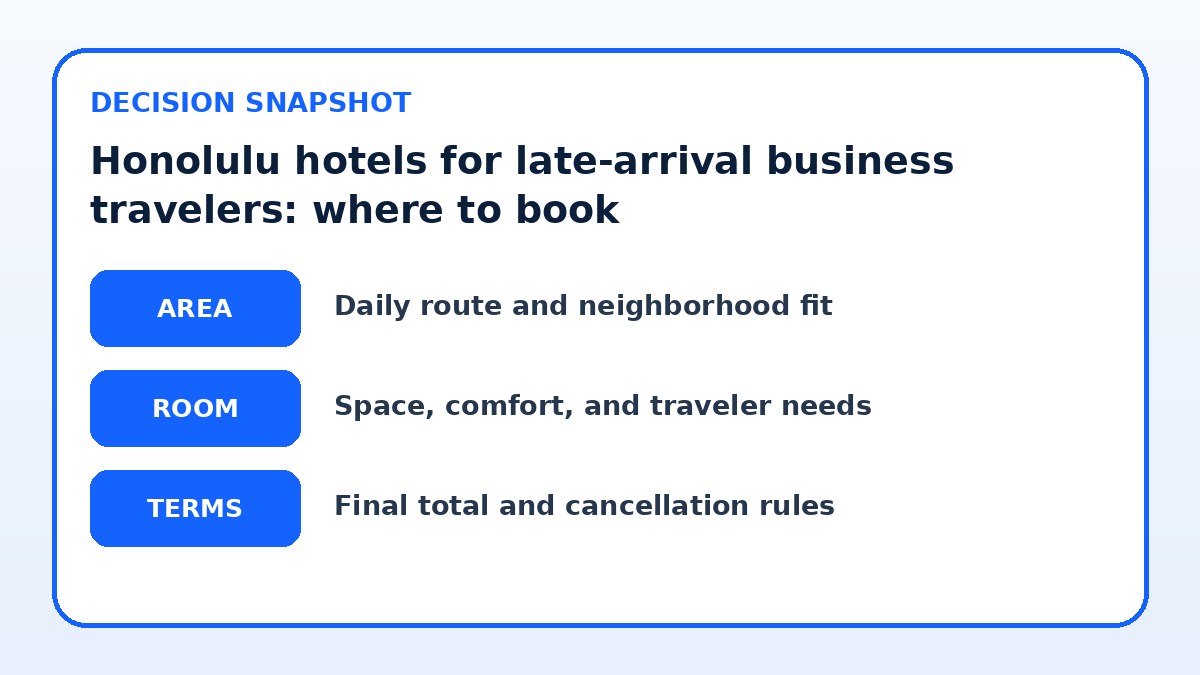
See current options before you compare the details
Availability and final conditions change. Open Trip.com now or keep reading for the practical comparison.
Pick location by morning agenda, not by sightseeing
When you land late, the most valuable commodity is time. Map your morning commitments first—meetings, offices, conference venues—and choose a hotel that minimizes rush-hour travel to those addresses. If your meeting is downtown or at a hotel conference center, staying in Waikiki might look convenient for amenities but can add unpredictable traffic. Compare door-to-door commute options: a taxi or rideshare from your hotel, shuttle transfers, or the proximity of shuttle stops and commuter routes. Remember that Honolulu traffic patterns and parking availability change during weekday mornings, so a short distance does not always equal a short commute.
If you have flexibility, prioritize neighborhoods with a clear, reliable route to your morning location. Staying near Ala Moana, Kakaako, or the central business district may reduce drive time compared with some tourist-heavy streets. Also consider the hotel’s drop-off and pick-up logistics; properties with designated rideshare or taxi zones speed late-night exits and morning departures. Finally, if your company reimburses parking or rides, factor that into your choice: a hotel that saves ten to twenty minutes each way can mean more rest and better preparedness for meetings.
Confirm late-arrival logistics before you book
Hotels vary in how they handle arrivals after midnight—some have 24-hour desks, others use key lockboxes or electronic check-in. Before you commit, call or message the hotel to verify their late-check-in process and whether they require a credit card pre-authorization or a mobile check-in app. Ask specifically how they provide entry after hours, whether a shuttle still runs late, and what documentation they need at arrival. If the hotel says they’ll hold a room but requires in-person ID verification, plan for a taxi wait or plan B in case of staffing gaps.
Also confirm practical items that matter when you land exhausted: whether the hotel offers an evening snack or a 24-hour pantry, the latest time for room service, and when breakfast is served. If you rely on a business center or in-room desk for early work, check whether those facilities are accessible at unusual hours. If a flight delay or diversion is possible, ask about flexible cancellation or rebooking policies related to late arrivals. For any provider-specific detail, verify the final terms on the hotel’s official booking page before you finalize payment.
| Approach | Best for | Tradeoff to check |
|---|---|---|
| Book closest-to-meeting hotel | Minimizing morning commute time and stress | May cost more or have fewer leisure options for companions |
| Choose airport-adjacent hotel | Fast arrival after a late flight and predictable transfers | Longer commute to downtown offices or conference venues |
| Pick a full-service hotel with 24/7 desk | Guaranteed support for late-night check-in and services | Often higher nightly rate and busier public areas at night |
| Select smaller boutique hotel | Quieter rooms and personalized service | May lack late-night amenities or on-site transport options |
Ready to check the option that fits your plan?
Use your exact dates and traveler details so the provider page can show the current total and conditions.
Balance sleep quality against hotel extras
After a late arrival, undisturbed sleep often trumps amenities like rooftop bars or concierge-curated experiences. Look for hotels that advertise quiet-room options, soundproofing, and blackout curtains when you need rest before a meeting. If the property’s description doesn’t clarify these points, ask about room locations away from elevators, ice machines, or busy roads. Consider requesting a higher floor or an interior-facing room to minimize street noise. A comfortable bed and a good room layout for working briefly in the morning can be worth more than evening social perks when time is tight.
That said, some amenities reduce friction after midnight: 24-hour vending or grab-and-go options, in-room microwaves, and reliable Wi-Fi for last-minute prep. If you expect to arrive hungry or have to finalize a presentation, a hotel with a simple late-night dinner option or round-the-clock lobby supplies can be invaluable. Decide which features are essential versus nice-to-have and weigh them alongside location and check-in policy—often a modest tradeoff yields a calmer overnight experience and a more productive morning.
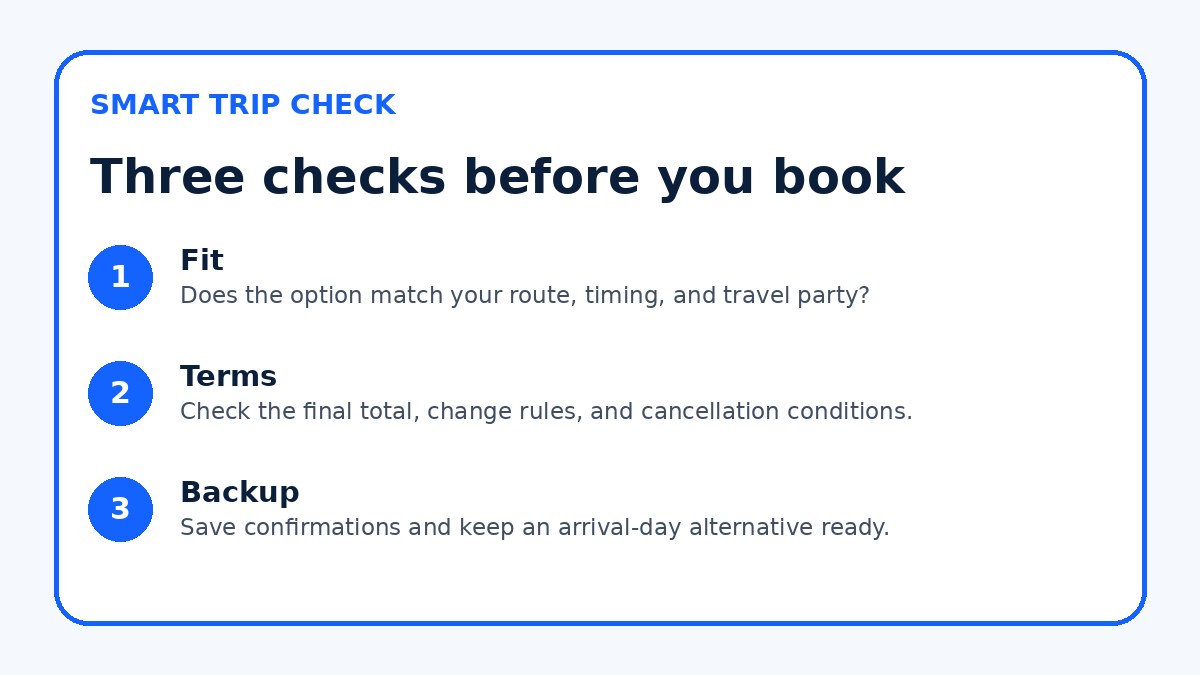
Before you book
- Call or message the hotel to confirm their late-check-in and after-hours entry procedures.
- Verify the hotel’s pickup/drop-off point for taxis or rideshare and save its exact address and any designated zone name.
- Request a quiet, interior-facing room or higher floor and note any preferences in the reservation confirmation.
- Confirm whether the hotel offers late-night food options, a 24-hour pantry, or nearby open restaurants.
- Check internet access and in-room workspace details so you can finalize presentation files if needed.
- Save the hotel’s emergency contact and the front desk number in your phone before departure.
Plan transfers that work at odd hours
Late arrivals change your transport calculus. Scheduled airport shuttles may not be available, and public transit can be limited late at night. Identify reliable options: taxis, rideshare pickup zones, or hotels with a confirmed 24-hour transfer service. If you prefer pre-booking, consider arranging a private car in advance and confirm the driver’s monitoring of flight arrivals to avoid paying for missed pickups. If you plan to use rideshare, verify the hotel’s recommended pickup point so your driver finds you quickly upon landing.
Also account for luggage and fatigue: a hotel with a short, easy walk from the drop-off point or covered entry can save time and stress. If you’re carrying presentation materials or tech gear, check the hotel’s luggage handling and early-morning bell service policies. For peace of mind, choose a transfer approach that leaves little ambiguity about where you’ll meet your driver and how to get to the hotel after deplaning. If you want to compare availability and current conditions, you can optionally check Trip.com, but always verify transfer details on the hotel’s booking page.
Frequently asked questions
What should I tell the hotel when I reserve a room after a late-night arrival?
When reserving, state your expected arrival window and ask how late arrivals are handled—whether a 24-hour desk exists, if they use electronic check-in, or if a key pick-up locker is provided. Mention any airline changes or possible delays and confirm whether they need a credit card on file or identification at arrival. If you have mobility needs or heavy luggage, note that so the hotel can prepare accessible entry or a bell service. Finally, request a quiet room and any amenities you’ll need immediately, such as a late meal or early breakfast.
How do I decide between staying near the airport or closer to my meeting in Honolulu?
Prioritize where you’ll be first thing in the morning. If your meeting is early and in downtown Honolulu, staying near the meeting location reduces commute risk even if the hotel is farther from the airport. If your arrival is extremely late and you want the simplest transfer, an airport-area hotel can save hassle and time getting off the plane. Consider estimated morning traffic, availability of reliable taxi or rideshare service from each area, and whether you value extra rest or a shorter pre-meeting commute more. Balance travel reimbursements and company policy when choosing.
What are the best ways to guarantee a smooth arrival when flights run late?
Plan redundancies: confirm the hotel’s late-arrival procedure, pre-save the hotel’s address and designated pickup spot, and have both taxi and rideshare apps set up with payment methods ready. If possible, arrange a pickup with the hotel or a private car that monitors flight status. Inform the hotel of any major delay and ask for a late arrival confirmation. Keep travel documents and an outfit for the meeting accessible in your carry-on so you can get to bed quickly or make a fast start if time allows. Verify any provider-specific terms on the booking page before finalizing.
Final planning note
Late arrivals in Honolulu are manageable with a few precise choices: pick a hotel that aligns with your morning agenda, confirm after-hours policies before you book, and plan transfers that work at odd hours. Tradeoffs are inevitable—closer hotels can cost more, and cheaper options may complicate morning commutes—but deciding which friction you can tolerate makes the choice simple. Use the checklist to ensure no detail is overlooked, and confirm provider-specific policies on the hotel’s booking page. With those steps you’ll arrive, sleep with confidence, and be ready for your business day in Honolulu.
Continue planning
Check current options and final conditions
Use the provider page to confirm live availability, the final total, cancellation terms, and every condition that matters to your trip.
This evergreen planning guide was created with AI-assisted drafting and a structured quality review. It does not display live prices, schedules, availability, visa guidance, or provider rankings. Verify current details before booking. Some links are affiliate links; we may earn a commission at no additional cost to you.