Practical answer first: for travelers with extra luggage in Osaka, a private transfer usually gives the easiest door-to-door handling and less time spent hauling suitcases on and off trains or buses; public transport is usually cheaper and can be faster into central Osaka if you’re willing to manage bags yourself. Which to pick depends on the number and size of bags, your tolerance for stairs and transfers, budget flexibility, arrival time, and where in Osaka you need to end up. Below you’ll find clear decision criteria, tradeoffs, and the exact things to verify on provider booking pages so you don’t get surprised after purchase.
See current options before you compare the details
Availability and final conditions change. Open Trip.com now or keep reading for the practical comparison.
Assess your luggage and airport arrival
Start by inventorying every piece of luggage you’ll take through the airport: count suitcases, measure whether items are oversized or fragile, and note wheeled versus non-wheeled pieces. Also consider any carry-on items you’ll want to keep with you while moving through busy terminals. Your answers determine whether a single compact car can carry everything or if you need a larger vehicle, multiple seats, or the practicality of maneuvering trains with long handles or heavy weights. Think also about whether you’ll need help lifting bags into trunks or onto platforms.
Next, check your flight arrival window and how tired you expect to be. Late-night or very early arrivals change the balance toward private transfers because public options may be less frequent and stations can be harder to navigate with big bags and limited staff. If you arrive during daytime, express trains and airport buses tend to run often, and elevators and ramps are usually available — but peak commuting hours can make stairs, crowded aisles, and limited space on trains a real hassle for larger items.
Practical tradeoffs: cost, time, and convenience
Private transfers give predictable door-to-door travel and usually include assistance with baggage, which reduces the physical burden and total transfer time in many cases. However, private options frequently require advance booking, possible waiting if flights are delayed, and careful verification of pickup points. When comparing providers, check exactly how they handle flight delays, where drivers meet passengers in the terminal, what counts as free waiting time, and whether additional stops or staging fees apply. These provider-specific terms can change, so confirm them on the final booking page before committing.
Public transport generally wins on cost and frequent departures during daytime; trains and buses serve central Osaka and major districts efficiently for travelers who can manage luggage. But this assumes your bags fit in available storage, that elevators are available at all required transfer points, and that you’re comfortable navigating ticket gates and platform gaps. If you need to transfer between lines, each transfer adds walking and time handling luggage. Compare total door-to-door time estimates for public routes against private travel time to decide which is truly faster for your situation.
| Approach | Best for | Tradeoff to check |
|---|---|---|
| Private transfer (pre-booked car or van) | Travelers with oversized or many bags, groups, late-night arrivals, or mobility needs. | Higher cost and need to confirm exact pickup details and delay policies on the booking page. |
| Airport express trains and rapid services | Solo travelers or light-packers who want frequent, often faster daytime access to central Osaka. | Requires carrying bags through stations and potential crowding during peak hours. |
| Airport-to-city express buses | Those with medium-sized luggage who prefer a direct ride to major hotel clusters or terminals. | Bus stops may be a short walk from hotels and schedules are less flexible late at night. |
| Mixed approach (public into major hub, short taxi for last mile) | People who want to cut cost but reduce walking and transfers with heavy baggage for final leg. | Still involves luggage handling at transfers and requires coordinating schedules and small taxi availability. |
Ready to check the option that fits your plan?
Use your exact dates and traveler details so the provider page can show the current total and conditions.
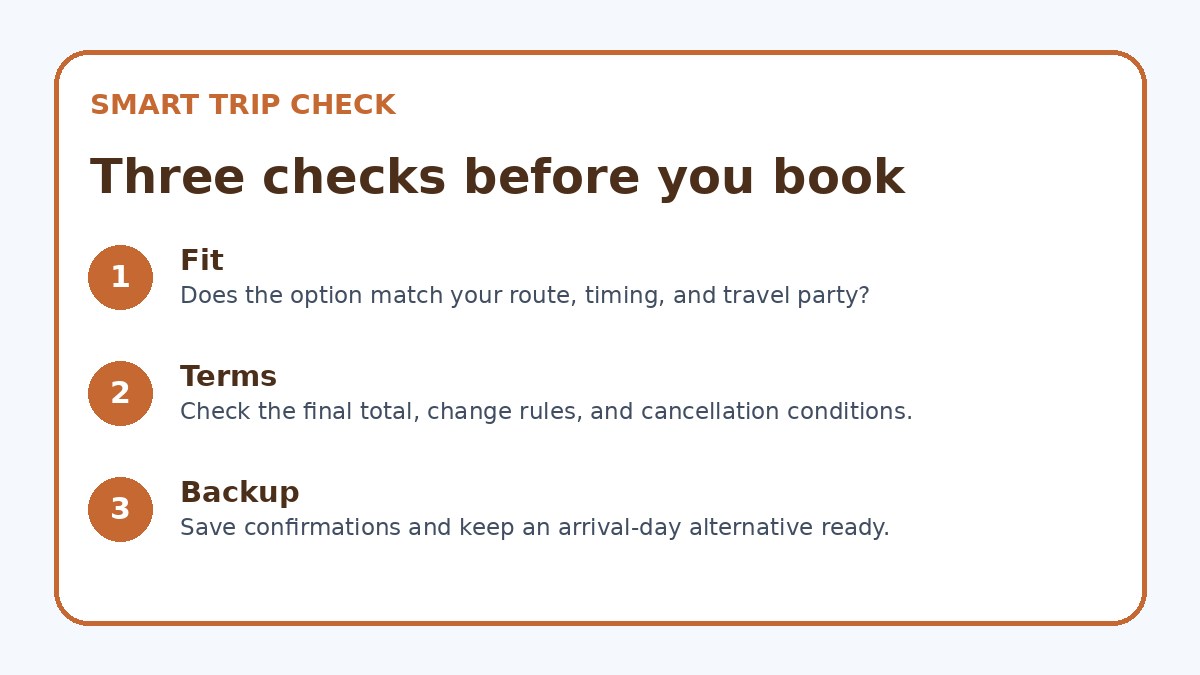
How to compare options before booking
Make side-by-side checks: list likely public routes (airport express trains, rapid lines, and airport buses) and a few private transfer options. For each public route verify station names, whether it requires transfers, elevator availability, and whether luggage restrictions or peak crowding will affect carriage. For private options confirm vehicle type, maximum luggage allowance, wait time policy for delayed flights, the exact pickup location inside the terminal, and whether the fare is flat or variable with traffic. If a provider publishes vehicle photos or trunk dimensions, use them to gauge fit.
When provider-specific facts could change, tell readers exactly what to verify on the provider's final booking page: pickup meeting point and contact method, delay and cancellation policies, the precise luggage policy including size and number limits, and any extra charges for stops or late arrivals. You may also want to check independent reviews for real experiences with luggage handling and punctuality, but always rely on the provider’s booking terms for rules that affect your reservation.
Before you book
- Count and measure every suitcase or box you plan to travel with and note how many are wheeled or oversized.
- Check the exact pickup point and driver contact method on the private transfer booking page before confirming.
- Verify elevator and ramp availability for each station on any public route you might use between airport and accommodation.
- Compare door-to-door time estimates, not just vehicle travel time, when weighing public and private options.
- Confirm luggage limits, extra-fee triggers, and waiting-time policies with any transfer provider before payment.
- Plan a backup (taxi app, hotel shuttle, or later public service) if your chosen option is disrupted or delayed.
Special situations: groups, late arrivals, and tight connections
If you’re traveling in a group or with family, factor in how many people and how much baggage each person carries — a larger private vehicle or multiple car bookings can become more cost-effective and far less stressful than juggling many pieces on public transport. For families with small children, private transfers remove the need to fold strollers or manage child seats at stations, but confirm whether child seats are provided or must be requested. Also check how much space you’ll need for prams or mobility equipment and whether ramps or lift access is available at railway stations.
For late-night arrivals, early departures, or very tight connecting times, favor private transfers if you value reliability and minimal walking with luggage. For short layovers where you can store some bags or travel light, public options may still be preferable. When connections are tight, always compare total end-to-end transfer times rather than only in-vehicle time, and verify provider guarantees about meeting delayed flights and holding times before booking any service.
Frequently asked questions
Can I take oversized or many suitcases on Osaka public trains and buses?
Most public trains and airport buses can carry suitcases, but space and comfort depend on time of day and vehicle type. Check station elevator availability and whether transfers require stairs; verify any size or quantity guidelines listed by the transport operator. If you have multiple large items or fragile pieces, a private transfer reduces the risk of damage and avoids moving bags across platforms and through busy gates.
How do I verify a private transfer will meet me if my flight is delayed?
On the provider’s final booking page look for language about flight monitoring and wait-time allowances. Many services will track your flight number and adjust pickup windows, but specific policies vary: confirm how much free waiting time is included, what happens after that period, and whether delays beyond a threshold incur extra charges. Also obtain a direct driver contact method and the exact terminal meeting point so you can coordinate if the arrival is complex.
Is it cheaper to mix public transport with a short taxi or private drop?
A mixed approach can balance cost and convenience: use an efficient public express to reach a central hub, then take a short taxi or ride-share for the final mile if your hotel isn’t adjacent to the station. Compare total time and the hassle of transferring luggage with the incremental taxi cost. When pricing, include time to move bags between modes and any potential elevator or stair obstacles that could negate the monetary savings.
Final planning note
Choosing between public and private Osaka airport transfer hinges on how much luggage you have, how comfortable you are handling it across stations, and whether convenience outweighs cost. Private transfers minimize physical effort and simplify late or complicated arrivals, but they require careful verification of pickup points, luggage rules, and delay policies on the provider’s booking page. Public options are cost-effective and frequent during the day but demand more baggage handling and attention to station accessibility. Use the checklist above, compare door-to-door times, and confirm provider terms before you book so your transfer matches your baggage needs and travel rhythm.
Continue planning
Check current options and final conditions
Use the provider page to confirm live availability, the final total, cancellation terms, and every condition that matters to your trip.
This evergreen planning guide was created with AI-assisted drafting and a structured quality review. It does not display live prices, schedules, availability, visa guidance, or provider rankings. Verify current details before booking. Some links are affiliate links; we may earn a commission at no additional cost to you.