If your Rome trip is mostly within the historic center, a rented car often creates more hassle than benefit. For solo travelers planning a mix of museums, narrow cobbled streets, and evening dining, public transport plus walking usually beats driving. That said, a Rome car rental can be a good call when your itinerary prioritizes day trips beyond the metro—coastal towns, hilltop villages, or rural wineries where public transport connections are sparse. This article gives the practical answer up front, then unpacks where driving adds value, the insurance and pickup pain points to check before booking, how to return a car smoothly, and a clear non-driving fallback plan for a stress-free solo visit.
When driving genuinely improves a solo Rome itinerary
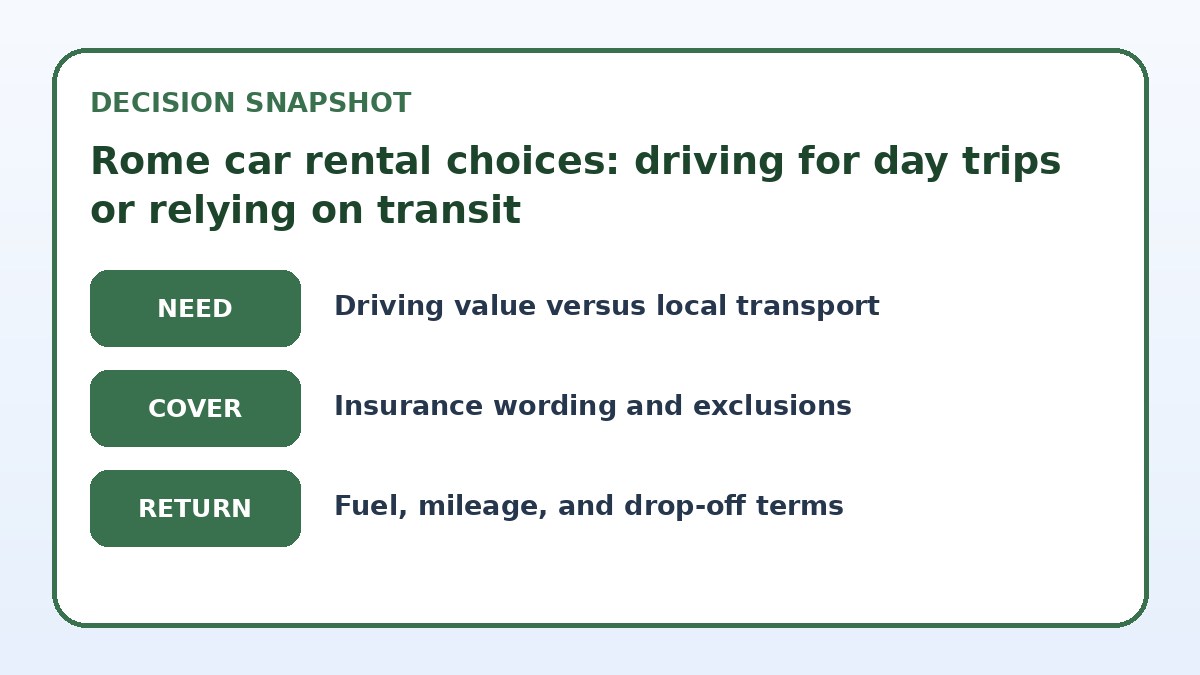
Driving makes sense when your plan centers on destinations outside Rome that are either infrequent by public transport or require a lot of transfers. Examples include dispersed rural spots, multiple hill towns in one day, or itineraries that prioritize flexibility to stay late in towns with limited return options. A car reduces timetable dependence and lets you sequence stops on your own clock, which is useful if you prefer scenic backroads or want to reach countryside wineries and coastal coves off the beaten track.
However, weigh that flexibility against the realities of solo travel: managing parking, navigating unfamiliar roads, and the mental load of city driving. If your Rome visit includes substantial time inside the historic center, narrow streets and restricted traffic zones (ZTLs) mean you will likely spend time and money on parking rather than sightseeing. Use driving selectively—reserve it for clear multi-day segments where rural access is the primary goal.
Decide whether driving earns its place
| Mobility strategy | Best for | Cost or friction to check |
|---|---|---|
| Public transport + walking | Solo travelers focused on Rome’s historic center, museums, and evening meals nearby. | Limited flexibility for remote day trips; depends on regional schedules and some connections may require transfers. |
| Rental car for multi-day excursions | Visitors planning several rural or coastal day trips where public transport is infrequent. | Higher administrative friction: parking, ZTL compliance, insurance complexity and city navigation stress. |
| Car-sharing or hourly rental | Short, on-demand drives from the city for single-day trips without long-term rental overhead. | Availability can be unpredictable; insurance and pickup zones vary, so verify terms before relying on this option. |
| Guided day trips or regional trains | Solo travelers who want access to distant sights without driving responsibilities. | Less personal schedule control and potential to spend more time on organized itineraries than independent exploration. |
Check live rental choices only after the route test
Use the exact driver, dates, pickup point, and return plan to compare current conditions.
Insurance wording and what to verify on the booking page
Insurance terms can be confusing and materially affect your out-of-pocket risk. On the final booking page, verify whether Collision Damage Waiver (CDW) or loss damage waiver is included, the size of any excess, and whether theft protection is separate. Confirm whether coverage applies to single drivers, and whether additional drivers are allowed and documented. Check whether third-party liability is adequate for local minimums and whether the provider’s coverage excludes certain roads or uses like off-pavement driving.
Also review payment and ID requirements: some companies require a major credit card for the security hold and deny debit cards or cash rentals. Read restrictions about crossing national borders if you plan to drive outside Italy, and whether the insurer requires added paperwork for mountains or unpaved roads. If anything on the booking page is unclear, use the provider’s messaging or phone contact to get explicit written confirmation before you commit.
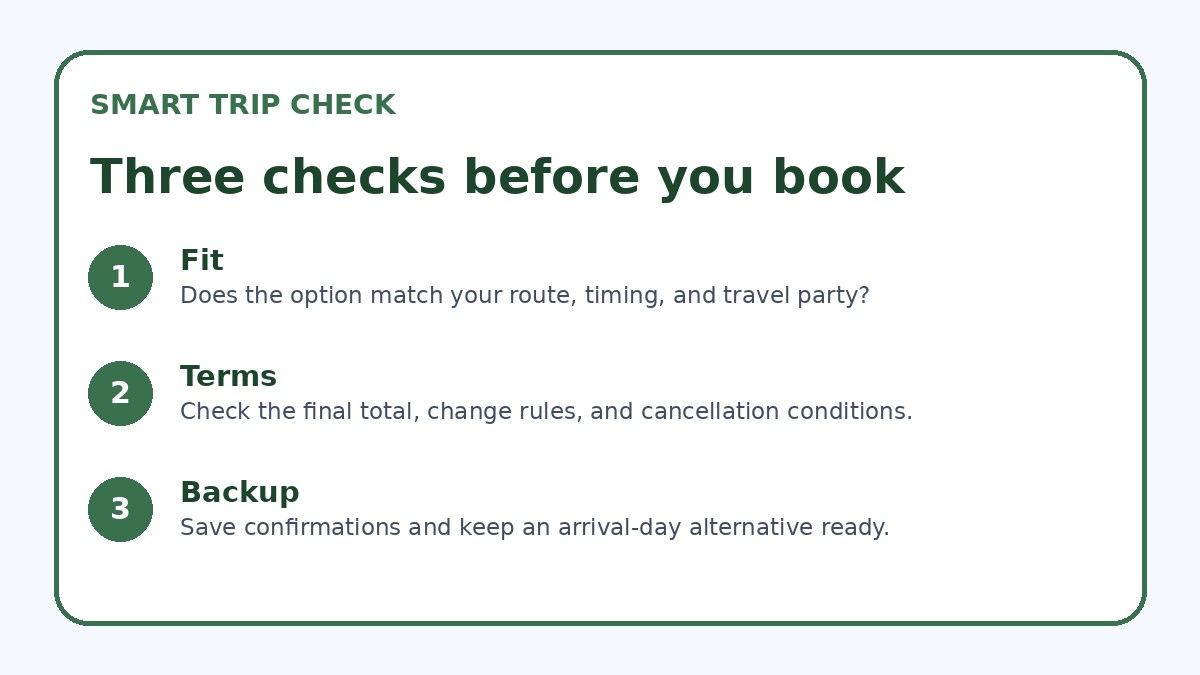
Compare the full rental conditions
Confirm insurance wording, exclusions, deposit, fuel, mileage, and return terms on the final page.
Pickup and return friction: practical solo-traveler considerations
Airport pickups might seem convenient, but they can introduce long queues and offsite shuttle waits—especially when traveling solo with luggage. City-center offices may be easier to reach on foot or by taxi and reduce the need to navigate busy ring roads on arrival. Whatever you choose, confirm the exact pickup location, the expected paperwork, and any required photos of vehicle condition. Ask whether the supplier will process damage claims at drop-off without lengthy hold times and how they handle disputes over pre-existing scratches.
Returning the car can also be a stress point if your flight or train departs early. Verify after-hours drop-off procedures and whether the provider charges for late returns. For one-way rentals, check whether return locations accept one-way drop-offs and confirm any extra fees on the booking page. If you foresee fatigue at journey’s end, consider parking the car the evening before in a safe, well-lit lot and taking a taxi or transit to your departure terminal to avoid rushed paperwork.
Car rental terms to verify
- On the car rental booking page, confirm whether Collision Damage Waiver and theft protection are included and the exact excess amount.
- Verify fuel policy wording (full-to-full, prepaid, or other) and what proof the provider requires for refueling claims.
- Check permitted drivers, age limits, and whether additional driver registration is necessary before pickup.
- Confirm pickup and drop-off locations, after-hours return procedures, and any one-way drop fees listed on the reservation.
- Look for explicit rules about driving into restricted zones (ZTLs) or low-emission areas and how the provider handles fines.
- If planning cross-border travel, review the booking page for territorial restrictions and required permits or insurance extensions.
Non-driving fallback: building a solid public-transport plan
If you choose not to rent a car, plan for mixed mobility: Rome’s metro, buses, trams and plenty of walking cover central neighborhoods, while regional trains and intercity buses connect to many nearby towns. For day trips that don’t fit public schedules, guided excursions or small-group tours solve the last-mile issue without the solo-driver responsibilities. Keep a list of reliable train stations and bus terminals that serve your target day-trip destinations, and cross-check timetables close to travel dates.
Also arrange local short-term alternatives for flexibility—hourly bike shares, e-scooters, or short taxi rides solve last-mile gaps after a long day of sightseeing. If you anticipate occasional needs for a car-like convenience, consider booking a one-way rental only for a specific excursion or using car-sharing services by the hour, checking provider terms on their booking pages to confirm driver age limits, insurance, and refueling rules.
Car Rental & Road Trip questions travelers ask
Can I drive in Rome’s historic center without paying fines?
Rome’s historic centre includes restricted traffic zones where unauthorized driving can trigger fines. Rental companies often do not assume responsibility for fines incurred by drivers, so verify the provider’s policy and whether the vehicle has a GPS or subscription that records entry into those zones. If you intend to drive near the center, look for parking outside the ZTL and complete the last mile on foot, by taxi, or public transit. Always confirm ZTL rules and enforcement practices on municipal or rental pages before re-entering the area by car.
What insurance documents should I bring when picking up a rental car?
Bring the same credit card used for the reservation to cover the security hold, your national driver’s license, and an international driving permit if your home license is not printed in Latin characters or if the rental company requests it. Also have printed or saved copies of the rental confirmation that state insurance inclusions and excess amounts. If you purchased supplementary coverage through a third party, carry that policy information and contact details to prevent confusion at the counter.
How do I compare driving versus public transport costs without current price data?
Compare non-monetary factors first—time flexibility, number of destinations, and comfort with driving in a foreign city. Then estimate likely costs by listing expected expenses: car rental days, parking, fuel, tolls, and insurance excess versus public transport tickets, regional train fares, and occasional taxis. Use those categories to create a basic spreadsheet and seek current rates on provider booking pages or a comparison site like Trip.com. That approach helps you decide whether rental convenience outweighs the administrative and parking costs for your specific plan.
Final decision note
For most solo travelers whose plans focus on Rome’s center, public transport combined with walking provides the least stress and the most efficient sightseeing. A Rome car rental becomes attractive when your trip prioritizes multiple rural or coastal day trips where public timetables do not align with your plans. If you rent, read insurance wording carefully, confirm pickup and return procedures, and verify restrictions like ZTLs and cross-border rules on the supplier’s final page. If you decide against driving, build a fallback that mixes regional trains, guided tours, and short-term bike or taxi options to keep your itinerary flexible and enjoyable.
Continue planning
Check current options and final conditions
Use the provider page to confirm live availability, the final total, cancellation terms, and every condition that matters to your trip.
This evergreen planning guide was created with AI-assisted drafting and a structured quality review. It does not display live prices, schedules, availability, visa guidance, or provider rankings. Verify current details before booking. Some links are affiliate links; we may earn a commission at no additional cost to you.