For most first-time visitors to Hong Kong, driving is a tool for specific plans rather than a default. If your trip centers on Hong Kong Island or Kowloon, dense transit, frequent ferries, and limited parking usually make public transport faster and cheaper. But if you plan cross-border day trips to the New Territories, remote beaches, or a longer road circuit that includes Guangdong (subject to permit rules), a car can transform what you can reach on your schedule. The practical choice often hinges on where you want to start and end: airport pickup cuts travel time if you arrive late or plan to drive out of the city right away; city pickup can save you parking and initial drop-off friction. Below I give the short recommendation, then unpack route value, insurance wording you must verify, pickup/return friction, and a robust non-driving fallback so you can book with confidence.
Decide whether driving genuinely improves your Hong Kong route
Start by mapping each day’s major stops and how accessible they are by MTR, bus, tram, minibus, or ferry. Central business districts, museum clusters, and most major markets are deliberately pedestrian- and transit-friendly; traffic congestion at peak times makes short drives slower than trains. Driving becomes valuable when your plan includes multiple remote locations in one day, such as staggered beach visits on Lantau and Tsing Yi, rural New Territories villages, or if you intend to bring bulky gear — surfboards or photography equipment — where transfers would be cumbersome.
If your trip includes cross-border travel into mainland China, or an onward road loop into Guangdong, confirm permit rules and consider picking up at the airport to avoid an extra transfer before a long drive. Conversely, if you’re staying in a single city hotel and only want a day trip or two, compare the added time, parking cost, and stress of city pickup to renting by the hour through local car-sharing apps or hiring a private driver for a day.
Decide whether driving earns its place
| Mobility strategy | Best for | Cost or friction to check |
|---|---|---|
| Airport pickup and one-way return | Arrivals that immediately drive out of the city toward the New Territories or cross-border routes | Saves transfers but may incur one-way fees and requires confirming after-hours return process at the airport |
| City pickup from a downtown office | Staying in central areas with occasional day drives; reduces initial parking and handles luggage via hotel drop-off | Easier to start in the city but can be time-consuming to exit congested areas and find authorised return bays |
| Short-term hourly or daily car-share | Flexible, occasional local drives without full-day rental commitment or long-term parking concerns | Limited vehicle choice and availability during peak times; inspect insurance terms and mileage limits carefully |
| Non-driving alternatives (transit, taxis, private driver/tours) | Visitors focused on urban sightseeing or those who prefer no driving stress and professional local navigation | Less flexibility for remote stops and independent pacing; costs for private drivers can rise with long rural itineraries |
Check live rental choices only after the route test
Use the exact driver, dates, pickup point, and return plan to compare current conditions.
Insurance wording and coverage: what to verify before you book
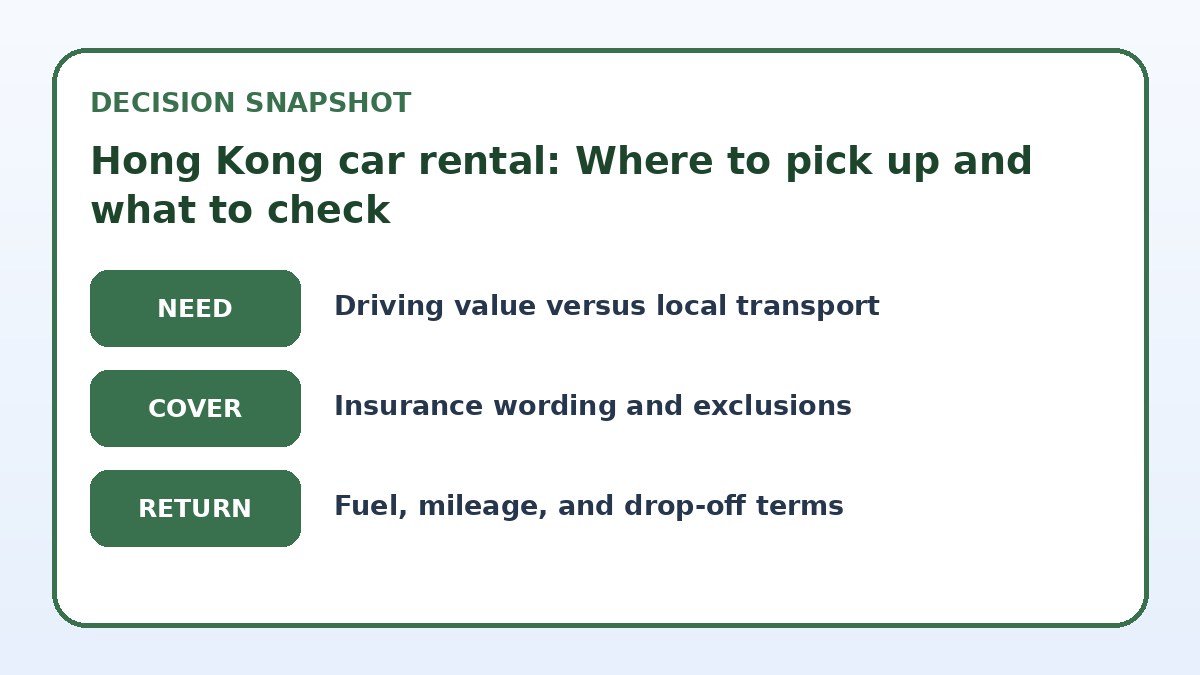
Insurance language can be dense; don’t sign until you know the limits. On the rental page, confirm the type of coverage included — third-party liability versus collision damage waivers (CDW) — and whether CDW carries a deductible or excess. Look for explicit statements about damage to glass, tires, underside, and third-party property. Also check whether credit-card offered coverage is accepted by the supplier and whether it requires you decline the supplier’s CDW or pay on site and claim later.
Cross-border permission is crucial: many suppliers won’t allow mainland China travel or require a separate permit and insurance extension. Note any age, licence, or experience restrictions and whether your home-country licence is accepted or a translation or International Driving Permit is required. On the final booking page, verify the exact deductible amount, how accident reporting works, and whether roadside assistance is included — these operational details determine potential cost and time exposure if something goes wrong.
Compare the full rental conditions
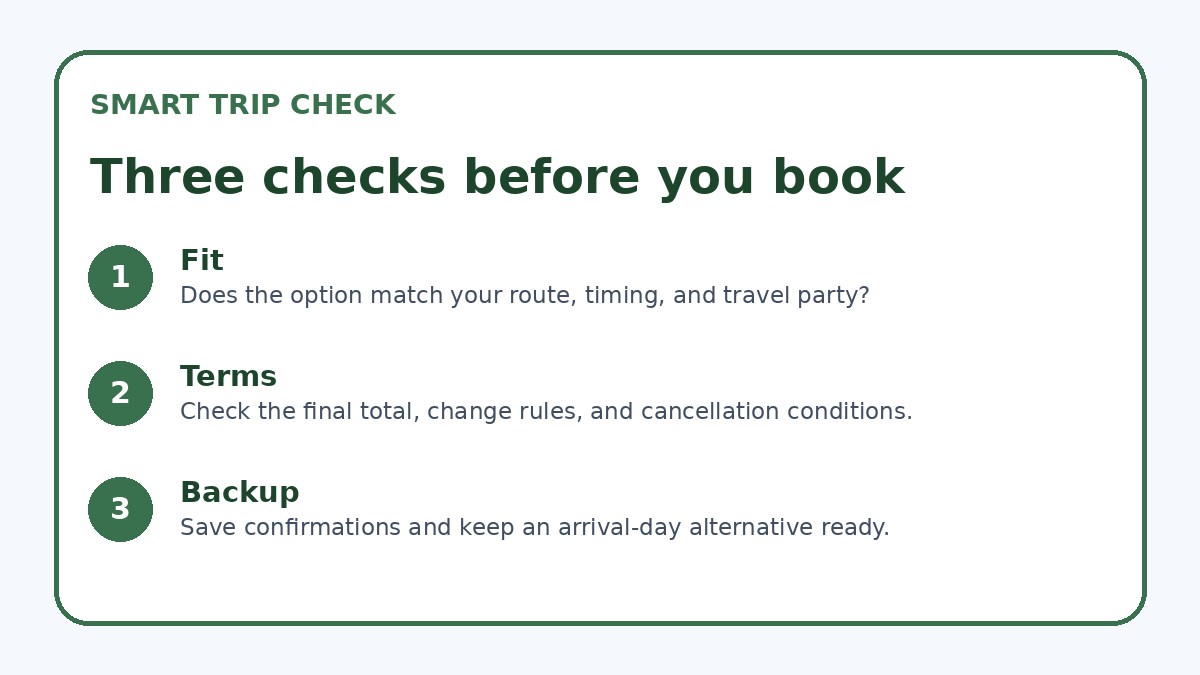
Confirm insurance wording, exclusions, deposit, fuel, mileage, and return terms on the final page.
Pickup and return friction: airport versus city logistics
Airport pickup usually means a dedicated rental centre, clear signage, and the convenience of collecting a car before heading into the city or beyond. For arrivals late at night or with large luggage, this removes the need for an extra transfer. However, airport pickups can add cross-hire fees if you collect one place and return in another, and returning a car through congested tunnels or limited airport return lanes during peak times can be stressful. On the booking page, check where exactly you collect keys, the provider’s shuttle arrangements within the airport complex, and any after-hours return process.
City pickup locations place you close to hotels and public transport links, which helps if you’re doing a day rental or prefer a shorter initial transfer from your arrival point. But city centres often have tight spaces for vehicle handover and limited on-site parking, so plan for time to inspect the car and find official return bays. If your hotel offers valet or a partner drop-off, confirm whether that counts as an authorised return location with the supplier. Verify fuel policies, documented inspection procedures, and whether the supplier requires photo evidence at return to avoid disputes.
Car rental terms to verify
- On the supplier’s final booking page, verify whether cross-border travel is allowed and what specific permits or insurance extensions are needed.
- Confirm the exact deductible/excess amount in writing and whether payment on-site or a hold on your card is required for collision coverage.
- Locate the pickup and return addresses, after-hours procedures, and any shuttle or parking instructions for airport and city branches.
- Check age, licence acceptance, and additional-driver rules, including whether an International Driving Permit is required for your nationality.
- Note fuel policy (full-to-full vs prepay) and any documented inspection/photo requirements to avoid disputes at return.
- Compare total door-to-door transit time and cost for airport pickup versus public transit plus city pickup to decide which saves you time with luggage.
Non-driving fallback and realistic alternatives in Hong Kong
Even if you lean away from renting, Hong Kong’s system makes non-driving travel efficient. MTR lines, trams, extensive bus networks, and ferries cover most visitor routes; taxis and ride-hailing are useful for off-hours or when you carry luggage. For day trips to islands or the New Territories, consider guided day tours or private drivers who handle parking, navigation, and local permits; these options let you access rural spots without dealing with unfamiliar traffic rules.
If you’re specifically weighing airport pickup to save a transfer, compare door-to-door time and cost of an airport hire car versus Airport Express or an arranged taxi. For occasional out-of-city days, renting for just those days and using public transport the rest of the trip can be the most practical compromise. Before booking anything, write down two fallback itineraries — one fully by public transport and one with short, single-day rentals — so you can pivot if weather, permits, or vehicle availability changes.
Car Rental & Road Trip questions travelers ask
Do I need an International Driving Permit (IDP) to rent in Hong Kong?
Requirements vary by supplier and your licence country. Many providers accept a full foreign driver’s licence in Latin-script combined with a passport, but some require an International Driving Permit or an official translation. On the rental supplier’s final booking page, check the acceptable licence list and any documentary requirements for foreigners. Also confirm the minimum age and whether additional fees apply for drivers under a certain age. Bring all original documents and photocopies to the pickup counter to avoid delays.
Can I drive a Hong Kong rental across the border into mainland China?
Crossing into mainland China typically requires explicit permission, a separate cross-border permit, and extended insurance coverage from the rental company; not all suppliers approve it. If you plan to cross the border, verify on the booking page that the vehicle is authorised for mainland travel, what paperwork is needed, and where border handover or inspection takes place. Expect additional fees, potential vehicle type restrictions, and a requirement to report any incidents immediately to the supplier and local authorities.
How do I decide between airport pickup and city pickup for a late-night arrival?
For late arrivals weigh sleep and logistics: airport pickup avoids a second transfer and the need to navigate to a city office after midnight, but confirm whether the supplier offers after-hours handover or key-drop and if extra night fees apply. If your hotel is within easy taxi or train reach and you prefer to rest, a city pickup the next morning may be less stressful. Always check the provider’s documented after-hours process, identification checks, and whether they require a deposit or hold on your card for night collections.
Final decision note
Pick the pickup option that matches how much driving adds to your plans. If your itinerary immediately heads into rural New Territories, western Lantau, or across the border, airport pickup is often the cleaner, more convenient start. If your days center on Hong Kong Island or Kowloon with only occasional excursions, a downtown pickup or using a short-term car-share reduces parking headaches and lets you blend driving with excellent public transit. Whatever you choose, verify cross-border permissions, deductible amounts, authorised return locations, and any age or licence conditions on the supplier’s final booking page. Keep a non-driving fallback mapped out; it will save time and stress if weather, permits, or unexpected traffic makes driving impractical.
Continue planning
Check current options and final conditions
Use the provider page to confirm live availability, the final total, cancellation terms, and every condition that matters to your trip.
This evergreen planning guide was created with AI-assisted drafting and a structured quality review. It does not display live prices, schedules, availability, visa guidance, or provider rankings. Verify current details before booking. Some links are affiliate links; we may earn a commission at no additional cost to you.