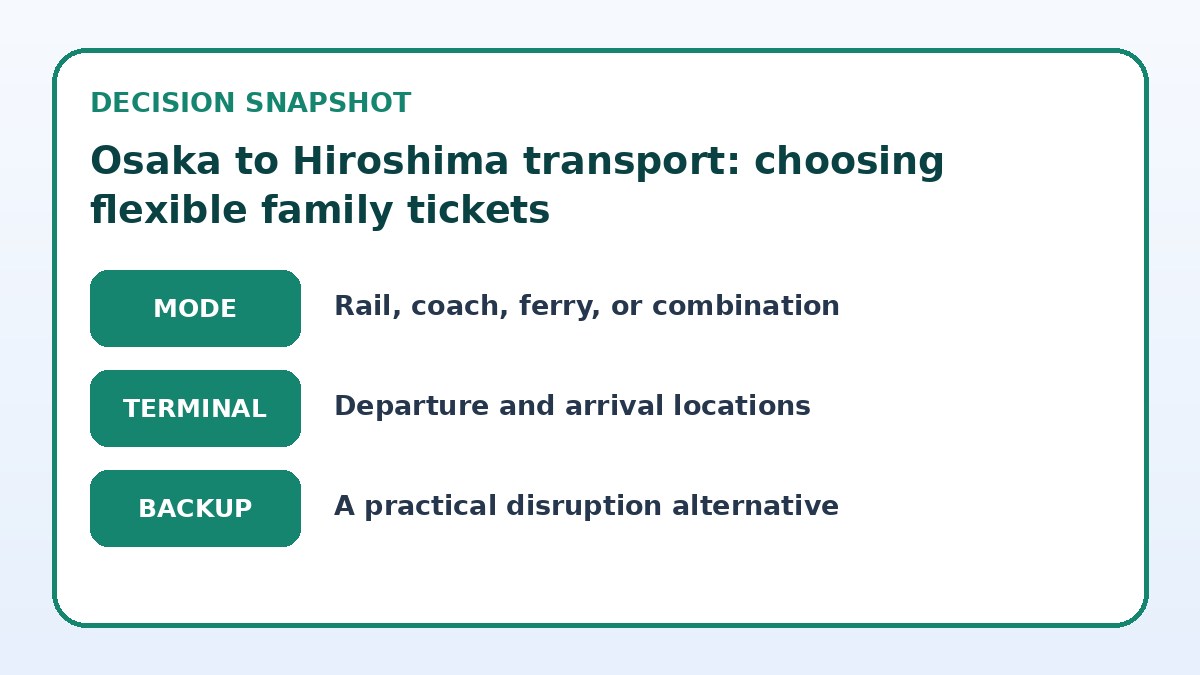
Practical answer up front: for families crossing from Osaka to Hiroshima, prioritize ticket flexibility that lets you change travel times, add or drop seats for children, and get refunds or exchanges without heavy penalties. If your group includes toddlers, seniors, or people who may need to delay or cancel, buy tickets with flexible change/refund terms or book refundable fare classes where available. If everyone’s plans are firm, a non-flexible ticket can be cheaper but riskier for families. When comparing options, look at the full rules on the provider’s final booking page — specifically change fees, child/infant policies, seat reservation rules, and whether a wheelchair or stroller can be accommodated. Use this guide to weigh predictability against cost, decide what flexibility level you actually need, and spot the exact terms to verify before you hit purchase.
Types of tickets and what “flexible” really means
Ticket flexibility is not a single feature — it’s a bundle of rules. Some options let you change departure times without a fee, others allow exchanges but charge a small reissue fee, and fully refundable fares return most or all of your money if you cancel. For families, the differences that matter most are whether seat reservations transfer when you change a booking, how child and infant tickets are handled during changes, and whether partial refunds are offered for a multi-person booking when only one passenger cancels. Treat the word “flexible” as a shorthand and read the specific change and cancellation section on the booking page to see what’s included.
Providers may call similar products by different names: flexible, refundable, changeable, or open tickets. Some sales channels bundle a refundable option with priority boarding or reserved family seating; others simply allow free date changes up to a set time before departure. When comparing offerings, list the practical outcomes you need (for example: keep the same seats, swap one passenger without rebooking everyone, or get a same-day transfer) and match each ticket’s exact rules to those needs. That approach helps you avoid paying for flexibility you won’t use or missing a crucial protection you do need.
How families should weigh cost versus convenience
Families often balance the desire to save money with the value of avoiding stress. A less flexible fare can be tempting if schedules look set, but travel with children frequently involves unpredictable elements: naps, sudden illness, or delays on connecting segments. Ask yourself how much it would cost emotionally and financially to change plans at short notice. If a change fee for a flexible ticket is less than the combined cost of replacing non-refundable tickets, hotel nights, or the hassle of rebooking multiple seats, the flexible option may be worth it even for budget-conscious travelers.
Another practical tradeoff is seat availability. Flexible tickets that include guaranteed seat reservations let you secure family seating together; cheaper tickets might not allow reserved seats or could release them only at check-in. For longer segments where a reserved seat, table, or compartment reduces stress, the convenience can justify the premium. Conversely, if your family is traveling very light, can split into smaller groups, or has wide tolerance for shifting seats, a less flexible approach could be acceptable — but only after checking the rules about child fares and seat assignments on the provider’s confirmation page.
| Approach | Best for | Tradeoff to check |
|---|---|---|
| Buy flexible refundable fares | Families needing change or cancellation peace of mind | Higher upfront cost but easier to alter plans and claim refunds |
| Choose changeable but non-refundable fares | Groups likely to shift travel times but not cancel entirely | Lower cost than refundable tickets, but fees may apply for changes |
| Purchase non-changeable discounted tickets | Families with fixed, confirmed itineraries and tight budgets | Lowest price but minimal protection against delays or cancellations |
| Mix ticket types for different passengers | Families balancing budget and flexibility across adults and children | Complex bookings with separate rules per passenger to manage |
Comparing direct and connecting train options
Direct trains reduce the number of moving parts — one boarding, one seat reservation, fewer chances for missed connections — and that simplicity often factors into what ‘flexible’ means for families. If direct services are available, confirm whether flexibility covers changing to another direct service on the same day or whether changes force a move to a slower or connecting itinerary with separate tickets. If you choose a direct route for convenience, verify on the booking page that your change rights include transfers to alternative direct services without additional penalties.
Connecting itineraries can sometimes offer cheaper tickets or alternative schedules but introduce complexity: separate legs may each have their own rules, and a change on one segment might not automatically alter the other. For families, that means more opportunities for complications when plans shift. If you consider a connecting option, map out how each leg is changeable and whether the operator or sale channel sells the journey as a single ticket or multiple tickets. On the provider’s final page, check whether missed connections caused by delays are covered, and whether child tickets and reserved seats apply across all segments.
Before you book
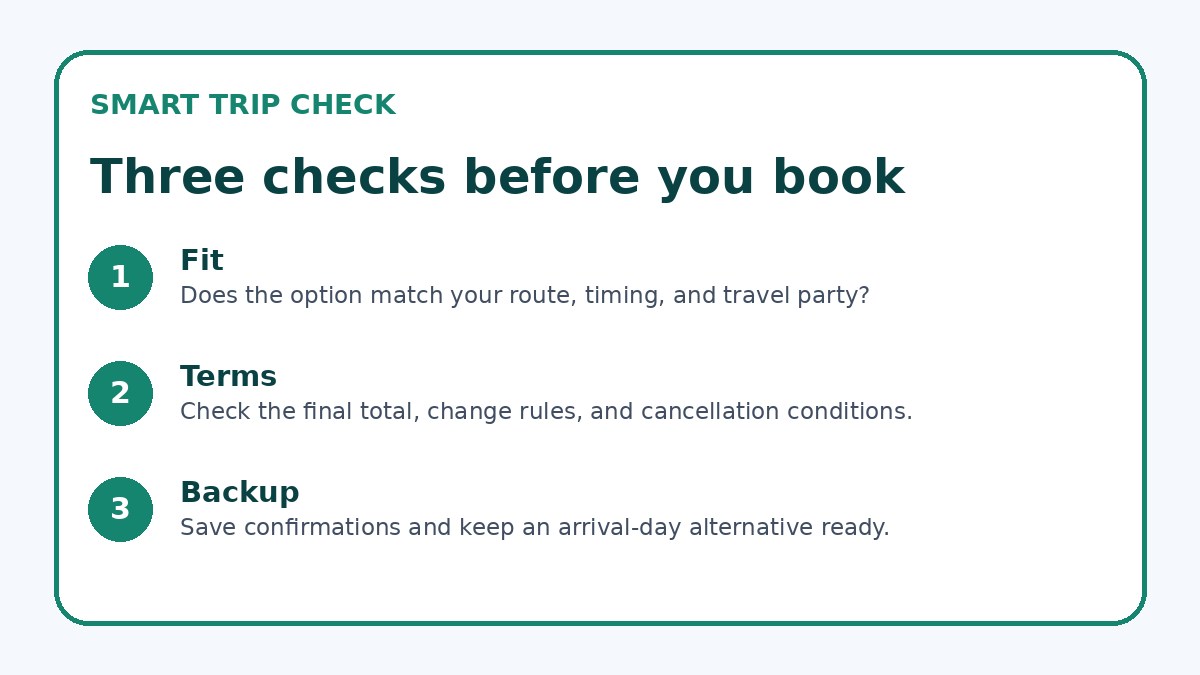
- Read the fare rules on the final booking page and screenshot the change and cancellation section.
- Confirm whether reserved seats transfer with changes or must be rebooked separately.
- Check child and infant fare change/refund policies and whether age-based proof is required.
- Verify whether the ticket is sold as a single through-ticket or separate legs for connections.
- Ask customer service in writing about stroller, wheelchair, or adjacent-seat guarantees.
- Compare the same ticket on the carrier’s site and one reseller (Trip.com if you like) before purchase.
Practical steps to verify before booking
Before you commit, verify four specific items on the final booking page: change and cancellation fees (and any time limits), how child and infant fares are treated in changes or refunds, whether reserved seats remain with the booking after a change, and the procedure for requesting a refund or exchange. Confirm who issues the refund — the carrier or the reseller — so you know where to follow up. If you’re using a third-party site to compare options, cross-check the same ticket on the carrier’s site because some resellers display different terms or add service fees that affect overall flexibility.
Also check practical family provisions: stroller storage, wheelchair spaces if needed, luggage allowances, and whether you can add extra seats to an existing reservation without canceling the whole booking. If you need special assistance or want to guarantee two adjacent seats, contact the provider’s customer service to get written confirmation of those accommodations in case the online booking flow doesn’t clearly document them. Finally, save screenshots of the fare rules page and booking confirmation so you have proof of the terms you purchased.
Frequently asked questions
Can I change a family booking so only one passenger travels on a different date?
Usually you can, but the answer depends on how the ticket was issued. Many carriers allow individual name changes or date changes for a single passenger on a multi-person booking, but some require canceling and reissuing the whole reservation. Check the final fare rules to see if partial changes are permitted and whether any reissue fees apply. If the booking platform doesn’t clearly explain partial modifications, contact the carrier’s customer service and request written confirmation before paying.
How do seat reservations work when I change a flexible ticket for a family?
Seat reservation policies vary: some tickets preserve your original seats when you change to another similar service, while others release seats and require new reservations. Look for language about ‘seat retention’ or ‘reissue of reserved seats’ on the booking confirmation. If reserved family seating is important, confirm whether a change keeps those seats or whether you must reserve again — and whether there’s a fee. For absolute certainty, call the operator and ask them to note the reservation record.
Is it better to book on the carrier site or a reseller when flexibility matters?
Both options can be fine, but the key is to read the fine print on the final booking page. Carrier sites often show the full fare rules directly and may process refunds faster, while resellers sometimes add their own change fees or different refund handling. If you use a reseller, verify who manages refunds and exchanges. When in doubt, check the same fare on the carrier’s site for comparison, and keep documentation of the terms the reseller displayed at booking.
Final planning note
Families traveling from Osaka to Hiroshima should decide which risks are acceptable and then match ticket flexibility to those risks. If last-minute shifts, health issues, or young children’s needs are likely, pay extra for changeable or refundable fares that protect seat reservations and let you modify individual passengers. If your plan is fixed and you can absorb potential losses, a cheaper non-changeable ticket may be fine. Always verify the exact change, refund, and seat rules on the provider’s final booking page, save screenshots of fare conditions, and get any special-seat or assistance confirmations in writing before you travel.
Continue planning
Check current options and final conditions
Use the provider page to confirm live availability, the final total, cancellation terms, and every condition that matters to your trip.
This evergreen planning guide was created with AI-assisted drafting and a structured quality review. It does not display live prices, schedules, availability, visa guidance, or provider rankings. Verify current details before booking. Some links are affiliate links; we may earn a commission at no additional cost to you.