
Practical short answer: for most families traveling between Dubai and Abu Dhabi, choose the most flexible fare you can afford if your group includes young children, infants, or people with tight schedules — flexibility reduces stress from unexpected delays, illness, or changing plans. If your plans are locked (fixed accommodation check-in and strict activities) and every dirham counts, a lower-cost fixed ticket can be sensible but comes with cancellation and change risk. This article explains the tradeoffs — refunds vs. date changes, family-friendly change policies, seat and luggage rules, and how to compare direct and connecting options. Read the checklist at the end for the exact items to confirm on a provider’s booking page, and consider checking current availability and conditions on Trip.com or the operator’s official site before you finalize anything.
Types of ticket flexibility and what they mean for families
Ticket flexibility for Dubai to Abu Dhabi travel usually falls into a few practical categories: fully refundable, partially refundable with change allowances, and non-refundable/restricted fares that may only allow changes for a fee or not at all. For families this translates directly into how easily you can reschedule when a child is sick, when a traffic delay happens, or when you need to adjust travel because a connecting plan in either city changed. Fully refundable fares give the most freedom but typically come with higher base prices; partially refundable or flexible-change fares try to balance price and convenience by allowing one free change or charging a moderate fee.
Beyond refunds and change fees, flexibility also includes practical family-focused elements such as the ability to reserve adjacent seats, bring prams/buggies without extra cost, or change passenger names without penalty. When comparing options, read the fine print for age definitions (infant vs. child), how carriers treat lap infants, and whether any family discounts or companion fares apply. If you are bundling transport with transfers, car seats, or excursions, check whether those add-ons inherit the transport provider’s change and refund policy or use separate rules.
How to compare direct and connecting transport options safely
Some operators or booking platforms offer direct coach or shuttle services, while others route you through a transfer point or require a change of vehicle. For families, direct services reduce the risk of missing a connection, handling luggage, and entertaining children during transfers. However, direct services may be less frequent or more expensive; connecting options often increase schedule choices but add layers of risk. When comparing, weigh how much buffer time you would need for a connection and whether the ticket’s flexibility covers missed connections caused by an earlier delay.
When a route uses connections, make sure the ticket’s terms state whether the provider will protect you if a missed connection occurs and what compensation or rebooking options exist. If you buy two separate tickets for each leg, you bear the risk of missing the second leg; a single-ticket itinerary that includes connection protection is usually preferable for families, even if slightly costlier. Always check whether a single operator issues the full itinerary or whether multiple suppliers are involved — if multiple, confirm which supplier’s rules apply to changes and refunds for each leg.
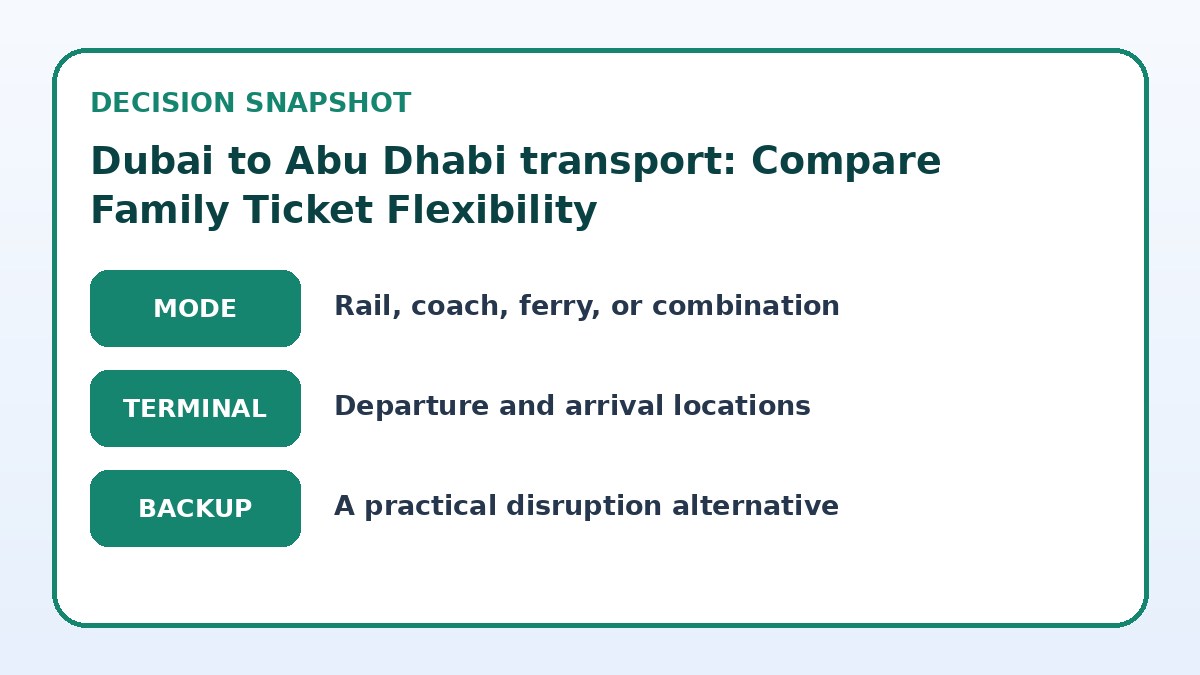
| Approach | Best for | Tradeoff to check |
|---|---|---|
| Fully refundable fare | Families needing maximum schedule freedom or traveling with infants and unpredictable plans | Higher base cost but minimal rebooking stress or financial loss if plans change |
| Flexible-change fare (limited free changes) | Families who want a middle ground — some certainty without full refund pricing | Moderate cost; watch for limits on number or timing of free changes |
| Non-refundable/restricted ticket | Families with locked itineraries and a firm budget who can accept change risk | Lowest upfront fare but potential high fees or no refund if you must cancel |
| Separate tickets for legs (buying individually) | Flexible parents comfortable managing connections and insurance for missed segments | More schedule choices but you assume full responsibility for missed connections |
Practical tradeoffs: price vs. peace of mind
The main tradeoff families face is price versus peace of mind. Lower-cost, non-flexible tickets reduce upfront expense but can create significant extra costs and stress if plans change. For many families the intangible cost of a missed day or stressful rebooking far outweighs the initial savings. If a parent is traveling with an infant or if you’re on a tight schedule (for example, arriving for a scheduled tour or a hotel check-in), flexibility tends to be worth paying for because it removes last-minute friction and uncertainty.
Conversely, if your travel dates are firm and you have contingency plans at either end — like a flexible hotel cancellation policy or a second adult who can rearrange plans — a restricted fare can be a good choice. Another consideration is whether travel insurance or your credit card offers trip interruption benefits that interact with ticket rules; these may cover some costs if you choose a cheaper, less flexible ticket. Always compare the total potential cost (fees plus risk) rather than price alone when deciding.
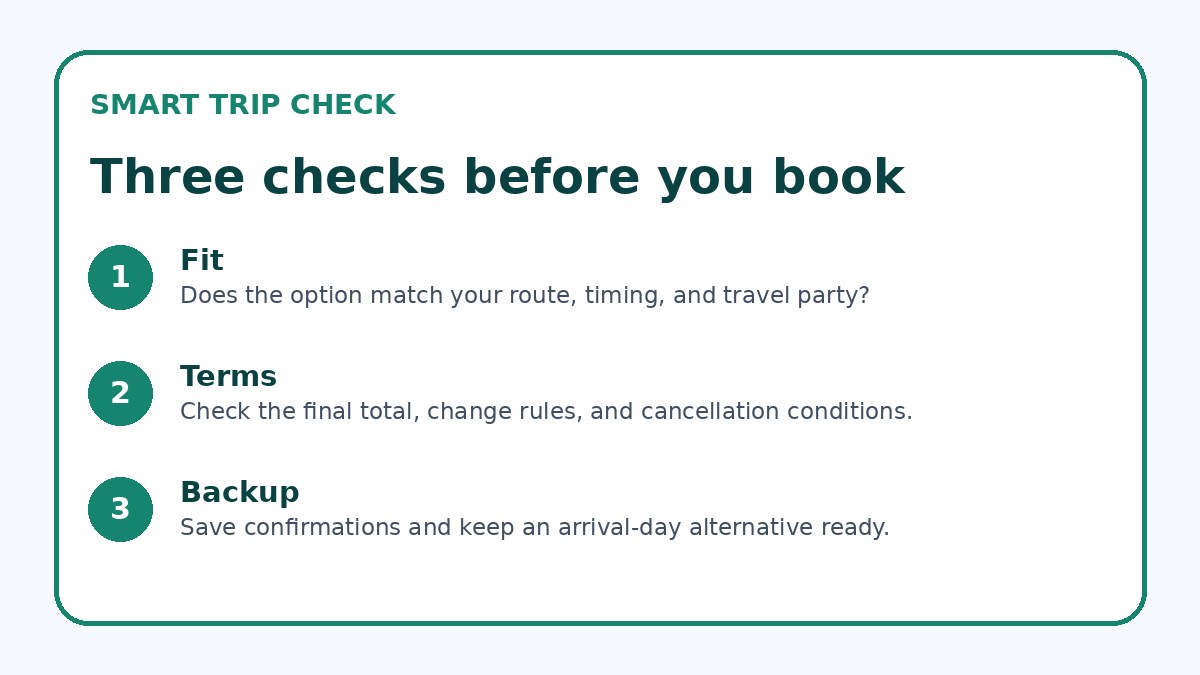
Before you book
- Confirm whether the fare allows free date changes and up to when (e.g., before departure or within 24 hours).
- Verify child and infant definitions, whether infants need their own ticket, and any lap-infant rules.
- Check seat reservation rules so you can secure adjacent seats for children and carers.
- Confirm luggage, pram/buggy, and stroller policies and whether any family items incur extra fees.
- Make sure refund processing method is acceptable (voucher, credit, or bank refund) and note expected timelines.
- If connections are involved, verify whether the ticket protects you for missed onward travel and who rebooks you.
Where to verify specifics before you book
Before you click purchase, confirm the provider’s final booking page details: exact change and cancellation fees, whether children and infants require separate tickets, seat reservation rules for families, luggage and pram allowances, and how refunds are processed (credit, voucher, or bank refund and the expected timeframe). If any family member needs a car seat, wheelchair assistance, or a particular boarding arrangement, verify availability and any charges. If the operator references “family-friendly” options, find the explicit policy text rather than relying on marketing phrases.
If you’re comparing multiple platforms, remember that resellers sometimes impose their own terms on top of the carrier’s rules. For that reason, consider booking directly with the operator if you need customized assistance. Trip.com is a convenient place to check options and availability, but always cross-check the final fare rules on the operator’s official booking page before accepting. Keep screenshots or PDFs of the final booking page and the emailed ticket; those records are invaluable if you later need to dispute charges or request a refund.
Frequently asked questions
Is it better to book a flexible ticket for a toddler or an infant?
For toddlers and infants, flexible tickets are often worth the extra cost because they reduce stress when schedules change. Young children may become unwell, need unexpected naps or breaks, or require last-minute changes to accommodations — situations where a refundable or changeable ticket avoids rushed decisions and possibly high rebooking fees. If you have a strict, immovable schedule and strong backup plans at both ends, a restricted fare can be reasonable, but factor in potential childcare-related disruptions before opting for lower flexibility.
Can I rely on ticket insurance instead of buying a flexible fare?
Travel insurance can fill gaps, but it rarely makes a non-refundable ticket fully equivalent to a refundable one. Many insurance policies cover medical cancellations or certain unforeseen events but exclude changes for convenience, some preexisting conditions, or predictable events. Also check coverage limits, whether it applies to domestic coach or shuttle travel between Dubai and Abu Dhabi, and what documentation the insurer requires. Always read the insurance policy exclusions and confirm whether it complements or duplicates the carrier’s refund and rebooking rules.
If a direct service and a connecting option have similar prices, which should a family choose?
If prices are similar, prefer the direct option for simplicity: fewer transfers mean less luggage handling, reduced risk of missed connections, and generally more predictable timing with children. However, if the direct service has restrictive change rules while the connecting option offers better flexibility or connection protection on a single-ticket itinerary, the connecting option may be safer despite the extra movement. Compare actual fare rules carefully — not just the advertised timetable — before deciding.
Final planning note
Choosing the right ticket flexibility for a Dubai to Abu Dhabi family trip comes down to balancing price with the value of reduced stress. If you travel with infants, toddlers, or need fixed onward arrangements, paying more for refundable or flexible-change fares often saves hassle and unexpected costs later. For families with immovable plans and strong contingency options, restricted fares can be appropriate — but only after you compare the real cost of potential changes and the specifics of seat and luggage rules. Before booking, verify all fare rules on the operator’s final booking page, retain screenshots of the confirmation, and consider whether travel insurance or direct booking with the carrier adds useful protection.
Continue planning
Check current options and final conditions
Use the provider page to confirm live availability, the final total, cancellation terms, and every condition that matters to your trip.
This evergreen planning guide was created with AI-assisted drafting and a structured quality review. It does not display live prices, schedules, availability, visa guidance, or provider rankings. Verify current details before booking. Some links are affiliate links; we may earn a commission at no additional cost to you.